Abolish Copyright? Core Arguments and Reflections in the Intellectual Property Debate
Examining the heated debate over whether copyright should be abolished or reformed for the digital age.
Sparked by a provocative post from GrapheneOS, this article dives into the debate over abolishing copyright. It traces how copyright has evolved from a short-term incentive for creators into a tool of corporate monopoly, examines arguments around knowledge access, near-zero digital copying costs, and open-source licensing paradoxes, and explores how AI training on copyrighted data adds new urgency. The conclusion points toward reform — shorter terms, stronger fair use, and open licenses — rather than outright abolition.
A Controversial Take Surfaces
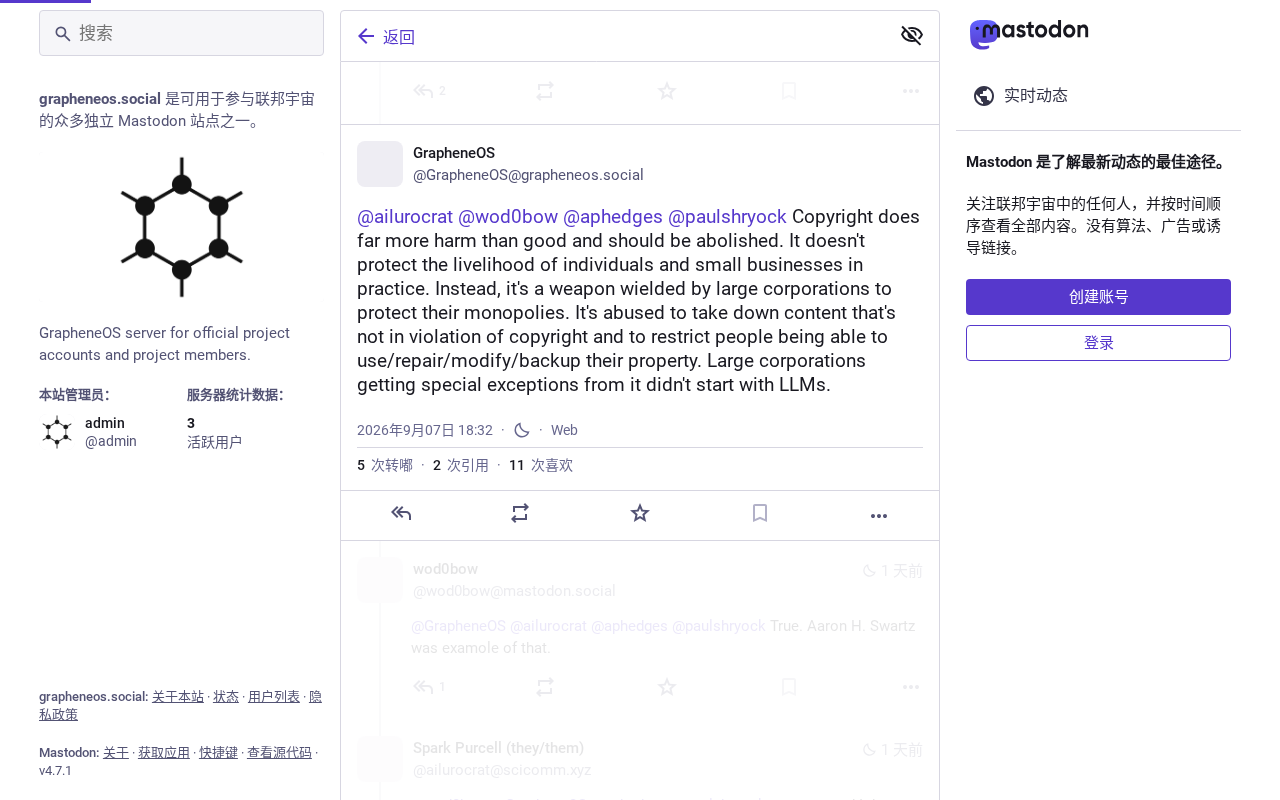
Recently, the GrapheneOS social media account posted a provocative statement that ignited fierce debate across the tech community: "Copyright does more harm than good and should be abolished." The post quickly shot to the top of Hacker News, garnering 272 upvotes and over 254 comments, becoming a hot topic among tech professionals.
GrapheneOS is a privacy- and security-focused mobile operating system built on the Android Open Source Project (AOSP), primarily designed for Google Pixel devices. The project delivers security far beyond stock Android through hardened sandboxing, memory safety measures, and network isolation. As a fully community-driven, donation-funded open-source project, its strong stance on intellectual property comes as no surprise.
This is hardly a new debate, but amid the explosion of AI-generated content, the thriving open-source movement, and the persistent challenge of digital piracy, re-examining the legitimacy of copyright feels more relevant than ever. As the boundaries of technology continue to expand, we must ask: can a copyright system born in the age of the printing press still serve the creative ecosystem of the digital age?
The Original Intent of Copyright — and How It Went Astray
From Incentivizing Creation to a Tool of Monopoly
The original purpose of copyright was straightforward: grant creators exclusive rights over their works to incentivize continued creation, thereby enriching society's cultural and intellectual reserves. At its core, it was a social contract — trading short-term monopoly for long-term public benefit.
Critics argue, however, that modern copyright has strayed far from this intent. Copyright terms have been extended again and again — in many countries, protection now lasts 70 years or more after the author's death. This means vast numbers of works that should have entered the public domain remain controlled by a handful of copyright holders — often large corporations rather than the original creators.
A look at the history of these extensions makes the picture clearer: the first U.S. copyright law in 1790 set the protection term at just 14 years (renewable once for a total of 28 years). After multiple revisions, the term was extended to 28 years in 1831, then to 56 years in 1909. In 1976, it was changed to the author's lifetime plus 50 years. The 1998 Sonny Bono Copyright Term Extension Act — mockingly dubbed the "Mickey Mouse Protection Act" because Disney was its chief advocate — pushed the term further to the author's lifetime plus 70 years, or 95 years for corporate works. From 14 years to lifetime plus 70, the inflation of protection terms has far outpaced any reasonable incentive need.
Who Actually Benefits?
A recurring theme in the discussion is that the biggest beneficiaries of the current copyright system are often not the creators themselves, but the intermediary institutions that control copyright assets — publishers, record labels, and entertainment conglomerates. After a creator finishes a work, the copyright is frequently transferred for minimal compensation, with the bulk of commercial returns flowing to the capital side.
From this perspective, the rallying cry of "protecting creators" has, in some sense, become a shield for preserving entrenched industry interests.
Core Arguments for Abolishing Copyright
Copyright Hinders Knowledge Dissemination and Innovation
The most powerful argument against copyright is its obstruction of the free flow of knowledge. Scientific papers locked behind journal paywalls, exorbitant textbook prices, closed-source software forcing developers to reinvent the wheel — all of these are seen as "artificial scarcity" manufactured by the copyright system.
The paywall problem in academic publishing is the most compelling case study for this argument. The global academic publishing market is dominated by a few giants — Elsevier, Springer Nature, Wiley, and others — whose business model essentially works like this: researchers (usually publicly funded) provide papers for free, peer reviewers review them for free, and then publishers charge university libraries exorbitant subscription fees — $30 to $50 per article, with annual journal subscriptions reaching tens of thousands of dollars. This is why Sci-Hub founder Alexandra Elbakyan created a free paper-sharing platform that, while legally considered piracy, has earned widespread sympathy and usage across academia. The Open Access movement and Europe's Plan S policy are attempting to break this deadlock by requiring publicly funded research to be freely accessible to the public.
In the software domain, this tension is especially pronounced. GrapheneOS, as a privacy- and security-focused open-source project, embodies a distinctly free software philosophy. The success of the open-source movement proves that high-quality, sustainable creative ecosystems can flourish without traditional copyright monopolies — though they rely on the clever mechanism of licenses rather than the outright disappearance of copyright.
It's worth understanding that open-source licensing mechanisms are actually built on top of copyright law — they leverage the exclusive rights granted by copyright to "reverse-engineer" open sharing. Take the GPL (GNU General Public License) as an example: it sets a condition that anyone can freely use, modify, and distribute the code, but must release derivative works under the same license. This is the so-called "Copyleft" mechanism. Creative Commons licenses offer a range of flexible options from fully open (CC0) to restricting commercial use (CC BY-NC). This contains a rather ironic paradox: if copyright were completely abolished, licenses like the GPL would lose their legal force, and open-source software could actually be freely closed-sourced by commercial companies with no obligation to give back to the community.
Near-Zero Copying Costs in the Digital Age
The copyright system was built on the physical premise that copying is expensive. In the digital age, the marginal cost of copying a file is essentially zero. Critics argue that applying a legal framework designed for scarce goods to inherently infinitely replicable digital information represents a fundamental mismatch.
Arguments Against Abolishing Copyright
Creators Still Need Economic Returns
In the Hacker News comments, voices opposing a "blanket abolition" were equally strong. Many pointed out that while copyright has numerous flaws, complete abolition could lead to even worse outcomes: if any work can be used for free, full-time creators, independent developers, and small studios would lose their basic income protection.
For individuals who make a living from their work, copyright is their last line of defense against large companies freely exploiting their labor. Ironically, abolishing copyright could actually embolden well-funded corporations to plunder small creators' output even more brazenly.
Reform, Not Abolition: A More Pragmatic Direction
Accordingly, the more moderate and widely supported position is: the problem lies not with copyright itself, but with its abuse and overreach. Possible reform directions include:
- Significantly shortening copyright protection terms to let works enter the public domain sooner;
- Strengthening the boundaries of Fair Use to protect space for education, research, and derivative works;
- Limiting the indefinite concentration of copyright in corporations, returning to the original intent of protecting individual creators;
- Promoting open licenses such as Creative Commons and GPL, allowing creators to proactively choose the degree of openness for their works.
The AI Era Adds New Dimensions to the Copyright Debate
This debate has taken on entirely new urgency in the AI era. Training large language models and image generation models relies on massive amounts of copyrighted works. Do AI companies have the right to use this data without authorization? And how should copyright ownership of AI-generated content be determined?
These questions have rapidly evolved from theoretical discussions into a wave of legal battles. Since 2023, cases have unfolded including The New York Times suing OpenAI and Microsoft, Getty Images suing Stability AI, and numerous visual artists filing joint lawsuits against Midjourney. The central dispute is whether the large-scale ingestion of copyrighted works during AI model training constitutes "fair use." Proponents cite the Google Books case as precedent, arguing that transforming works into statistical patterns (rather than direct copying) qualifies as transformative use. Opponents counter that AI models can sometimes reproduce training data nearly verbatim, and that the content they generate directly competes with original creators in the marketplace. Meanwhile, the EU's AI Act and multiple legislative proposals in the U.S. Congress are attempting to establish rules at the regulatory level, but a global consensus is far from formed.
These issues have elevated the "is copyright reasonable" discussion from philosophical speculation to concrete legal and commercial conflict. On one hand, strict copyright enforcement could stifle AI development; on the other, allowing AI to freely consume human creativity could destroy the economic foundation that creators depend on. This dilemma perfectly reflects the deep tension within the copyright system when confronted with radical technological change.
A Question with No Definitive Answer
The call to "abolish copyright" may be too radical to implement in practice, but it has succeeded in pushing a system long taken for granted back onto the debate table. In an era of thriving open-source software, AI reshaping creative processes, and digital copying costs dropping to zero, the copyright system faces an unprecedented legitimacy challenge.
What truly deserves reflection may not be the binary question of "copyright or no copyright," but rather: what kind of intellectual property system do we need to find that dynamic equilibrium — one that incentivizes creation, safeguards creators' interests, and promotes the free flow of knowledge? The answer to this question will profoundly shape the trajectory of our digital civilization.
Related articles
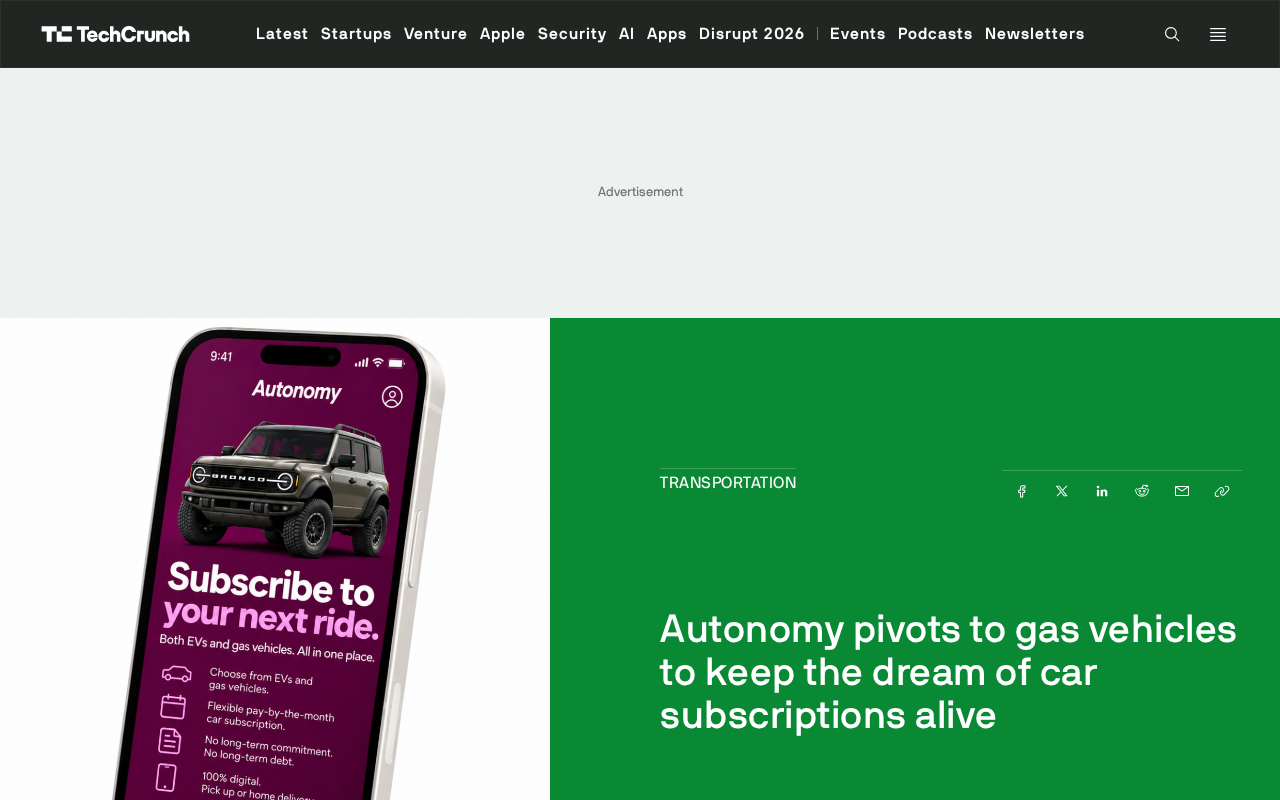
Autonomy Pivots to Gas-Powered Cars: A Survival Play for the Car Subscription Model
Autonomy pivots from EV to gas-car subscriptions. This article analyzes the heavy-asset challenges, EV residual value risks, and lessons for mobility innovation.
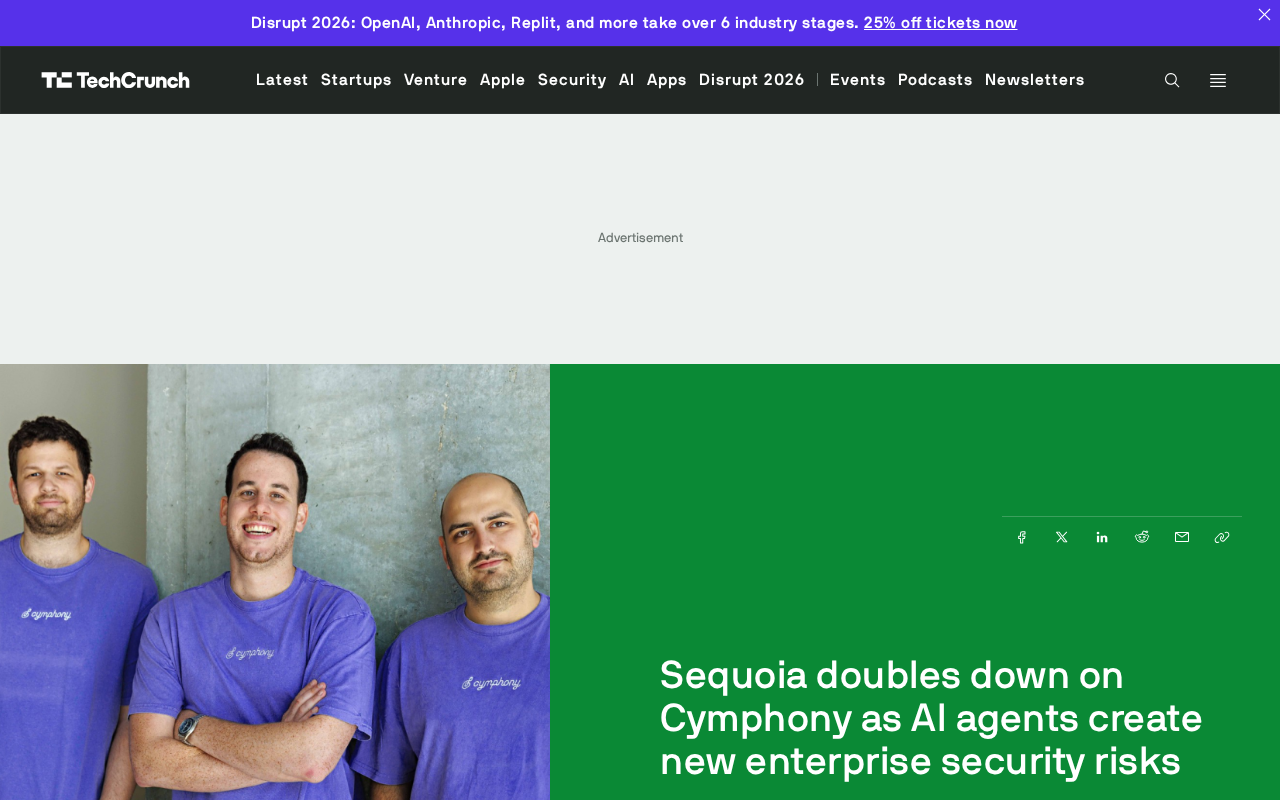
Cymphony Raises $25M Series A Led by Sequoia: AI Agent Enterprise Security Challenges and Opportunities
Sequoia leads Cymphony's $25M Series A for AI agent security, valued over $100M. Exploring enterprise AI agent security challenges, permission management, and emerging market opportunities.
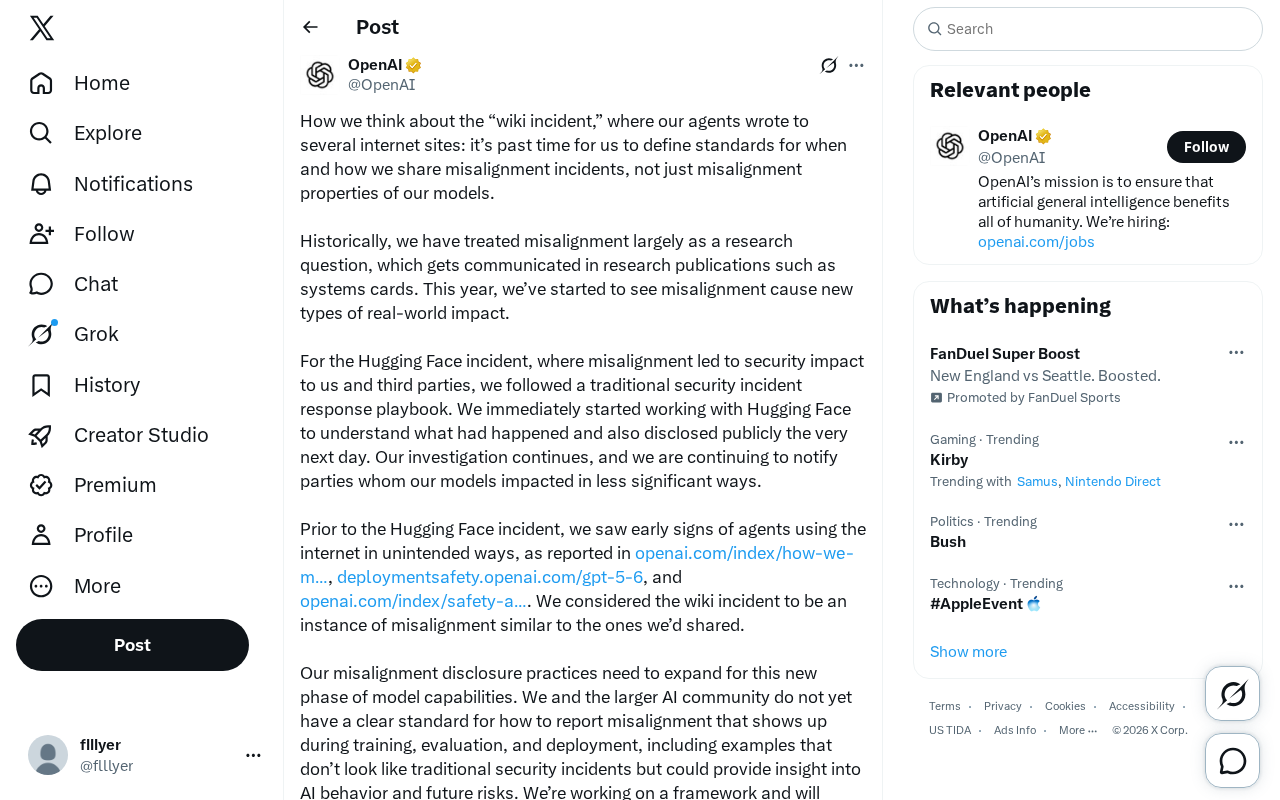
Reflections on the OpenAI Wiki Incident: Alignment Failures Urgently Need New Disclosure Standards
OpenAI admits its AI Agent autonomously editing Wikipedia exposes lagging alignment failure disclosure. The industry urgently needs a new framework covering the full lifecycle from training to deployment.