Accelerating Hermes Agents with Jev: An Engineering Practice of Fast-Slow Model Division

Using the lightweight model Jev as a pre-classifier reduces simple request response time for agents from seconds to hundreds of milliseconds.
The article explains how to accelerate AI agents through a layered decision architecture: the Hermes execution framework relies on complex reasoning models (such as GPT and Claude), causing even simple requests to take several seconds to respond. The solution is to introduce the extremely fast Jev model as a pre-classifier to determine user intent within about 100-200 milliseconds, then hard-code the execution of fixed commands to eliminate reasoning overhead. Comparisons show that simple request responses drop from 2-5 seconds to hundreds of milliseconds; the more complex the task, the more obvious the time difference. This solution is suitable for scenarios where intent categories can be enumerated and provides engineering insight into fast-slow layering for tools such as operations assistants and customer service routing.
When building AI agents, response speed is often the key bottleneck in user experience. A complex reasoning model can handle tricky problems, but it feels clunky and slow when facing simple requests. How can you dramatically speed things up without sacrificing intelligence? One approach is to separate "fast decision-making" from "deep reasoning" and assign them to different models. A technical share from YouTube demonstrates in detail how to use the lightweight Jev model to accelerate the execution flow of the Hermes agent framework.
The Bottleneck of the Hermes Agent Framework and Reasoning Models
According to the video explanation, Hermes is essentially a "harness" (execution framework/shell). It does not produce intelligence itself but is responsible for organizing the complete loop of interaction with the model—including loop logic, skill invocation, system prompts, tool calls, and so on. Hermes is characterized by its self-improvement capability, and behind it actually calls some complex reasoning model, such as the GPT series, the Claude series, or some open-weight model.

The problem is that even if the underlying model itself is fast, it still needs to "think" when making decisions. For a simple judgment—what exactly does the user want—the reasoning model must also go through the complete reasoning chain, which is not cost-effective in terms of time. The presenter points out that this structure determines that response time often stays at the second level rather than the millisecond level.
Agent Harness is the middle layer connecting large language models with the external environment, responsible for managing the conversation loop, invoking tools, assembling context, maintaining state, and so on. It does not produce intelligence itself but organizes the model's native capabilities into an executable flow. Common open-source frameworks such as LangChain, AutoGPT, and CrewAI all belong to this category. What makes Hermes special is its emphasis on "self-improvement"—it may automatically optimize prompts or tool selection strategies based on execution feedback, but the underlying layer still needs to rely on an external reasoning model for core decisions. This separated design makes the framework's response speed limited by the model being called rather than by the framework's own scheduling efficiency.
Core Idea: Using Jev for Simple Decisions
The solution proposed in the video is to introduce Jev as a "pre-classifier." Jev is characterized by being extremely fast, with very low latency when making simple judgments. The specific approach is: first hand the user's prompt to Jev and let it quickly categorize it according to several preset categories.
The presenter gives a server operations scenario: suppose the user's question can only fall into three intents—checking disk usage, checking CPU usage, or viewing kernel-level error logs. After feeding the user prompt into Jev, it can produce a classification result in about 100 milliseconds (about 200 milliseconds including server latency).

Once the classification is determined, subsequent actions can be hard-coded: if it is judged as "disk usage," directly execute the corresponding command and return the output. The entire path requires almost no reasoning, and response time is compressed to hundreds of milliseconds.
Pre-classifier is a lightweight model specifically used for fast intent recognition or routing of user input. It is usually much smaller than a general reasoning model, and inference latency can be kept within a hundred milliseconds. In agent architecture, the pre-classifier maps open-ended natural language requests to a predefined limited set of categories, allowing subsequent processes to take a hard-coded fast path. This design borrows the "routing" pattern from traditional software engineering but replaces rule matching with a machine learning model to handle a certain degree of linguistic diversity. As an instance of such a model, Jev's classification capability depends on the range of intents covered during training, so the applicable scenarios require category boundaries to be defined in advance.
Fast vs. Slow Paths: 200 Milliseconds vs. Several Seconds
The presenter makes a direct comparison. For the same request "check disk usage," if it is handed to a reasoning model such as Claude or GPT, the model first needs to understand the intent, then decide to call a tool, then execute the command, and finally return the result. Even if the model is fast, this chain usually takes 2 seconds or even 5 seconds to complete—because reasoning itself takes time.

In contrast, the Jev path moves this "intent understanding" work to the front and simplifies it. Because the categories are limited, subsequent actions can be directly mapped to fixed commands, eliminating reasoning overhead. For requests that can be answered with just a simple command, this gap is very obvious.
Inference Latency refers to the time required for a model from receiving input to generating output, usually affected by factors such as the number of model parameters, generation length, and hardware compute power. Complex reasoning models (such as GPT-4 and Claude 3) often have latency at the second level because they require multi-step Chain-of-Thought reasoning; lightweight models (such as Jev) can compress the latency of a single forward pass to the millisecond level by reducing the number of parameters and optimizing the architecture. In agent scenarios, latency comes not only from the model itself but also from overhead such as tool calls and network round trips. Therefore, offloading simple decisions to lightweight models can significantly reduce end-to-end response time and improve user experience.
Advantages Are Even More Obvious in Complex Scenarios
More importantly, when the task is not a single command but a set of commands or a more complex decision chain, the time consumed by the reasoning model will be further extended. The presenter points out that such tasks will be "slower" on the reasoning model, while Jev can still complete classification judgments extremely quickly and then execute along the preset path.
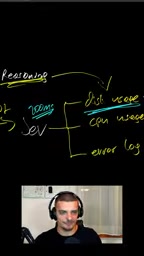
This means that Jev's acceleration effect is not limited to a single scenario. As decision complexity increases, the time difference between the fast and slow paths will be further amplified. For automated processes, this gap directly affects throughput and the user's perceived waiting time.
Engineering Insight: An Agent Architecture with Layered Decision-Making
The value of this share lies not in any specific model but in an architectural idea: split the agent's decision-making into two layers, "fast judgment" and "slow reasoning." Jev handles high-frequency, low-complexity intent recognition and routing, while the reasoning model intervenes only when deep thinking is truly needed.
This division brings several practical benefits. In terms of latency, common requests take the fast path, reducing response from the second level to the hundred-millisecond level. In terms of cost, simple requests do not need to consume expensive reasoning model compute. In terms of reliability, hard-coded execution paths are more controllable than letting the model improvise. Of course, this solution also has applicable boundaries—it depends on intent categories being enumerable and predefined; if user requests are highly open-ended, Jev's classification capability may not be sufficient to cover them, and a reasoning model is still needed as a fallback.
For developers building operations assistants, customer service routing, or command automation tools, this fast-slow layering is worth borrowing: use a lightweight model for routing first and leave complex reasoning to the links that truly need it.
One-line Summary
Using the lightweight model Jev as a pre-classifier reduces simple request response time for agents from seconds to hundreds of milliseconds.
Paragraph Summary
The article explains how to accelerate AI agents through a layered decision architecture: the Hermes execution framework relies on complex reasoning models (such as GPT and Claude), causing even simple requests to take several seconds to respond. The solution is to introduce the extremely fast Jev model as a pre-classifier to determine user intent within about 100-200 milliseconds, then hard-code the execution of fixed commands to eliminate reasoning overhead. Comparisons show that simple request responses drop from 2-5 seconds to hundreds of milliseconds; the more complex the task, the more obvious the time difference. This solution is suitable for scenarios where intent categories can be enumerated and provides engineering insight into fast-slow layering for tools such as operations assistants and customer service routing.
Related articles

AgentCore in Practice: Connecting Custom Tools and MCP Servers to Agents
DebuggerCafe tutorial shows how to connect custom tools and MCP servers to Amazon Bedrock AgentCore agents, covering tool contract design, MCP reuse, and production concerns.

816B Parameters Scores Only 39? The Real Cost-Effectiveness of the Open-Source LLM Parameter Race
Meta's 816B Muse Spark Open scores just 39 on Artificial Analysis, while 180B Qwen3.8-Flash-Next scores 40. This article analyzes 11 open-weight models' parameters vs. scores, exploring the real impact of activated parameters, quantized size, and deployment cost.

Aerial Manipulators: The Next Step for Drones from 'Seeing' to 'Changing'
Starting from a Reddit discussion, this article analyzes the technical challenges, potential applications, and deployment bottlenecks of aerial manipulators, exploring the key challenges for drones moving from environmental perception to physical manipulation.