Adaptive Physical AI Exploration: Can LLM Agents Handle Long-Horizon Physical Tasks?
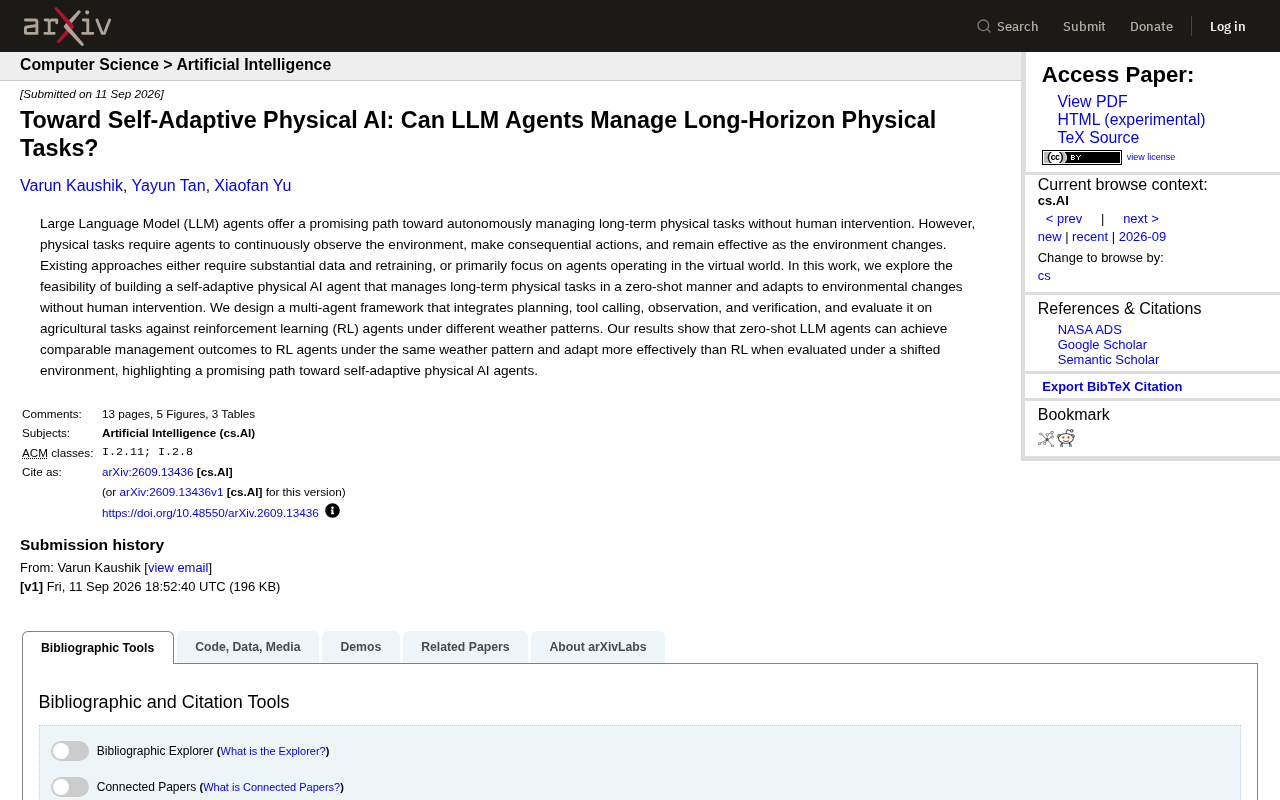
LLM multi-agent framework matches RL on physical tasks zero-shot and adapts better when environments shift.
This arXiv paper investigates whether LLM agents can autonomously manage long-horizon real-world physical tasks without human intervention. The authors propose a multi-agent framework integrating planning, tool calling, observation, and verification, tested in an agricultural setting. Results show zero-shot LLM agents match trained RL agents under standard conditions and significantly outperform them when the environment shifts — pointing toward a new path for self-adaptive Physical AI with lower deployment barriers.
From Virtual to Physical: The Real Challenge
LLM agents have already demonstrated impressive performance in virtual environments, but when tasks extend beyond chat windows and code editors into the real physical world, things get considerably more complex. A recent arXiv paper, Toward Self-Adaptive Physical AI: Can LLM Agents Manage Long-Horizon Physical Tasks?, attempts to answer a critical question: can LLM agents autonomously manage real-world physical tasks over extended periods — without human intervention?
Physical tasks place fundamentally different demands on agents compared to virtual ones. Agents must continuously observe the environment, make decisions with real-world consequences, and remain effective as conditions change over time. This "long-horizon" nature means that a single misjudgment may not manifest until days or even weeks later — leaving far less room for error than a typical conversational task in a virtual setting.
The Dilemma with Existing Approaches
The paper highlights that most current technical approaches fall into one of two limitations. One category relies on reinforcement learning (RL), requiring large volumes of data and repeated training cycles for agents to master specific tasks. While this can yield strong performance in targeted environments, training costs are high and adaptability to environmental change is limited — once real-world conditions drift away from the training distribution, performance can degrade significantly.
The other category focuses primarily on agents operating in virtual environments, sidestepping the harder challenges of physical reality: continuous observation, consequential actions, and environmental drift. The research team argues that a true "Physical AI" must be capable of working under zero-shot conditions — diving directly into long-horizon physical task management without task-specific training, and autonomously adapting to environmental changes as they arise.
Design Philosophy of the Multi-Agent Framework
To test the feasibility of this vision, the research team designed a multi-agent framework that integrates four core capabilities:
Planning
Decomposes long-horizon physical tasks into executable steps and formulates management strategies. This is central to handling the long-horizon nature of the problem, giving agents the capacity for forward-looking decision-making.
Tool Calling
Enables agents to invoke external tools to interact with the physical environment and execute concrete actions. This is the critical bridge that takes LLMs from "thinking" to "acting."
Observation
Continuously monitors environmental state to provide real-time grounding for subsequent decisions. The dynamic nature of physical tasks means agents cannot simply "plan once and execute forever" — they must constantly adjust based on what they observe.
Verification
Validates the agent's actions and outcomes, creating a closed feedback loop that reduces the risk of compounding errors.
These four modules work in concert to form a self-adjusting agent system designed to sustain long-term task effectiveness without human intervention.
Experimental Comparison in an Agricultural Setting
The research team selected agricultural tasks as their evaluation scenario — a classic long-horizon physical management problem where crop growth spans months and is highly dependent on external environmental variables like weather. They compared zero-shot LLM agents against trained RL agents, focusing on performance across different weather patterns.
The experiments surfaced two notable findings. Under the same weather conditions, the zero-shot LLM agent achieved management outcomes comparable to the RL agent. This means that without any task-specific training, LLM agents can reach performance levels close to carefully fine-tuned RL solutions.
Even more revealing was the second finding: when the evaluation environment shifted, LLM agents demonstrated significantly stronger adaptability than their RL counterparts. In other words, when faced with unseen weather conditions, RL agents — which depend heavily on training data — tend to struggle, while LLM-based agents leverage their general reasoning capabilities to exhibit stronger generalization and self-adaptation.
Significance and Outlook
The value of this research lies in charting a promising path toward building "self-adaptive physical AI agents." Traditionally, automation in the physical world has relied heavily on customized training for specific scenarios. The zero-shot capability and environmental adaptability of LLM agents could dramatically lower the barrier to deployment, enabling a single framework to remain robust across dynamic, real-world conditions.
Of course, as an early exploratory work, the paper's conclusions are still limited to the agricultural domain and one type of environmental drift — weather variation. Whether LLM agents can maintain the same advantages in more complex, higher-stakes physical tasks (such as industrial control or robotic manipulation), and how to ensure the reliability and safety of their decisions, all remain open questions.
But the direction is becoming clear: as LLM reasoning capabilities continue to improve, Physical AI may no longer need to be retrained for every new environment. Instead, like a human expert, it may be able to flexibly navigate an ever-changing real world armed with general knowledge and real-time observation. For long-horizon domains like agriculture, energy, and environmental management, the implications are significant.
Related articles
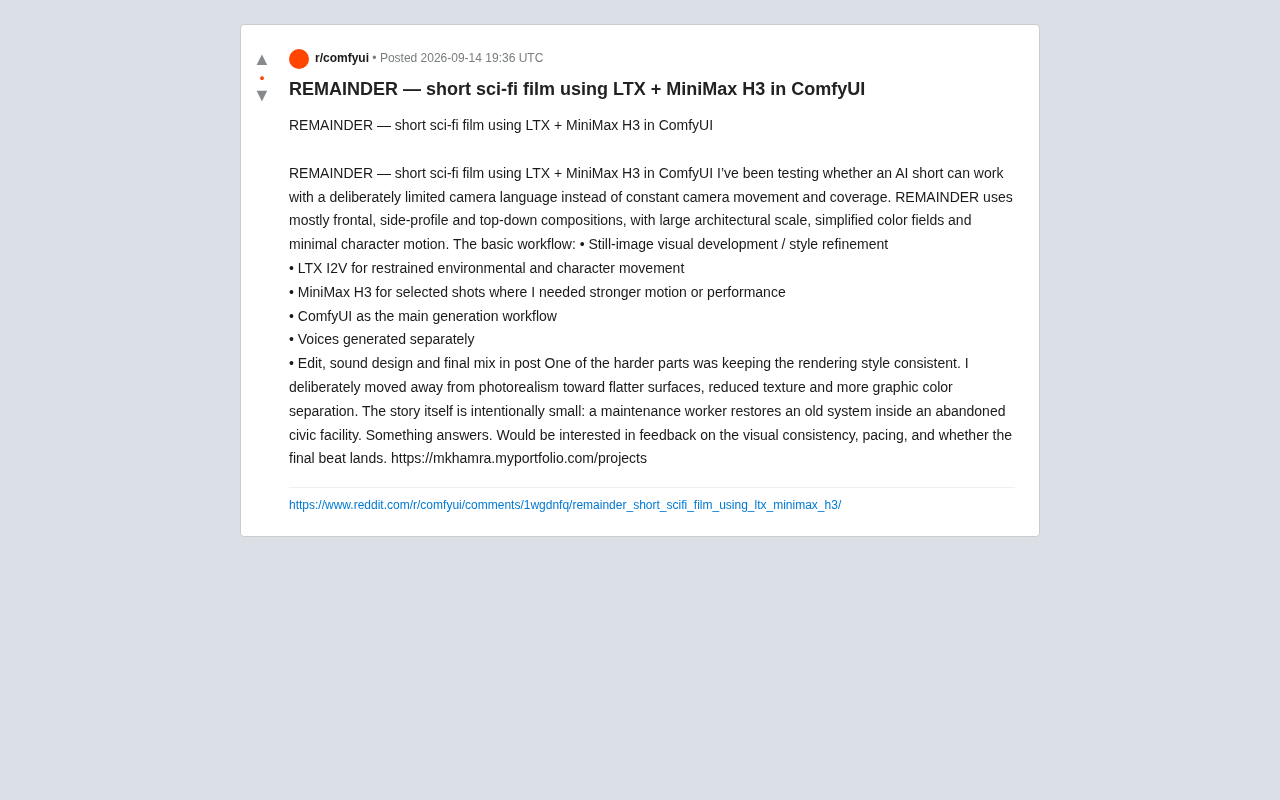
Building an AI Sci-Fi Short with LTX + MiniMax H3: Restrained Cinematography in ComfyUI
Sci-fi short REMAINDER uses LTX, MiniMax H3, and ComfyUI with restrained cinematography and flat aesthetics to solve visual consistency in AI filmmaking.

LangChain Deep Agents vs. MDA: Clearing Up the Confusion for Developers
What's the difference between LangChain's Deep Agents and MDA (Managed Deep Agents)? We break down create_deep_agent vs. define_deep_agent and help developers choose.
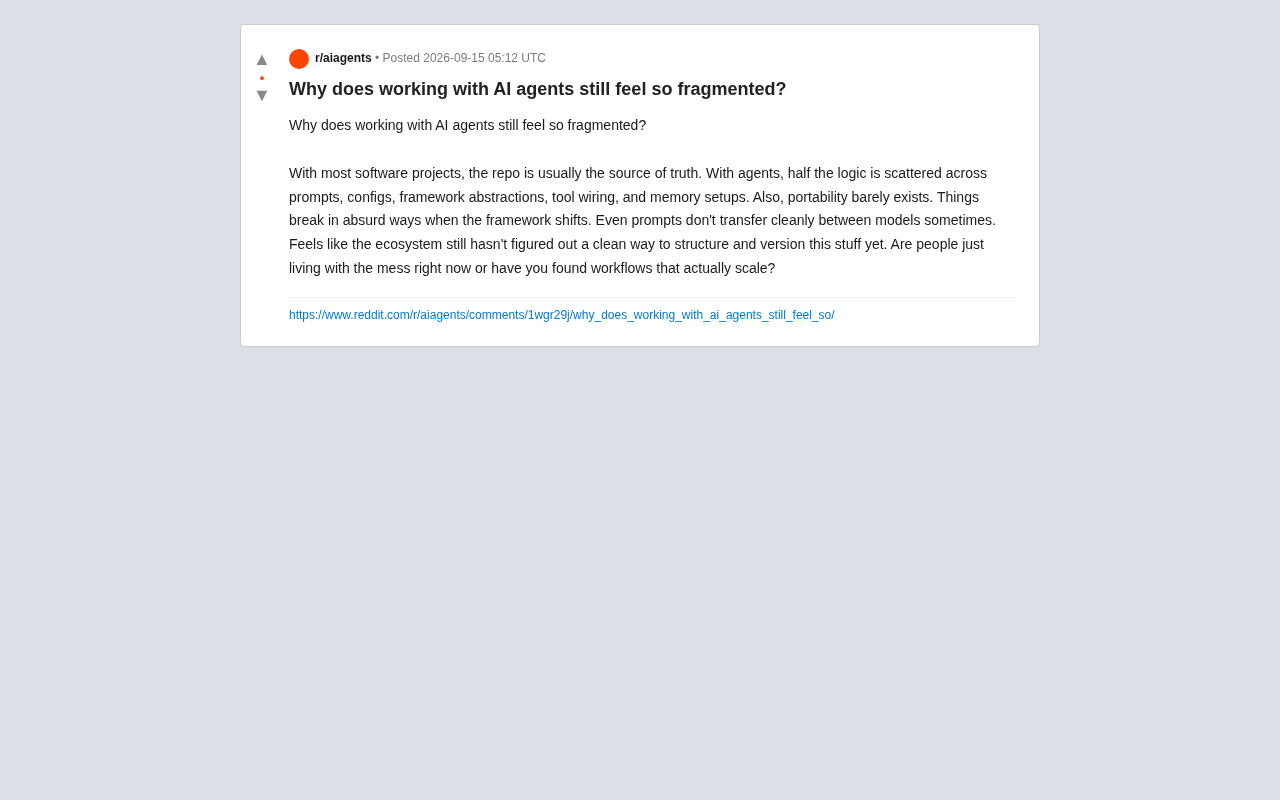
Why Is AI Agent Development So Fragmented? The Real Causes and How to Work Around Them
Why does AI Agent development feel so fragmented? Logic scattered across prompts, configs, and frameworks makes portability nearly impossible. Here's why — and how to cope.