AFK Agent: Let AI Code Autonomously While You're Away From the Keyboard
AFK Agent lets AI agents code autonomously via automated multi-phase execution while engineers focus on higher-value work.
AFK Agent transforms AI-assisted programming by automating the phase-by-phase execution of multi-stage plans, freeing engineers from manual babysitting. By leveraging a simple for loop to drive agent prompts, combined with robust task decomposition, tracer bullets, and automated feedback loops, engineers shift from operators to dispatchers — parallelizing work across multiple AI agents while focusing on planning, review, and high-value decisions.
From Multi-Phase Plans to Automated Execution
In the practice of AI programming, a mental model that has been repeatedly validated is the Multi-Phase Plan. Its core idea is simple: break large chunks of work into several phases, keeping each phase within the AI agent's "intelligence comfort zone" to achieve optimal output quality.
The Multi-Phase Plan isn't an original concept from the AI programming domain. Its intellectual roots trace back to the classic "Divide and Conquer" strategy in software engineering and the iterative delivery model in Agile development. In traditional software development, the waterfall model divides projects into linear stages like requirements, design, coding, and testing. In the context of AI agents, however, the core innovation of multi-phase planning is that the granularity of each phase is carefully calibrated to match the LLM's context window and reasoning capabilities. The so-called "intelligence comfort zone" essentially refers to the task complexity boundary within which a model can maintain high-quality output in a single interaction — beyond this boundary, models tend to hallucinate, miss key constraints, or produce logically inconsistent code.
Driving such a workflow typically requires three key inputs:
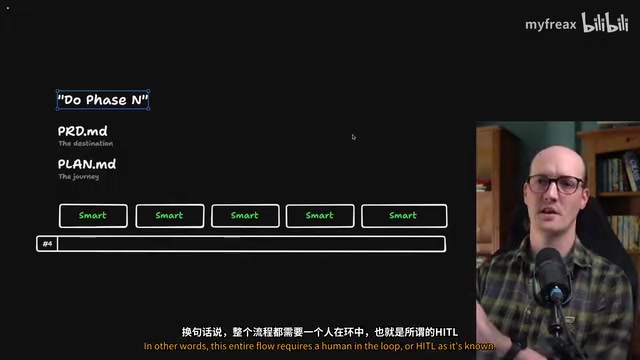
- Target PRD (Product Requirements Document): Defines what needs to be done
- Plan: The roadmap for the entire task "journey"
- Phase execution instructions: Telling the agent to execute Phase 1, Phase 2, Phase 3, and so on
This setup looks comprehensive, but it hides a critical pain point — the "execute Phase N" instruction means someone must constantly babysit the agent, manually telling it which step to do next.
The Waste of HITL: Why Must a Human Keep Watch?
This pattern is known in the industry as HITL (Human-In-The-Loop). In theory, it ensures controllability, but in practice, it creates enormous waste of human effort.
HITL is a classic design pattern in machine learning and automation, first widely applied in Active Learning and semi-automated annotation systems. In those scenarios, human intervention handles edge cases where model uncertainty is high, thereby improving overall system reliability. However, when HITL is applied to AI programming agents, its role undergoes a subtle degradation — humans often aren't making "judgments" but merely providing "confirmations" and "nudges," mechanically telling the system to proceed to the next step. This degraded HITL actually violates the pattern's original design intent: it should let humans exercise irreplaceable judgment at critical decision points, not serve as a timer or button clicker.
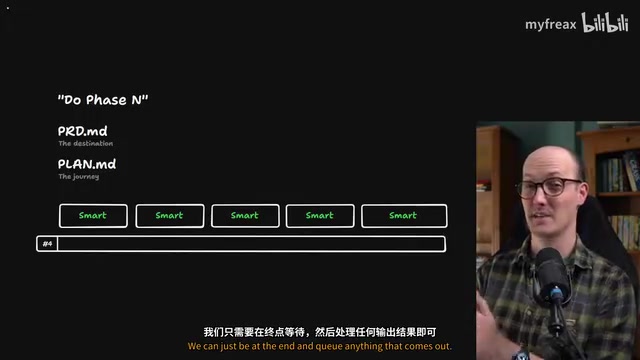
Consider this scenario: your goal is fully planned out, the LLM's entire execution journey is already laid out, and all you need to do is wait at the finish line and process the final output. So why does a human still need to manually click "next" at the end of each phase?
The author makes a razor-sharp observation: "Execute Phase N" is essentially a for loop. Since the content of each phase is already clearly defined and automated, the progression logic between phases can be automated just as well — with a simple loop that repeatedly runs prompts, letting the agent walk through the entire process on its own.
The Turning Point: Model Capabilities Reach a Critical Threshold
The author admits that for a long time while using Claude Code, he felt that "standing by was essentially unnecessary," but didn't dare fully let go. The real turning point came when model capabilities finally reached a critical threshold.
Claude Code is a command-line AI programming tool for developers launched by Anthropic. It allows developers to interact with the Claude model directly in the terminal, letting the model read codebases, edit files, run commands, and debug errors. Unlike IDE plugins (such as GitHub Copilot or Cursor), Claude Code emphasizes an agentic way of working — the model doesn't just generate code snippets but can autonomously plan file modifications, execute tests, and handle error feedback. The so-called "critical threshold" refers to the capability leap where a model evolves from "occasionally making mistakes requiring frequent correction" to "independently completing well-defined subtasks in most cases." This transition isn't linear — it's an emergent capability that suddenly manifests once model scale, training data quality, and post-training alignment (RLHF/Constitutional AI) cross a certain threshold.
At this point, you can genuinely dispatch these clearly defined tasks to agents for independent completion, and they perform remarkably well. This is no longer a theoretical possibility but a mature engineering practice.
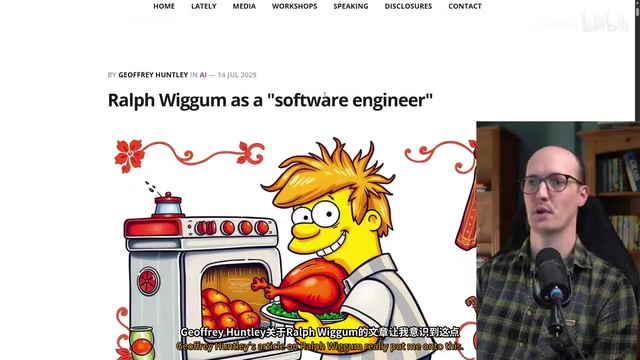
What inspired the author to reach this conclusion was Jeffrey Huntley's article about Ralph Wiggum. Huntley is a well-known practitioner in AI-assisted development. His Ralph Wiggum method, named after the naive character from The Simpsons, alludes to the approach's "stupidly simple" nature. The core idea: you don't need complex orchestration frameworks or multi-agent coordination systems — just a for loop in a bash script that repeatedly calls the same agent prompt to drive phased complex task execution. This discovery is significant because it broke the industry's over-reliance on AI agent frameworks (like LangChain, AutoGPT, CrewAI, etc.) — these frameworks introduce massive abstraction layers and complexity, but the real automation bottleneck often isn't the complexity of orchestration logic, but whether each phase's task definition is sufficiently clear.
What Is an AFK Agent?
The author initially adopted Ralph's method but gradually diverged from the original vision in practice, forming his own pattern, which he named AFK Agent.
The Meaning of AFK
AFK stands for "Away From Keyboard," a term that originally became popular in online gaming and chat communities to let others know you're temporarily away from the computer. As the name suggests, AFK Agents are AI agents that can keep running while you're away from the keyboard.
Its core value lies in "delegation": you can hand off large volumes of work to these agents, letting them autonomously generate code while you're busy with other things. Meanwhile, you can:
- Plan future work tasks
- Review the completed results of other agents' runs
- Handle high-value decisions that require human judgment
Why AFK Agent Is a Game-Changer
The author used "game-changer" to describe the efficiency leap this pattern delivers. In the traditional model, an engineer can only watch one agent at a time; in AFK mode, the human role shifts from "operator" to "dispatcher and reviewer," enabling parallel progress across multiple work streams.
This role shift closely parallels the evolution within the DevOps movement. Before DevOps, operations engineers had to manually execute deployment scripts and configure environments server by server. Once CI/CD pipelines (like Jenkins, GitHub Actions) automated these repetitive operations, the ops role shifted to writing pipeline configurations and monitoring anomalies. AFK Agent reshapes the programming engineer's role following the same logic: an engineer's value is no longer in "watching code get generated line by line" but in three higher-level activities — quality of task decomposition (determining whether agents can complete tasks independently), design of verification criteria (determining whether output is trustworthy), and handling of edge cases (intervention strategies when agents deviate from expectations). This is essentially yet another paradigm shift pushing software development from "artisan workshop" toward "industrial assembly line."
This is fundamentally a paradigm shift from labor-intensive to automated orchestration. When the model is reliable enough and the task is clear enough, why should a human still serve as a cheap "for loop executor"?
Prerequisites for AFK Execution
Here's an important detail: AFK Agent isn't an isolated trick but the convergence point of an entire methodology. The author emphasizes that everything learned from Feedback Loops, Plans, Specs, and Tracer Bullets ultimately converges on enabling multi-phase plans to achieve AFK execution.
Among these, Tracer Bullet is a classic concept from The Pragmatic Programmer. In the military, tracer bullets (tracers) glow along their flight path, letting the shooter see the trajectory in real time and adjust aim accordingly. In software engineering, a tracer bullet refers to a minimal end-to-end implementation — it cuts through all layers of the system (from UI to database) and, while functionally minimal, validates connectivity across the entire tech stack. In the context of AI programming, tracer bullets are used before formal multi-phase execution to first verify with a minimal task whether the agent can correctly understand requirements, generate compilable code, and pass basic tests. This "fire one round first to see where it lands" approach dramatically reduces the risk of agents going off course during unattended AFK mode and causing massive rework.
In other words, all the preceding work on structured, verifiable, and traceable approaches exists to enable agents to reliably complete tasks without supervision. Only when tasks are decomposed clearly enough and verification mechanisms are robust enough is it safe to hand them over to a for loop for automatic execution.
Feedback loops play an equally critical role here: at the end of each phase, agents need to automatically validate their own output (e.g., running unit tests, checking for type errors, verifying build success) rather than relying on humans to judge "did this step go right?" These automated verification mechanisms form the safety net of AFK mode — without them, unattended execution is like driving blindfolded.
Conclusion: Toward Truly Autonomous Coding
AFK Agent represents an important evolutionary direction in AI programming practice. It rests on two premises: first, model capabilities have reached a level where well-defined tasks can be entrusted to them; second, engineers have mastered the methodology for decomposing complex work into clear phases.
When these two come together, human engineers can finally be freed from the tedium of "babysitting" and redirect their attention to where creativity and judgment truly matter. For engineers, learning to build and trust AFK Agents may be the key to the next leap in productivity.
It's worth noting that AFK Agent doesn't mean human engineers become irrelevant — quite the opposite, it raises the bar for engineer capabilities. You need stronger system design skills to decompose tasks, sharper quality judgment to review output, and more mature engineering intuition to design verification criteria. In this sense, AFK Agent isn't replacing engineers — it's filtering them. Those who can master automated orchestration will gain unprecedented productivity leverage.
Related articles
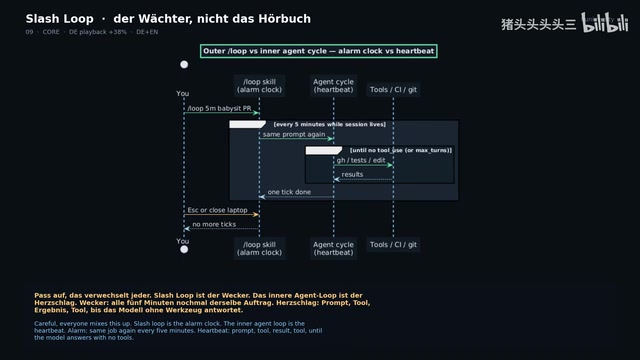
Deep Dive into the /loop Command in Cursor and Claude Code
In-depth analysis of the /loop command in Cursor and Claude Code, covering four control levers (Turn, Go, Loop, Schedule), local PowerShell implementation traps, termination state specifications, and measured data to help developers build reliable automated Agent loop mechanisms.

Fable 5.1 Hands-On: AI One-Click 3D Game Scene Generation Crushes GPT and Grok
Hands-on comparison of Fable 5.1, GPT-5.6 Sol, Grok 4.6, and Kimi K3 in 3D game scene generation — from Gothic architecture to Sekiro menus, analyzing real gaps in detail fidelity, speed, and interaction.
Free Data Science Learning Resources Guide: An Efficient Path to Getting Started on Zero Budget
How to learn data science on a tight budget? This guide covers free resources like Kaggle Learn, freeCodeCamp, and Fast.ai with a complete self-study roadmap from Python basics to machine learning.