Afterglow: Bringing Classic After Dark Screensavers Back to Modern macOS
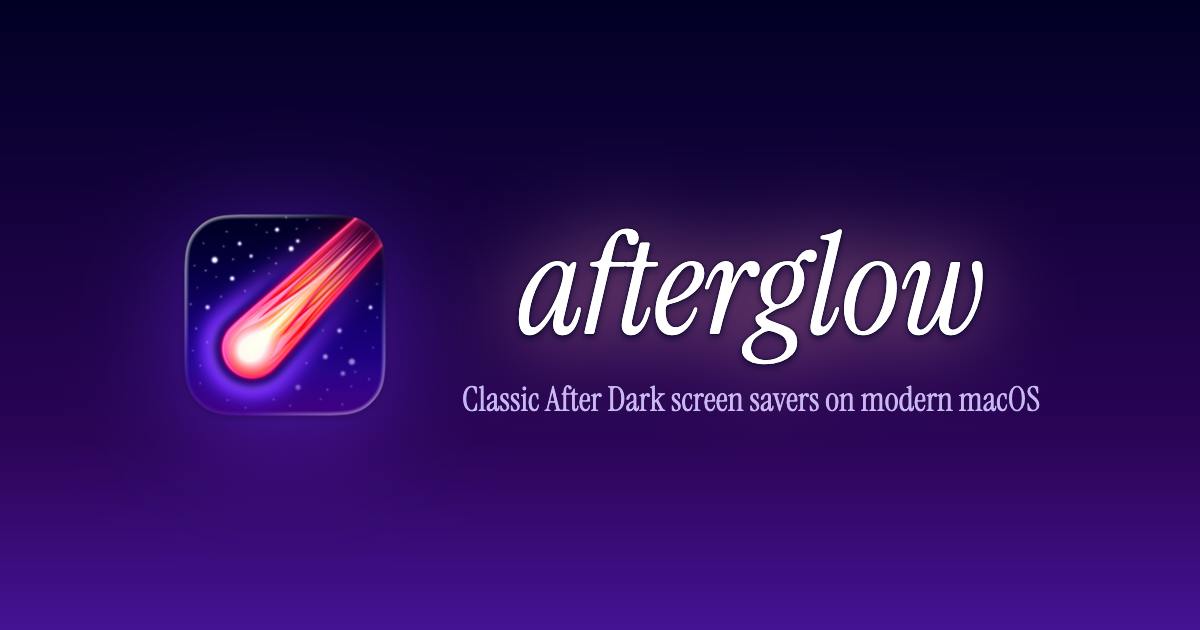
Afterglow brings '90s After Dark screensavers to modern macOS natively, no ROM needed.
Afterglow is a macOS tool by indie developer Jeff Halter that lets fans of the '90s After Dark screensaver suite relive classics like Flying Toasters and Fish! natively, without emulators or ROM files. Listed under Mac and Funny on Product Hunt, it's clearly positioned as a nostalgia-driven niche product rather than a productivity tool. The article explores how screensavers have shifted from a practical CRT fix to a cultural artifact, and flags key challenges for the project going forward: macOS API compatibility, module expansion, and the IP implications of recreating classic software.
A Screensaver Tool Built for Nostalgics
For those who lived through the early days of personal computing, "Flying Toasters" is practically a shared cultural memory. These classic modules from the After Dark screensaver suite were among the most recognizable animations on Mac and Windows desktops throughout the '90s. Now, a tool called Afterglow lets these beloved screensavers run natively on modern macOS.
Afterglow launched on Product Hunt with 77 upvotes and 4 comments, ranking 16th for the day under the Mac and Funny categories. It was created by developer Jeff Halter.
The Core Appeal: No ROM Required, Native Execution
What makes Afterglow worth paying attention to is that it runs After Dark screensaver modules natively — with no ROM files required. That's a fundamentally different approach from traditional emulation.
In the past, getting these old animations to run on modern systems typically meant firing up a vintage computer emulator and hunting down original software disk images or ROM files — a process that was tedious at best and legally murky at worst. Afterglow brings these classic modules directly to macOS in a native format, dramatically lowering the barrier to a nostalgic experience.
The officially listed modules include:
- Flying Toasters — the most iconic symbol of After Dark
- Fish! — the classic aquarium screensaver
- Starry Skyline — a cityscape meets starfield animation
- Plus "more" modules not yet individually listed
After Dark was originally released by Berkeley Systems in 1989 and was one of the first commercially successful screensaver suites, especially popular on the Mac before expanding to Windows. Its underlying modules were built on the Classic Mac OS screensaver extension architecture — a precursor to the modern .saver plugin format — and relied on 68k or early PowerPC instruction sets and system calls. Running these modules on modern macOS isn't just a matter of crossing CPU architectures (from x86 to Apple Silicon); it also means bridging the environmental gap between Classic Mac OS and macOS (built on Darwin/BSD). Afterglow's ability to run these modules natively without a ROM strongly suggests the developer has rewritten or ported the original module logic rather than relying on Classic environment emulation or full-system emulators like SheepShaver — a technical undertaking far more substantial than it might appear.
Why Tools Like This Still Have an Audience
In an era when most screens simply go to sleep, screensavers are no longer necessary for preventing CRT phosphor burn-in. They've evolved into something more expressive — a statement of aesthetics and nostalgia. Afterglow being listed under "Funny" says something about its positioning: this isn't a serious productivity tool. It's a product with strong emotional resonance.
The value of nostalgic software like this lies precisely in its ability to trigger memory and recognition within a specific audience. For many longtime Mac users, Flying Toasters is a genuine cultural artifact from the early digital age. Faithfully recreating it for modern systems is, in essence, an act of digital preservation and revival.
For some context: screensaver technology emerged as an engineering solution to the "phosphor burn-in" problem with CRT monitors — prolonged static images would permanently degrade the phosphor coating, leaving ghost images on screen. From the late 1980s through the '90s, screensavers rapidly evolved from utility to personal expression, and After Dark caught that wave perfectly. Once LCD panels made burn-in a non-issue, operating systems shifted to simply turning off the backlight (sleep/hibernate) as the preferred power-saving strategy. Today, both macOS and Windows default to putting the display to sleep rather than running a screensaver — which has paradoxically given screensavers greater cultural and aesthetic significance. Running one is now a deliberate choice, almost a ritual.
Observations and Takeaways
As a product, Afterglow is a small but focused indie developer project. It has no grand feature ambitions — it serves a specific, well-defined niche: making old screensavers run on new systems.
For those watching this space, a few things are worth keeping in mind:
- Compatibility is everything. macOS's ongoing adjustments to its screensaver API mean tools like this require consistent developer attention to stay current with system updates.
- Module breadth determines long-term staying power. The official listing mentions "and more" — whether the developer continues adding classic modules will significantly affect user retention.
- Copyright boundaries deserve scrutiny. Despite the "no ROM required" approach, how the original screensaver IP is handled remains an unavoidable question for any revival project like this.
For users who fondly remember After Dark — or anyone with an interest in retro computing culture — Afterglow offers a near-zero-cost way to revisit the past. It won't make you more productive, but during a quiet moment when your screen goes idle, it just might take you back to that era when a fleet of toasters soared across your monitor.
Related articles
Losing Memory After Claude Code Context Compaction? Practical Solutions Explained
Claude Code losing debugging context after compaction? Learn how CLAUDE.md persistent memory, manual /compact control, session splitting, and external records solve the problem.
Great at the Work, Bad at the Hustle: A Realistic Look at Monthly Income for Independent Professionals
Can a 12-year professional who hates self-promotion earn well independently? Explore real Reddit insights on income expectations and non-sales client acquisition paths.
COGEXT: A Verification Layer That Gives AI Agents a "Lie Detector"
COGEXT is a verification layer for AI Agents like LangChain that extracts commitments and cross-checks them against Gmail, GitHub, and other external systems to catch agents lying about task completion.