Agent-Dev-Team: A Deep Dive into the Tool-Agnostic Hierarchical Engineering Agent Framework
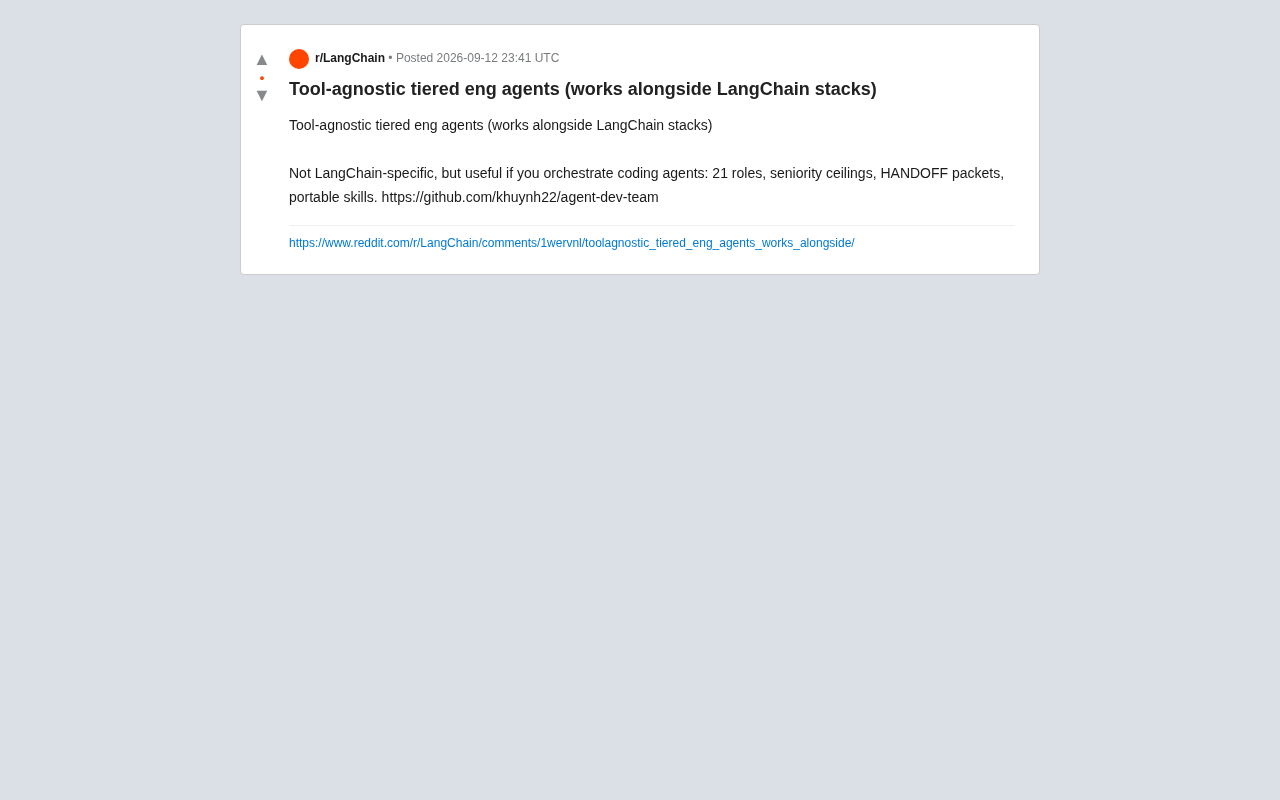
agent-dev-team organizes AI coding agents into 21 engineering roles using a tool-agnostic hierarchical collaboration framework.
agent-dev-team is an open-source multi-agent coding framework that organizes AI agents into 21 specialized roles modeled after real engineering teams, rather than relying on a single general-purpose model. Three key mechanisms define the design: seniority ceilings that limit lower-level agents' decision-making scope, structured HANDOFF packets that standardize information handoffs between roles to reduce context loss, and portable skills that keep capabilities decoupled from specific tools. Positioned as tool-agnostic, it can be layered on top of existing stacks like LangChain and LangGraph rather than replacing them. The project is still early-stage, and the real-world effectiveness of its 21-role structure and handoff mechanisms warrants further validation.
Against the backdrop of multi-agent orchestration becoming an increasingly mainstream direction in AI programming, an open-source project called agent-dev-team has been gaining attention on Reddit. It centers on a "tool-agnostic" design philosophy that can run alongside mainstream orchestration stacks like LangChain, offering a structural approach to organizing coding agents that more closely mirrors a real engineering team.
Core Concept: Treating AI Agents Like an Engineering Team
Unlike the common "one agent to rule them all" approach, agent-dev-team draws inspiration from real software company org structures, splitting AI agents into 21 distinct roles. These roles span the various functions of an engineering team, allowing each agent to focus on what it does best — rather than expecting a single general-purpose model to simultaneously handle architecture design, coding, testing, and code review.
The immediate benefit of this division of labor is clearly defined boundaries of responsibility. When tasks are broken down and assigned to specific roles, the model's context becomes more focused, and output quality tends to be more consistent. For complex engineering tasks that require long chains of collaboration, role-based design is an important evolutionary direction for current multi-agent systems.
Three Key Mechanisms
The project documentation highlights several design decisions worth unpacking.
Seniority Ceilings
Each role is assigned a "seniority ceiling," meaning there is a clear hierarchical division of decision-making authority and task complexity across different agents. The value of this mechanism lies in preventing lower-level agents from overstepping their judgment — making calls that exceed their capability — thereby reducing the overall error risk in the system. In real teams, the output of junior engineers typically requires review by senior staff. This framework explicitly encodes that constraint into the agent collaboration workflow.
HANDOFF Packets
The most failure-prone point in multi-agent systems is often the "handoff" — how the output of one agent gets passed completely and accurately to the next. agent-dev-team introduces structured HANDOFF packets to address this pain point, establishing clear format and content standards for information transfer between roles, reducing context loss and semantic drift.
Context loss and semantic drift are two classic forms of information degradation in multi-agent systems. Context loss occurs when key decision rationale, constraints, or intermediate states generated by an upstream agent are truncated or omitted during handoff, causing downstream agents to continue working with incomplete information. Semantic drift is subtler — even when information is passed in full, different agents may interpret the same description differently. In natural-language interfaces especially, terminology ambiguity accumulates and amplifies as the chain grows longer. The value of structured packets lies precisely in forcing defined fields, formats, and required content — converting implicit context into explicit structure, compressing the opportunity for both types of error at the protocol level.
Portable Skills
The "portable skills" design echoes the framework's overall tool-agnostic positioning. Skills are not bound to any specific framework or tool, and can theoretically be reused across different orchestration environments. This is also why the project emphasizes that it can run "in parallel with LangChain stacks" rather than replacing them — it acts more as an organizational logic layer than yet another closed orchestration engine.
The core design challenge in multi-agent systems is balancing "specialization through division of labor" against "overhead from coordination." Common orchestration patterns include: Sequential Pipeline (the output of one agent feeds directly into the next), Supervisor-Worker (a scheduling agent decides how to distribute tasks), and Parallel Execution (multiple agents simultaneously handle independent subtasks).
agent-dev-team's role-based design most closely resembles the Supervisor-Worker pattern, but explicitly codifies coordination logic through seniority ceilings and HANDOFF packets rather than relying entirely on dynamic judgment from a scheduling agent. Understanding this context helps evaluate where this framework is most applicable.
What "Tool-Agnostic" Actually Means
The author explicitly states this solution is "not LangChain-specific." For developers already using LangChain, LangGraph, or other orchestration frameworks, this is particularly important. It lowers the cost of migration and experimentation: you don't need to tear down your existing tech stack to layer in this hierarchical role-based organizational approach.
In today's highly fragmented AI coding tool ecosystem, tool-agnostic design has real appeal. Developers are broadly concerned about being locked into a single framework, and a role system that works across different stacks can theoretically extend the lifespan of any solution built on top of it.
LangChain and LangGraph are the most widely used AI orchestration frameworks today. LangChain provides foundational capabilities like chained calls, tool integration, and memory management; LangGraph is its graph-computation extension, allowing developers to model agent workflows as directed graphs (with loops and conditional branching), making it better suited for scenarios requiring state management and complex control flows. What both share is that they are "orchestration engines" — responsible for scheduling the execution order of agents and tools — but neither imposes built-in constraints on the organizational question of "what role should each agent play." That's precisely the gap
agent-dev-teamtargets. It doesn't replace the orchestration engine; it layers a team structure specification on top of it. This is why the two approaches don't conflict.
An Honest Assessment: More Validation Still Needed
It's worth noting that this article is based on a brief Reddit introduction and the project link (github.com/khuynh22/agent-dev-team), so available information is limited. The actual effectiveness and maturity of the claimed features — 21 roles, seniority ceilings, HANDOFF mechanisms — still need to be verified through real-world project use.
The direction of layered multi-agent design is sound, but real-world implementation often faces challenges: high coordination overhead, elevated token consumption, and difficult debugging. For interested developers, the recommendation is to start with small-scale tasks to evaluate whether the handoff mechanism and role division genuinely fit your workflow before committing to deep integration.
Summary
agent-dev-team represents a pragmatic exploration in the multi-agent coding framework space: rather than aiming to become the next dominant orchestration engine, it offers a composable, portable team-based organizational logic. For developers exploring AI programming team collaboration who don't want to be locked into a single tool, it's worth adding to the shortlist for a real-world test run.
Related articles
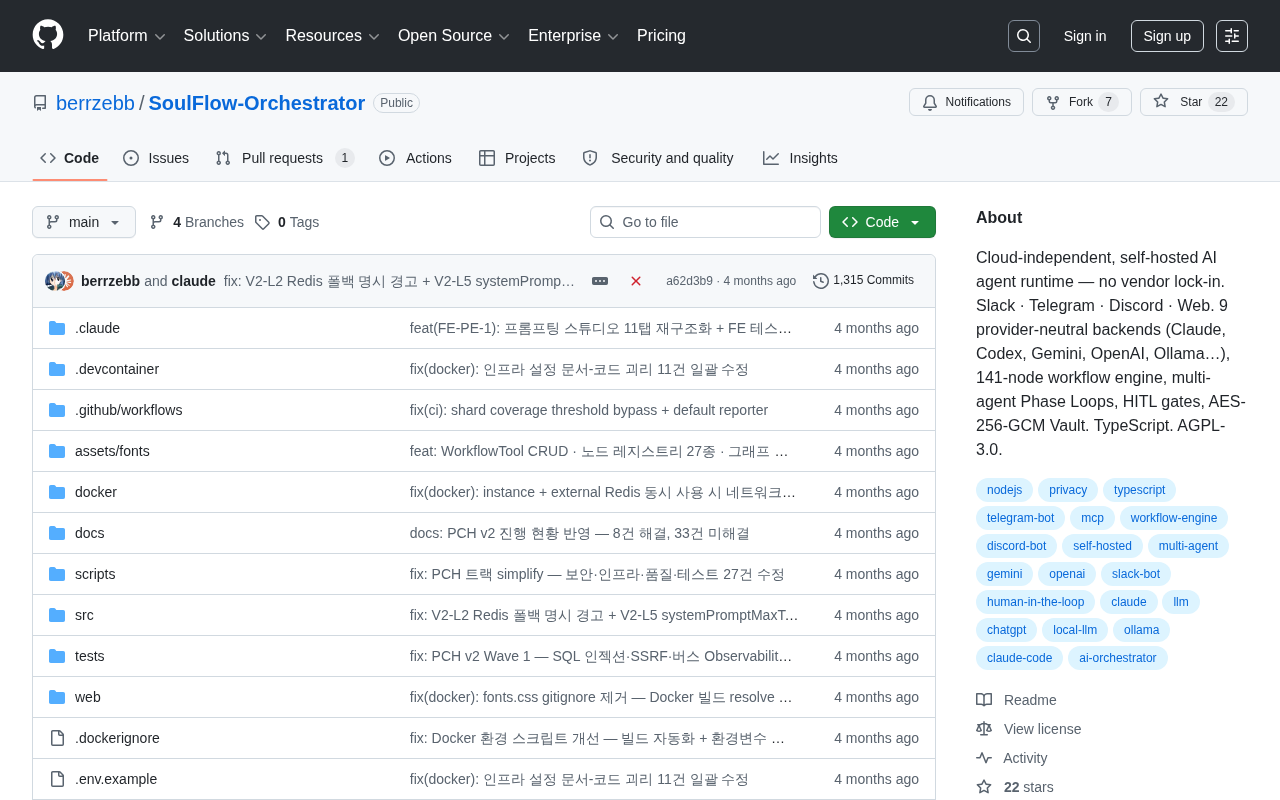
SoulFlow-Orchestrator: A Self-Hosted, Vendor-Lock-In-Free AI Agent Runtime
SoulFlow-Orchestrator is an open-source, self-hosted AI agent runtime with no vendor lock-in. Supports 9 neutral backends (Claude, OpenAI, Ollama), 141-node workflow engine, multi-agent loops, and HITL gates.
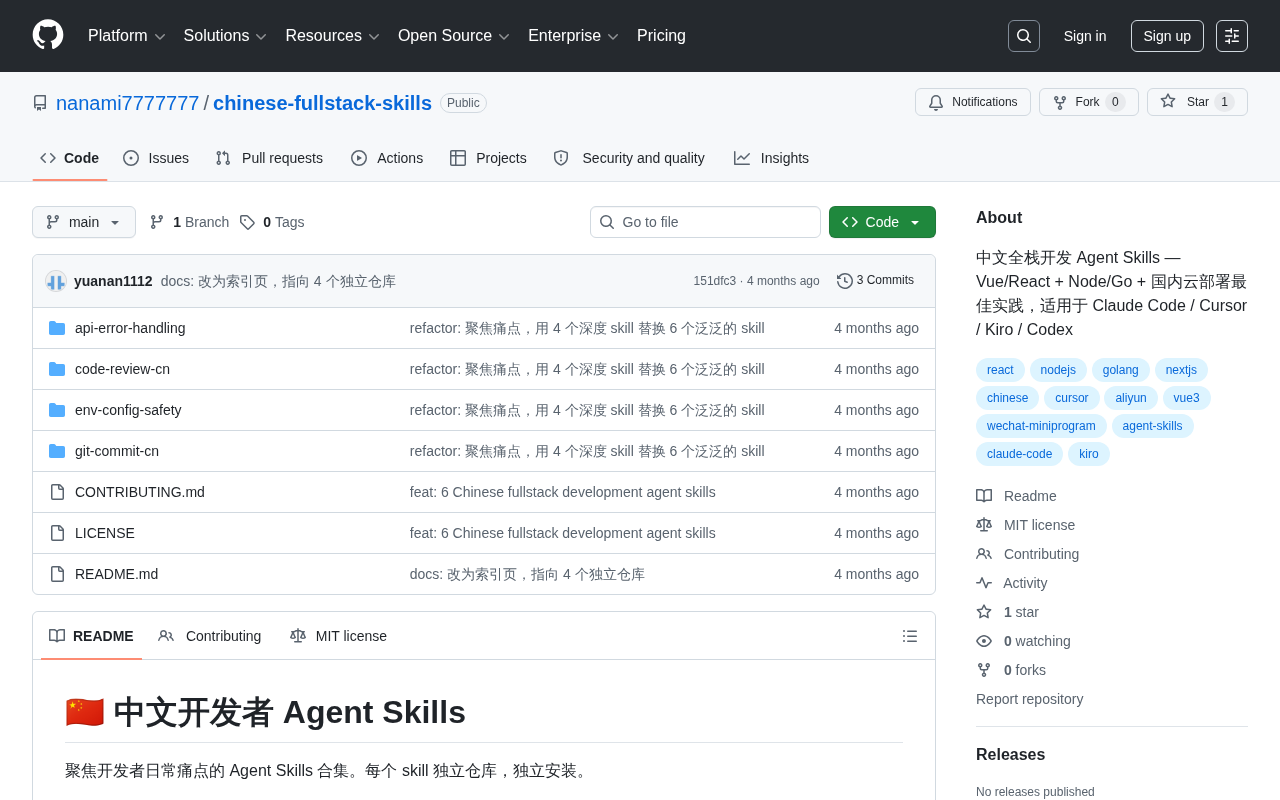
Chinese Full-Stack Agent Skills: A Skill Library Tailored for Domestic AI-Assisted Development
chinese-fullstack-skills is an Agent Skills library for Chinese full-stack development, covering Vue/React, Node/Go, and domestic cloud deployment best practices. Compatible with Claude Code, Cursor, Kiro, and Codex.
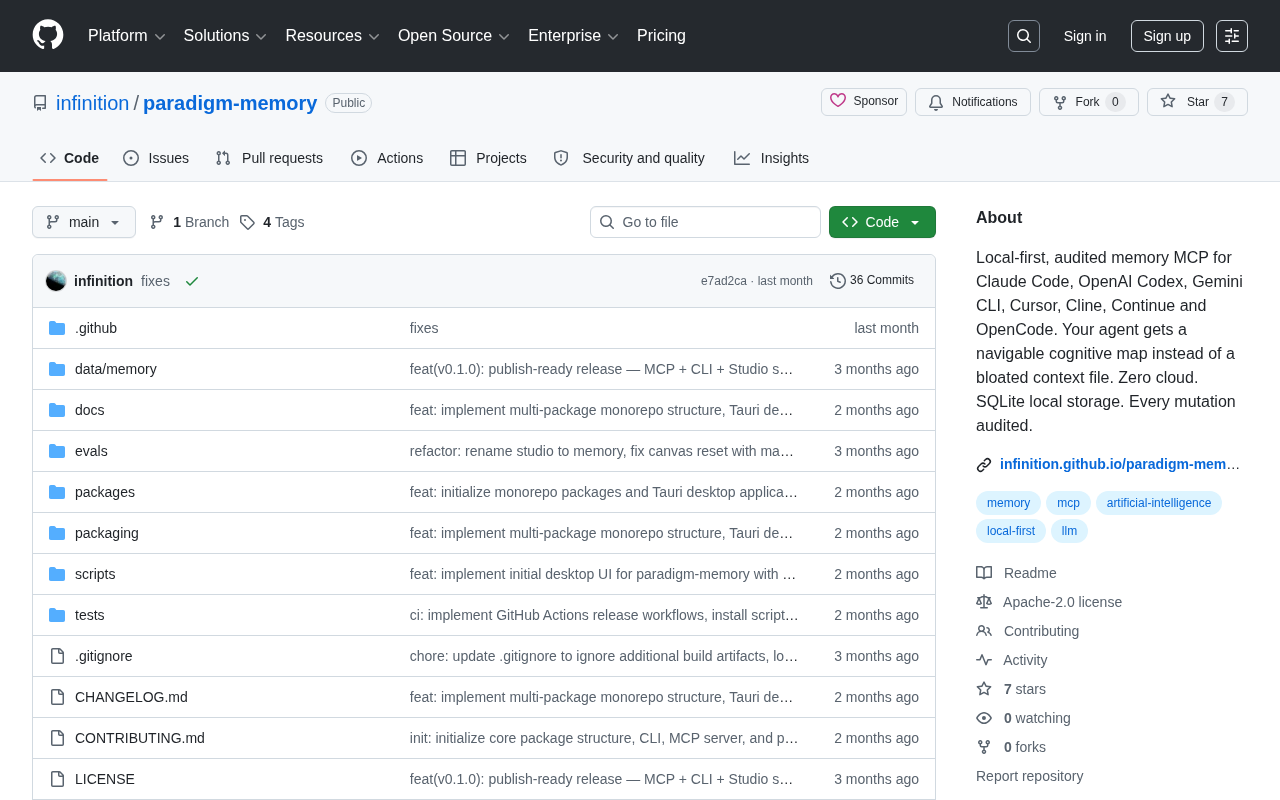
Paradigm Memory: A Local-First Memory System for AI Coding Assistants
paradigm-memory is a local MCP memory tool for Claude Code, Cursor, and Cline. It uses SQLite local storage, zero cloud, full audit trails, and a navigable cognitive map instead of bloated context files.