Agentic Coding in Practice: Test Feedback Loops, LLM Benchmarks, and an Engineering Adoption Guide
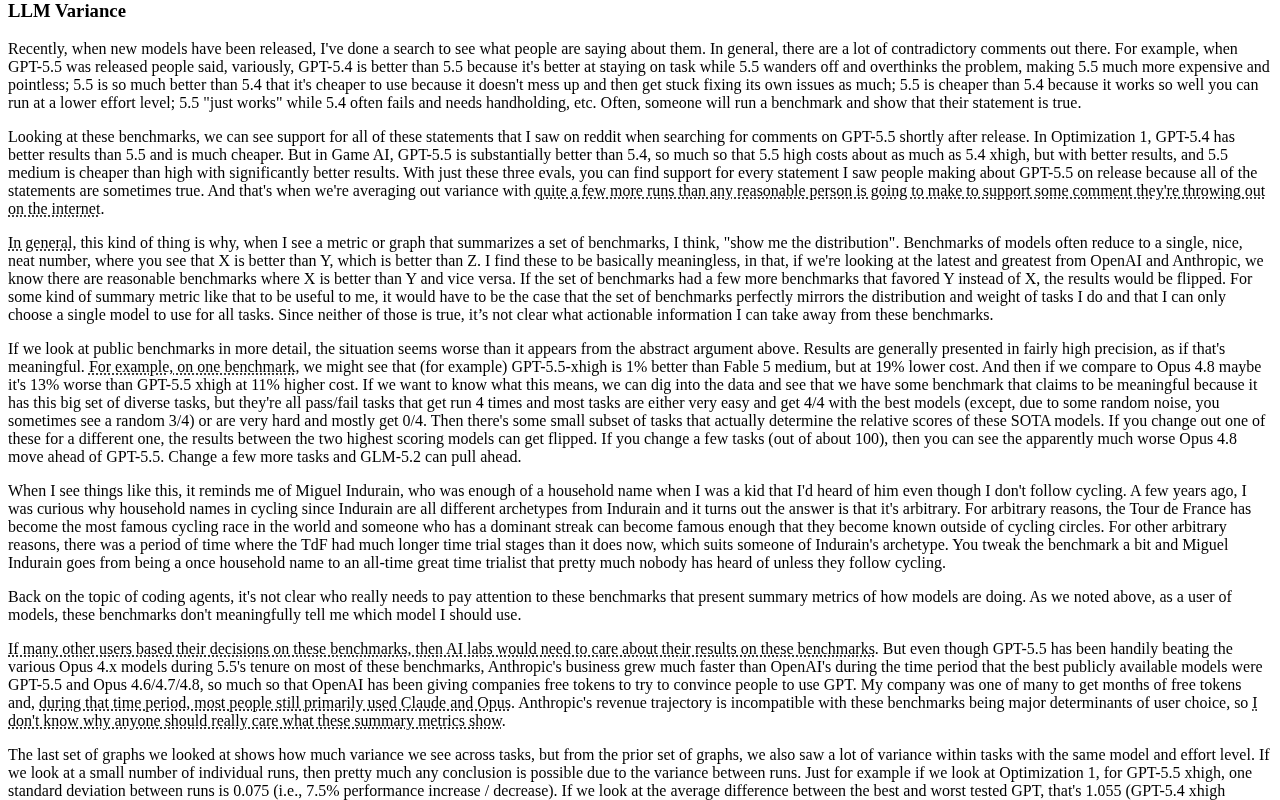
Practical guide to agentic coding: test loops, LLM benchmark limits, and real engineering adoption.
This article explores the core practices of agentic coding: how test-driven feedback loops enable AI to self-correct, why LLM benchmark scores don't always reflect real-world capability, and key engineering lessons on context management and human-AI collaboration—helping dev teams truly get value from AI programming tools.
Introduction: From Code Completion to Autonomous Programming
As the capabilities of large language models (LLMs) continue to evolve, AI programming is moving beyond simple code completion toward more autonomous Agentic Coding. This is no longer about getting AI to help you write a single function—it's about letting AI act like a real developer: understanding requirements, writing code, running tests, fixing errors, and continuously iterating within that loop.
A recent note on agentic coding that sparked discussion on Hacker News touched on several core issues in today's AI-assisted development: Agentic Test Processes, LLM benchmarks, and lessons learned from deploying these tools in real engineering environments. Although the original discussion didn't generate huge buzz, it reflected the pragmatic thinking of frontline developers as they move AI programming tools from "trying something new" to "production-ready."
What Is Agentic Coding
From Passive Tools to Proactive Agents
Traditional AI programming assistants are essentially passive—they wait for your input and then offer suggestions. The key difference with agentic coding is "autonomy": once given a high-level goal, an AI agent can independently break down the task, execute multiple steps, and dynamically adjust its strategy based on feedback.
A typical agentic workflow looks like this:
Receive task → Analyze codebase → Write/modify code → Run tests → Analyze results → Fix issues → Loop until passing
Throughout this process, the AI agent must continuously interact with the development environment (file system, terminal, testing framework), not merely generate text snippets.
The Test-Driven Feedback Loop: The Key to AI Self-Correction
Agentic coding places special emphasis on the importance of the test-driven feedback loop. The logic is straightforward: without a reliable verification mechanism, AI-generated code lacks trustworthiness. Tests play the role of an "objective referee" in agentic coding, providing the AI with a clear signal of success.
A well-designed test loop allows the AI agent to self-correct without human intervention:
- When tests fail: error messages become critical input for the AI to understand the problem
- When tests pass: the agent judges the task complete and stops iterating
This mechanism, driven by test results as feedback, is the technical foundation that makes agentic coding truly viable.
The Real-World Challenges of LLM Benchmarks
The Gap Between Benchmark Scores and Real Capabilities
To evaluate the coding capabilities of LLMs, the industry commonly relies on benchmarks such as HumanEval and SWE-bench. However, a common piece of feedback from frontline developers is that high benchmark scores don't always translate into real-world efficiency.
The reason is that benchmarks are often standardized, isolated coding problems, whereas real software engineering involves massive context, legacy code, ambiguous requirements, and complex dependencies. A model that shines on HumanEval may make frequent errors when facing a real project with hundreds of thousands of lines of code, due to insufficient context understanding.
How to Choose the Right Model for Your Team
For engineering teams, model selection can't be based on leaderboards alone. A more practical approach is to build an evaluation set that closely matches your own business scenarios, focusing on:
- The accuracy of code modifications
- Adherence to the project's coding standards
- The maintainability of generated code
- The convergence speed within a test-driven loop
It's especially important to note that agentic scenarios place higher demands on a model's tool-calling and long-horizon planning abilities—dimensions that traditional code-generation benchmarks struggle to adequately measure.
Lessons Learned from Engineering Adoption
Context Management: The Most Overlooked Bottleneck
When actually using agentic coding tools, context management is one of the biggest engineering challenges. Although LLM context windows keep expanding, the scale of real codebases often far exceeds what a model can effectively handle.
How to intelligently retrieve relevant code and construct precise context directly determines the quality of an AI agent's performance. This also explains why many advanced coding agents integrate capabilities like code retrieval and semantic search—at their core, they are all solving the fundamental problem of "what information to feed the AI."
Human-AI Collaboration, Not Full Replacement
At the current stage, agentic coding is better positioned as a capability amplifier rather than a "complete replacement." Developers need to:
- Set clear task boundaries
- Maintain oversight at key decision points
- Conduct necessary code reviews of AI-generated code
Fully autonomous coding agents excel at handling well-defined, testable tasks, but for stages requiring deep business understanding—such as architecture design and requirement clarification—the judgment of human engineers remains indispensable.
Conclusion: The Future Direction of Agentic Coding
Agentic coding is in a critical phase of rapid evolution. The test-driven feedback loop makes AI self-correction possible, while the limitations of benchmarks remind us not to blindly worship leaderboard data.
For development teams, the pragmatic strategy is to:
- Build a model evaluation system that closely matches real scenarios
- Invest in the engineering of context management
- Maintain reasonable boundaries for human-AI collaboration
As model capabilities and tool ecosystems continue to mature, agentic coding is poised to evolve from today's assistant role into an indispensable part of the software development process.
The real value lies not in whether AI can independently write code, but in whether it can reliably amplify developer productivity in real, complex engineering environments. This path is still being explored, but the direction is becoming increasingly clear.
Related articles
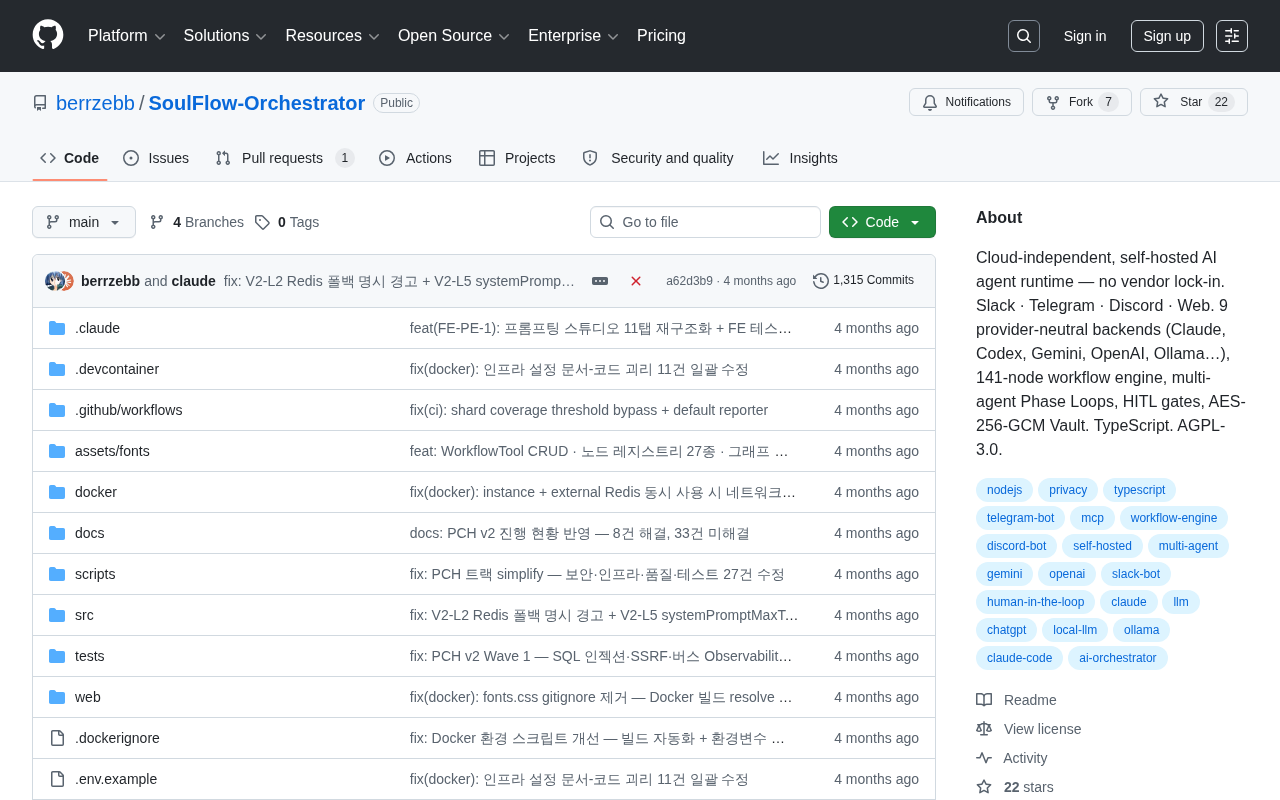
SoulFlow-Orchestrator: A Self-Hosted, Vendor-Lock-In-Free AI Agent Runtime
SoulFlow-Orchestrator is an open-source, self-hosted AI agent runtime with no vendor lock-in. Supports 9 neutral backends (Claude, OpenAI, Ollama), 141-node workflow engine, multi-agent loops, and HITL gates.
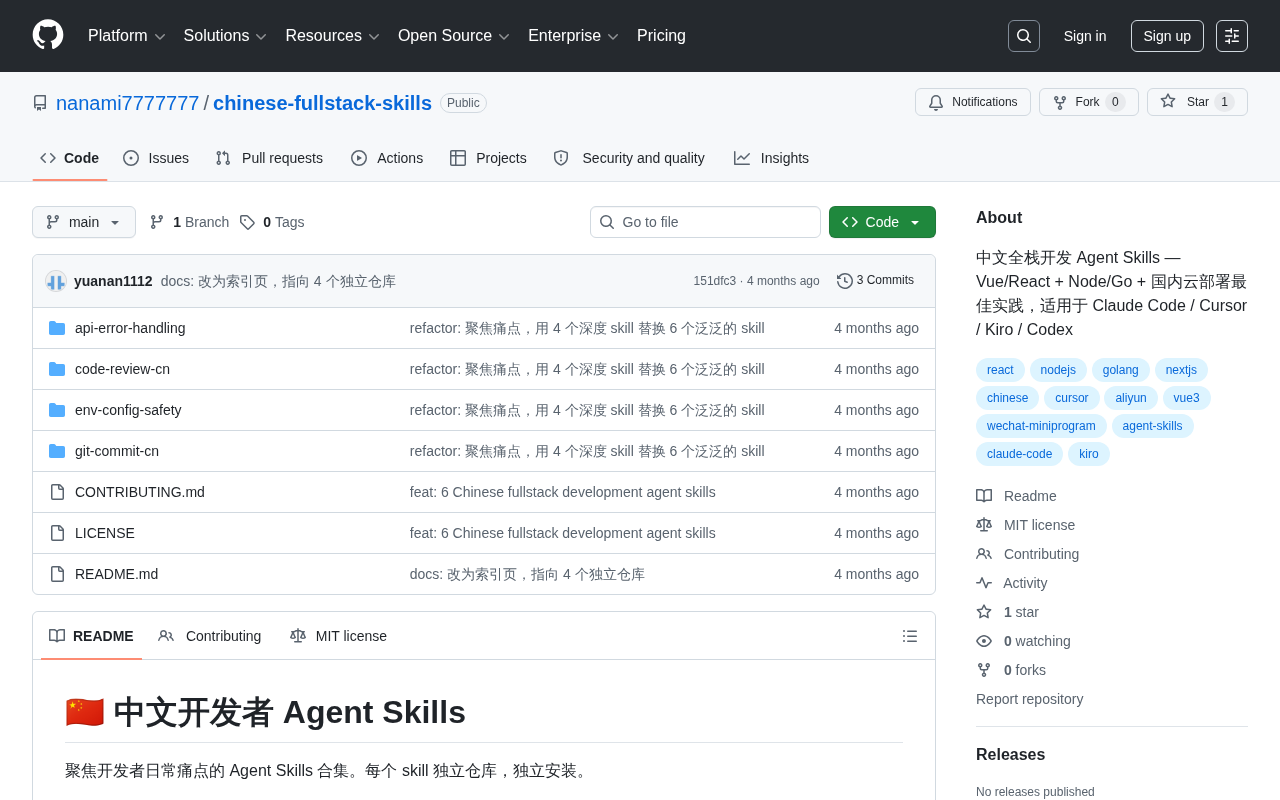
Chinese Full-Stack Agent Skills: A Skill Library Tailored for Domestic AI-Assisted Development
chinese-fullstack-skills is an Agent Skills library for Chinese full-stack development, covering Vue/React, Node/Go, and domestic cloud deployment best practices. Compatible with Claude Code, Cursor, Kiro, and Codex.
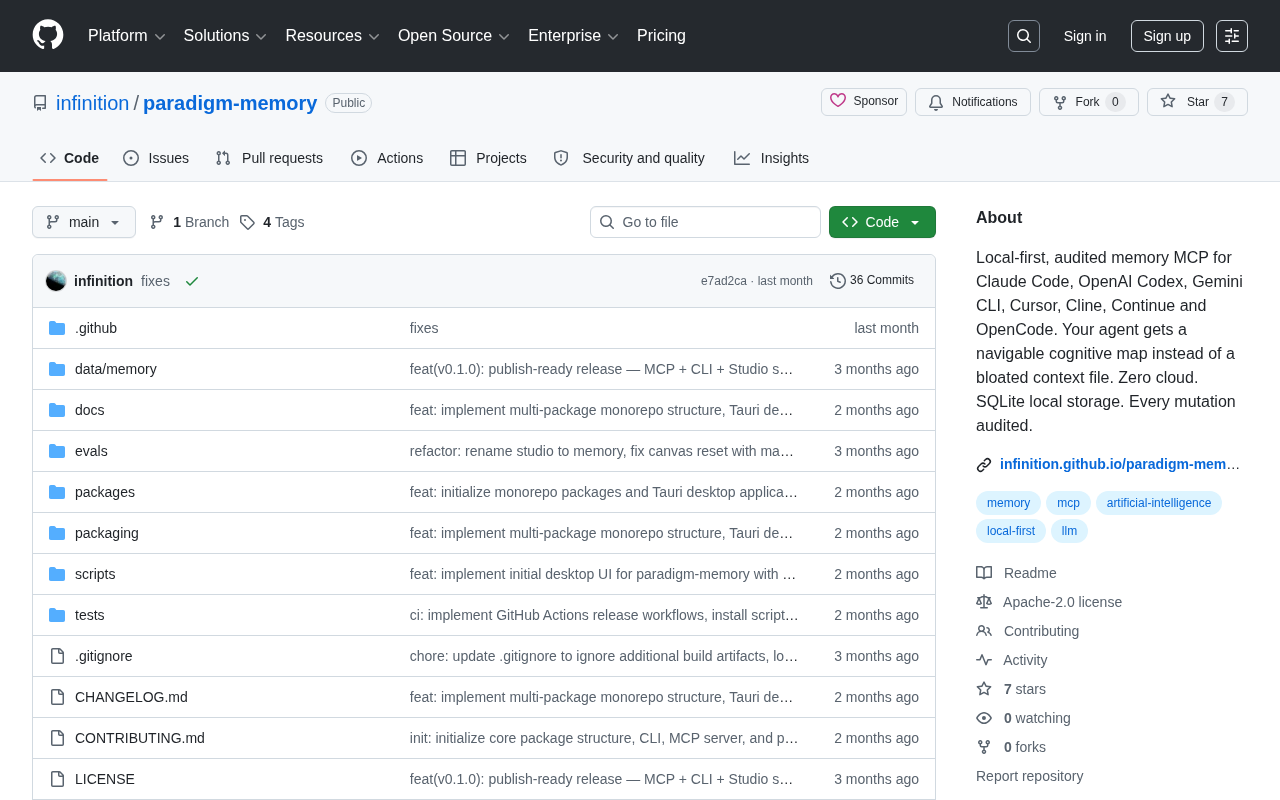
Paradigm Memory: A Local-First Memory System for AI Coding Assistants
paradigm-memory is a local MCP memory tool for Claude Code, Cursor, and Cline. It uses SQLite local storage, zero cloud, full audit trails, and a navigable cognitive map instead of bloated context files.