AgentScope: A Deep Dive into an Observable, Trustworthy Multi-Agent Development Framework
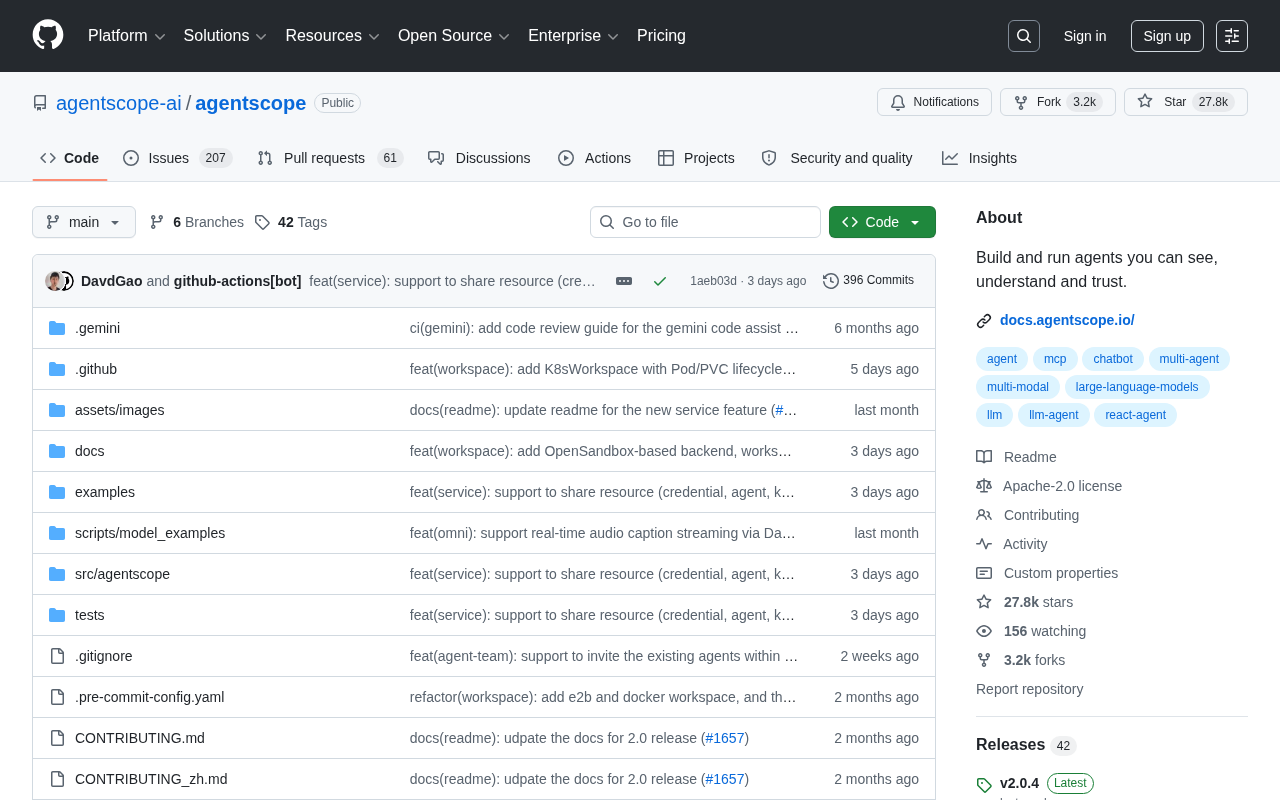
AgentScope is an open-source Python multi-agent framework that makes AI agent behavior visible, understandable, and trustworthy.
AgentScope is an open-source Python multi-agent framework whose core design philosophy — "see, understand, trust" — directly addresses the biggest engineering pain point in LLM-driven agent systems: behavioral opacity. Unlike experimental frameworks that only focus on functionality, AgentScope embeds observability into its architecture with clear logs, structured message streams, and traceable call chains. With 24,000+ GitHub stars and 2,600+ forks, it has achieved strong community maturity. Its use cases span multi-agent collaboration, tool-augmented applications, and enterprise production environments requiring audit trails — representing a pivotal shift in agent frameworks from "can it run" to "can it be trusted."
What Is AgentScope
AgentScope is an open-source Python framework focused on building, running, and managing AI agents. Its positioning is captured perfectly in the project's tagline — "Build and run agents you can see, understand and trust." This single sentence cuts right to the most critical pain point in agent development today: as LLM-driven agents grow increasingly complex, developers often have no visibility into their internal execution, making it nearly impossible to establish trust in their behavior.
On GitHub, the project has accumulated over 24,000 stars and 2,600+ forks, reflecting substantial traction in the open-source community. For a Python-based agent framework, this level of community engagement signals that it has moved well past early validation and into a stage of widespread adoption and evaluation.
Core Philosophy: See, Understand, Trust
AgentScope places observability at the center of its framework design — a sharp contrast to many agent tools that prioritize feature accumulation over transparency.
See
When an agent executes a task, it typically involves multiple rounds of reasoning, tool calls, and message passing. Traditional black-box execution leaves developers with only the final output, with no insight into what happened in between. AgentScope emphasizes giving developers direct visibility into every step an agent takes — something that is absolutely critical for debugging and optimization.
Understand
Visibility alone isn't enough. The framework also needs to present runtime data in a way that humans can actually comprehend. This means clear logs, structured message streams, and traceable call chains that help developers understand why an agent made a particular decision.
Trust
When developers can both see and understand an agent's behavior, trust follows naturally. Deploying AI agents in production requires a foundation of trust — especially in scenarios involving critical business decisions — and that trust cannot be built on opacity.
Why Observability Is the Key to Agent Frameworks
The complexity of multi-agent systems tends to grow exponentially. When multiple agents collaborate, pass messages, and call external tools, a failure at any single point can cause the entire system to behave unexpectedly. Without robust observability, developers facing failures are essentially left guessing.
By treating transparency as a first principle, AgentScope is fundamentally addressing the maintainability challenges of real-world engineering. This is what sets it apart from purely experimental frameworks that only care about whether something runs — it focuses on the end-to-end experience of taking agents from prototype to production.
For enterprise applications, this design philosophy is especially critical. An AI system that cannot explain its own behavior will struggle to pass compliance reviews and will make it difficult to quickly identify root causes when issues arise.
Technical Ecosystem and Use Cases
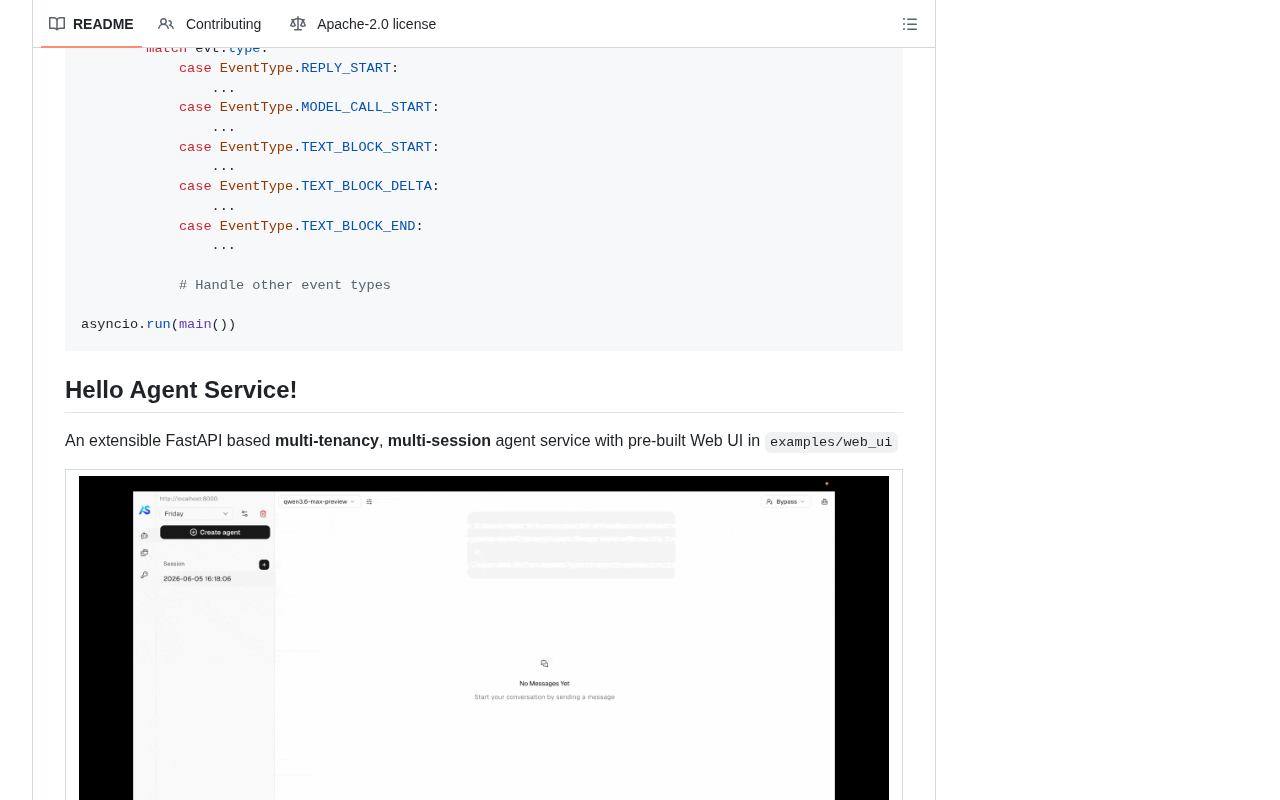
As a pure Python framework, AgentScope fits naturally into the mainstream AI development stack. Python's rich machine learning ecosystem and strong integration capabilities with major LLM services allow developers to start building their own agent applications with minimal friction.
Typical use cases include:
- Multi-agent collaboration systems: Where multiple agents divide responsibilities to complete complex tasks
- Tool-augmented agents: Applications that need to call external APIs, databases, or search engines
- Production systems requiring audit trails: Enterprise scenarios with high transparency requirements for agent behavior
- Education and research: Learning environments that need to clearly expose agent internal mechanisms
Community Activity and Project Maturity
The 24,000+ stars reflect real developer community endorsement of this direction. In a landscape flooded with agent development frameworks, projects that manage to stand out and maintain high visibility typically share two characteristics: they solve genuine pain points, and they are actively maintained and iterated upon.
The 2,664 forks indicate that a significant number of developers aren't just bookmarking the project — they're actually rolling up their sleeves to build on it or contribute back. This level of active participation is vital for the long-term health of any open-source project.
Conclusion
AgentScope represents an important evolutionary direction for agent development frameworks — shifting from pure feature implementation toward prioritizing observability, understandability, and trustworthiness. As AI agents are deployed in more real-world business contexts, this design philosophy centered on transparency and maintainability may well become the defining differentiator in the next wave of agent framework competition.
For teams currently evaluating agent development tools, AgentScope is well worth considering — particularly when a project has high requirements for observability and production-grade reliability.
Related articles
Recurrent Looped Transformers: A New Architecture That Teaches Models to "Think Again"
Recurrent Looped Transformers repeatedly apply the same Transformer block to decouple compute from parameters, enabling variable reasoning depth without scaling model size.
"Everyone Else Should Slow Down AI — Except Me": The Double Standard Trap in Big Tech
A viral Hacker News quip — "Everyone should slow down AI, except me" — exposes the double-standard at the heart of the AI race. We unpack why it's a Prisoner's Dilemma, not mere hypocrisy, and why institutions matter more than moral self-discipline.
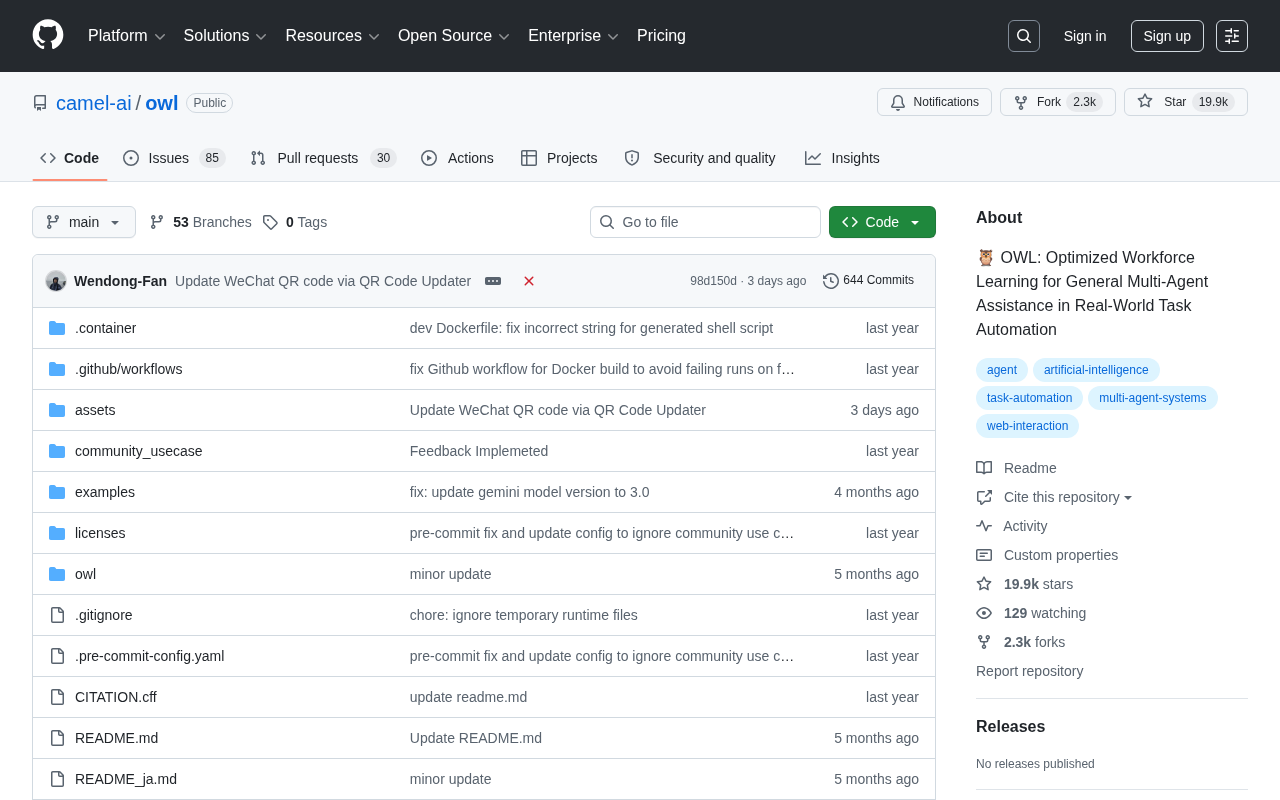
OWL: An Open-Source Multi-Agent Framework for Real-World Task Automation
OWL (Optimized Workforce Learning) is an open-source multi-agent framework by camel-ai for real-world task automation, with 19K+ GitHub Stars. Learn how it works.