AI Agent for Beginners: One Cognitive Map to Understand the Full Picture

Build a cognitive map of Agent concepts before diving into tools — structure first, details second.
This article tackles the "familiar fragments" trap that trips up most AI/Agent beginners — you've heard all the words but can't connect them. Rather than rushing into specific tools, it proposes building a cognitive map that assigns each concept (prompt engineering, RAG, memory, workflows, plugins/MCP, multi-agent systems) to the specific problem it solves. On the practical side, it emphasizes that everyday users need judgment skills above all: knowing which tasks suit Agents, how to evaluate output quality, and how to tell genuine business requirements from buzzword chasing. The recommended learning path is structure first, tool details second.
Why You Always Get Stuck at the Agent Starting Line
After encountering terms like large language models and intelligent agents, most people immediately hit the same wall: What exactly do I need to learn about Agents?
Every day online, someone is talking about LLMs, prompt engineering, RAG, workflows, plugins, MCP, multi-agent systems, memory, and knowledge bases. Each term feels vaguely familiar as you hear it — but once the explanation ends, all those concepts are like loose parts scattered across a table. You recognize each piece on its own, but you have no idea how the machine is supposed to run, or which screw you're supposed to tighten first.

This feeling of "familiar fragments" is the biggest trap for beginners. You've seen all the words, but without a structure to connect them, learning becomes more confusing and anxiety-inducing the further you go. The real problem isn't that any individual concept is too hard — it's that you're missing a global view that positions every concept clearly.
Not a Technical Architecture Diagram — A Cognitive Map
The solution isn't to memorize more terminology, or to debate which LLM is the most powerful or which platform is easiest to use. The first step is to build a cognitive map.
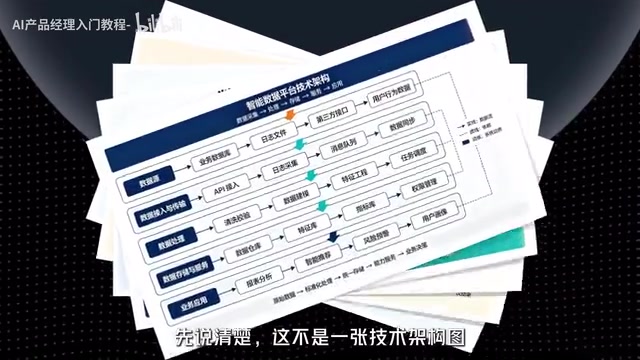
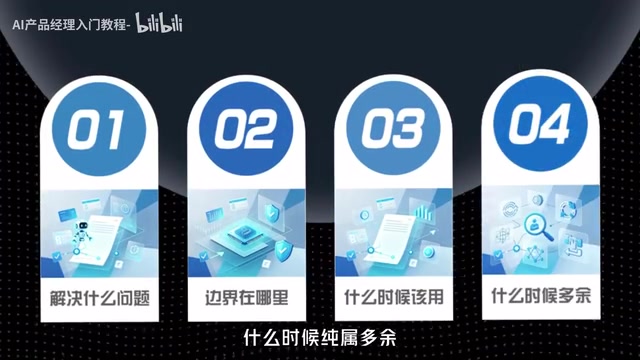
This map isn't a technical architecture diagram, and it isn't an engineer's glossary. Its purpose isn't to make you memorize terms — it's to help you understand what problem each concept is actually solving, where its boundaries lie, when it's the right tool, and when it's completely unnecessary.
In other words, concepts like prompt engineering, RAG, workflows, plugins, MCP, multi-agent systems, memory, and knowledge bases each occupy a different "layer" and solve different problems. Once you understand how they divide the work, they stop feeling like dozens of unrelated names. Instead, you can see how an Agent system operates step by step, from input to output.
Every Concept Answers a Specific Question
- Prompt engineering addresses: How do you get the model to understand your intent?
- RAG and knowledge bases address: How do you get the model to use information it was never trained on?
- Memory addresses: How do you keep context consistent across a conversation or task?
- Workflows address: How do you orchestrate multiple steps in a coherent sequence?
- Plugins and MCP address: How do you let the model call external tools and access external data?
- Multi-agent systems address: How do you get multiple roles to collaborate on complex tasks?
Map every term to "what problem it solves," and the fragments will fall naturally into place.
RAG (Retrieval-Augmented Generation) works by retrieving relevant text snippets from an external knowledge base before calling the LLM, then injecting those snippets into the prompt so the model can generate answers grounded in up-to-date or private information. The core problem it solves: an LLM's parametric knowledge is frozen at training time, so it can't inherently "know" your company's internal documents, the latest policies, or real-time data. RAG lets the model "borrow" external information on the fly — without retraining. A knowledge base is the storage layer for all that retrievable text, typically implemented as a vector database that converts text into numerical embeddings and retrieves them by semantic similarity.
MCP (Model Context Protocol) is an open protocol introduced by Anthropic that defines a standardized communication interface between large language models and external tools or data sources. Think of it as the "USB standard" for AI — any tool built to the MCP spec can be called directly by any MCP-compatible model or Agent framework, with no custom integration code required per tool. The difference from "plugins": plugins are typically proprietary extension mechanisms tied to a specific platform, whereas MCP aims for cross-platform, cross-model interoperability.
How Far Does an Everyday Person Need to Go?
This map isn't meant to turn you into an AI product builder the moment you finish reading it. It's meant to help you make sense of the real decisions you'll encounter in your day-to-day work.
In practice, the high-frequency questions look like this:
- Can this task actually be handed off to an Agent?
- If I hand it off, how do I validate the quality of the output?
- What does it cost to run one cycle?
- Is it safe to feed our company's data into it?
None of these are purely technical questions — but every single one requires a basic understanding of what Agents can and can't do. Knowing which tasks are a good fit, which aren't, where the costs come from, and where the risks lie matters far more than knowing how to call a few APIs.
Separating Real Requirements from Buzzword Chasing
When your manager says "let's build an intelligent agent" — is that a genuine requirement, or just following the hype?

This is the most common fault line at the deployment stage. Many projects fail not because the technology couldn't be built, but because no one stopped to ask at the start: Does this scenario actually need an Agent? Could a fixed workflow — or even a simple script — do the job just as well? Over-engineering and chasing trends are often more destructive than any technical difficulty.
With a cognitive map in hand, you can make a calmer judgment during the requirements phase: which tasks genuinely warrant the complexity of an Agent, and which would be more stable and cheaper with a lighter solution. This is exactly the step that transforms conceptual knowledge into real productivity.
From Understanding to Practice
Once you've built this map, diving deeper into Agents, RAG, MCP, LangChain, LangGraph, multi-agent architectures, and enterprise-level project implementation becomes a much clearer journey. You'll know exactly which layer of the map each part of the stack corresponds to, and which capability gap it fills.
For everyday learners, the right order of entry into the Agent world is: build structure first, fill in details second. Understand how the concepts relate to each other and where each one's boundaries are — then start hands-on practice with specific tools. Both learning efficiency and the quality of real-world implementation improve dramatically as a result.
LangChain is currently the most widely used framework for AI application development. It provides standardized components for assembling LLMs, prompt templates, tool calling, memory modules, and RAG pipelines together. LangGraph is a graph-based orchestration framework built on top of LangChain, specifically designed for building multi-step Agent workflows with branching logic. It abstracts the execution process into directed graphs of "nodes" and "edges," making state transitions in an Agent's decision-making clearer, more debuggable, and better suited for complex scenarios involving iterative reasoning or multi-agent collaboration. For beginners, LangChain is the right starting point for building the core capabilities of a single Agent; LangGraph becomes the essential tool when you advance to enterprise-grade, multi-step automation.
Related articles

AI Is Not a Replacement: Human-AI Collaboration Through the Lens of Factory Root Cause Analysis
Starting from factory root cause analysis, this article explains how AI accelerates evidence chain construction rather than replacing human experts, exploring the pragmatic implementation logic and business value of 'AI supporting people rather than replacing them.'

AI Agent Decision Auditing: Building an Evidence Chain in Regulated Workflows
Starting from a Reddit discussion, this article analyzes three core issues in AI agent decision auditing within regulated workflows: what fields audit records should contain, how to handle feedback latency for erroneous decisions, and how to continuously calibrate LLM judge consistency with human judgment.

Apple Opens Multiseat Subscription Purchasing: App Subscriptions Can Now Be Sold in Bulk to Businesses and Schools
Apple opens multiseat purchasing for auto-renewable subscriptions: businesses and schools can bulk-buy via Apple Business and Apple School Manager, adding or removing seats anytime. Enabled by default in App Store Connect—developers should verify settings; group purchasing sandbox testing opens October 2026.