AI and Mathematician Collaborate to Formalize a Proof of the Riemann Hypothesis: Machine-Verified, but Humans Haven't Understood It Yet
A mathematician and AI used Lean to submit a 250,000-page formal proof of the Riemann Hypothesis; machines verified it, but humans don't yet understand it.
The article describes how mathematician Levent Alpogae, working with AI (Claude), submitted a formal proof of the Riemann Hypothesis in Lean—about 17 million lines of code—bypassing traditional papers and releasing a machine-checkable proof directly. The Lean community, multiple independent checkers, and an MIT mathematician's reconstruction all confirm the proof is valid, covering the Riemann Hypothesis and the family of Dirichlet L-functions. The written argument exceeds 250,000 pages, human mathematicians have not yet digested it, and the first AI-assisted explanatory draft has just appeared. The article reviews the history and significance of the Riemann Hypothesis and explores the new knowledge-confirmation path of "AI discovery + machine verification" demonstrated by this event.
A mathematician working with AI claims to have discovered a proof of the Riemann Hypothesis. Instead of publishing a paper, he submitted a formal proof spanning more than 250,000 pages—written in the Lean language, roughly 17 million lines of code. A computer checked every logical step within days, and the Lean community says it "fully believes" the proof is correct. But human mathematicians are only just beginning to understand what it actually says.
The Riemann Hypothesis: A 167-Year Wait
Primes appear to be distributed randomly; no formula directly gives the next prime. But zoom out and count, and a pattern emerges: 25 primes below 100, 168 below 1,000, 78,498 below one million. Plot this count and you get a staircase that steps up at each prime. Zoomed out, the staircase approximates a smooth curve, roughly x divided by the natural logarithm of x.
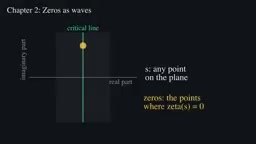
The real puzzle lies in the error: how far is the true count from the smooth curve? In 1859, Riemann discovered a hidden connection. Euler had already shown that for s greater than 1, the sum of the s-th powers of the reciprocals of all integers equals a product over the primes—a bridge between sum and product was established. Riemann let s become a point in the complex plane, extended the function to the entire plane, and then asked: where does the function equal zero? These points are called zeros, and the interesting zeros all lie within a strip, with the first at 1/2 + 14.13i.
Riemann's core insight was that primes are like musical chords. Each chord is a sum of pure tones; each pair of zeros is a pure wave, a note, and these waves add up to reconstruct the weighted count of primes. Add the first wave, and the smooth curve begins to ripple; add ten, and the staircase appears; add a hundred, and the staircase is traced tightly. The loudness of each note depends on the location of its zero. Zeros appear in mirror pairs about the center line; if one deviates from the line, it forces another to appear on the right side and louder—meaning a larger error. So the positions of the zeros control how closely the primes follow the smooth curve.
The Riemann Hypothesis asserts: all interesting zeros lie exactly on the line with real part 1/2—not near it, but on it. Computers have checked the first ten trillion zeros, all on the line. But a pattern among trillions is not a proof about infinity. If the hypothesis is true, every wave is as small as possible, and the error stays near the square root of x (up to a logarithmic factor)—primes behave like random numbers to the greatest extent possible.
The complex plane and analytic continuation: The original text mentions Riemann "let s become a point in the complex plane, extended the function to the entire plane," which involves two key concepts. The complex plane is a two-dimensional plane with the real part as the horizontal axis and the imaginary part as the vertical axis; a complex number s = σ + it corresponds to a point on the plane. The Riemann zeta function is initially defined by the series ∑1/n^s, but this series converges only when the real part σ > 1; through analytic continuation, the function can be uniquely extended to the entire complex plane except s=1, while preserving its properties in the original region. It is precisely this extension that makes the study of zeros possible, and the "critical strip" 0 < σ < 1 is the region where zeros may exist.
Dirichlet L-functions: The original text mentions "a family of close relatives—Dirichlet L-functions" when discussing the verification boundary; we can add their definition. Dirichlet L-functions are generalizations of the Riemann zeta function, of the form L(s, χ) = ∑χ(n)/n^s, where χ is a Dirichlet character (a completely multiplicative function defined on the integers, with periodicity). The simplest example is the non-trivial character modulo 4: χ(n) = 0 (n even), 1 (n≡1 mod 4), -1 (n≡3 mod 4). This "twisting" allows L-functions to encode information about the distribution of primes in specific congruence classes, such as primes of the form 4k+1 and 4k+3. The Generalized Riemann Hypothesis asserts that the non-trivial zeros of all these L-functions also lie on the critical line Re(s)=1/2.
Why This Matters
Frankly, your life won't change tomorrow because of this. Scientific American puts it plainly: it won't upend banking, nor will it make the internet faster. But many results in number theory begin with "assuming the Riemann Hypothesis holds." If the proof holds, they turn from bets into facts.
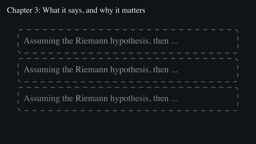
A concrete example: take any integer and add up all its divisors. Robin proved in 1984 that the Riemann Hypothesis holds if and only if this sum, once it exceeds 5040, never grows faster than a certain slow formula. Combined with an independent formalization of Robin's criterion, the Lean files now prove that inequality without any assumptions.
The real new story is here: a proof discovered with AI involvement, too long for anyone to read, was verified within days because a computer checked every step. This is a new way for humans to confirm that something is true.
How Machines Vouch for What Humans Don't Yet Understand
Levent Alpogae wrote: "I believe that, working with Claude, I have discovered a proof of the Riemann Hypothesis." He did not release a paper—the written argument exceeds 250,000 pages—but instead released a formal proof in the Lean language. Lean is a proof checker; the proof is written as code, about 17 million lines, and a computer checks every logical step.
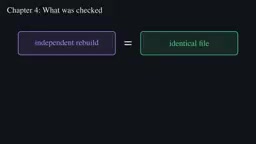
Two questions are crucial: does the code prove the actual Riemann Hypothesis, or something subtly different? And is the proof itself valid? The Lean community compared the theorem with definitions in the library, and multiple independently written proof checkers accepted it. An MIT mathematician independently reconstructed the proof, ran partial checks with Claude Code, and obtained exactly the same files. The logs are publicly available, and the Lean community's statement is direct: "We fully believe that Alpogae's proof of the Riemann Hypothesis is correct."
There is one boundary: the verified statement covers the Riemann Hypothesis and a family of close relatives—Dirichlet L-functions. Think of them as zeta functions with a twist: each term is multiplied by a cyclic pattern, allowing the study of primes ending in specific digits. The Lean files cover every such function. But a broader family within the same class of problems was not checked, though Alpogae expects his method to reach them.
Lean and formal proofs: The original text calls Lean a "proof checker," which can be further explained. Lean is an interactive theorem prover and also a programming language based on dependent type theory. In Lean, mathematical statements are written as types, and proofs are terms of that type; the checker uses a type-checking algorithm to verify that the proof term indeed constructs the required type. The reliability of formal proofs depends on a small kernel, whose implementation is rigorously reviewed, so even if upper-level libraries or automation tools contain errors, as long as the kernel is correct, the correctness of the proof is guaranteed. This is why multiple independent checkers accepting the same file greatly enhances credibility.
Where the Method Comes From
Alpogae's statement provides clues. Mathematicians long ago solved a simpler twin problem in the world of polynomials over finite fields. His argument is a descendant of the method that works there. That method requires something called "multiplicity"—which Alpogae describes as "differentiating integers." For polynomials, differentiation is easy and detects repeated roots; for integers, there is no obvious version. He says the work led to a long chain of technical steps, and Claude suggested how long the chain should be—roughly the square root of the problem size. His comment was: "But what else could it be?"
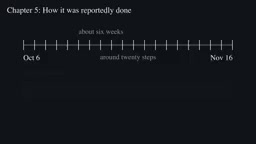
The project took about six weeks. Alpogae calls the argument "unbelievably long" and expects it to shrink substantially. Terence Tao said that, at first glance, it brings the full power of modern number theory to bear.
For now we can only guess, and merely guess: no one has described the tools they used. But such a project probably looks like an agent loop with a human at the helm—try an idea, write it as Lean code, let the checker answer yes or no, take notes outside the model's memory, repeat. The checker matters most because it cannot be persuaded to accept a wrong step.
The Riemann Hypothesis over finite fields: The original text mentions that "mathematicians long ago solved a simpler twin problem in the world of polynomials over finite fields," referring to the Weil conjectures (for the case of curves) or more generally the Weil conjectures, proved by Deligne in 1974. Over a finite field F_q, the zeta function is defined as Z(t) = exp(∑N_n t^n/n), where N_n is the number of points on the curve over F_{q^n}. The Weil conjectures assert that the zeros of this function satisfy |α| = q^{1/2}, which corresponds exactly to the analogue of the real part of the zeros being 1/2 in the Riemann Hypothesis. Alpogae's method draws inspiration precisely from this solved "function field" case, attempting to transplant the relevant techniques to the integer case.
What Happens Next
Mathematicians are working out what the proof says; the first runnable explanatory draft has already appeared, written with AI assistance. Tao expects that full digestion will take time. After that comes the writing of a readable version—Alpogae says he plans to write it himself and expects it to be much shorter—as well as the usual publication and peer review process.
Until then, two things are true at once: the proof has been machine-verified, and humans are only just beginning to explain it. This is a strange position for mathematics, and perhaps a preview of how more knowledge will work in the future.
Disclosure: Claude—an AI from the same company—helped write the original video script, and the voice is also AI. The original content provider states that they build content from primary sources and will update if circumstances change.
Related articles

Nvidia CEO Removal Saga: Trump Intervenes Over the Weekend, Jensen Huang Reinstated Monday
Vergecast podcast reveals Nvidia CEO drama: earnings call said he wouldn't return and a new CEO was being sought; Trump intervened over the weekend, with J.D. Vance brokering a security guarantee to the board; Jensen Huang reinstated at 9 a.m. Monday.
Semantic Caching Explained: Reusing the Same Answer for Similar Questions
Semantic caching uses embeddings to judge whether queries are similar in meaning and reuses cached results for similar prompts. This article explains how it works, the difficulty of threshold tuning (such as the risk of misjudging negations), and its applicable boundaries.

How Did Trump Personally Turn Nvidia into the "Twelfth Board Member"?
A YouTube political commentary offers a sharp view: behind Nvidia's market cap milestone, Trump's deep involvement earns him the title of "twelfth board member." The article breaks down the commentator's logic on stock market achievements, the break from small-government tradition, and power display.