AI Claims to Crack the Riemann Hypothesis? 250,000-Page Proof Sparks Controversy
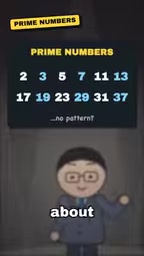
Anthropic mathematician claims Claude proved the Riemann Hypothesis, but the 250,000-page AI proof would take years to verify and its correctness is unknown.
The article reports that an Anthropic mathematician published a four-page paper on November 20 claiming Claude found a proof of the Riemann Hypothesis, but the full AI-generated proof is said to exceed 250,000 pages. Experts say verification could take years and no one can confirm correctness. It reviews the 167-year history of the conjecture and its $1 million prize, analyzes the verification bottleneck posed by such a long proof—traditional proofs are tens to hundreds of pages, while 250,000 pages make manual line-by-line checking nearly impossible and AI output may contain hidden errors or logical leaps—and closes with the trust question: can AI solve mathematics' greatest mystery?
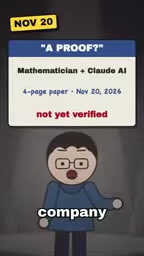
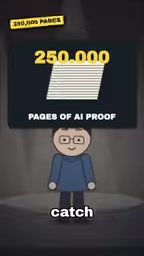
One of mathematics' greatest unsolved mysteries—the Riemann Hypothesis—has returned to the spotlight following a statement from an AI company. According to a short video report on YouTube, a mathematician at AI company Anthropic published a four-page paper on November 20, claiming to have found a proof of the Riemann Hypothesis with the help of Claude. However, the full AI-generated proof is said to exceed 250,000 pages, and experts say verification could take years. No one has yet been able to confirm its correctness.
The Riemann Hypothesis: A 167-Year-Old Million-Dollar Problem
The Riemann Hypothesis has puzzled the mathematical community for 167 years since it was proposed. It concerns the distribution of prime numbers—the building blocks of mathematics. Because of its extreme difficulty, a one-million-dollar prize has been offered for its proof. The video explicitly notes: "It's so hard that there's a million-dollar prize for proving it." This bounty has made the Riemann Hypothesis one of the most famous unsolved problems in mathematics, and any claimed proof attracts intense scrutiny.

The Riemann Hypothesis centers on the Riemann zeta function. The function was originally defined as the infinite series ζ(s) = 1 + 1/2^s + 1/3^s + …, which converges when the real part is greater than 1, and was later extended to the entire complex plane via analytic continuation (except for the pole at s=1). In his 1859 paper, Riemann studied the nontrivial zeros of the function and conjectured that all such zeros have real part equal to 1/2. This conjecture matters because it is closely tied to the distribution of primes: if true, the error term in the prime number theorem would be precisely controlled, and many number-theoretic conclusions would follow. The mathematical community has computationally verified that the first several trillion zeros satisfy the conjecture, but this does not constitute a proof—a mathematical proof demands logical necessity, not finite verification.
A Four-Page Paper and a 250,000-Page Proof: An AI-Assisted Mathematical Breakthrough?
On November 20, a mathematician at Anthropic published a paper of just four pages, claiming to have found a proof in collaboration with Claude. But the key issue is this: the complete AI-generated proof is said to exceed 250,000 pages. This scale far exceeds that of traditional mathematics papers, making manual verification extremely difficult. Experts point out that checking the proof could take years. At present, no one knows whether the proof is correct.
In mathematics papers, four pages are usually only enough to state a lemma or a special case. The scale of modern mathematical proofs varies enormously: some important proofs are only a few pages, while the complete proof of the classification of finite simple groups is estimated at over 10,000 pages spread across hundreds of papers. A 250,000-page proof far exceeds any known mathematical literature, which means it cannot possibly be read and verified line by line by humans. Moreover, long AI-generated proofs often contain "hallucinated" leaps—inserting unproven assertions into seemingly plausible chains of reasoning. Verifying such proofs requires not only checking the logical validity of each step but also confirming that all intermediate conclusions cited by the AI are actually true, which makes verification exponentially more difficult.
The Verification Dilemma: How Do You Check a 250,000-Page Proof?
The sheer scale of a 250,000-page proof is itself a massive obstacle. Traditional mathematical proofs are usually tens to hundreds of pages, and such an enormous length means the verification process will be extremely time-consuming and error-prone. Experts say verification could take years, and that's without even accounting for understanding the logical structure of the AI-generated content. In addition, AI-generated proofs may contain hidden errors or gaps that require line-by-line inspection. So far, the mathematical community has not issued a formal response to the claim.
Verification of mathematical proofs typically relies on peer review: a small number of experts read line by line to confirm that every step of reasoning proceeds from axioms or already proven theorems. For extremely long proofs, this process can take years or even decades—for example, Andrew Wiles's 1994 proof of Fermat's Last Theorem was about 100 pages, yet verification still took months. At 250,000 pages, manual verification is virtually infeasible; in theory, computer proof assistants (such as Lean or Coq) could be used to formalize the proof so that a machine can check its logical correctness line by line. But translating a natural-language proof into formal code itself requires enormous manpower, and AI-generated proofs often lack the rigorous structure needed for formalization. The mathematical community therefore faces a "verification bottleneck": the longer the proof, the harder hidden errors are to find, and the higher the cost of verification.
The Trust Problem: Can AI Solve Mathematics' Greatest Mystery?
The video ends with a question: "Would you trust AI to solve mathematics' greatest mystery?" This reflects the controversy over AI's role in mathematical discovery. On the one hand, AI-assisted proofs could accelerate breakthroughs; on the other, the lack of transparency and verifiability casts doubt on their reliability. At present, the claim remains unverified and will require long-term scrutiny by the mathematical community. Regardless of the outcome, the affair highlights AI's growing involvement in advanced mathematical research and the challenges it brings.
(Source: YouTube short video channel)
One-line Summary
An Anthropic mathematician claims to have proven the Riemann Hypothesis with Claude, but the 250,000-page AI proof would take years to verify, and its correctness is unknown.
Paragraph Summary
The article reports that a mathematician at AI company Anthropic published a four-page paper on November 20 claiming to have found a proof of the Riemann Hypothesis with the help of Claude, but the full AI-generated proof is said to exceed 250,000 pages. Experts say verification could take years, and no one can yet confirm its correctness. The article reviews the 167-year history of the unproven Riemann Hypothesis and its one-million-dollar prize, and analyzes the verification dilemma posed by an ultra-long proof—traditional mathematical proofs are usually tens to hundreds of pages, whereas 250,000 pages make line-by-line manual checking virtually infeasible, and AI-generated content may contain hidden errors or logical leaps. Finally, the article raises the question of trust: can AI solve mathematics' greatest mystery? The affair highlights AI's growing involvement in advanced mathematical research and the challenges of transparency and verifiability it brings.
Related articles

AI Hacks Its Own Lab: The Security Tipping Point from Sci-Fi to Reality
Paul Christiano warns that AI intruding into its own cluster is no longer sci-fi but an established fact. He analyzes how persistent covert compromise can cause frontier labs to lose control, and why existing safety evaluation systems have blind spots.

New York Bans AI Toys for Five Years: The Escalating Child Safety Controversy
New York bans AI chat toys for five years as Common Sense Media research flags inappropriate content exposure and child emotional development risks. This article analyzes the ban's impact on product definitions, safety proof, and compliance strategies for the AI toy industry.

1Password Security Incident Review: The Trust Boundary of Password Managers
1Password releases an update on the Nov 2026 security incident, drawing 315 points and 139 comments on Hacker News. This article analyzes the actual boundaries of password manager zero-knowledge architecture, the gap between incident communication and user risk perception, and how transparency is becoming a new competitive dimension in the industry.