AI + CNC Machining: The Intelligent Programming Revolution Behind $1 Prototyping

AI replaces costly CNC programming, enabling sub-dollar prototyping through automated toolpath generation.
A CNC service provider offers prototyping at just 6 RMB by using AI to automate the most expensive step in machining — programming. AI automatically identifies part features and generates toolpaths in seconds, eliminating hours of manual work. This flywheel model grows stronger with more data, breaking cost barriers for small-batch manufacturing and hardware startups.
The Secret Behind $1 Prototyping
Recently, a CNC machining service provider launched an ultra-low-cost prototyping service at just 6 RMB (less than $1), sparking considerable attention and skepticism — can they really avoid losing money at this price? The answer is: yes, because they've used AI to replace one of the most expensive steps in the traditional machining workflow — programming.
This isn't a simple price war or cash-burning subsidy. It's a fundamental change to the cost structure of CNC machining through AI technology. This case is worth a close look for anyone interested in practical AI applications and smart manufacturing.
Where Are the Cost Pain Points in Traditional CNC Machining?
To understand AI's value in CNC machining, you first need to understand the complete workflow of traditional CNC machining. After a customer sends drawings to a factory, a programming engineer must complete the following tasks:
- Open the file and analyze the part's 3D structure
- Plan the machining paths (toolpaths)
- Determine which equipment to use and how many operations are needed
- Plan the workholding/fixturing method
- Select cutting tools and machining strategies

This process is known as "CNC programming" and is one of the most labor-intensive and expensive steps in the entire machining workflow. For a structurally complex part, programming time can stretch to over a dozen hours.
For large-volume orders, programming costs can be amortized across each part, so the impact is minimal. But for small-batch or single-piece prototyping orders, programming costs can't be spread out — sometimes the programming fee is even higher than the actual machining cost.
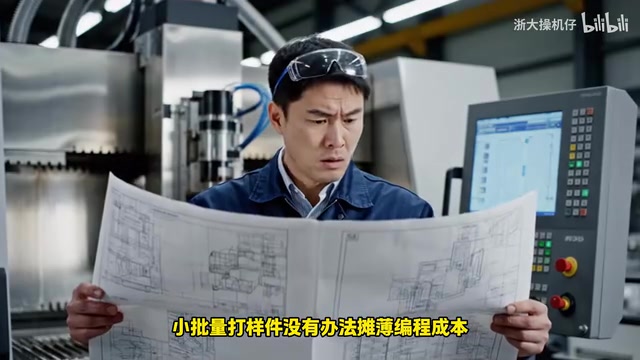
This is the fundamental reason traditional factories are reluctant to take small-batch orders — it's not that they can't do it technically, but that the economics don't work out. Small customers can't find factories willing to take their orders, and factories don't want to invest significant programming labor for just a few parts. Both sides of the supply-demand equation suffer.
How AI Auto-Programming Restructures the CNC Workflow
The core innovation of this service provider is handing the programming step over to AI. The specific workflow is as follows:
- Users upload 3D model files on the website
- AI automatically identifies the part's geometric features
- The system automatically generates complete machining toolpaths
- Toolpath data is transmitted directly to the CNC machine for execution
The entire process no longer requires human programming engineers. Programming costs go from "over a dozen hours of manual labor" to "a few seconds of computation" — this is the underlying logic that makes $1 prototyping viable.
From a technical perspective, this is essentially a CAM (Computer-Aided Manufacturing) automation problem. Traditional CAM software (such as Mastercam, UG, etc.) is powerful but still heavily depends on the operator's experience and judgment. AI's involvement automates decision-making in feature recognition, strategy selection, and path planning — converting a master programmer's experience into algorithmic capability.
Current Capability Boundaries and Growth Potential of AI Programming
Interestingly, this AI system currently cannot cover all types of parts. For some particularly complex structures that the system cannot recognize, the traditional manual programming workflow is still required. This is an honest admission and aligns with the objective reality of AI technology development.
But this model has a natural flywheel effect:
- The more models users upload, the richer the AI's training data becomes
- The richer the data, the more part features the AI can recognize
- The stronger its capabilities, the wider the range of orders it can handle
- More orders bring even more training data
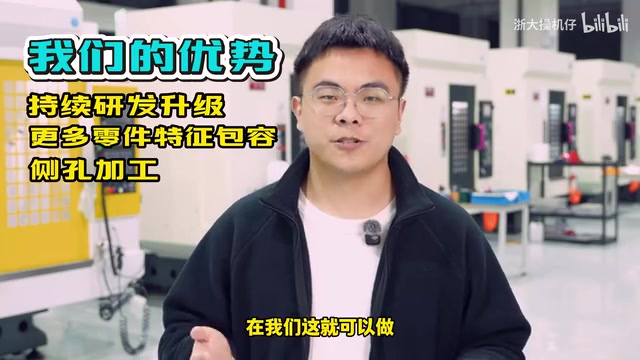
Additionally, the service provider mentioned a specific technical breakthrough: special features like "side ports" that are difficult for traditional factories to handle can already be automatically recognized and machined by their AI system. This shows that AI isn't merely replicating human programmers' capabilities — in certain scenarios, it has already surpassed the processing range of traditional workflows.
AI + Manufacturing: Replacing Decisions, Not Machines
The significance of this case goes far beyond "saving a few dollars." It reveals an important direction for AI deployment in manufacturing: it's not about replacing machines, but replacing the decision-making step in front of the machines that requires extensive experience and time.
In the CNC field, the machines themselves already have a high degree of automation. The real bottleneck lies in "telling the machine what to do." AI solves exactly this problem.
Similar logic can be extended to more manufacturing scenarios:
- Injection mold design: AI automatically generates mold solutions
- Sheet metal fabrication: AI automatically handles nesting and process planning
- Quality inspection: AI vision automatically identifies product defects
Once AI digitizes "expert experience" — one of the most expensive factors of production — the cost barriers to small-batch, customized manufacturing will be dramatically lowered. This is genuinely good news for hardware entrepreneurs, independent designers, researchers, and others who need rapid prototyping.
Summary
The essence of $1 prototyping isn't low-price competition — it's a technology-driven transformation of cost structure. AI replaces the most expensive manual programming step in CNC machining, making small-batch orders economically viable. While AI auto-programming capabilities still have boundaries today, those boundaries will continue to expand as data accumulates and models iterate. This is a highly pragmatic and convincing case of AI deployment in traditional manufacturing.
Related articles
 Tech Frontiers
A Rare Quiet Day in AI: Recursive Self-Improvement Stirs Beneath the Surface
A rare quiet day in AI sees multiple sources go silent simultaneously. Behind the calm, Recursive Self-Improvement (RSI) research continues. What this means for the industry.
 Tech Frontiers
Reve 2 vs. Ideogram 4: A Deep Dive into Layout Control in AI Image Generation
A deep comparison of Reve 2 and Ideogram 4's layout control capabilities, covering technical approaches, real-world use cases, and industry trends for designers and creators.
 Tech Frontiers
In the Weights: Check Your Influence Score in the AI World
In the Weights is an AI influence search engine that quantifies your presence in the AI world with a score. Explore how it evaluates practitioners and what it means for digital identity.