AI Coding Made Building Cheap, but Not Maintenance
AI makes building internal tools cheap, but maintenance costs haven't dropped—inventory-based governance is needed.
The article notes that AI coding agents let every team build internal tools in an afternoon, yet these tools are typically absent from formal backlogs, lack clear owners, and run on personal access tokens—creating shadow IT at unprecedented scale. When dependencies change—Jira fields renamed, API versions retired, owners transferred—tools break one by one or silently show wrong data unnoticed. Fixing one tool takes an hour, but across many tools and teams it becomes an unclaimed side job, with duplicate builds amplifying the burden. Three governance principles emerge: keep a tool inventory, assign an owner to each tool, retire tools without owners, and favor reuse before rebuilding. The core takeaway: AI lowered build costs but not maintenance costs, so teams must manage these casually built tools like formal products.
The spread of AI coding agents has made it possible for every team to build internal tools in a single afternoon. But there's an overlooked truth: build costs have dropped, but maintenance costs haven't. As tools proliferate and no one takes ownership, they quietly turn into hidden liabilities for the team.
The Building Spree: Every Team Is Reinventing the Wheel
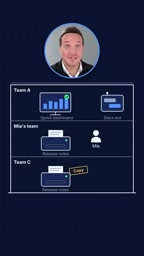
According to analysis on a YouTube channel, every team in the company is now building its own internal tools. Team A built a sprint board and a Slack bot, Mia's team built a release notes generator, and Team C rebuilt the exact same generator from scratch. Each tool took only an afternoon, thanks to coding agents.
The problem is that none of these tools are on a formal backlog, none have a clear owner, and most run on someone's personal access token. The barrier to building has dropped so low that "shadow IT" is expanding at an unprecedented rate.
Shadow IT refers to technology solutions that employees or teams procure or build on their own without IT department approval. Traditionally, it took the form of self-subscribed SaaS tools or locally deployed scripts; with coding agents, it has shifted toward a flood of one-off internal micro-tools. The risk of shadow IT isn't that the tools themselves are poor quality—it's that they exist outside the organization's asset inventory, security audits, and permission systems: data flows are invisible, access credentials are scattered across individuals, and no one is accountable when things break. When the barrier to building drops from "needing an engineer to schedule it" to "done in an afternoon," the number of shadow IT tools jumps from single digits to dozens or hundreds, and management approaches that relied on human memory quickly fall apart.
The Hidden Reefs of Maintenance: When Change Arrives, Tools Start to Crumble
When underlying dependencies change, problems surface. A Jira field gets renamed, an API version is retired, or Mia transfers to another team—these everyday changes are enough to break tools one after another. Even more dangerous are the tools that "look like they're still running": they display wrong data, and no one notices.
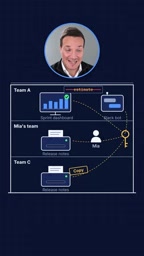
Each fix might take only an hour, but when you have 10 tools across 5 teams, it becomes a side job no one volunteers for. That includes two teams maintaining two copies of the same script. This duplicated effort and maintenance debt is the underestimated cost behind "cheap to build."
Access tokens are credentials used to prove identity when calling APIs, typically bound to a specific account with an expiration date and permission scope. Running an internal tool on "someone's access token" means the tool's availability, permission boundaries, and lifecycle are implicitly tied to that person: the token expires, permissions are revoked, the account is deactivated—and the tool silently fails; the person transfers or leaves, and the tool disappears along with its configuration knowledge. Worse, such tokens often have excessively broad permissions, so a leak has an impact far beyond the tool's own functionality. The proper approach is to use dedicated service accounts with least-privilege tokens managed through a secrets manager—but that's exactly the step most likely to be skipped for something "built in an afternoon."
Governance: One Inventory, One Owner, Reuse First
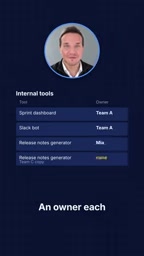
The video offers three pragmatic governance principles: maintain an inventory of internal tools, assign an owner to each tool, and retire any tool without an owner; consider reuse before rebuilding.

Mia now owns the release notes tool, and Team C uses her version directly instead of maintaining its own copy. This case shows that reuse not only reduces maintenance burden but also makes quality accountability clearer.
AI coding agents made building cheap, but they didn't make maintenance cheap. Teams need to manage these "thrown-together" tools the same way they manage formal products: with an inventory, with ownership, and with a retirement mechanism. Otherwise, the more tools there are, the higher the hidden costs.
Who owns the tools your team is running right now?
Backlog in agile development is a controlled list of all the team's pending work items; anything that enters it gets prioritized, resourced, and tracked. The article repeatedly emphasizes that these internal tools are "not on a backlog," which essentially means they've escaped the organization's resource allocation and accountability mechanisms: no entry means no review, no scheduling, no acceptance—and therefore no one responsible for its long-term state. Bringing them into inventory management doesn't require a full R&D process; it just means making "which tools exist, who maintains them, and when they'll be retired" a queryable, auditable fact—turning hidden liabilities into a visible asset register.
One-line Summary
AI made building internal tools cheap, but maintenance costs haven't dropped—inventory-based governance is needed.
Paragraph Summary
The article points out that the spread of AI coding agents lets every team build internal tools in an afternoon, but these tools are generally not on a formal backlog, have no clear owner, and run on personal access tokens, creating shadow IT on an unprecedented scale. When underlying dependencies change—Jira fields renamed, API versions retired, owners transferred—tools break one by one, or even silently display wrong data with no one noticing. Fixing a single tool might take an hour, but multiplied across tools and teams it becomes an unclaimed side job, and duplicated builds (two teams maintaining the same script) amplify the burden further. The article offers three governance principles: maintain a tool inventory, assign an owner to each tool, retire tools without an owner, and prioritize reuse before rebuilding. The core conclusion: AI lowered build costs but not maintenance costs, and teams must manage these casually built tools the way they manage formal products.
Related articles

Former Huawei Genius Youth Open-Sources AI Agent Guide: 90+ Hands-On Case Studies
Former Huawei Genius Youth Li Bojie open-sources AI Agent Book, the most systematic Chinese Agent learning repo on GitHub, with 90+ runnable examples covering context compression, memory frameworks, MCP tool calling, prompt injection attack and defense, and other enterprise-level hands-on content.

The Most Detailed FDE Tutorial on Bilibili: Case-Based Teaching from Business Practice to Interviews
B站UP主推出FDE从入门到面试实战教程,讲师深入业务一线,用马氏学习平台真实案例讲解FDE岗位要求。本文分析案例教学法、笔记策略与私密信息处理,为AI岗位求职者提供参考。

518 Dance Motion Chains + H3 Relay: Long-Video Choreography Breaks the Duration Limit
The open-source dance motion library adds 518 motion chains for choreography without reference videos. The H3 workflow combines AddGuide relay, CF Lift acceleration, and VDN to enable 30–60s long-video generation, breaking single-segment duration limits with independently controlled segmented prompts.