AI Coding Security: A CLI Tool Designed to Block Vulnerable Dependencies for Agents

A CLI tool designed for AI Agents to intercept vulnerable dependencies at code generation time.
AI coding assistants like Copilot and Claude Code frequently recommend outdated or hallucinated packages, creating supply chain risks like slopsquatting. This article analyzes an Agent-native CLI tool that intercepts vulnerable dependencies during AI code generation, explains its machine-readable design philosophy, and explores how shift-left security must evolve in the age of AI Agents.
The Dependency Security Risk in the AI Coding Era
With the rise of AI coding assistants like GitHub Copilot, Cursor, and Claude Code, more and more code is being generated automatically by AI Agents. While these tools significantly boost development productivity, they introduce a security risk that's easy to overlook: AI-generated code frequently pulls in third-party dependencies with known vulnerabilities.
Recently, a developer posted a CLI tool on Hacker News specifically designed to help AI Agents avoid vulnerable dependencies when writing code. The post didn't generate much discussion, but it touched on a real and increasingly serious security pain point in AI-assisted development.
Why Are AI Models More Prone to Introducing Vulnerable Dependencies?
Large language models (LLMs) have a fixed training cutoff — a fundamental architectural limitation. Mainstream models like GPT-4, Claude, and Gemini are all pre-trained on static corpora in a one-time process; once the model weights are fixed, they cannot be dynamically updated. This is fundamentally different from traditional search engines or rule-based databases, which can ingest new data in real time — LLMs require a full retraining cycle to absorb new knowledge.
At the technical level, during pre-training, models compress knowledge from trillions of tokens into billions or hundreds of billions of floating-point parameters through self-supervised learning. Once complete, the model weights form a closed "knowledge snapshot" — fundamentally unlike the incremental update mechanisms of knowledge graphs or traditional databases. Even models with hundreds of billions of parameters can only reflect the state of the dependency ecosystem as of their training cutoff. After training, a model's internal "knowledge" is frozen at a specific point in time, with no awareness of subsequent changes in the world.
For software dependency security, this means the package versions a model recommends may be the most frequently seen historical versions in its training data — versions that may have been disclosed as containing serious vulnerabilities and assigned CVEs (Common Vulnerabilities and Exposures) after the model was released. The NVD database now receives over 25,000 new CVEs per year (a record in 2023), meaning dozens of new vulnerabilities are disclosed every day after a model's training cutoff — and the model has no awareness of any of them. Compounding this, the time from model training to official deployment is often several months, and enterprise usage cycles can extend beyond a year, making the knowledge lag window sometimes exceed two years. Retrieval-Augmented Generation (RAG) and tool calling are currently the primary technical approaches to mitigating this problem, but not all AI coding tools have implemented real-time vulnerability database integration.
Furthermore, AI models sometimes "hallucinate" package names that don't actually exist — a phenomenon known as dependency hallucination. The root cause lies in the LLM's generative mechanism: models generate token sequences based on statistical probability rather than retrieving package names from a real index. When certain package name patterns appear frequently in training data, the model tends to generate "plausible-looking" but nonexistent variants. In 2023, a research report by security firm Vulcan Cyber found that hallucinated package names appeared at rates as high as 21.3% in specific scenarios across several mainstream AI coding assistants tested.
Malicious actors are exploiting this characteristic, giving rise to a new type of supply chain attack known as "slopsquatting" (a term coined by security researcher Joseph Thacker in 2024; "slop" refers to low-quality AI-generated content, derived from "typosquatting"). Notably, the effectiveness of slopsquatting also relies on the high predictability of LLM generation behavior: research has found cross-model consistency in the package names that different AI models tend to hallucinate for specific coding scenarios. This means attackers can build a list of high-value target package names with minimal queries, making the attack far more efficient than traditional typosquatting's brute-force enumeration. The attack unfolds in two steps: first, collect package names that AI models tend to hallucinate through large-scale queries; then, bulk-register those names on package registries like npm and PyPI, uploading malicious code containing backdoors or information-stealing functionality. Unlike traditional typosquatting (which exploits human typing errors), slopsquatting targets the output patterns of AI, and the attack surface grows proportionally with the user base of AI coding tools. When developers blindly trust AI suggestions and execute install commands, they introduce malicious code into their projects — a targeted attack specifically aimed at AI-assisted development workflows.
How a CLI Tool Defends Dependency Security
The core idea of this tool is to insert a security checkpoint into the AI Agent's workflow. As a CLI tool, it can be invoked directly by AI Agents to screen dependencies for vulnerabilities before they're written into a project.
How It Works
From a design perspective, tools of this type typically involve the following steps:
- Dependency parsing: Scans AI-suggested or already-written dependency manifests (e.g.,
package.json,requirements.txt,go.mod, etc.). - Vulnerability matching: Cross-references dependencies and their versions against known vulnerability databases in real time. Current mainstream vulnerability databases each have different strengths, and understanding their technical differences is critical for evaluating tool quality: NVD (National Vulnerability Database), maintained by the US NIST, is an authoritative vulnerability database where each record includes CVSS 2.0/3.x/4.0 scores across multiple versions — broad coverage, but due to a rigorous review process, there's often a delay of days to weeks between CVE publication and NVD analysis completion; OSV (Open Source Vulnerability), an open-source vulnerability format and database led by Google since 2021, features Git commit-level impact descriptions as a core innovation, enabling vulnerabilities to be pinpointed to specific code changes, with better real-time coverage and precision for open-source projects; GitHub Advisory Database is deeply integrated with Dependabot, with human-reviewed data directly linked to package registry versions, making it the most developer-friendly for daily workflows. High-quality dependency security tools (such as Google's OSV-Scanner) typically need to aggregate multiple data sources and cross-validate to reduce false negatives, since different databases vary in timeliness and coverage — relying on a single source may lead to missed detections.
- Security recommendations: When a vulnerable dependency is found, returns structured feedback to the AI Agent suggesting replacement with a safer version or alternative.
By embedding security checks into the AI coding loop, the tool enables AI Agents to "self-correct" rather than waiting until manual code review or CI/CD pipeline stages to discover issues.
The Agent-Native Design Philosophy
A key positioning of this tool is that it's designed "for AI Agents" rather than directly for human developers. This is an important design shift, representing an emerging "Agent-native" paradigm taking shape in today's AI engineering ecosystem: treating AI Agents rather than humans as the first-class user.
The rise of Agent-native tools signals a fundamental transformation in the user model of the development toolchain — logically similar to the historical migration from desktop applications to browser compatibility in the Web era, but happening faster and with deeper impact. Under this paradigm, the interface design philosophy shifts from "usability" to "composability" — tools no longer need intuitive human-computer interaction interfaces; instead, they need to be programmatically invokable, produce machine-parseable output, and exhibit highly deterministic behavior. In essence, this is an infrastructure-level reconstruction that upgrades security capabilities from "human-usable" to "machine-usable."
Traditional security scanning tools (such as npm audit, Snyk, and Dependabot) are primarily designed for human workflows, prioritizing human-readable output — formatted reports, color-annotated terminal output, graphical dashboards. Agent-native tools, by contrast, must satisfy several key technical dimensions: standardized output format — providing a normalized JSON Schema with fields like vulnerability severity, affected_versions, and remediation suggestions (ANSI color-decorated terminal output is completely unparseable by Agents); framework compatibility — often needing to be compatible with LangChain's Tool abstraction, OpenAI's Function Calling protocol, Claude's MCP (Model Context Protocol), and other mainstream AI programming frameworks, supporting standardized invocation by Agents; response latency — Agents may call tools frequently during code generation, and latency exceeding 1–2 seconds will severely degrade the experience, requiring tools to maintain local vulnerability database mirrors rather than querying remote APIs each time; deterministic output — any format ambiguity can cause Agents to misinterpret and make incorrect decisions.
As AI Agents become the primary producers of code, the output of security tools equally needs to be machine-readable and actionable by Agents. This "Agent-native" tool design paradigm signals that the future development toolchain will bifurcate into separate tracks for humans and Agents.
The New Battleground of Software Supply Chain Security
The emergence of this CLI is not an isolated phenomenon — it's a concrete practice within the broader trend of AI coding security.
The AI Amplification Effect on Supply Chain Attacks
Software supply chain attacks are not a new concept, but their scale and complexity have escalated significantly in recent years. The 2018 event-stream incident exposed a unique attack surface in the npm ecosystem — "maintainer transfer": an attacker took over the maintainership of a popular npm package and planted malicious code specifically targeting a certain Bitcoin wallet; the malicious code was downloaded over 8 million times before discovery, affecting millions of downstream projects. The 2020 SolarWinds incident elevated supply chain attacks to a nation-state threat level, with attackers planting a backdoor in the software build pipeline that infected 18,000 organizations — including multiple US government agencies — through legitimate software update mechanisms. The 2021 Log4Shell vulnerability (CVE-2021-44228, CVSS score 10.0) produced an unprecedented impact due to Log4j's near-ubiquitous embedding in the Java ecosystem — as a logging library present in virtually every Java application, its remote code execution vulnerability affected cloud services, enterprise software, and industrial control systems across nearly every industry; CISA estimated the number of affected devices exceeded hundreds of millions, with remediation efforts continuing for years. These historical cases collectively drove the rapid adoption of the SLSA framework and SBOM (Software Bill of Materials), the latter of which was mandated for inclusion in federal software procurement standards by a 2021 US Presidential Executive Order, becoming a core tool for supply chain security governance.
The proliferation of AI coding further amplifies this risk:
- Scale: AI can generate massive amounts of code in a very short time, introducing dependencies at a speed far exceeding human review capacity.
- Systematic bias: Multiple teams using the same AI model may be guided toward the same vulnerable dependencies, creating systemic risk.
- Trust blind spots: Developers often place excessive trust in AI-generated code, reducing careful scrutiny of dependency origins.
From Reactive Detection to Proactive Prevention
This tool embodies a shift from "post-hoc detection" to "proactive prevention" — the core concept of the DevSecOps movement known as Shift-Left Security. The concept originated in Larry Smith's 2001 paper, and its core logic is based on classic IBM Research data: fixing a vulnerability in production costs 64 times more than fixing it during the coding phase, while vulnerabilities discovered at the design stage cost approximately 1/100th as much to fix as those caught in production. The DevSecOps movement systematized this philosophy into standard practices for integrating SAST (Static Application Security Testing), SCA (Software Composition Analysis), and secret scanning into CI/CD pipelines.
However, the advent of AI coding has redefined the boundaries of "shifting left," creating a logical gap in the traditional framework: when an AI Agent batch-generates hundreds of lines of code in seconds and automatically invokes package managers, even the most aggressive pre-commit hook security checks have effectively degraded into "after-the-fact checks." This "shift-left paradox" reveals the core tension in AI-era security governance — the structural imbalance between the speed of code production and the speed of security review, which means that any security control based on human review checkpoints theoretically has a window of vulnerability. The true left-shift extreme is embedding security judgment into the AI's inference process — performing security filtering at the exact moment the model decides to recommend a dependency. Technically, this corresponds to two paths: injecting up-to-date vulnerability knowledge into the AI via system prompts, or having the AI query a security API via tool calls before generating code. The latter, due to its stronger real-time capability and interpretability, is becoming the mainstream design direction for Agent-native security tools, representing a paradigm upgrade of DevSecOps methodology in the AI era. When code is batch-generated by Agents in milliseconds, the Shift-Left Security strategy takes on an entirely new dimension: security tools must be capable of intervening in Agent workflows instantly in a machine-readable way, rather than serving merely as an auxiliary reference for human developers.
Practical Recommendations: Managing Dependency Security in AI-Assisted Coding
For teams currently using or planning to adopt AI coding assistants, the following points are worth considering:
- Integrate Agent-level security checks: Embed dependency security CLIs into AI workflows so that AI avoids known vulnerabilities at the generation stage.
- Maintain human review checkpoints: AI tools are assistants, not replacements — critical dependency introductions still require human confirmation.
- Pin dependency versions: Use lockfiles to fix dependency versions and avoid unknown risks introduced by automatic upgrades.
- Continuously monitor vulnerability databases: Dependencies that are secure today may have newly disclosed vulnerabilities at any time — a continuous monitoring mechanism is essential.
- Maintain an SBOM inventory: Build a Software Bill of Materials to track the origin and version of all third-party dependencies — a foundational practice for compliance with the SLSA framework and regulatory requirements.
Conclusion
This CLI tool, designed to help AI Agents avoid vulnerable dependencies, precisely addresses a core security challenge of the AI coding era. As code production gradually shifts from humans to AI, the design paradigm of security tools must evolve in tandem — from "reports for humans to read" to "instructions for Agents to execute."
As AI Agents play an increasingly important role in software development, Agent-native security tools like this will become an indispensable part of the development toolchain. From knowledge lag caused by training cutoffs, to slopsquatting as a novel attack method specifically targeting AI output patterns, to the redefinition of shift-left security boundaries in the Agent era — each link reveals new challenges emerging from the deep intersection of AI and security. For every practitioner focused on AI-assisted coding and software supply chain security, this is a direction worth following closely.
Related articles

Alibaba Launches Happy Shrimp: AI-Powered One-Click Complete Song Generation
Alibaba launches Happy Shrimp, an AI music generation tool that creates complete songs with lyrics, melody, arrangement, and vocals from natural language descriptions. In-depth analysis of its core features, differentiation from competitors like Suno, and industry impact.

GPT Sol Ultra vs Grok 4.6: Real-World Task Completion Benchmark in Reasoning Mode
Developer benchmark reveals GPT Sol Ultra completes draw.io scientific diagrams in one iteration while Grok 4.6 fails to converge despite maximum reasoning mode, exposing that reasoning depth ≠ task delivery capability.
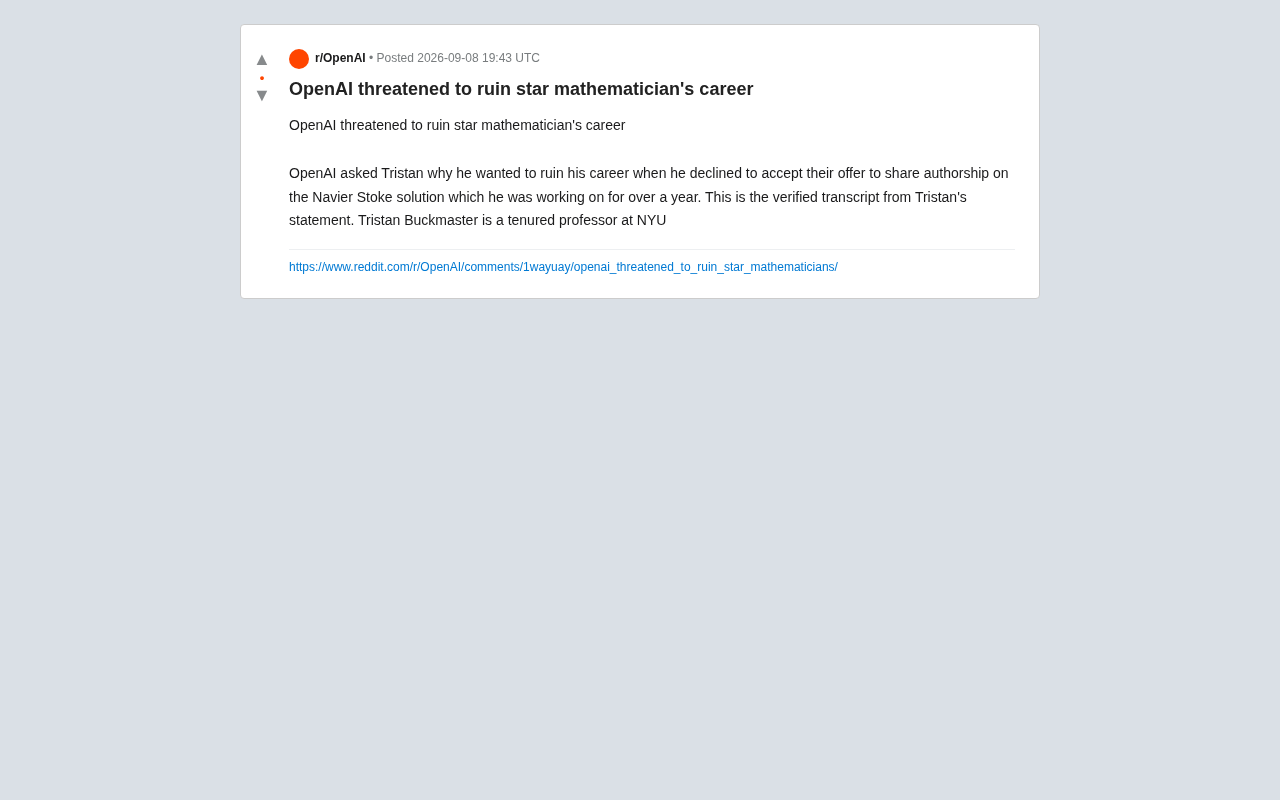
OpenAI Authorship Dispute: The Battle Over Academic Boundaries in the AI Era
OpenAI disputes authorship with mathematician Tristan Buckmaster over Navier-Stokes research, raising ethical questions about AI involvement in science.