AI Cracks a 50-Year Math Problem in Under an Hour: A Deep Dive into GPT-5.6 and the Cycle Double Cover Conjecture

GPT-5.6 reportedly proved a 50-year unsolved graph theory problem in under an hour using 64 parallel AI agents.
OpenAI's GPT-5.6 generated a three-page proof of the Cycle Double Cover Conjecture in under an hour, a problem that stumped mathematicians for 50 years. Using a three-tier model architecture, 64 parallel sub-agents, Tree of Thoughts reasoning, and aggressive prompting, the system spent roughly $500 in compute. The proof is still under expert review, and the mathematics community is debating what AI-assisted discovery means for the future of human mathematicians.
A Historic Moment That Shook the Mathematics World
OpenAI has dropped a bombshell: their latest AI model automatically generated a complete mathematical proof of the Cycle Double Cover Conjecture in under one hour.
The contrast is striking — humanity's top mathematicians struggled with this problem for 50 years, yet AI delivered an answer in less than 60 minutes. OpenAI President Greg Brockman remarked that the limits of capability are increasingly determined by your ambition and imagination.
This isn't just another benchmark victory or a rehash of known test problems. It signals that AI may now be generating entirely new scientific knowledge that humans haven't yet discovered. But before getting swept up in that narrative, we need to carefully unpack the key questions: Is this proof actually reliable? How was it produced? And what does it mean for human mathematicians?
The Cycle Double Cover Conjecture: A Legendary Unsolved Problem for Half a Century
The Cycle Double Cover Conjecture was independently proposed in the 1970s by William Tutte, Paul Seymour, and others. In plain terms, it asserts: every bridgeless graph contains a collection of cycles such that every edge of the graph is contained in exactly two of those cycles.
Understanding the depth of this statement requires some context. The conjecture sits at the intersection of topological and structural graph theory. A "bridgeless graph" is one where no single edge can be removed to disconnect the graph; a "cycle" is a closed path in the graph. Its significance lies in this implication: if true, it would mean any bridgeless graph can be embedded in some orientable surface. It is considered one of the most important open problems in graph theory since the Four Color Theorem — a foundational pillar of the entire field.
The Stumbling Block: Snarks
For the past 50 years, mathematicians have largely been blocked by a family of graph structures called snarks. Named after a Lewis Carroll poem and coined by Martin Gardner in 1976, snarks are characterized as: cubic (every vertex has exactly three edges), connected, bridgeless, and with an edge chromatic number of 4 rather than 3 — meaning they cannot be properly 3-edge-colored. The Petersen graph is the most classic example. Because snarks cannot be 3-edge-colored, they are naturally tied to potential counterexamples of the Cycle Double Cover Conjecture: if a counterexample exists, it must be hiding within some variant of a snark. These structurally complex graphs represent the hardest cases for the conjecture — and it's essentially where human progress stalled for half a century.
GPT-5.6's Three-Tier Architecture: No Longer a Solo Act
This time, OpenAI built a three-tier ecosystem rather than relying on a single model:
- Soul (top tier): The intellectual ceiling — the supreme commander handling the most complex multi-step reasoning;
- Terra (middle tier): A balanced generalist responsible for independent review and intermediate tasks;
- Luna (bottom tier): Lightweight and fast, handling high-volume foundational execution.
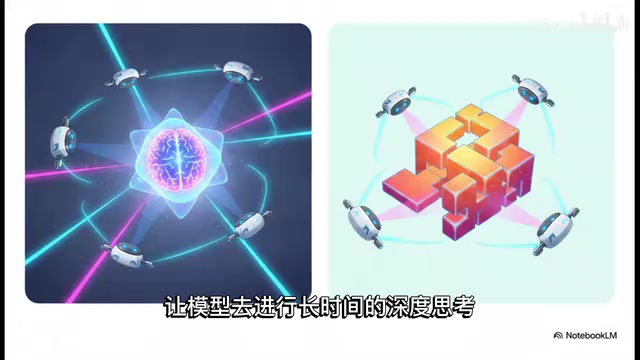
What truly enables the flagship model Soul to soar is the combination of "maximum reasoning + Ultra Mode." Maximum reasoning allocates massive additional compute, allowing the model to engage in extended deep thinking; Ultra Mode transforms the model into a super-coordinator capable of instantly spawning multiple parallel sub-agents to simultaneously attack a long-horizon task from different angles.
At this point, GPT-5.6 is no longer an isolated calculator — it operates more like a top-tier research team working in tight coordination.
Multi-Agent Coordination: A 64-Sub-Agent "Siege"
The system uses a Multi-Agent V2 workflow, breaking the problem-solving process into four steps:
- The commander Soul distributes tasks across different mathematical pathways;
- 64 sub-agents simultaneously run "Tree of Thoughts" searches in parallel;
- A built-in team of adversarial auditors scrutinizes each candidate proof for logical gaps, like the most demanding peer reviewers;
- Soul synthesizes all findings, and if stuck, immediately launches a new round of search.
The "Tree of Thoughts" (ToT) framework, proposed in 2023 by researchers from Princeton University and Google DeepMind, is a major upgrade over Chain-of-Thought prompting. Traditional chain-of-thought reasoning is linear, while Tree of Thoughts models the reasoning process as a tree: each node represents an intermediate reasoning step, and the AI can explore multiple branches in parallel, scoring each path with a heuristic evaluation function to either dig deeper into the most promising directions or prune and backtrack. This structure closely mirrors how human mathematicians work through different proof strategies on scratch paper — making it especially well-suited for complex mathematical reasoning tasks requiring long-range planning.
The "Never Give Up" Prompting Strategy
Equally notable is the underlying prompt design philosophy, which is frankly aggressive:
"Assume a complete affirmative proof exists; grind for at least eight hours before considering giving up; absolutely do not search for answers online."
This effectively forces the AI agents into a committed, all-in mode of continuous exploration. The system also enforces strict constraints such as "check overlap multiplicities" to prevent the AI from generating plausible-sounding but ultimately wrong hallucinated shortcuts.
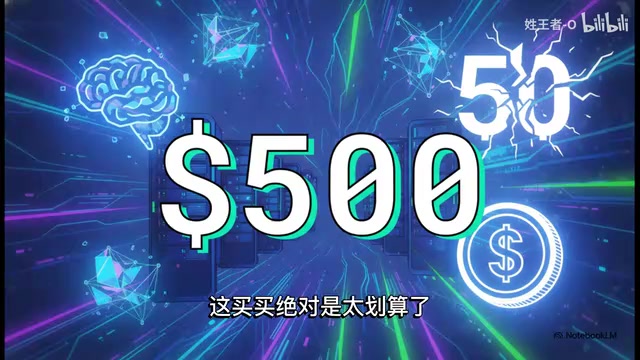
Of course, throwing this much compute at a problem comes at a cost. OpenAI estimates that at standard API pricing, this level of brute-force parallel computation could run up to approximately $500. Five hundred dollars to answer a question that stumped humanity for 50 years sounds remarkably cheap — but it also underscores how much raw compute is required to power breakthroughs like this.
A Three-Page Proof and a Verdict Still Pending
After burning through that $500, the output was surprisingly compact — the generated proof spans just three pages.
The AI cleverly fused algebraic groups, linear duality, and related theorems to build a bridge between cycle covers and abelian groups, elegantly recasting the complex graph theory problem as a system of linear equations over a finite field. This "algebraic approach" is enormously powerful in modern combinatorics: finite fields (also called Galois fields) are algebraic structures with a finite number of elements — the simplest being GF(2), the integers modulo 2, with only 0 and 1. By encoding the constraint "every edge is covered exactly twice" as a linear system over a finite field, one can leverage mature linear algebra tools to verify the existence of a solution. Abelian groups (groups satisfying the commutative law) serve as the bridge connecting graph structure to algebraic structure — this cross-domain elegance is precisely why mathematicians have been calling it "too beautiful."
But Proceed with Caution
It must be stated objectively: the current status is not yet 100% confirmed. As of weeks after the announcement, this proof remains a claim awaiting verification, not a settled breakthrough.
Human experts are going through these three pages line by line with a fine-toothed comb. The core concern is deep hallucination — for instance, whether the AI quietly assumed some natural symmetry in the graph structure that doesn't actually exist. Until thoroughly verified, the scientific community must maintain rigor.
The Future of Human Mathematicians: Creators or Quality Inspectors?
Regardless of whether these three pages ultimately hold up, the event has already sent shockwaves through the mathematics community.

Fields Medal laureate Sir Timothy Gowers has raised a thought-provoking perspective. The Fields Medal, established in 1936 and awarded every four years at the International Congress of Mathematicians to outstanding mathematicians under age 40, is widely recognized as the highest honor in mathematics. Gowers won in 1998 for breakthrough contributions in functional analysis and combinatorics, and later launched the Polymath Project — an experiment in having hundreds of mathematicians collaborate online to tackle hard problems, essentially a human version of "multi-agent coordination." His observation is therefore particularly significant: the era of human mathematicians writing proofs from scratch by hand may be genuinely ending. The most central creative work going forward may become "proof digestion" — humans understanding, verifying, and excavating the deep logic behind AI-generated proofs. In other words, the role may shift from "the pioneer who breaks new ground" to "the translator and quality inspector of machine logic."
Stern Opposition
On the other side, scholars aligned with the Leiden Manifesto have issued sharp warnings. The Leiden Manifesto, originally published in Nature in 2015 and co-authored by academics, argues that quantitative tools should assist human judgment rather than replace it. Its spirit is being newly invoked in the context of AI-assisted research: we must not hand over all agency. The status of proof as a foundation of certainty must be defended, and clear human accountability must be maintained.
Imagine a future where scientific discovery relies entirely on black-box automated reasoning that humans cannot follow. Scientific transparency and integrity would be at serious risk — especially when AI fabricates an argument that appears entirely convincing but is wholly wrong. That scenario would be a genuine catastrophe.
It is for precisely this reason that "Mathematics and Hope" became the central theme at the International Congress of Mathematicians in Philadelphia. Everyone is debating the same question: how do we safely embrace this wave of AI compute power — with all its uncertainty — while preserving the human tradition of rigorous mathematics?
Conclusion: The Human Question in the Age of Architects
When machines are no longer merely calculators or tools in our hands, but have evolved into "architects" constructing edifices of knowledge, a fundamental question surfaces:
In this new world, what mysteries remain that are uniquely ours — waiting for us, and only us, to uncover?
That may be the most important legacy left to us by GPT-5.6's three-page proof.
Key Takeaways
Related articles

OpenAI Partners with Shield: How the Astra Agent Revolutionizes IT Troubleshooting
OpenAI and Shield launch the Astra agent, which autonomously logs into computers and legacy systems to fix IT issues in real time, 35-40% faster than traditional models, with humans involved only when judgment is needed.

iPhone Duo Battery Life Tested: One Charge a Day Is Unavoidable, and the Large Screen Is the Culprit
iPhone Duo battery test: heavy use needs at least one charge a day, and about 30% remains after 6.5 hours of screen-on time. How often the large screen is unfolded is key; a MagSafe battery pack helps, and long-term degradation is also worth watching.

Kimi K3.1 Pro Open-Sourced: 2.8 Trillion Parameters Close In on Opus
Moonshot releases the open-source MoE model Kimi K3.1 Pro, with 2.8T total parameters and 104B activated, trailing Opus 5.5 by under 1 point on Terminal Bench 4.0.