AI Cracks the 167-Year-Old Riemann Hypothesis? Claude-Assisted Proof Sparks Debate
Anthropic mathematician and Claude AI claim a Lean-formalized proof of the Riemann Hypothesis, not yet accepted by the math community.
The article discusses the November 2026 claim by Anthropic mathematician Levent Alpogue that, with Claude AI, a proof of the Riemann Hypothesis was proposed and formalized in Lean. Proposed in 1859, the conjecture predicts that nontrivial zeros of the Riemann ζ function lie on the critical line with real part 1/2, closely tied to prime distribution, and has remained unproven for 167 years. The article stresses that formal verification only guarantees syntactic self-consistency of the derivation, not mathematical consensus; an independent group reportedly expressed confidence, but peer review and reproduction are incomplete. The conclusion: the puzzle is not yet officially solved; AI can accelerate exploration, but final arbitration remains with human mathematicians, warranting cautious optimism.
An Unsolved Mathematical Mystery
The distribution of prime numbers (numbers divisible only by 1 and themselves) appears utterly irregular, yet it constitutes one of the deepest puzzles in mathematics. In 1859, mathematician Bernhard Riemann proposed a hypothesis closely tied to the distribution of primes, predicting a striking regularity in the locations of the zeros of a certain mathematical function.
Computers have verified vast numbers of zeros, but verifying individual cases is far from a proof. What mathematicians need is a rigorous proof that holds for all possible cases — which is precisely why the Riemann Hypothesis has confounded the field for 167 years.
The Riemann Hypothesis centers on the Riemann zeta function. This function is initially defined as the infinite series ζ(s) = 1 + 1/2^s + 1/3^s + … (convergent when the real part of s exceeds 1), and extends to the entire complex plane via analytic continuation (except for a pole at s=1). Riemann observed that all nontrivial zeros of the ζ function lie on a vertical line in the complex plane known as the "critical line" — the line where the real part equals 1/2. The connection between this conjecture and prime distribution comes from the Euler product formula: ζ(s) can be written as the product of (1 - p^{-s})^{-1} over all primes. Thus the locations of the ζ function's zeros precisely govern the error term in the prime counting function; if the conjecture holds, fluctuations in prime distribution would be constrained to the tightest possible range.
A Breakthrough Claim of AI-Assisted Proof
According to YouTube video content, in November 2026, Anthropic mathematician Levent Alpogue announced a proof of the Riemann Hypothesis developed in collaboration with Claude AI. The work was formalized using the Lean system — a tool capable of automatically checking the correctness of mathematical reasoning.

The significance of formal verification lies in translating the proof process into machine-checkable code, greatly reducing the possibility of logical gaps. If the formalization passes, it means the chain of reasoning is self-consistent at the syntactic level.
Lean is an interactive theorem prover and a functional programming language based on dependent type theory. In Lean, mathematical statements are written as types, and proofs are terms of those types; as long as type-checking passes, the proof is logically valid. Lean's math library, mathlib, already contains extensive undergraduate- to graduate-level mathematics. Formalizing a conjecture in Lean means first precisely defining the relevant objects in code (such as the ζ function, zeros, and the critical line), then writing out step-by-step derivations. The main cost of formalization lies in the accuracy and completeness of the encoding, not in the verification itself — machine checking is automatic and deterministic.
Independent Verification and Community Reaction
The video mentions that an independent research group expressed confidence in the formalized proof, but broader mathematical evaluation is still ongoing.

It is important to distinguish two concepts here: formal verification passing does not equal the mathematical community accepting the proof. Formalization only guarantees that the derivation from axioms to conclusion is error-free, but only if the formalization itself accurately encodes the statement of the Riemann Hypothesis and the axiom system itself is consistent.
The independent group reportedly expressed confidence, but final peer review has not yet been completed. Major conjectures in mathematical history often take years before the community fully accepts or refutes them.
Peer review is the standard process by which the mathematical community accepts major results: after a paper is submitted to a journal, anonymous experts examine the reasoning line by line, potentially taking months or even years. For results at the level of the Riemann Hypothesis, the community typically also demands independent reproduction — other mathematicians re-deriving or checking key steps without relying on the original authors. Historically, some major claims in the 19th and 20th centuries were retracted after review found flaws. While formal proofs can eliminate errors in computation and logical steps, they cannot automatically guarantee that the formalized statement is semantically identical to the original conjecture — subtle deviations in definitions, for example, could mean that what was formalized is a weaker or different proposition.
A Measured View: Not Yet Settled
So, has the 167-year-old puzzle been officially solved? The answer is no. This claim is a noteworthy development, but the broader mathematical community must carefully evaluate the result.
AI's role in mathematical discovery deserves attention: it may accelerate conjecture exploration, but the ultimate authority for arbitrating proofs remains with human mathematicians. The formalization tool Lean provides a layer of assurance, but cannot replace mathematical intuition and community consensus.
The true resolution of the Riemann Hypothesis still awaits rigorous peer review and reproduction. Until then, cautious optimism is the appropriate attitude.
One-line Summary
An Anthropic mathematician and Claude AI claim to have formalized a proof of the Riemann Hypothesis in Lean, but it has not yet gained mathematical consensus.
Paragraph Summary
The article discusses the November 2026 claim by Anthropic mathematician Levent Alpogue that, in collaboration with Claude AI, a proof of the Riemann Hypothesis was proposed and formalized using the Lean system. The Riemann Hypothesis, proposed in 1859, predicts that the nontrivial zeros of the Riemann ζ function lie on the critical line with real part 1/2, closely tied to prime distribution, and has remained unproven for 167 years. The article emphasizes that formal verification only guarantees the derivation is syntactically self-consistent, not that the mathematical community accepts the proof; although an independent group reportedly expressed confidence, peer review and reproduction remain incomplete. The article's final conclusion is that the puzzle is not yet officially solved; AI can accelerate conjecture exploration, but the ultimate authority for arbitrating proofs remains with human mathematicians, and cautious optimism is warranted.
Related articles
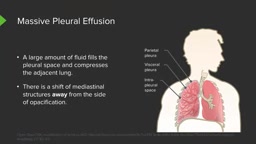
Differentiating the White Hemithorax: Five Causes of Complete Unilateral Thoracic Opacification
How to differentiate complete unilateral thoracic opacification (white lung sign) on chest X-ray? This article systematically reviews the five causes—complete atelectasis, massive pleural effusion, pneumonic consolidation, pneumonectomy, and mixed pattern—using the direction of mediastinal and tracheal shift as the core clue, with imaging features and CT backup for each.

Abdominal X-Ray Differentiation: Key Signs of Small Bowel Obstruction vs. Large Bowel Obstruction
Using two abdominal X-rays, this article explains the key imaging signs of small bowel obstruction vs. large bowel obstruction: air-fluid levels, proximal bowel dilation, and the presence or absence of colonic gas.
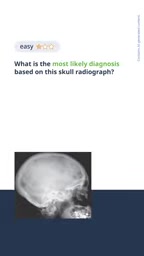
What Is the Most Likely Diagnosis for "Punched-Out" Lesions on a Skull X-Ray?
A skull X-ray shows multiple low-density, well-circumscribed radiolucent lesions with a classic "punched-out" appearance. This article explains this hallmark sign of multiple myeloma and how it differs from osteolytic metastases: metastatic lesions are usually fewer in number.