AI Cracks the Riemann Hypothesis? A 167-Year-Old Math Mystery Reaches a Turning Point

AI claims to have formally proven the Riemann Hypothesis in Lean, leaving the math community to verify and understand it.
The article covers the latest development in the 167-year-old Riemann Hypothesis mystery: in November 2026, a four-page note claimed that AI, working with Claude, formally proved the Riemann Hypothesis and the Generalized Riemann Hypothesis in Lean, with about 17 million lines of code and over 250,000 pages of explanation left unreleased. Stanford mathematician Ravi Vakil released a competing preprint hours later, calling it "all humanity, no AI." The article reviews prime distribution, the zeta function, and the conjecture that zeros lie on the critical line, noting that computers have checked trillions of zeros but checking is not proving. Both claims await community verification, and a gap exists between formal verification and mathematical understanding. If the proof holds, hundreds of theorems depending on the Riemann Hypothesis would become established results, the distribution of primes would no longer be mysterious, and AI could change how mathematics is discovered.
In 1859, Bernhard Riemann proposed a conjecture about the distribution of prime numbers. For 167 years, no one has been able to prove it. This puzzle is deeply rooted in the primes—the building blocks of arithmetic. This month, a new claim says it may have been solved. The problem is older than the electric light, the airplane, and the computer, yet it still stands.
Today's story is where mathematics, artificial intelligence, and a 167-year-old mystery intersect. If proven, it will reveal a hidden order in the primes and unlock a flood of results mathematicians have awaited for decades.
Primes: The Building Blocks of Arithmetic and an Unsolved Mystery
A prime number can only be divided by 1 and itself: 2, 3, 5, 7, 11… They are the building units of all integers. Over 2,000 years ago, Euclid proved that the primes never end—there are infinitely many. But where do they appear? On the number line, they seem scattered at random, without pattern, like seeds sown haphazardly. Sometimes primes appear in pairs; other times they are completely absent for long stretches.
In the early 19th century, Gauss noticed a phenomenon: looking from a distance, the density of primes decreases in a smooth, steady way. This smooth curve is a good approximation, but not exact—the true prime count fluctuates above and below the curve. The question is how large these fluctuations can be. The smaller the fluctuations, the more orderly the primes.
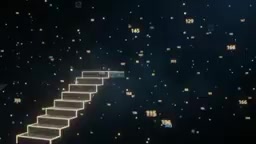 The smooth curve is only an approximation; the true prime count fluctuates
The Riemann Hypothesis: Cosmic Order on a Single Line
Riemann found a way to answer this question, using a curious function—the zeta function, which listens to the hidden music in the primes. This function takes a number as input and outputs a number, but it can also handle complex numbers. Long before, Euler had discovered a bridge: a formula linking the zeta function to all primes.
Where this function's landscape crosses zero, something extraordinary happens. These points are called "zeros," and they hold the secret of the primes. Each zero adds a wave to the prime count. Stack up enough waves, and you can reconstruct the exact shape of the prime staircase.
Riemann noticed that the first few zeros all line up on a perfect straight line. He conjectured that every zero would do the same. This is the Riemann Hypothesis: every nontrivial zero lies exactly on that line—not near it, but precisely on it.
 The Riemann Hypothesis requires all nontrivial zeros to lie exactly on the line
If any zero strayed from the line, the primes would be far more chaotic than anyone could hope. Kept on the line, they remain tame. Computers have checked trillions of zeros, and every one lies on the line. But checking is not proving—infinity is a very long road.
The zeta function and the Euler product
The Riemann zeta function is originally defined as the infinite series ζ(s) = 1 + 1/2^s + 1/3^s + …, which converges when the real part of s is greater than 1. In the 18th century, Euler discovered a striking identity: this series equals the product over all primes ∏(1 - p^{-s})^{-1}. This is the "Euler product," which directly ties the analytic properties of the zeta function to the multiplicative structure of the primes. Because of this bridge, analyzing the behavior of the zeta function—especially the distribution of its zeros in the complex plane—can be used to deduce the counting law of the primes. In his 1859 paper, Riemann analytically continued the zeta function to the entire complex plane (except for a simple pole at s=1) and pointed out that all nontrivial zeros lie within the "critical strip" between 0 and 1, and he conjectured that they lie exactly on the "critical line" with real part 1/2.
The Million-Dollar Mystery and AI's Sudden Intervention
Hundreds of theorems and branches of mathematics begin with the same condition: assuming the Riemann Hypothesis holds. They have all been waiting for this answer for a century and a half. The world's top mathematicians have taken aim at it, but the wall has not moved. In 1900, David Hilbert placed the Riemann Hypothesis on his list of the greatest unsolved mathematical problems. In 2000, the Clay Institute named it one of the seven Millennium Prize Problems—solve one, and you win $1 million. In all those years, only one of the seven has been solved, and the Riemann Hypothesis was not that one.
 The Riemann Hypothesis is listed among the Millennium Prize Problems
It is so difficult that many mathematicians quietly avoid it—a career could vanish because of it. Over the decades, many claimed proofs have been announced, most collapsing under scrutiny. Mathematicians have learned caution.
Then, on November 20, 2026, a four-page note appeared online, and the mathematical world stopped. It appeared at the end of a year in which artificial intelligence began making genuine mathematical breakthroughs. The AI claimed that, working with Claude, it had discovered a proof. Rather than publishing a traditional paper, it provided a relevance argument in Lean—a language that checks every step of logic. The proof reportedly also covers the Generalized Riemann Hypothesis, a larger family of the same pattern.
The Generalized Riemann Hypothesis (GRH)
The Generalized Riemann Hypothesis extends the Riemann Hypothesis from the integers to the Dedekind zeta functions over arbitrary algebraic number fields: it asserts that all nontrivial zeros of these functions likewise lie on the critical line Re(s)=1/2. It can also be stated as a conjecture about the location of the zeros of Dirichlet L-functions. GRH is stronger and broader in scope than the original Riemann Hypothesis; a great many conditional results in number theory—concerning the distribution of primes in arithmetic progressions, the class numbers of quadratic fields, and numerous algorithms (such as deterministic primality testing)—depend on it. Therefore, a claim to have proven both the Riemann Hypothesis and GRH would have an impact far beyond the original conjecture itself; but correspondingly, it would need to withstand stricter and broader scrutiny.
Lean Verification and the Reaction of the Mathematical Community
The reaction was swift and fierce. Within hours, Stanford mathematician Ravi Vakil released a competing preprint, describing it as "all humanity, no AI." Both claims now face the same test: can the community follow, check, and trust the argument? There is no conclusion yet.
Lean is a proof assistant. It does not accept arguments that sound right; it only accepts arguments it can verify line by line. The Lean code runs to about 17 million lines, far beyond what any human could study carefully. The AI's written explanation exceeds 250,000 pages and has not yet been released.
 The Lean code runs to 17 million lines, far beyond human review capacity
A computer can check every step, but a checked proof is not an understood proof. Mathematics is more than truth. Mathematicians want to know why something is true, to see the ideas behind the symbols. Some experts say it could take years to understand what the machine has discovered. Others doubt the proof will hold up. Still others worry that the hard work now falls to human mathematicians—who must spend years checking it while receiving little credit.
This is why verification matters. In science, a claim is not a result until others have tested, challenged, and confirmed it. Reports vary: some say experts confirmed the formal statement is correct; some say the proof itself is not yet understood; a proof that people can read, follow, and teach has not been published. Until then, the full picture remains incomplete.
Formal verification and proof assistants
Lean is an interactive theorem prover and also a programming language based on dependent type theory. In Lean, mathematical statements are written as types, and proofs are terms of those types; the kernel checks every step of the derivation one by one, and no logical leap can slip through. This contrasts with the "peer review" of traditional papers: the latter relies on human readers to understand the argument and may miss subtle errors; the former provides machine-checkable certainty, but only if the formal statement itself faithfully captures the original problem (that is, the "formalization" has not smuggled in a different concept). The Lean community has built the mathlib mathematics library, but fully formalizing a large conjecture like the Riemann Hypothesis still requires an enormous amount of code. This is exactly why "17 million lines of code" drew attention: machines can check it, but humans find it hard to read through and understand the mathematical ideas.
If the Proof Holds, Where Does Mathematics Go?
Normally, a major proof enters peer review, and experts spend months or even years testing it before it is accepted. The Clay Institute has its own rules for the million-dollar prize, which take time and careful scrutiny.
If the proof holds, hundreds of results that depend on it could become established theorems. The primes would become far less mysterious. If AI can help prove this, it could change how mathematics works—not just checking proofs, but discovering them. But mathematics is also a story of human curiosity, beauty, and understanding. The question is how the two will work together.
Has AI just solved a 167-year-old mystery? We don't know yet. But mathematics may never be the same.
Related articles

AI Cracks the Riemann Hypothesis? Analyzing the Claude Math Breakthrough Rumor
Meta's Chief AI Officer Alexander Wang claims AI, via Claude, has cracked the Riemann Hypothesis. This article analyzes the reliability of the source, verifiability issues, and its potential implications for AI math capabilities in cancer and space research.

Sakana AI's In-House Model: Ambitions Beyond Japanese National Security
Sakana AI's CEO says in-house models mean more than Japanese national security—they're about industrial competitiveness. We analyze its small-model and model-merging approach, industrialization challenges, and the economic logic beyond the "sovereign AI" narrative.

Knuth Pauses Error Reports for The Art of Computer Programming, Sparking Discussion
Donald Knuth pauses error reports for The Art of Computer Programming, sparking Hacker News discussion. We analyze the announcement's background, possible reasons, and lessons for technical writing and open-source maintenance.