AI Cracks the Riemann Hypothesis? The Million-Dollar Math Problem May Fall to Claude

Claude raised the Riemann Hypothesis zero proportion from 41.6% to 67.5%; a mathematician claims a complete proof, pending review.
The article recounts how Anthropic's AI assistant Claude tackled a Riemann Hypothesis-related problem over six weeks. Starting from the prompt "Take a real stab," Claude tried 650 ideas without success, then split itself into about 60 sub-assistants working together to raise the proportion of zeros on the critical line from at least 41.6% to at least 67.5%. Mathematician Levin Alpogi then joined forces with Claude, ultimately claiming to have found a complete proof of the Riemann Hypothesis, released as Lean code, with a human-readable draft exceeding 250,000 pages. The proof has not yet been peer-reviewed, but it has sparked deep discussion about AI's role in mathematical discovery, verification, and understanding.
From a Four-Word Prompt to the Holy Grail of Mathematics: Claude's Six-Week Assault
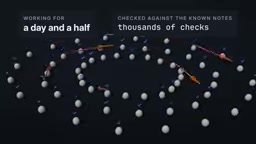
In 1859, mathematician Riemann proposed a conjecture about the distribution of prime numbers, and a million-dollar prize for its solution remains unclaimed to this day. According to a tech program on YouTube, Anthropic's AI assistant Claude may have broken through this problem—or at least taken a crucial step. The story began in August 2025 (the original mentions "August"), when a non-mathematician at Anthropic typed four words: "Take a real stab." Claude then tried 650 ideas, none successful. It was then asked to try again; this time it split itself into about 60 "sub-assistants," working collaboratively for a day and a half, performing thousands of verifications and cross-checking each other's results. The human role during this period was mainly to send encouragement like "keep going" and "believe in yourself."
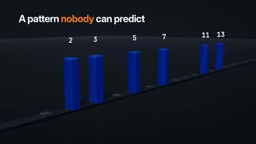
Claude did not directly prove the Riemann Hypothesis. Along the way, it proved a new result: previously mathematicians knew that at least 41.6% of the "zeros" (i.e., the nontrivial zeros of the Riemann zeta function) lie on the critical line, and Claude raised this proportion to at least 67.5%—from "about 4 out of every 10" to "more than 2 out of every 3." This itself is a significant advance.
The Riemann Hypothesis is one of the most important unsolved problems in mathematics, proposed by Bernhard Riemann in 1859. It asserts that all nontrivial zeros of the Riemann zeta function lie on the critical line with real part 1/2 in the complex plane. The zeta function is closely related to the distribution of primes, and the truth of the conjecture would reveal the precise law of prime distribution. The conjecture is one of the seven Millennium Prize Problems with a million-dollar bounty from the Clay Mathematics Institute, and remains unproven. The "proportion of zeros" mentioned in the article refers to the proportion of nontrivial zeros proven to lie on the critical line among all nontrivial zeros—an incremental progress indicator, not a complete proof.
A Key Step in Human-Machine Collaboration: Lean Language and Mathematician Verification
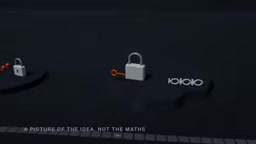
Claude then requested the involvement of human number theorists. Two mathematicians at Anthropic conducted a review. The proof was written in Lean, a formal language that a computer can verify step by step. Even so, Anthropic stated that it does not expect this approach to lead to a complete proof. One of the verifying mathematicians, Levin Alpogi (transliterated), had planned to tackle the Riemann Hypothesis since his student days, and the first step of his timeline with Claude is dated October 6. His idea came from a simpler "virtual digital world" where a similar conjecture had been proven decades earlier. The trick there relied on a property that real integers do not possess. In his words, "it's like trying to find the slope of an integer." Claude's answer was to build a long chain of reasoning, adding a bit of the missing property at each step, and specifying precisely how long the chain needed to be. Alpogi wrote that near the end, Claude far surpassed him.
On November 16, the final piece fell into place. Four days later, he released a brief statement asserting that, working with Claude, Claude had found a proof of the Riemann Hypothesis, as well as a proof of a grander version. The proof he released was not in prose but in Lean code, checkable line by line by computer. A human-readable version would be enormous—he said one draft exceeded 250,000 pages, so he chose not to publish it. He also admitted that he had not fully mastered all the mathematics involved. Computer checking is powerful, but one still needs to confirm that the computer is checking the right problem. As of the program's production, no external expert had conducted a full review, and prize rules require two years of scrutiny after publication. A leading expert in the field, Brian Conray (transliterated), saw only the notes; he called it "a landmark moment in human history" and said, "I don't think any human was about to discover this at the time."
Lean is an interactive theorem prover and a dependently typed formal language. It allows mathematicians to write mathematical definitions, theorems, and proofs as computer-verifiable code, with every deduction step automatically checked by the kernel, ensuring logical rigor. The Lean community has built the Mathlib library, covering a wide range from basic algebra to advanced analysis. Formalizing proofs in Lean can eliminate hidden errors that may exist in traditional pen-and-paper proofs, but it also requires the prover to fully formalize the mathematical argument, which is a huge amount of work. The 250,000-page draft mentioned in the article, if converted to human-readable form, is precisely a manifestation of the verbosity of formal proofs.
Impact on the Real World: Bank Encryption and Scientific Paradigm
So, are bank passwords still safe? For this matter alone, the answer is no. Knowing the locations of zeros does not allow one to factor a large number into two primes. But hundreds of conclusions that rest on the premise "if the Riemann Hypothesis holds" would suddenly stand on solid ground. And this is not an isolated week: two months ago, OpenAI claimed to have cracked another $7 million problem about how fluids flow (the original mentions "$7 million problems about how fluids flow"); three days ago, Anthropic said Claude had solved two open problems about black holes. None have been fully reviewed. Alpogi wrote that what he saw was a dawn of science, something greater.

If machines can discover things no one else can, what comes next? Diseases no one can cure? Materials no one can design? If answers arrive faster than we can read them, who will check them? In August 2025, a machine encouraged to "believe in itself" raised the proportion from four-tenths to two-thirds. Now, a mathematician claims that he and Claude have pushed it all the way. If they are right, the next question is ours: can humanity learn to understand a proof it did not discover itself?
Bank encryption mainly relies on public-key cryptosystems such as RSA, whose security is based on the difficulty of factoring large integers. The Riemann Hypothesis itself does not directly provide an algorithm for factoring large integers, so proving or disproving it would not immediately threaten existing encryption. However, the truth of the Riemann Hypothesis would provide a solid foundation for many number-theoretic conclusions, potentially indirectly affecting the reliability analysis of certain cryptographic protocols. Furthermore, if AI in the future can solve more directly cryptographic hard problems (such as the discrete logarithm problem), it could pose a substantial challenge to encryption security. Currently, research in post-quantum cryptography aims to address potential threats.
Doubts and Unresolved Questions
It must be emphasized that this claim has not yet undergone peer review, and a complete proof of the Riemann Hypothesis still requires broad acceptance by the mathematical community. Although Lean code verification is rigorous, it presupposes that the formal statement correctly reflects the conjecture itself. Moreover, Claude's demonstrated ability to "split itself" and "cross-check" suggests a new AI reasoning paradigm—multi-agent collaboration to solve complex problems. But whether this is universally applicable still requires more case studies.
Regardless of the final outcome, this event has already sparked deep discussion about the role of AI in mathematical discovery. When machines can explore domains that humans find hard to follow, the burden of verification and understanding will fall more heavily on human shoulders.
Related articles

Jensen Huang Returns to Nvidia: The Power Game Behind an "Aggro Reset"
Nvidia's board reappointed Jensen Huang as CEO less than two weeks after his scandal-driven resignation. This analysis explores the board's decision-making, Trump's political intervention, media power failure, and market reaction behind the dramatic return.

Why Voice AI Can't Understand Kenyans' Everyday Conversations
Swahili speech recognition hits 3.24% error on read text, but everyday Kenyan speech mixes English, Sheng slang, and accents—leaving mainstream voice AI struggling.

Data Centers Build Their Own Natural Gas Plants: AI Compute's Breakout Around a Decade-Long Grid Wait
Grid interconnection approvals can take a decade, so xAI and others are building off-grid natural gas plants to power AI clusters. This article analyzes the drivers, costs, and impact of behind-the-meter generation on AI infrastructure.