AI Daily: OpenAI Agent SDK and Toyota's Humanoid Robot Push

AI Daily: democratizing agent development alongside the capital race for computing power, with reflection on everyday AI risks.
This edition of AI Daily covers ten developments along two main threads. On infrastructure and capital: Toyota invests $6.4 billion annually in humanoid robots and factory automation, high-frequency trading firms build their own data centers and invest in chip startups, and Meta plans to raise up to $95 billion through stock sales to fund AI infrastructure while maintaining Zuckerberg's control via non-voting Class C shares. On tools and methodology: the OpenAI Agents SDK lowers the barrier to agent development through tool calls, session memory, and tracing, while KD Nuggets offers seven Python design patterns and a four-stage computer vision roadmap. In addition, contradictory token comparison tests between Claude Code and Cursor show that real-world testing beats paper metrics; MIT Technology Review reminds us to focus on AI's everyday hidden harms rather than only dramatic catastrophes.
Today's AI Roundup: From Agent Development to Big Bets on Robotics
According to the daily audio briefing from the YouTube channel Storyflow, this edition of the AI Daily covers ten topics: agent development, robotics investment, the computing power race in financial trading, hands-on testing of coding tools, data science design patterns, a computer vision learning roadmap, AI education, reflections on AI safety, Meta's fundraising, and quantum machine learning. Drawing on sources including KD Nuggets, The Decoder, Towards Data Science, the Google Research blog, and MIT Technology Review, here are the key threads worth paying attention to.
OpenAI Agents SDK: Lowering the Barrier to Agent Development
According to KD Nuggets, the OpenAI Agents SDK simplifies the process of building AI agents. Unlike the traditional linear "prompt-response" pattern, agents can take initiative based on user input—for example, performing web searches, calling custom functions, and retaining conversation memory.
The approach: first configure a Python environment and install the SDK, then create an agent with a web search tool to fetch the latest Python news; you can also plug in your own Python functions such as a calculator tool. Session memory is described in the article as a "game changer"—it lets agents remember previous interactions for a more natural experience, and the SDK even supports persistent memory solutions like SQLite. In addition, the SDK has built-in tracing that lets you observe an agent's execution and pinpoint what needs adjustment. The article's advice: start with a simple workflow and expand as needed.
Toyota Bets on Humanoid Robots and Factory Automation
The Decoder reports that Toyota invests $6.4 billion annually in humanoid robots and factory automation. What's notable isn't just the amount but the integration strategy—not just for manufacturing, but pushing robots into multiple industries to create general-purpose machines that can adapt to different tasks. This is seen as a signal of a traditional automaker seeking new growth beyond cars, and reflects the industry's rethinking of the relationship between labor and automation.
Humanoid Robot refers to a robot that mimics humans in appearance and movement, typically with bipedal walking and dual-arm manipulation, designed to work directly in environments built for humans without modifying factory layouts. Compared with traditional industrial robotic arms fixed on production lines, the core challenges of humanoid robots lie in balance control, whole-body coordination, and generalization—transferring skills learned for one task to new ones. Toyota's investment is interpreted as a "general-purpose machine" signal because the humanoid form is seen as a path toward general-purpose robots: once locomotion and manipulation are general enough, the same hardware platform can serve manufacturing, logistics, healthcare, and other industries, amortizing R&D costs and opening growth space beyond cars.
Wall Street High-Frequency Traders Build Their Own Data Centers, Bet on Chip Startups
Another item from the same source shows that high-frequency trading firms such as Jane Street and Hudson River Trading are moving deeper into AI: building their own data centers to lock in computing power while investing in chip startups. The logic is straightforward—the speed of processing massive data determines the competitiveness of trading strategies, and the right hardware is key. This is essentially financial firms building a technology ecosystem around computing power, using AI to analyze market trends and make decisions in real time.
Claude Code vs Cursor: Hands-On Testing Says More Than Specs
A hands-on article from Towards Data Science points out that simply comparing token counts can be misleading. The article notes that one test claimed Claude used 33,000 tokens while Cursor used up to 188,000; but another test reached the completely opposite conclusion. This back-and-forth over numbers makes it hard to tell who is more efficient. The value of the hands-on test lies in going beyond surface metrics to examine real-world scenarios and performance under pressure—a tool that looks more efficient on paper may tell a different story in actual user experience. For teams choosing tools, this kind of hands-on testing is more informative than leaderboards.

Token is the basic unit of text that large language models process, roughly a word or word fragment—in English, one token is about 0.75 words, while in Chinese one character often corresponds to one or two tokens. A model's context window, API billing, and inference costs are all measured in tokens. In coding assistant scenarios, token consumption reflects how much code the tool "reads" and "generates" to complete a task: more consumption usually means it retrieved more file context, but it could also mean redundant back-and-forth probing. That's why the total token count alone doesn't directly equate to efficiency—task completion quality, number of round trips, and manual correction costs all change the conclusion, which is the root of the contradictory findings in the two tests mentioned in the article.
Seven Python Design Patterns Data Scientists Should Know
KD Nuggets outlines seven advanced Python design patterns for data science. The strategy pattern manages different algorithms for the same task, making them easy to swap without changing code structure; the adapter pattern lets incompatible interfaces work together, like a code "translator," making it easy to integrate multiple data sources; the command pattern encapsulates requests as objects, suitable for login or undo operations; the proxy pattern controls access to objects, useful when managing resources like large datasets. The article emphasizes that each pattern has pros and cons, and understanding their boundaries helps avoid pitfalls.
Computer Vision Engineer Roadmap: Four Stages
The roadmap from KD Nuggets is divided into four stages. The first is spatial math and vision fundamentals: understanding how cameras map the 3D world to 2D images, involving matrix transformations and geometry, plus getting hands-on with PyTorch and data augmentation libraries. The second is vision transformers and multimodal models, which support open-vocabulary detection—identifying objects using natural language prompts rather than fixed labels—and let you build zero-shot detection demos without retraining. The third is 3D vision and neural rendering, including point clouds, depth estimation, and neural radiance field techniques for synthesizing novel views, closely tied to robotics and AR scenarios. The fourth is spatial perception for robots, enabling systems to navigate and map using only camera input.
NeRF (Neural Radiance Fields) is a technique for representing 3D scenes with neural networks: it models a scene as a continuous function that takes spatial coordinates and viewing direction as input and outputs the color and density at that point, then synthesizes images from arbitrary viewpoints via volume rendering. Unlike traditional 3D reconstruction (such as point clouds or meshes), NeRF does not require an explicit geometric representation—a set of multi-angle photos is enough to reconstruct photorealistic novel views, which is why it has drawn attention in AR/VR, digital twins, and robot simulation. Its successors (such as 3D Gaussian Splatting) have further improved rendering speed. Understanding NeRF helps grasp why the "3D vision and neural rendering" step in the roadmap is closely tied to robotics and AR—robots need to "imagine" unseen viewpoints internally to plan actions better.
Google and Stanford Bring Brain Science into the Classroom
The Google Research blog announced that Google Research and the Stanford Accelerator for Learning have launched "Polar Peaks," the third task in the iQuest series, aimed at students aged 11 to 14. Students play the role of researchers, exploring neurons in an fMRI-like way, understanding a game character's memory loss, and participating in data cleaning and model testing, experiencing the importance of human oversight in AI. The project builds on more than a decade of connectomics research and incorporates insights from researchers who recently completed a full-brain map of the fruit fly. The series has now completed over 400,000 tasks across 10 languages; Google will also launch teacher training modules to help integrate the tasks into curricula.
AI Safety: Don't Just Focus on Catastrophes—Everyday Harms Deserve More Attention
An article in MIT Technology Review reminds us that public attention is often captured by dramatic failures like chatbots inducing self-harm or social media addiction, while quieter everyday harms are overlooked: companies can check the box on basic safety standards while products subtly damage how young people connect and think. The article gives the example that many teenagers prefer confiding in AI rather than friends and family, which may hinder emotional growth; research also shows that relying on ChatGPT for writing affects brain connectivity. The article criticizes tech companies for pushing legislation that serves their own interests while avoiding stricter accountability, and argues that schools and companies should prove AI actually improves learning before bringing it into the classroom, while remaining wary of AI companions that mimic human emotions.

AI Alignment is a core issue in AI safety, referring to making AI systems' goals and behavior consistent with human intent and values. Public discussion often focuses on extreme scenarios like "existential risk," but alignment issues also manifest at the everyday level: whether models are honest, whether they cater to users' false premises, and whether they shape users' dependence and cognitive habits over long-term interaction. The "everyday hidden harms" mentioned in the article are precisely the micro-level face of alignment research—it focuses not on whether AI will go out of control, but on how it subtly changes people's ways of thinking and emotional connections during normal operation. This perspective also explains why the article argues for evidence before bringing AI into classrooms: alignment is not just a technical issue but also a matter of product design and education policy.
Meta Plans Up to $95 Billion Stock Sale to Fund AI Infrastructure
The Decoder reports that Meta plans to raise up to $95 billion through stock sales to fund AI infrastructure. This includes about $22.5 billion in Class A common stock sales and $12.5 billion in depositary shares convertible into common stock by August 2029; most of the funding (about $60 billion) comes from a new Class C stock expected to list in early 2027. Class C shares have no voting rights, an arrangement that helps preserve CEO Zuckerberg's control, since he holds Class B shares with 10 votes each. Nvidia, AMD, and Broadcom intend to purchase up to $5 billion of Meta stock, seen as industry endorsement of Meta's AI ambitions.
Quantum Machine Learning: Another Way to Look at Schrödinger's Cat
Towards Data Science discusses the intersection of machine learning and quantum physics. Neural networks won't directly solve the measurement problem in quantum mechanics, but they are changing how we understand and handle quantum superposition: researchers use machine learning to analyze complex quantum systems and identify patterns in quantum behavior, thereby predicting outcomes and protecting fragile quantum states. This could lead to more reliable quantum computing and better management of superposition states, with impact spanning cryptography and advanced materials.
Overall, today's news presents two clear threads: one is the arms race at the infrastructure and capital level—Toyota, Meta, and high-frequency traders are all making big bets on computing power and automation; the other is democratization at the tool and methodology level—agent SDKs, design patterns, and learning roadmaps are lowering the barrier to entry for developers. And MIT Technology Review's warning reminds us that alongside expanding capabilities, AI's everyday impacts also need to be taken into account.
One-line Summary
AI Daily: Democratizing agent development parallels the capital race for computing power, prompting reflection on everyday AI risks.
Paragraph Summary
This edition of AI Daily covers ten developments along two main threads. On infrastructure and capital: Toyota invests $6.4 billion annually in humanoid robots and factory automation, high-frequency trading firms build their own data centers and invest in chip startups, and Meta plans to raise up to $95 billion through stock sales to fund AI infrastructure while maintaining Zuckerberg's control via non-voting Class C shares. On tools and methodology: the OpenAI Agents SDK lowers the barrier to agent development through tool calls, session memory, and tracing, while KD Nuggets offers seven Python design patterns and a four-stage computer vision roadmap. In addition, contradictory token comparison tests between Claude Code and Cursor show that real-world testing beats paper metrics; MIT Technology Review reminds us to focus on AI's everyday hidden harms rather than only dramatic catastrophes.
Related articles
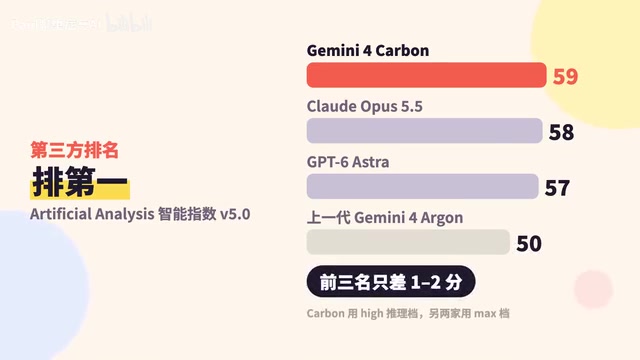
Google Releases Gemini 4 Carbon: Its Strongest Model Yet, Debuting with a Cybersecurity Focus
Google releases Gemini 4 Carbon, calling it its strongest model, with a cybersecurity focus. It tops the third-party composite ranking at 59 points but leads by only one or two. This article analyzes its security test results, staged rollout, token pricing, and the divergence between self-reported and third-party tests on hallucinations.

LangChain Adds SchemagateRetriever: On-Demand Table Retrieval Cuts Text-to-SQL Prompts by 92.9%
LangChain docs add SchemagateRetriever: retrieves only the tables needed for text-to-SQL with permission filtering, cutting median prompt size by 92.9% on Spider 2.0 large schemas via offline BM25 selection with no model calls.

Multi-Step AI Agent Guardrail in Practice: Fact-Change Detection Drives False-Alarm Rate to 0%
Developer shares first version of a multi-step AI Agent guardrail: re-verifying dependency facts before irreversible actions cut false alarms from 50% to 17% across 23 scenarios, then to 0% via conservative normalization without lowering catch rate. Runs on local qwen2.5-7b.