AI Data Centers Fuel Nuclear Fusion Boom: Utilities Racing to Back Fusion Startups
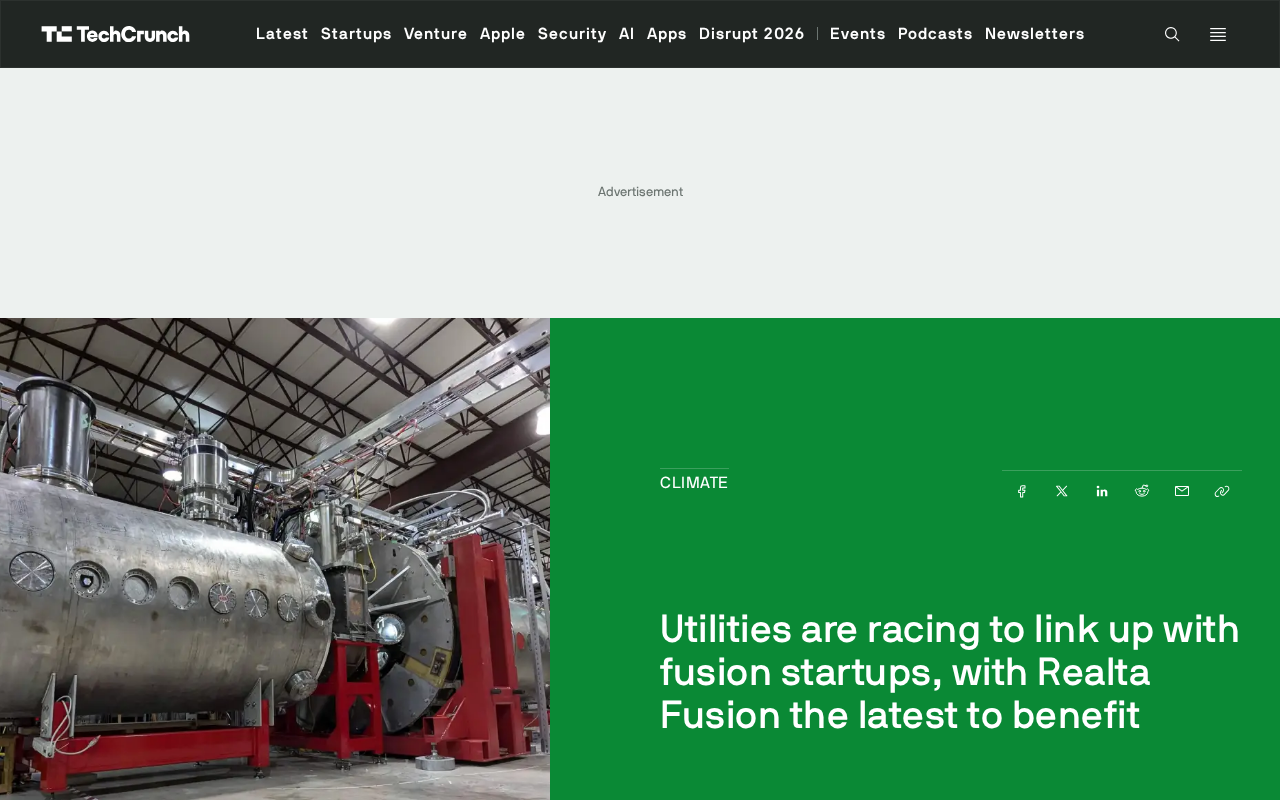
AI's power hunger is pushing utilities to bet big on nuclear fusion startups as the next baseload solution.
Explosive AI growth is straining power grids, driving utilities to partner with fusion startups like Realta Fusion. As data centers demand stable baseload power that renewables can't reliably provide, utilities are signing PPAs and investing in fusion technology despite commercialization timelines extending into the 2030s, marking a strategic shift from fossil fuels toward long-term clean energy solutions.
The Power Grid Crisis Amid the AI Computing Frenzy
As generative AI experiences explosive growth, data centers are expanding at an unprecedented pace, pushing power grid systems to their breaking point.
Generative AI and Data Center Energy Consumption Context: Generative AI refers to artificial intelligence systems capable of creating new content, such as ChatGPT and Midjourney. These AI models are typically based on Transformer architecture with parameters numbering in the hundreds of billions or even trillions. Training a large language model (LLM) requires thousands of high-performance GPUs running continuously for weeks to months, with a single training session consuming millions of kilowatt-hours. More critically, the inference stage after model deployment is equally energy-intensive—each ChatGPT response to a user query consumes approximately 10 times the energy of a traditional Google search. According to the International Energy Agency, global data center electricity consumption is projected to reach 1,000 terawatt-hours by 2026, equivalent to Japan's annual electricity usage.
Industry analysis shows that AI data center energy consumption far exceeds traditional computing facilities, with a single large AI training cluster's power consumption rivaling that of a small to medium-sized city. This exponential growth in electricity demand is pushing power infrastructure in the United States and globally to its limits.
The sudden surge in grid pressure is forcing utilities to reconsider their future energy supply structure. Traditional fossil fuel generation faces carbon emission constraints, while renewable energy sources like wind and solar suffer from intermittency issues, making it difficult to meet data centers' rigid requirement for 24/7 stable operation. Against this backdrop, a technology once considered "always fifty years away"—nuclear fusion—is unexpectedly becoming the target of competition among power giants.
Why Nuclear Fusion Is the Ideal Energy Solution for the AI Era
Nuclear fusion's core appeal lies in how it almost perfectly matches the energy requirements of the AI age.
The Fundamental Difference Between Nuclear Fission and Fusion: Nuclear fission is the process where heavy atomic nuclei (such as uranium-235) split into lighter nuclei, releasing energy—this is the technological basis for existing nuclear power plants. Its drawbacks include producing long half-life radioactive waste (requiring millennia-long safe storage) and the risk of core meltdown. Nuclear fusion is the opposite: light atomic nuclei (mainly deuterium and tritium, isotopes of hydrogen) fuse under extremely high temperature and pressure to form heavier nuclei (helium), releasing energy—this is precisely how the sun generates light and heat. Fusion's advantages include: virtually unlimited fuel supply (deuterium can be extracted from seawater), no long-lived radioactive waste production, and reactors that won't explode uncontrollably. However, achieving controlled fusion is extremely difficult, requiring heating plasma to hundreds of millions of degrees Celsius and maintaining stable confinement for sufficient time.
Unlike nuclear fission, fusion reactions use hydrogen isotopes as fuel and theoretically provide nearly unlimited, clean, and high-density energy without producing long-term high-level radioactive waste, with better safety assurances.
Data Centers' Critical Need for Stable Baseload Power
The Grid Concept of Baseload Power: Baseload power is a core concept in power system planning, referring to electricity that is continuously and stably supplied 24 hours a day to meet minimum demand. Traditional baseload sources include coal power, nuclear power, and large hydroelectric plants, all sharing the characteristic of stable, controllable output unaffected by external conditions. This contrasts with peak load power (addressing consumption peaks) and intermittent renewable energy supply. Data centers have extremely high power quality requirements: voltage fluctuations exceeding ±10% can cause server outages, making them dependent on baseload sources. While wind and solar are clean, their generation fluctuates dramatically with weather—Germany once experienced an 80% drop in wind and solar generation on cloudy days, which is precisely why renewables cannot independently support data centers.
What AI data centers need most is stable "baseload power"—a continuous, predictable power source. Once commercialized, nuclear fusion would provide exactly this type of weather-independent, round-the-clock electricity. This is the key reason utilities are willing to plan ahead and lock in future capacity.
Utilities Shift from Wait-and-See to Proactive Engagement
Notably, the role of utilities in this wave has fundamentally transformed. Previously, fusion R&D relied mainly on government laboratories and venture capital, with utilities mostly taking a wait-and-see approach. Now, facing certain demand growth driven by AI, they're proactively establishing partnerships with fusion startups, securing positions on this still-maturing track through power purchase agreements (PPAs) or direct investments.
The Business Model of Power Purchase Agreements (PPAs): A Power Purchase Agreement (PPA) is a long-term contract mechanism in the energy industry where the buyer commits to purchasing the seller's power output at agreed prices over a specified future period. For fusion startups, PPAs have revolutionary significance: first, they provide stable future cash flow projections, making it easier to obtain bank loans and equity financing; second, having a definite customer makes technical approaches more than paper exercises; third, utilities typically require participation in technical reviews, objectively improving project feasibility. Typical PPA terms range from 10-25 years, with prices potentially including fixed and variable components. For example, Google once signed a 20-year PPA with a solar company, locking in per-kilowatt-hour rates, both hedging against future price increases and providing construction capital for the partner.
Realta Fusion: Latest Beneficiary in the Fusion Commercialization Wave
In this collaboration surge, Realta Fusion has become one of the latest fusion startups to gain utility favor. This company represents the typical path of new-generation fusion ventures—leveraging cutting-edge physics research to explore more cost-effective and scalable fusion technology routes.
For fusion startups, establishing connections with utilities holds major significance:
- Clear Commercial Pathway: Utilities as potential customers significantly reduce market risk for technical approaches
- Industry Endorsement and Financial Support: Recognition from energy industry entities helps capital-intensive companies cross the long R&D cycle
- Boosting Market Confidence: In an environment where fusion commercialization still faces many uncertainties, a partnership signal from utilities often carries more persuasive power than pure financing
Rational Thinking Behind the Fusion Fever
Despite the attractive prospects, a clear-headed approach to this "fusion fever" remains necessary.
Real Challenges in Commercialization Timeline
The Physical Significance of Net Energy Gain: Net energy gain is the key indicator for judging fusion success, meaning the energy released by fusion reactions exceeds the energy input required to sustain the reaction, typically expressed as Q value (Q = output energy / input energy). In December 2022, Lawrence Livermore National Laboratory first achieved Q>1 inertial confinement fusion, inputting 2.05 megajoules of laser energy and obtaining 3.15 megajoules of fusion energy—a physics milestone. However, commercial power generation requires Q≥10 or higher, and system losses like laser efficiency must be factored in—the experiment's lasers consumed 300 megajoules of electrical energy, resulting in overall energy loss. Additionally, the experiment was pulsed (repeatable only a few times daily), while commercial plants need continuous stable operation. Thus a huge gap remains between scientific breakthrough and engineering application.
Nuclear fusion has yet to achieve truly commercially viable power generation with net energy gain. Even under optimistic estimates, most fusion startups target commercialization in the 2030s or later. Meanwhile, the power gap for AI data centers is an immediate pressing issue, creating a clear temporal mismatch between the two. Therefore, fusion is more a "strategic bet" by utilities on the long-term future rather than a panacea for current crises.
The Commercial Logic of AI Industry Demand Spillover
From a broader perspective, this "marriage" between utilities and fusion companies is essentially the result of AI industry demand spillover. AI is not only reshaping software and computing industries but also profoundly changing the investment logic of the energy sector. The massive energy consumption of data centers is, in turn, becoming a powerful engine driving the accelerated deployment of clean energy and frontier technologies—this may be an easily overlooked yet far-reaching chain reaction in the AI wave.
Conclusion: The Shared Future of AI and Nuclear Fusion
AI data centers and nuclear fusion—one the hottest technological application of the present, the other frontier science carrying humanity's ultimate energy dream—are now tightly linked through the common thread of electricity. Realta Fusion and similar startups gaining utility favor marks fusion technology's gradual transition from pure scientific exploration toward real commercial rehearsal.
Whether this race ultimately bears fruit depends on whether fusion technology can deliver on its promises within the next decade. But regardless of outcome, AI's transformative impact on energy infrastructure is already evident—it is paving a path to reality with real money for technologies once deemed impossibly distant.
Related articles
2026 AI Coding Tools Comparison: Claude, ChatGPT, Gemini — Which Is the Best?
A 2026 comparison of five mainstream AI coding tools — Claude Code, ChatGPT Codex, Gemini, DeepSeek, and GitHub Copilot — on real projects, pricing, and code quality, to help you decide where that $20/month should go.

ChatGPT Codex Can Clone Any Software? Testing the Risks and the Truth
YouTube shorts claim ChatGPT Codex or Claude Code can clone Adobe, Excel, and Figma for lifelong free use. We break down the feasibility, legal risks, and DM-funnel tactics—and explain what AI coding tools are truly good for.

Kilo Code Is Free to Install but Charges for API: Cost Estimation and Configuration Guide
Kilo Code is free to install, but connected AI models are billed per token. This guide covers VS Code extension and CLI setup and shows how to estimate API costs.