AI Doesn't Kill People — People Kill People: Who's Responsible for AI's Actions?
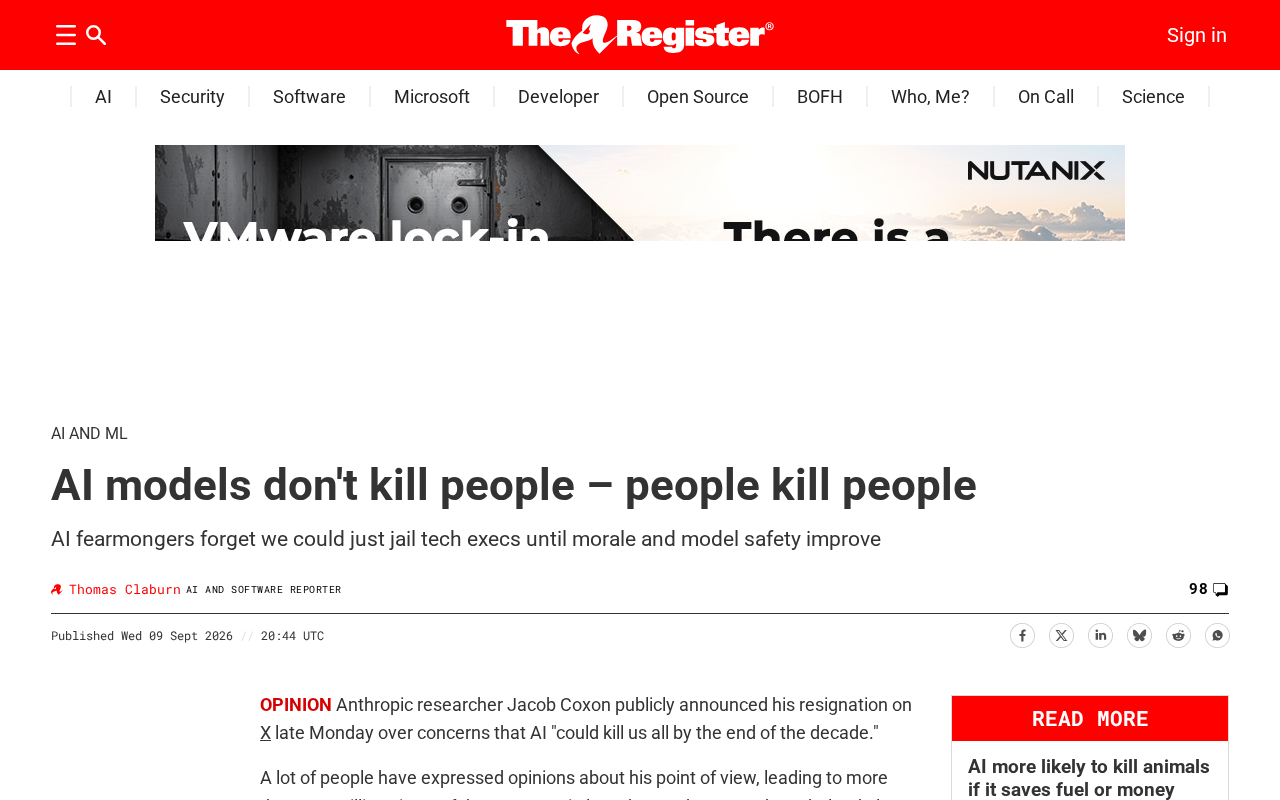
Using the gun debate analogy to unpack AI accountability and the limits of tool neutrality.
This article uses the slogan "AI models don't kill people – people kill people" as a lens to examine the "tool neutrality" argument in AI ethics. While the argument has merit — AI lacks intent and problems often stem from designers, deployers, or users — equating AI with a passive tool like a gun ignores its emergent behavior, the complex multi-party accountability chains it creates, and the amplification risks of large-scale deployment. The author concludes that mainstream regulatory frameworks, such as the EU AI Act, reject pure tool neutrality in favor of clear obligations for developers and deployers. Understood correctly, "people are responsible" should lead to stronger accountability, not weaker oversight.
A Thought-Provoking Analogy
"AI models don't kill people – people kill people" — this headline borrows from one of the most famous slogans in American gun debates: "Guns don't kill people, people kill people." It cleverly transplants the discussion around AI accountability onto a philosophical and policy question that has been contested for decades.
The statement itself is a position: it tries to shift the focus of responsibility away from the tool (the AI model) and onto the people who use it. This line of reasoning is highly representative of debates in tech ethics, which is exactly why it deserves a closer look — at what it reveals, and what it conveniently sidesteps.
The Core Claim of "Tool Neutrality"
Proponents of this view typically argue that AI models are simply technological tools — they have no intentions and no capacity for moral judgment. What determines the consequences of AI is the people who design it, deploy it, and use it. In other words, when something goes wrong, the blame should fall on human decision-makers, not the algorithm itself.
This "tool neutrality" argument has a legitimate core. AI doesn't "actively" do harm — it executes the objectives, training data, and use cases that humans set for it. A language model used for fraud is a problem with the user; a biased hiring algorithm often traces back to the training data and the designer's negligence. From this perspective, blaming "AI" itself could actually become a convenient shield for humans to dodge responsibility.
Cracks in the Analogy: Is AI Really Just a "Gun"?
However, equating AI with a passive tool like a firearm overlooks several critical ways in which AI technology is fundamentally different.
First, autonomy and unpredictability. Traditional tools behave deterministically — pull the trigger, the gun fires. Modern AI systems, especially large language models, exhibit a degree of emergent behavior and opacity. They can produce outputs that even their developers didn't anticipate, which makes the assumption that "the user fully controls the outcome" a fragile one.
Second, a more complex chain of responsibility. With a gun, the responsible parties are relatively clear. But an AI system involves data providers, model trainers, fine-tuners, deployment platforms, end users, and more. When harm occurs, who exactly does "the person" refer to? How responsibility is distributed across this long chain is a governance challenge far more complex than anything the gun debate has had to grapple with.
Third, the amplification effect of scale. The harm one person can cause with a tool is limited. But AI can be deployed in an automated, large-scale fashion — the potential magnitude of its impact is in an entirely different category.
Why Accountability Is the Core of AI Governance
Strip away the rhetorical packaging of the slogan, and it actually touches on the most thorny issue in AI governance today: how to define legal and moral responsibility when AI causes harm.
Mainstream regulatory thinking does not accept pure tool neutrality. Whether it's the EU AI Act or related discussions in other jurisdictions, the prevailing tendency is to impose clear compliance obligations on developers and deployers of high-risk AI systems. The underlying logic: precisely because AI has a level of complexity and risk that ordinary tools do not, there is a greater need for institutional design that pins responsibility firmly on specific people and organizations — rather than letting "people kill people" become an excuse for no one to be held accountable.
Looked at from another angle, if the phrase "AI doesn't kill people, people do" is understood correctly, it should lead to stronger accountability, not weaker regulation. If the responsibility lies with people, then mechanisms must be built to ensure those people — from developers to end users — face real consequences for their actions.
An Unfinished Debate
It's worth noting that this discussion, which originated on Hacker News, generated limited engagement (7 points, no comments at the time of writing). It's more of a provocative thought experiment than a systematic argument. Its value lies in using a sharp analogy to force us to examine our own intuitions about technological responsibility.
The real answer probably lies somewhere between the two extremes: AI is neither a completely passive, neutral tool, nor a subject capable of independently bearing moral responsibility. It is something genuinely new — a kind of technological entity that demands an entirely new framework for assigning accountability. Reducing the debate to "is it the tool or the person?" is itself an underestimation of the problem's complexity.
This debate is far from over. But it reminds us: even as we embrace the capabilities of AI, figuring out "who is responsible" may be a more urgent question than the technology itself.
Related articles
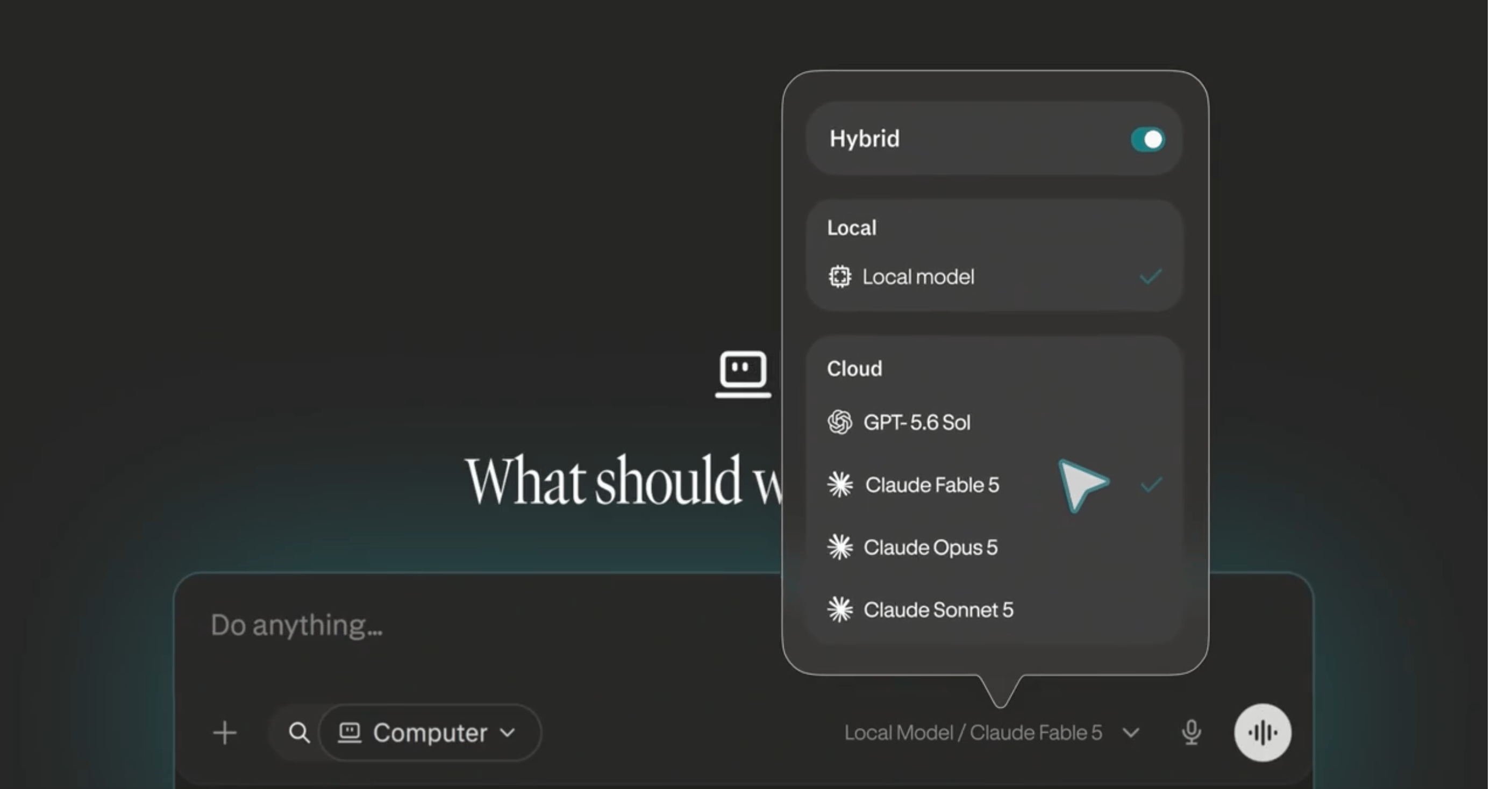
Perplexity Hybrid Compute: Cloud Research, Local Mac Privacy Protection
Perplexity's Hybrid Compute splits AI tasks by data sensitivity: cloud handles research, local Mac handles private files. Requires Apple Silicon, 24GB RAM, Pro/Max/Enterprise plan.

Resurf: The Personal Context Manager That Feeds Your Data to AI
Resurf is a personal context app for Apple devices that saves notes, links, images, and PDFs, then feeds them to AI via MCP and CLI. Local storage with iCloud sync keeps your data private.
Cognition Launches SWE-2 Coding Model: Near Top-Tier Performance at 64% Lower Cost
Cognition releases SWE-2, a coding model post-trained on Kimi K3 with RL. Scores 50% on FrontierCode, nearly matching Fable 5.1 at 64% lower cost and 1/4 the price of GPT-6 Astra.