AI Joins Forces with Mathematicians to Challenge the Riemann Hypothesis: Claude-Assisted Proof Sparks Debate

Mathematicians and Claude jointly built a Riemann Hypothesis proof; Lean verification passed, but the academic community has not yet accepted it.
This week, a mathematician published a proof of the Riemann Hypothesis built with the AI assistant Claude, formally verified using the Lean proof assistant with multiple independent checkers reporting a pass. The Riemann Hypothesis concerns prime distribution and has stood for over 160 years as mathematics' most famous unsolved problem. However, formal verification does not mean the conjecture is officially solved: the proof still needs formal publication and a two-year peer review, and mathematicians need to understand its logic. The core controversy is whether AI should receive authorship and recognition—reflecting the academic norms AI participation inevitably raises. For now, cautious excitement is the right attitude.
The Riemann Hypothesis—the most famous unsolved problem in mathematics, which has stood for over 160 years—appears to have met an unexpected challenger: AI. This week, a mathematician published a proof he built together with Claude, and a computer has already verified it. The news immediately sparked intense discussion in both the mathematics and AI communities.
What Is the Riemann Hypothesis Actually Saying?
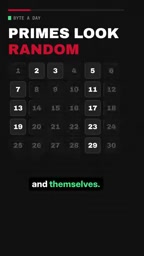
To understand the weight of this development, we first need to return to the origin of the conjecture. The Riemann Hypothesis concerns prime numbers—those numbers divisible only by 1 and themselves, such as 2, 3, 5, 7, 11. These numbers appear completely random, and a large part of the foundation of modern internet security rests precisely on enormous primes.
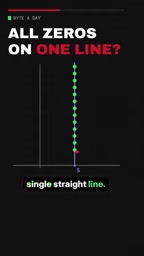
Riemann discovered a formula called the zeta function. You can think of it as a kind of audio equalizer: the special points on the function (called zeros) are like individual notes, and together they play the hidden rhythm behind the primes. Riemann conjectured that all the important zeros lie on the same straight line. Computers have checked trillions of zeros, and all of them fall on that line—but checking trillions of cases is not the same as a proof.
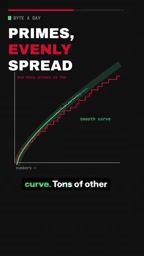
If the conjecture holds, it means the distribution of primes is as even as possible, and their count never deviates too far from a smooth curve. Many other branches of mathematics have long treated this conjecture as established fact.
The zeta function and the Euler product
The Riemann zeta function was first studied by Euler and is defined as the infinite series ζ(s) = 1 + 1/2^s + 1/3^s + …, which converges when the real part is greater than 1. Riemann's key contribution was to analytically continue it to the entire complex plane (except for the pole at s=1) and to discover the functional equation and symmetries. More importantly, the Euler product formula directly connects the zeta function to the primes: ζ(s) = ∏(1 - p^{-s})^{-1}, where the product runs over all primes. This identity means that the analytic properties of the zeta function encode information about the distribution of primes, and the locations of the zeros control the error term in the prime-counting function π(x). The Riemann Hypothesis asserts that all nontrivial zeros lie on the critical line Re(s)=1/2, and it is precisely this connection that makes the conjecture central to the problem of prime distribution.
Computer Verification: Enter Lean
So how do you check a proof this enormous? The answer is Lean—an extremely strict proof assistant, like an impossibly demanding teacher who checks every step line by line and rejects the whole thing if there is a single error. According to the video, multiple independent checkers all returned a pass.
Here is an intriguing twist: the computer says it is correct, but mathematicians still need time to understand why it is correct. Top experts are studying the proof, and the entire mathematical community is trying to figure out how it was actually solved.
What is formal verification?
Lean is an interactive theorem prover based on dependent type theory. Users can write mathematical definitions, theorems, and proofs in it, and the system checks the logical correctness of every step line by line. Unlike traditional computer algebra systems, Lean does not rely on numerical computation or heuristics; it requires proofs to be completely rigorous in formal logic. In recent years, the Lean community has developed the mathlib library, which has formalized a large amount of modern mathematics. When a proof is accepted by Lean, it means it does not depend on any undeclared assumptions or implicit steps, thereby ruling out human oversight or error. This is also why “multiple independent checkers passing” is regarded as strong evidence, although it is still not equivalent to peer review by the mathematical community.
Formal Verification Passing ≠ Acceptance by the Mathematical Community
To be clear, this does not mean the Riemann Hypothesis has been officially solved. According to the rules, a proof must first be formally published and then undergo a two-year peer review period before it can possibly be accepted. The current state is: AI found a path, a computer checked every step, and now it is humanity's turn to understand it.
This also raises a deeper question: formal verification tools can confirm that every step in the logical chain is correct, but they cannot replace mathematical intuition and conceptual understanding. A proof being “machine-verifiable” and a proof being “human-understandable and accepted” are two different things.
Peer review and the standards for accepting a proof
In the mathematical community, acceptance of a proof usually requires peer review: experts carefully read the manuscript and check whether the logic is rigorous, the concepts are clear, and whether there are hidden gaps. For major conjectures, the review process can take years or even longer. For example, when Andrew Wiles proved Fermat's Last Theorem, the initial version contained a gap, and it took more than a year of repair before it was finally published. Although formal verification can ensure that the logical chain is flawless, it does not check the “mathematical meaning” of the proof—that is, whether the proof provides new insight, whether it can be understood by humans, and whether it connects naturally with existing theory. Therefore, even if Lean verification passes, the mathematical community still needs time to digest its structure and ideas before it can judge whether it constitutes a genuine “proof.”
Should AI Be Credited for the Proof?
The core controversy raised by the video is: should AI receive recognition for a proof? There is no standard answer to this question, but it reflects the issues of authorship, contribution, and academic norms that inevitably arise once AI participates in mathematical research.
From a practical perspective, Claude's role here is closer to that of a powerful exploration tool—it may have helped find the proof path, but the posing of the problem, the judgment of direction, and the interpretation of results still depend on human mathematicians. The real answer may only emerge after this proof has gone through full review and been digested by the mathematical community. Until then, cautious excitement is the more appropriate attitude.
One-line Summary
A mathematician and Claude jointly constructed a proof of the Riemann Hypothesis; Lean verification passed, but the academic community has not yet accepted it.
Paragraph Summary
This week, a mathematician published a proof of the Riemann Hypothesis built together with the AI assistant Claude, and it was formally verified using the Lean proof assistant, with multiple independent checkers reporting a pass. The Riemann Hypothesis concerns the distribution of primes and has stood for more than 160 years as the most famous unsolved problem in mathematics. However, formal verification passing does not mean the conjecture has been officially solved: the proof still needs formal publication and a two-year peer review, and mathematicians need to understand its internal logic. The core controversy is whether AI should receive authorship and recognition for the proof, which reflects the academic norms that inevitably arise when AI participates in mathematical research. At present, cautious excitement is the more appropriate attitude.
Related articles

AI Cracks the Riemann Hypothesis? Analyzing the Claude Math Breakthrough Rumor
Meta's Chief AI Officer Alexander Wang claims AI, via Claude, has cracked the Riemann Hypothesis. This article analyzes the reliability of the source, verifiability issues, and its potential implications for AI math capabilities in cancer and space research.

Sakana AI's In-House Model: Ambitions Beyond Japanese National Security
Sakana AI's CEO says in-house models mean more than Japanese national security—they're about industrial competitiveness. We analyze its small-model and model-merging approach, industrialization challenges, and the economic logic beyond the "sovereign AI" narrative.

Knuth Pauses Error Reports for The Art of Computer Programming, Sparking Discussion
Donald Knuth pauses error reports for The Art of Computer Programming, sparking Hacker News discussion. We analyze the announcement's background, possible reasons, and lessons for technical writing and open-source maintenance.