AI Large Model Engineering Careers Decoded: Algorithm Research vs. Engineering Deployment — Which Path Is Right for You?

AI large model careers split into two tracks — engineering deployment is the realistic path for most developers in 2026.
The AI large model job market has two core tracks: algorithm research (requiring top-tier master's degrees and conference publications) and engineering deployment (applying mature models like DeepSeek to real business scenarios). Engineering deployment is more accessible but still demands solid coding skills and mastery of Multi-Agent development, full-stack RAG, LLM inference/deployment, and foundational concepts like Transformer architecture and LoRA fine-tuning. Heading into 2026, Harness architecture has become the key interview differentiator — candidates who can demonstrate complex engineering deployment projects will have a decisive edge over those relying on low-code, drag-and-drop tools.
The AI large model job market can feel overwhelming. Browse any major job board and you'll find a chaotic mix of titles and descriptions — but if you step back and look at the big picture, there are really only two career tracks: AI Algorithms and AI Large Model Engineering Deployment. Understanding the difference between these two paths is the essential first step in planning your career.
Two Main Tracks: Algorithm Research vs. Engineering Deployment
The algorithm track centers on in-house model work — pre-training, iterating, and optimizing models. Classic examples include algorithm-focused companies like DeepSeek and Alibaba's Qwen team, as well as large tech companies like ByteDance and Huawei that develop proprietary model toolchains. Day-to-day work on this track means training models, improving models, and building the next generation of models.
The barrier to entry here is steep — realistically, you need a master's degree from a top-tier Chinese university (985-level), and publications are essentially mandatory, typically at top-tier conferences. For candidates without that pedigree, the algorithm track is an uphill battle. The advice here is direct and practical: if you have an ordinary bachelor's degree, don't bang your head against the algorithm track.
Engineering deployment, by contrast, is far more accessible. The core idea is taking models that someone else has already trained — DeepSeek, Qwen, ByteDance's or Huawei's models — and deploying them to solve real business problems. This track doesn't ask you to train models; it asks you to use them effectively.
What Engineering Deployment Actually Looks Like
Engineering deployment isn't an abstract concept — a few concrete examples make it clear. Take a manufacturing company like BYD, which typically runs large, complex procurement platforms. A single vehicle contains thousands of parts, and managing procurement at scale is tedious and error-prone. One solution: build an Agent that lets procurement staff complete purchasing analysis and auto-generate purchase orders through natural conversation. That's a textbook example of large model engineering deployment.
Or consider healthcare: privately deploying DeepSeek within a hospital and applying it to clinical diagnosis assistance. Same idea — you're not building the model, you're grafting a mature model onto a specific industry workflow.

One critical point: engineering deployment requires real coding ability. Without code, nothing actually gets deployed — the same principle that applies to any software project. In the future, as robotics and AI converge, a more orchestration-focused role with less hands-on coding may emerge, but for now, coding ability is a hard prerequisite.
The Core Skill Map for Engineering Deployment
Breaking down engineering deployment into its major components reveals the key areas that interviews are likely to probe.
Agent Development
This is the most in-demand area right now. Core competencies include:
- Multi-Agent systems: coordinating multiple agents with specialized roles
- Task planning and execution: enabling agents to decompose and complete complex tasks
- Tool calling: giving agents the ability to invoke external tools and APIs
Full-Stack RAG
RAG (Retrieval-Augmented Generation) is a cornerstone of engineering deployment, covering vector retrieval, knowledge graphs, semantic understanding, and hybrid retrieval techniques. These capabilities determine whether an agent can accurately access and apply a company's internal knowledge.
LLM Inference and Deployment
Many people assume engineering deployment doesn't touch lower-level infrastructure — that's a misconception. Inference and deployment are very much part of the job: building services with FastAPI in the Python ecosystem, handling proxies and cluster scheduling, and getting models running stably in production.

Essential Foundational Knowledge
You don't need to be an algorithms expert, but you do need to understand the fundamentals:
- Transformer architecture: a solid conceptual grasp of the overall flow — deep mathematical derivations aren't required
- Fine-tuning methods: practical knowledge of LoRA and parameter-efficient fine-tuning (PEFT) approaches
The key calibration here is important: you need to know and be able to apply every area, but you don't need to master them all deeply. The gap between "can do" and "expert-level" is large, and interviews frequently cover all of these topics — so you can't afford blind spots in breadth.
The Big Shift Heading into 2026: Harness Architecture Becomes an Interview Focal Point
As we move into 2026, the biggest change in interviews is the growing emphasis on Harness architecture. Interviewers increasingly want to see evidence of complex, end-to-end engineering deployment ability. If your resume can point to one to three Harness architecture projects, you'll have a clear edge over the competition.

The advice on this is direct: projects from before 2025 don't need to be reframed around Harness architecture, but anything you build from 2026 onward should be structured and presented as a Harness architecture project. Even retrofitting an existing project to present it in a more rigorously engineered form is worth doing.
This reflects a broader rise in industry standards. Being able to say "I built an Agent using Dify" was passable a couple of years ago — by 2026, it barely registers. The market is pushing practitioners toward deeper, more engineering-intensive work. For anyone entering this space, the core strategy comes down to one principle: stop relying on drag-and-drop builders and go deeper into underlying principles and real engineering deployment.
Conclusion
For candidates with an ordinary bachelor's degree background, AI large model engineering deployment is the more realistic and achievable path. It doesn't demand top-conference publications or an elite university name — but it does demand solid coding ability, a complete skill set, and systematic mastery of core technologies like Multi-Agent systems, RAG, and inference deployment. In the 2026 job market, the ability to clearly articulate Harness architecture and walk through complex engineering deployment projects is increasingly becoming the dividing line between candidates who stand out and those who don't.
Related articles

Codex vs. Claude Code: A Beginner's Guide to AI Coding Agents
Codex vs. Claude Code: which AI coding agent should you use? This guide compares both tools and walks beginners through GPT account setup, virtual number platforms, US App Store switching, and subscription cost-saving tips.
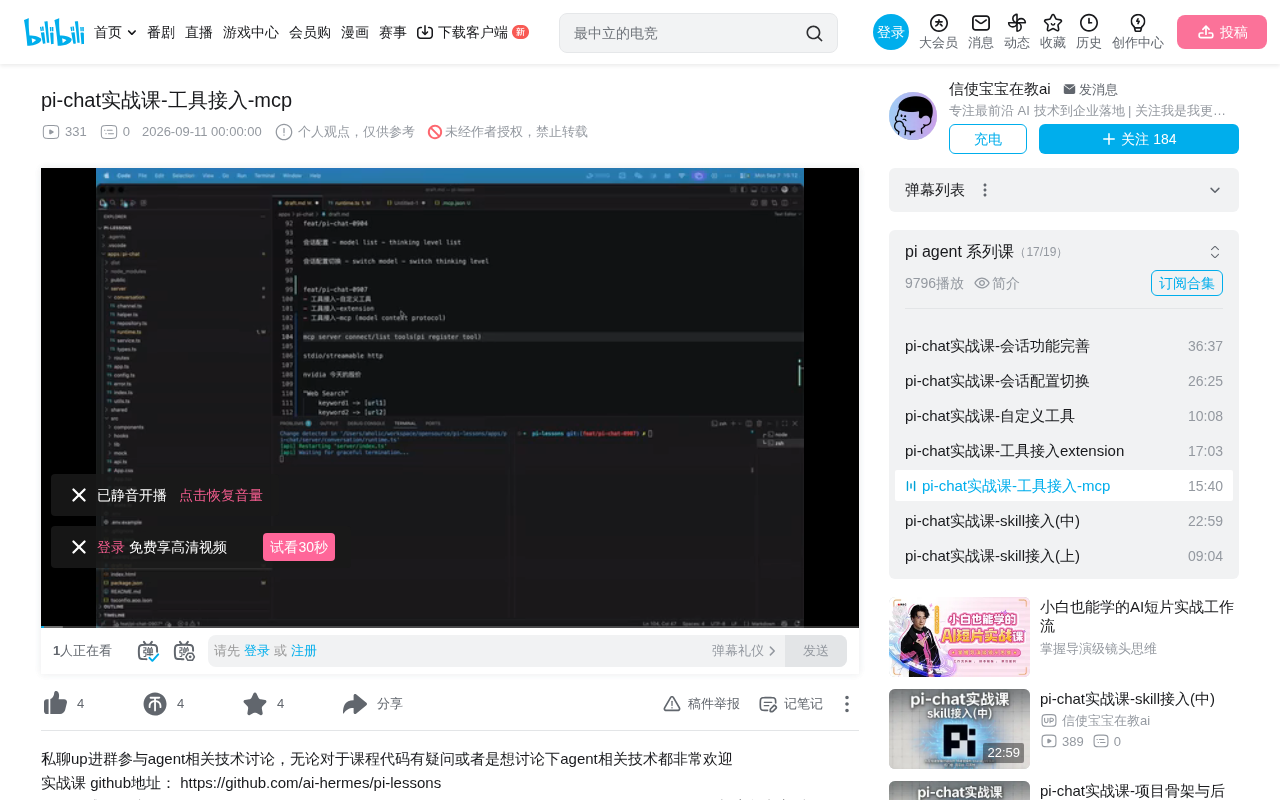
Pi-chat in Practice: Connecting External Tools to AI Agents via MCP Protocol
Learn how to integrate external tools into AI Agents using MCP protocol with Pi framework. Covers pi-mcp-adapter setup, .mcp.json config, Extension Factory initialization, and a live 12306 train ticket query demo.

Build an AI Daily Digest with Hermes Agent: Auto-Delivered at 8 AM Every Day
Step-by-step guide to building a multi-source AI creator daily digest with Hermes Agent, combining websearch, curated channels, and platform signals for automated 8 AM delivery to enterprise WeChat.