AI LLMs Auto-Patching Browser Environments: A Practical Guide to 10x JS Reverse Engineering Efficiency

Using AI LLMs with crafted System Prompts to auto-patch browser environments in JS reverse engineering.
This article introduces a novel approach using AI LLMs (like DeepSeek V3) to automatically complete the "environment patching" work in JS reverse engineering. The core isn't simply asking AI to write code, but encoding senior reverse engineers' methodologies — including prototype chain simulation, anti-detection strategies, and function toString protection — into a carefully designed System Prompt as executable instructions for AI, automatically generating simulation code that passes major platform environment detection with efficiency gains of several to ten times.
AI Is Changing the Game of JS Reverse Engineering
In the world of web reverse engineering, "environment patching" (补环境) has always been a tedious and technically demanding task. Environment patching means simulating various browser APIs and objects in non-browser environments like Node.js, enabling encrypted JS code extracted from websites to run properly.
Understanding this problem requires some background: encrypted JS code on modern websites typically relies heavily on the browser host environment, including global objects like window, document, and navigator, as well as advanced browser APIs such as Canvas fingerprinting, WebGL, and AudioContext. When reverse engineers port this code to Node.js for execution, since Node.js is fundamentally a server-side JavaScript runtime lacking these objects provided by browser rendering engines, the code immediately throws ReferenceError or returns abnormal values, preventing encryption algorithms from functioning properly. The traditional approach requires reverse engineers to individually troubleshoot missing environment variables and manually write simulation code — an extremely time-consuming process.
Now someone has proposed a completely new approach: leveraging AI LLMs (such as DeepSeek) combined with carefully designed System Prompts to automatically patch JS environments. This solution reportedly handles environment detection from major platforms including Alibaba ecosystem, Tencent ecosystem, Xiaohongshu, Pinduoduo, JD.com and more, with efficiency improvements of several times or even 10x.
Core Principles of AI Environment Patching: It's Not Simply Asking AI to Write Code
Why Directly Feeding Code to AI Doesn't Work
Many people's first instinct is: just throw the JS file at ChatGPT or DeepSeek and have it patch the environment, right? Actual testing shows this "raw submission" approach performs poorly — the environment code AI generates is often not realistic enough to pass various detection mechanisms on target websites.
The fundamental reason is that AI lacks critical contextual information: it doesn't know what standards to follow when patching environments, how to handle prototype chain detection, property descriptor detection, function toString protection, and other anti-detection mechanisms.
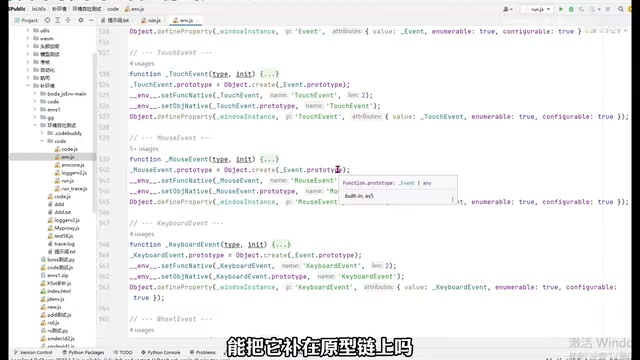
To understand the difficulty of these detection mechanisms, you need to understand their technical principles. Every object in JavaScript has a Prototype Chain, and native browser objects (such as HTMLElement, Navigator) have specific prototype chain structures. When reverse engineers simply forge objects with window.navigator = {userAgent: 'xxx'}, the forged object's prototype chain differs from real browser objects, and website detection code can easily identify it as a forged environment through Object.getPrototypeOf(), the instanceof operator, or constructor properties. Additionally, Property Descriptor Detection checks whether property characteristics like enumerable, configurable, and writable conform to native object specifications; function toString protection detects the return value of Function.prototype.toString — native functions should return the function xxx() { [native code] } format, which hand-written simulation functions cannot pass. These multi-layered detection mechanisms are the core obstacle that "raw submission" to AI cannot overcome.
System Prompt Design Is the Core Competitive Advantage
The key to this solution isn't which AI model you use, but rather a carefully crafted System Prompt (prompt template).
Prompt Engineering refers to the technical methodology of guiding large language models to produce high-quality, expected outputs through carefully designed input prompts. The difference between a System Prompt and a regular user Prompt is that it establishes the AI's role, capability boundaries, output specifications, and behavioral guidelines before the conversation begins — essentially pre-installing a professional operations manual for the AI. In general scenarios, prompts are often simple task descriptions; but in specialized domains, a high-quality System Prompt is essentially a "structured encoding of domain knowledge" — converting senior engineers' methodologies into instruction sets that AI can understand and execute.
This prompt contains the following critical information:
- Environment patching methodology: Instructs AI to inject simulation code above the prototype chain rather than simple assignment
- Anti-detection strategies: Bypassing descriptor detection, prototype chain detection, function toString protection, and other common validations
- Standard code templates: Providing standardized environment simulation code snippets as references
- Output specifications: Defining log formats and file structures
- Trigger mechanisms: Triggering the complete automated workflow through specific keywords (such as "帮我补环境" / "help me patch the environment")
In simple terms, this prompt is equivalent to "injecting" years of accumulated experience and methodology from a senior reverse engineer into the AI, giving it professional-grade environment patching capabilities.
Practical Demonstration: Complete Workflow from Zero to Running
Preparation
Before using this AI auto-patching solution, you need to prepare the following:
- Target JS file: Encrypted JS code extracted from the target website, saved with a fixed filename (e.g.,
kou.js) - AI tool: The demonstration uses the OpenCode command-line tool paired with the DeepSeek V3 model
- System Prompt file: Pre-configured prompt template
Note that the prompt has the JS filename hardcoded, so the file naming must match when using it.

One-Click Automated Environment Patching
The actual operational steps are very concise:
- Open the OpenCode terminal tool
- Input the prompt, tell AI your JS file path, and add "帮我补环境" (help me patch the environment)
- Press Enter and wait for AI to process automatically
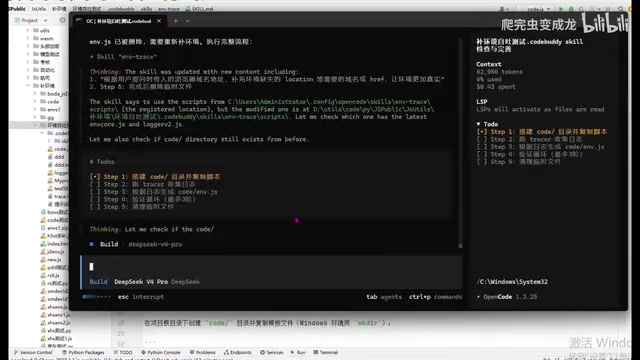
The AI will execute 5 pre-configured steps in sequence: automatically create a working directory, analyze missing environment variables in the JS file, generate simulation code, handle various anti-detection logic, and output test results.
Processing Time and Model Comparison
Different AI models show notable performance differences on environment patching tasks:
| Model | Processing Time | Cost | Use Case |
|---|---|---|---|
| DeepSeek V3 | ~10 minutes | Very low | Batch processing, daily use |
| Claude | 2-3 minutes | Higher | Speed-focused, complex scenarios |
DeepSeek V3 is a large language model released by DeepSeek at the end of 2024, using a MoE (Mixture of Experts) architecture with a total parameter count of 671B, but only activating 37B parameters per inference — maintaining high performance while drastically reducing inference costs. In terms of code generation capability, DeepSeek V3 performs excellently on multiple programming benchmarks (such as HumanEval, MBPP), approaching or even surpassing closed-source models like GPT-4o. Its biggest competitive advantage is the extremely low API call cost — approximately 1/20 to 1/30 of GPT-4o — making it an ideal choice for automation engineering scenarios requiring massive AI API calls (such as batch environment patching). OpenCode is a command-line-based AI programming assistant tool that supports connecting to multiple LLM backends and can directly read and write the local file system, making it well-suited for automated workflows where AI needs to manipulate local code files.
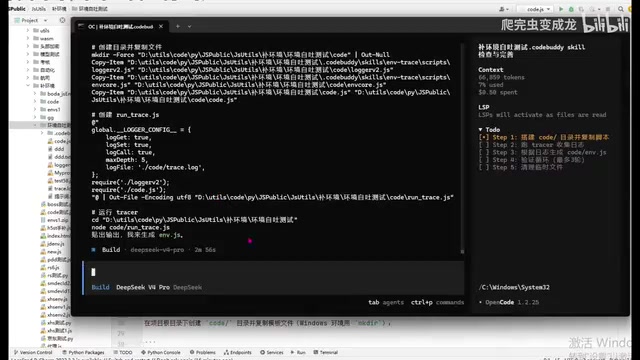
Throughout the process, AI automatically completes the following tasks:
- Scanning all environment dependencies in the JS file
- Injecting simulation code above the prototype chain
- Handling
toStringfunction protection - Simulating browser fingerprint information (UA, screen resolution, etc.)
- Generating ready-to-run test scripts
Limitations and Technical Boundaries of AI Environment Patching
Not a Zero-Threshold Universal Solution
Despite this solution looking quite attractive...
Related articles
 Tutorials
ChatGPT Plus Subscription Guide: Are GPT-5.5, image-2, and Codex Worth the Upgrade?
A detailed look at ChatGPT Plus features — GPT-5.5, image-2, and Codex — with a Plus vs Pro comparison and a complete step-by-step subscription guide for users outside the US.
 Tutorials
Harness AI Engineering in Practice: Using Claude Code to Master Enterprise-Level E-Commerce Development
Deep dive into Harness AI Engineering: master enterprise e-commerce development with Claude Code using the Rules, Skills, Wiki, and Changes framework.
 Tutorials
Cursor + Codex Dual-IDE Collaboration: A Practical Methodology for Open-Source Project Customization
A complete methodology for open-source project customization based on real-world experience, detailing the Cursor+Codex dual-IDE workflow, seven-stage process, MVP validation, and AI source code reading techniques.