AI Made Self-Hosting Fun Again: Behind the HN Buzz

AI lowers the cognitive load of self-hosting, bringing the fun of tinkering back.
Starting from a Hacker News post with only 3 upvotes titled "AI made self-hosting fun again," the article discusses why self-hosting once lost its fun and how AI brings it back. The real barrier isn't coding but operational chores like reverse proxies, certificate renewal, backups, and monitoring. AI reduces cognitive load by explaining errors in context, compressing docs into actionable steps, generating scripts, and enabling low-cost trial and error. The essence of fun returning is that AI removes boring execution and returns people to design and decision-making—hence fun, not easy. Still, AI may offer risky configs and can't bear responsibility for data loss, so treat it as a co-pilot, not autopilot.
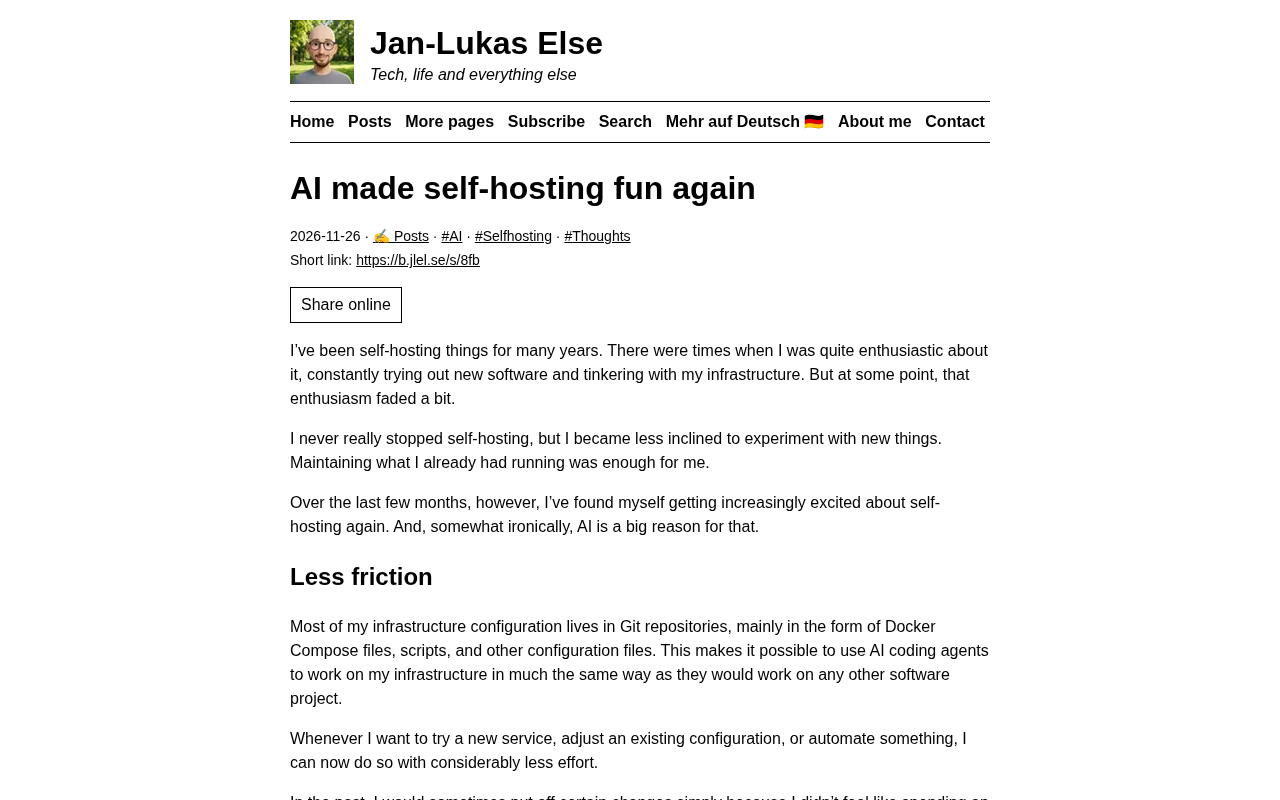
Recently, a post appeared on Hacker News with just 3 upvotes and zero comments, yet its title hit a nerve for many: "AI made self-hosting fun again". No long essay, no technical details—just that one sentence. But it's precisely this kind of lightweight expression that often reflects a spreading mood better than a ten-thousand-word article: self-hosting, an old topic, is regaining attention thanks to AI.
Why Self-Hosting Once Stopped Being "Fun"
Self-hosting has always had a special romantic appeal in tech communities. Running your own mail server, cloud storage, blog, or home lab used to be a badge of geek identity. But the reality is that the barrier and the cost are severely underestimated.
To configure a service, you first have to sort out reverse proxies, certificate renewal, database backups, monitoring and alerts—and then pray there are no dependency conflicts after every system update. When something breaks, you dig through docs, search forums, read logs, and half a day disappears. Many people enthusiastically set up a stack, then give up weeks later because some container died in the middle of the night. The fun of self-hosting gets worn away bit by bit by operational drudgery.
This complaint has circulated in the community for a long time. The word "again" in the title actually implies a premise: it used to be fun, then it wasn't so fun, and now it's back. So what changed?
Reverse proxies and certificate renewal are two of the most common hidden barriers in self-hosting. A reverse proxy (such as Nginx, Caddy, or Traefik) forwards external requests to internal services and handles HTTPS termination; certificate renewal is usually automated via Let's Encrypt's ACME protocol. The problem is that the two often need to be configured together. Once domain resolution, port mapping, or renewal hooks go wrong, the service suddenly becomes unreachable after the certificate expires—and when troubleshooting, it's hard to tell at a glance whether the problem lies in the proxy layer, the DNS layer, or the certificate layer. For newcomers, the debugging cost of such failures far exceeds writing business code, and it's a direct reason many give up on self-hosting.
Homelab refers to a private server cluster built in a home environment using spare hardware, mini PCs, or virtual machines, commonly used to run cloud storage, media libraries, CI pipelines, monitoring, and more. Its fundamental difference from cloud services is that networking, power, hardware, and backups are all the individual's responsibility, with no platform to fall back on. As a result, the joy and the pain of a homelab are tightly bound together—hardware freedom is high, but if any layer breaks, you can only fix it yourself. This is the structural reason the sense of operational drudgery gets amplified.
Which Link in the Self-Hosting Chain Did AI Fill?
Judging from scattered community discussions around this topic, the change AI brings is mainly not "writing code for you," but reducing the cognitive load across the entire self-hosting workflow.
The most direct is configuration and troubleshooting. In the past, pasting an error message into a search engine might require paging through several results to find a matching solution—often from someone else's environment five years ago. Now you can hand the logs to AI, and it can explain in context roughly which layer the error is in and offer several troubleshooting directions. For users unfamiliar with a particular middleware, it's like having a patient assistant available at all times.
Second is document comprehension and automated script generation. Self-hosting involves documentation from a huge number of projects, with wildly varying styles and quality. AI can help compress a lengthy README into "which steps do I need for my situation," and can turn scattered operations into executable scripts. The barrier shifts from "read and execute manually" to "understand and confirm execution."
There's another layer that's less discussed but crucial: AI lowers the cost of trial and error. Want to try a new service? Before, you had to assess "how long will it take to set up, and how do I roll back if I mess up." Now you can spin up a temporary environment faster to validate an idea. This low-cost exploration is exactly where the "fun" comes from.
To be clear, these are observations based on the community discussion atmosphere; the post itself doesn't expand on technical details. What it conveys is more like a signal than a solution.
Cognitive load is a concept from cognitive psychology that refers to the burden on working memory when a person handles a task. The cognitive load of self-hosting comes not only from writing configuration, but even more from tracking multiple abstract layers simultaneously: networking, processes, permissions, storage, and dependencies. AI's value lies in compressing "multi-hop retrieval and assembly" into a single conversation—it doesn't execute for you, but it converges information scattered across docs, logs, and forums into a few actionable steps. This reduces the cost of understanding, not the operation itself, so it won't turn self-hosting into one-click deployment, but it can shorten being stuck from hours to minutes.
Trial-and-error cost in the self-hosting context includes time cost, rollback cost, and psychological cost. In the past, trying a new service meant reserving a block of time for setup, debugging, and cleanup, and failure could leave behind residual configuration. With containers and temporary VMs, plus AI quickly generating startup scripts and troubleshooting suggestions, the barrier to validating an idea is pushed very low. Low-cost exploration matters because it turns self-hosting from a heavy decision of "invest once, maintain long-term" into a light decision you can experiment with at will—and that is precisely the precondition for sustained fun.
The Essence of Fun Returning: From Operational Burden Back to Creation
Zooming out a bit, AI's significance for self-hosting may be more than efficiency gains.
The appeal of self-hosting originally lay in a sense of control and the desire to create—building a system according to your own needs, keeping data in your own hands, and running services your own way. But operational complexity alienated that fun into a burden. When AI takes on a considerable portion of "translating requirements, troubleshooting, and generating configuration," people return to the position of design and decision-making. You're responsible for figuring out what you want, and friction at the execution level is greatly reduced.
This also explains why the title uses "fun" rather than "easy." Self-hosting was never about convenience; those who choose it want exactly that process. AI didn't turn it into idiot-proof operation—it took away the boring parts and left the interesting ones.
A Sober View: AI Is Not Omnipotent Ops
Of course, it would be inappropriate to paint this trend too optimistically. AI has clear boundaries in self-hosting scenarios.
It may offer configuration suggestions that look reasonable but carry actual security risks; it doesn't understand the special constraints of your local environment; it can't bear responsibility for data loss on your behalf. The core risks of self-hosting—data security, permission management, failure recovery—still require human oversight. Treating AI as a co-pilot rather than autopilot is the reasonable expectation.
Also, the post itself has only 3 upvotes and no comments—an extremely small sample. It's worth discussing because the title precisely hits a community sentiment, not because it provides verified conclusions. This is also an interesting phenomenon in tech communities: sometimes one sentence resonates more than an article.
The distinction between co-pilot and autopilot is especially important in ops scenarios. AI-generated configuration suggestions are often syntactically correct and internally consistent, but it doesn't know your network topology, existing credentials, backup strategy, or compliance requirements, so it may recommend overly permissive permissions, ports exposed to the public internet, or scripts that ignore idempotency. The reasonable way to use it is: let AI provide candidate solutions and troubleshooting directions, while a human completes final review and execution, and bears ultimate responsibility for data security, permission boundaries, and recovery processes. Positioning AI as a tool that "accelerates understanding and drafting" rather than an entity that "makes decisions and takes responsibility" is the only way to avoid turning efficiency gains into a new source of risk.
Final Thoughts
Self-hosting is essentially about trading your time for control. What AI does is compress the wasted consumption in that trade, making the deal worthwhile again. Whether it can keep more people on the self-hosting path remains to be seen over time. But at least judging from this short HN post, that long-lost feeling of "tinkering is actually pretty fun" is indeed coming back.
One-line Summary
AI lowers the cognitive load of self-hosting, bringing the fun of tinkering back.
Paragraph Summary
Starting from a Hacker News post with only 3 upvotes titled "AI made self-hosting fun again," the article discusses why self-hosting once lost its fun and how AI is bringing it back. The author points out that the real barrier to self-hosting isn't writing code, but operational chores like reverse proxies, certificate renewal, backups, and monitoring—these trivialities wear down geeks' enthusiasm. AI's main contribution is reducing cognitive load across the workflow: explaining errors in context, compressing lengthy docs into actionable steps, generating scripts, and making exploration easy again through low-cost trial and error. The essence of fun returning is that AI removes boring execution and returns people to the position of design and decision-making—hence the title uses fun rather than easy. The article also cautions that AI may offer risky configurations and cannot bear responsibility for data loss, so it should be treated as a co-pilot, not autopilot.
Related articles
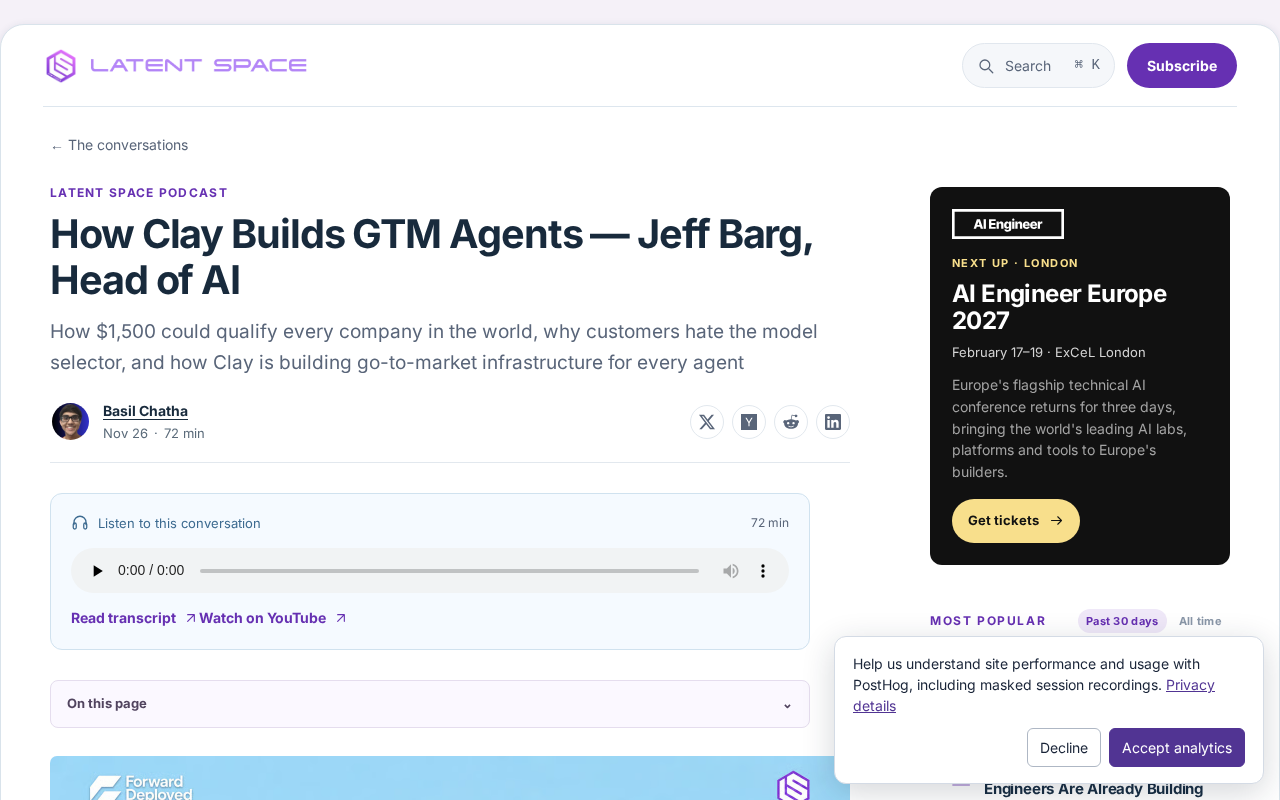
How Clay Uses AI Agents to Rebuild GTM: Qualifying Global Customers for $1,500?
Clay AI lead Jeff Barg shares GTM Agent insights: $1,500 to qualify every company globally, users hate model selectors, and Clay builds GTM infrastructure for every Agent.

Poland Establishes No-Fly Zone at Border in Response to Repeated Airspace Violations
Poland announces a border no-fly zone in response to repeated airspace violations. This article analyzes the strategic significance, Hacker News community discussion, and impact on aviation and security industries.

The AI Extinction Threat: A 90% Probability and a 6–18 Month Window
A YouTube video warns that without halting AI development, humanity could face an extinction threat from superintelligence within 6 to 18 months, with over 90% probability. This article examines its core arguments, Sam Altman's remarks, and divisions among AI safety experts.