AI Manga Series Production: A Practical Guide from Screenplay to Storyboard Script

A step-by-step guide to building a solo AI manga series production pipeline, from screenplay to final cut.
This guide walks through the complete workflow for producing AI animated manga series — from writing screenplays and storyboard scripts with large language models like Doubao and DeepSeek, to image generation, video synthesis, voiceover, and monetization. It introduces the three golden elements of effective prompting and explains the critical difference between a screenplay and a storyboard script.
Why AI Manga Series Are the New Content Frontier
AI manga series are delivering increasingly impressive numbers: many accounts have relatively modest followings, yet individual episodes routinely break a million views. More importantly, creators have already proven the monetization loop works and are generating consistent income. According to analysis from Bilibili content creators, the two core revenue mechanisms for AI manga series are paid unlocking and ad revenue sharing.
Paid unlocking (also called "pay-to-follow") works like chapter-based payments in web novels — viewers pay a small fee to access subsequent episodes. This model has already matured on platforms like Douyin and Kuaishou. Ad revenue sharing means platforms distribute advertising income to creators based on view counts and engagement metrics; Bilibili's "Creator Incentive Program" and Douyin's "Mid-length Video Partner Program" both fall into this category. AI manga series perform particularly well under both models because their serialized nature naturally drives binge-watching behavior, while AI tools dramatically lower production costs — making the revenue-per-unit ratio quite attractive. The more hooked viewers get, the higher the back-end earnings.
This explains the claims of "earning four figures from a one-minute manga episode." That said, a dose of realism is warranted: these headlines tend to be sensationalized. The real barrier isn't "can you make money" — it's "can you actually get the entire production pipeline running." The original video's author made a sharp observation: 99% of people don't get stuck because of ability, but because of workflow. They buy a bunch of subscriptions, binge tutorials, and still can't produce a single uploadable first episode.
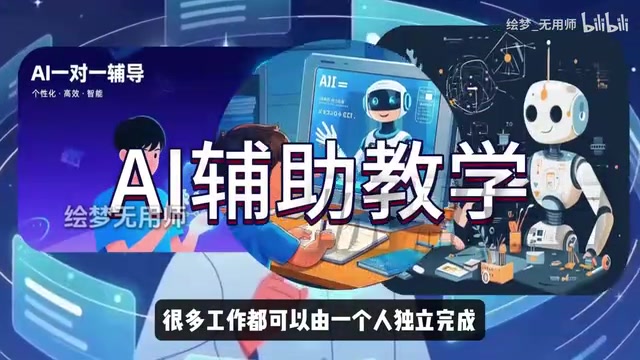
The Complete AI Animated Short Production Workflow
Creating a complete AI animated short isn't fundamentally different from producing a conventional animated short — the difference is that AI makes it possible for a single person to handle work that used to require an entire team. The full workflow includes the following stages:
- Write the story screenplay: Define the main plot
- Write the storyboard script: Break it down into executable shots
- Generate images: Create storyboard visuals from the screenplay and script
- Image-to-video: Bring static frames to life
- Sound design: Add ambient sound effects
- Character voiceover: Generate character dialogue audio
- Post-production editing: Assemble the final cut
For newcomers, staring down this long production chain can feel overwhelming. But here's the key insight: AI's value lies in dramatically lowering the skill barrier at every stage, making "one person = one team" genuinely achievable. You don't need to know how to draw, understand animation, or be a skilled editor. The only thing you really need to learn is how to get this pipeline running.
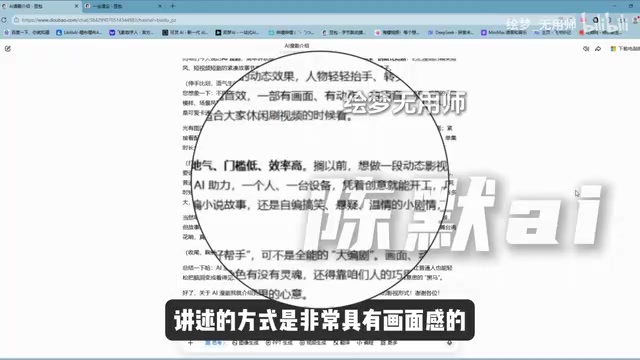
Step One: Writing the Screenplay with a Large Language Model
The starting point for the entire workflow is writing the story screenplay and script. Most creators aren't professional directors or screenwriters, so they rely on AI large language models like Doubao or DeepSeek to generate content.
A Large Language Model (LLM) is an AI system pre-trained on massive text datasets using the Transformer architecture. Its core capability is understanding and generating natural language. Doubao is ByteDance's conversational AI assistant; DeepSeek is an open-source large model developed by DeepSeek (深度求索). Both have strong Chinese-language creative writing capabilities. In content creation workflows, an LLM's value goes beyond just "generating text" — it extends to understanding narrative structure, character arcs, and dialogue logic, making it capable of handling everything from brainstorming to full screenplay writing. However, LLM output quality is heavily dependent on input quality. This is exactly why Prompt Engineering has emerged as a standalone skill, and why how you phrase your questions directly determines output quality.
The Three Golden Elements of Effective Prompting
The video outlines a universal prompting formula with three essential components:
-
Assign the AI an identity: This is the most overlooked yet most critical step. Academically, this corresponds to the "Role Prompting" technique — when a model is told to play a specific professional role, it activates knowledge patterns from its training data associated with that role, producing noticeable differences in tone, professional depth, and logical framing. Take the prompt "explain what an AI manga series is" — when you position the AI as an "AI manga director/writer," it breaks the topic down along professional dimensions: core definition, five key characteristics, industrialized production workflow, and so on. Assign it the role of a "stand-up comedian," and the response becomes witty, grounded, and richly visual. An LLM doesn't store a single knowledge system — it compresses countless writing styles and knowledge perspectives. Role assignment acts as a "decoding key," pointing the model toward a specific knowledge activation pathway.
-
Give the AI a clear task: There's not much technique required here. Just state your need in plain, direct language — for example, "Please explain what an AI manga series is."
-
Set the output format: By explicitly requiring the AI to answer along fixed dimensions — such as "core concept, core technology, content genres, monetization methods" — you make the output structured and predictable, which is much easier to reuse downstream.
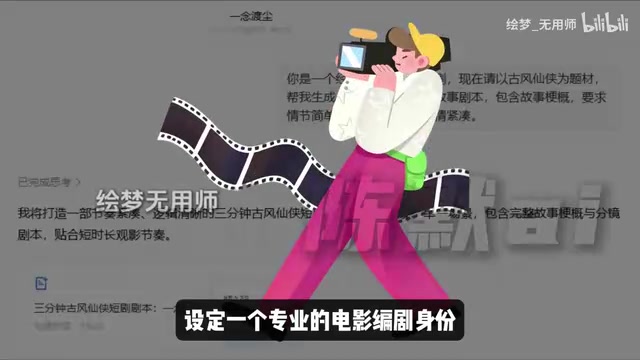
The Essential Difference Between a Screenplay and a Script
Many beginners confuse screenplays and scripts, but they serve entirely different functions.
Screenplay: Grasping the Full Story at a Glance
A screenplay's purpose is to let you quickly understand the plot — much like reading a short story. There are no complex technical instructions; it simply tells a complete narrative in the way an audience would experience it. As the "director," you need a clear understanding of the story first: who the characters are, how the plot unfolds. Compared to the dense detail of a script, a screenplay lets you grasp the big picture as quickly as watching a short film.
More importantly, writing the screenplay first makes revision easier. If the story logic doesn't hold up or lacks punch, editing a concise screenplay is far simpler than revising a full script. Once the screenplay is polished, you can have AI use the revised version to generate a complete script — significantly reducing trial-and-error costs.
Storyboard Script: An Executable Production Blueprint
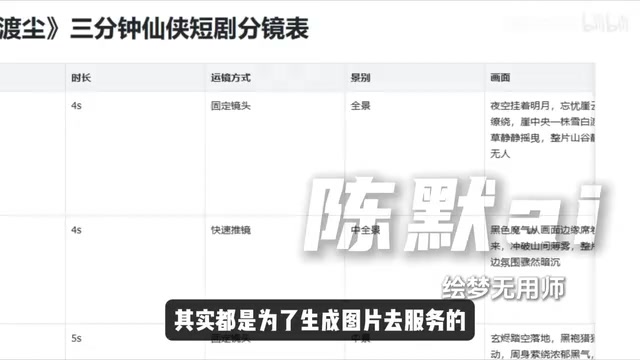
A storyboard script is one of the core documents in industrial filmmaking, originating from Disney's animation studio practices in the 1930s. A standard storyboard script typically includes shot numbers, shot types (extreme wide / wide / medium / close-up / extreme close-up), camera movement instructions, scene descriptions, dialogue, sound cues, and timing estimates. It functions as an execution plan for the production — telling you exactly what to focus on in each shot and how long it should run.
In the context of AI manga production, the storyboard script's role extends further. It's not just a production guide — it becomes the "prompt source" for AI image generation tools. Each shot's visual description will be directly or indirectly fed into a text-to-image model as input, so the objectivity and precision of those descriptions directly determines how closely the generated images match your creative intent.
Two Key Practical Tips for Generating Scripts
Two details in the script generation stage have an outsized impact on downstream production efficiency.
First, strictly control duration. The animated shorts shown in these tutorials are typically only one to two minutes long. You must specify a time constraint in your prompt — for example, "under three minutes" — to prevent the AI from generating excessively long content.
Second, use objective language — avoid flowery prose. This is one of the easiest mistakes to make. Text-to-image models like Stable Diffusion and Midjourney work by mapping text descriptions to an image generation space. Their attention mechanisms perform a "literal interpretation" of every noun and adjective in the prompt. Because the visual descriptions in your script will directly feed image generation tools, using novelistic, ornate writing can easily mislead the AI. A classic example: if a script says "his gaze turned cold and sharp, like an unsheathed blade," the model will latch onto "blade" as a strong visual semantic word and may literally draw a knife. For image generation models, the literal meaning of language carries far more weight than rhetorical intent — metaphors and similes are semantic traps these models struggle to handle correctly. Shot type, scene, image quality, and character descriptions should all be as objective and plain as possible.
Summary and Next Steps
This piece focuses on the first stage of AI manga production: using a large language model to write the screenplay and script. The core methodology distills down to a single prompting framework: assign an identity, define the task, set the format. You should also clearly distinguish between the screenplay (helps you understand the story) and the script (guides production execution), and when generating scripts, remember to control duration and keep descriptions objective.
A word of caution: tutorials promising "go from zero to expert in seven days" or "easy commercial monetization" tend to have a marketing angle. Actual monetization is far more complex than it sounds — platform policies, content saturation, and regulatory risks are all real challenges. From a technical learning perspective, however, mastering the complete AI content production pipeline is genuinely a worthwhile skill to invest in right now.
The most time-consuming stage ahead will be generating storyboard images from the screenplay and script. This involves not just image generation itself, but also character design, maintaining visual consistency across frames, and iterating on unsatisfactory outputs. This is the central battlefield where final production quality is won or lost.
Key Takeaways
Related articles
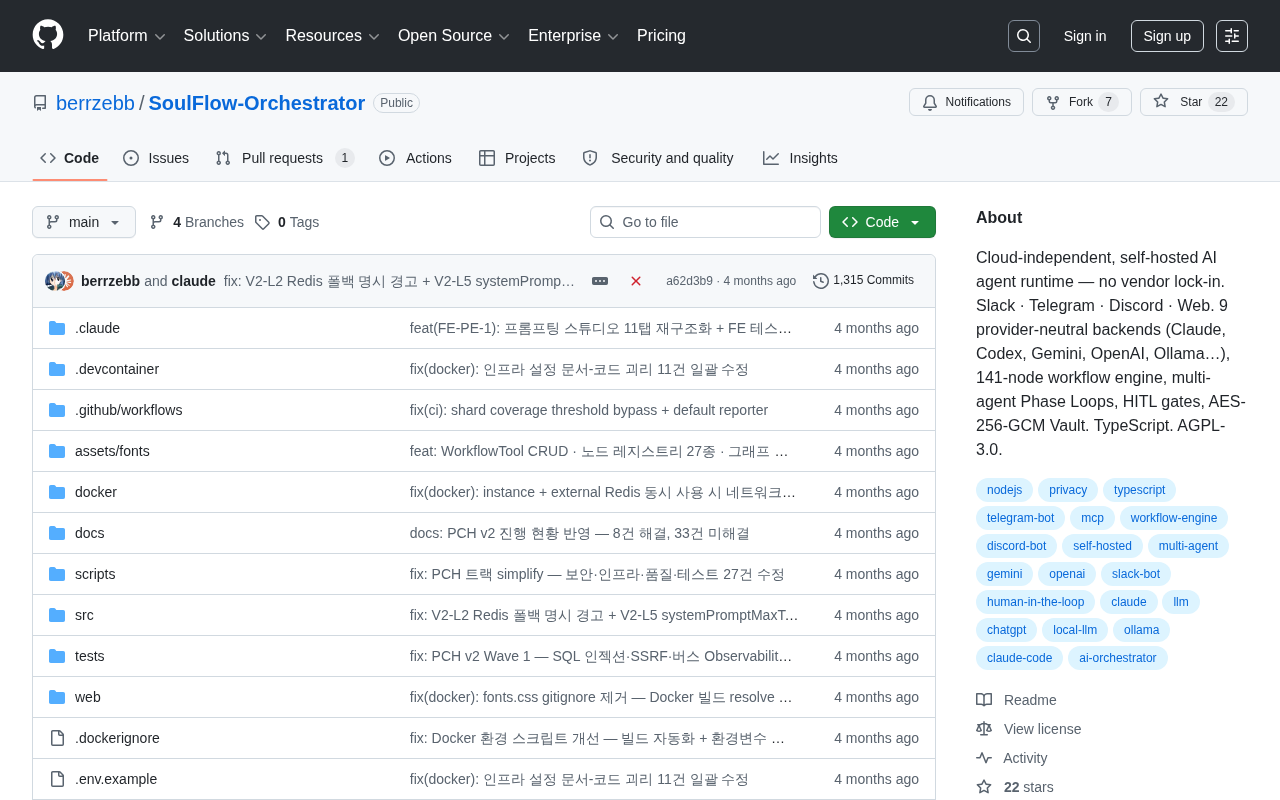
SoulFlow-Orchestrator: A Self-Hosted, Vendor-Lock-In-Free AI Agent Runtime
SoulFlow-Orchestrator is an open-source, self-hosted AI agent runtime with no vendor lock-in. Supports 9 neutral backends (Claude, OpenAI, Ollama), 141-node workflow engine, multi-agent loops, and HITL gates.
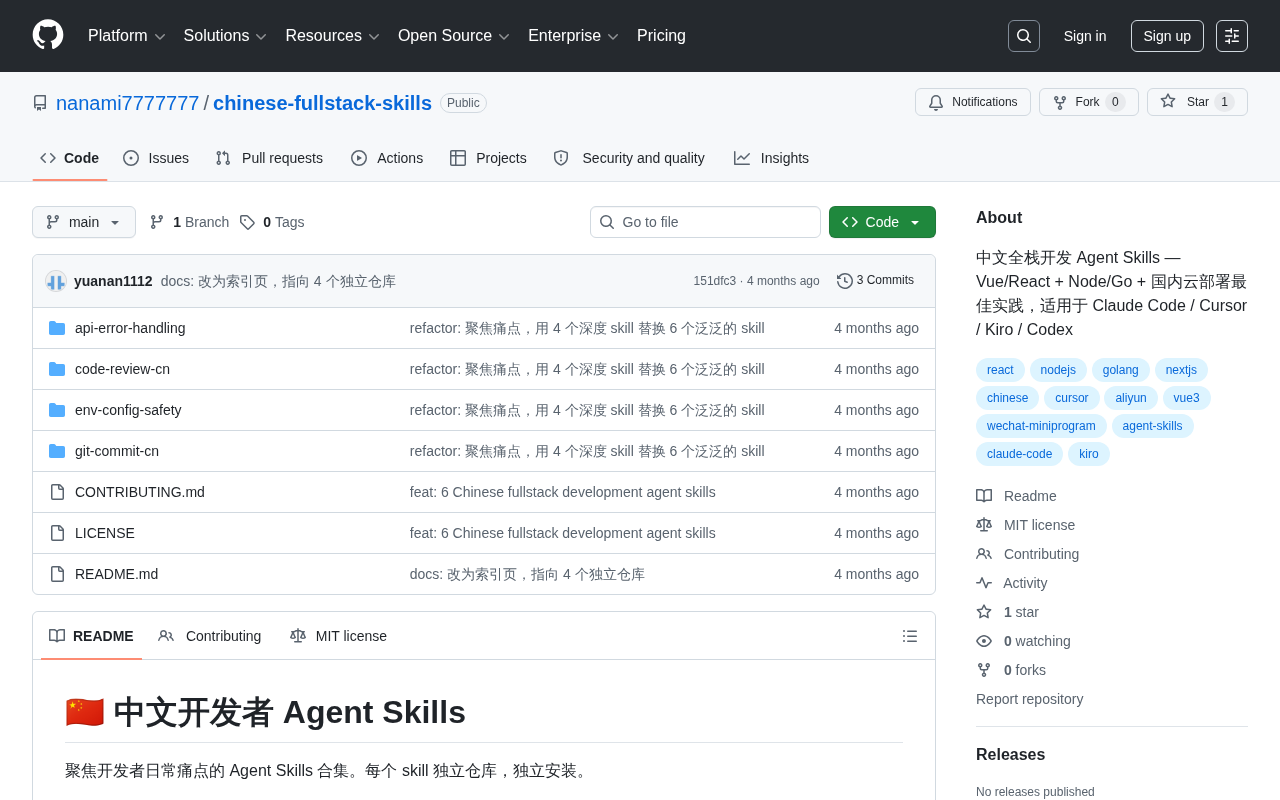
Chinese Full-Stack Agent Skills: A Skill Library Tailored for Domestic AI-Assisted Development
chinese-fullstack-skills is an Agent Skills library for Chinese full-stack development, covering Vue/React, Node/Go, and domestic cloud deployment best practices. Compatible with Claude Code, Cursor, Kiro, and Codex.
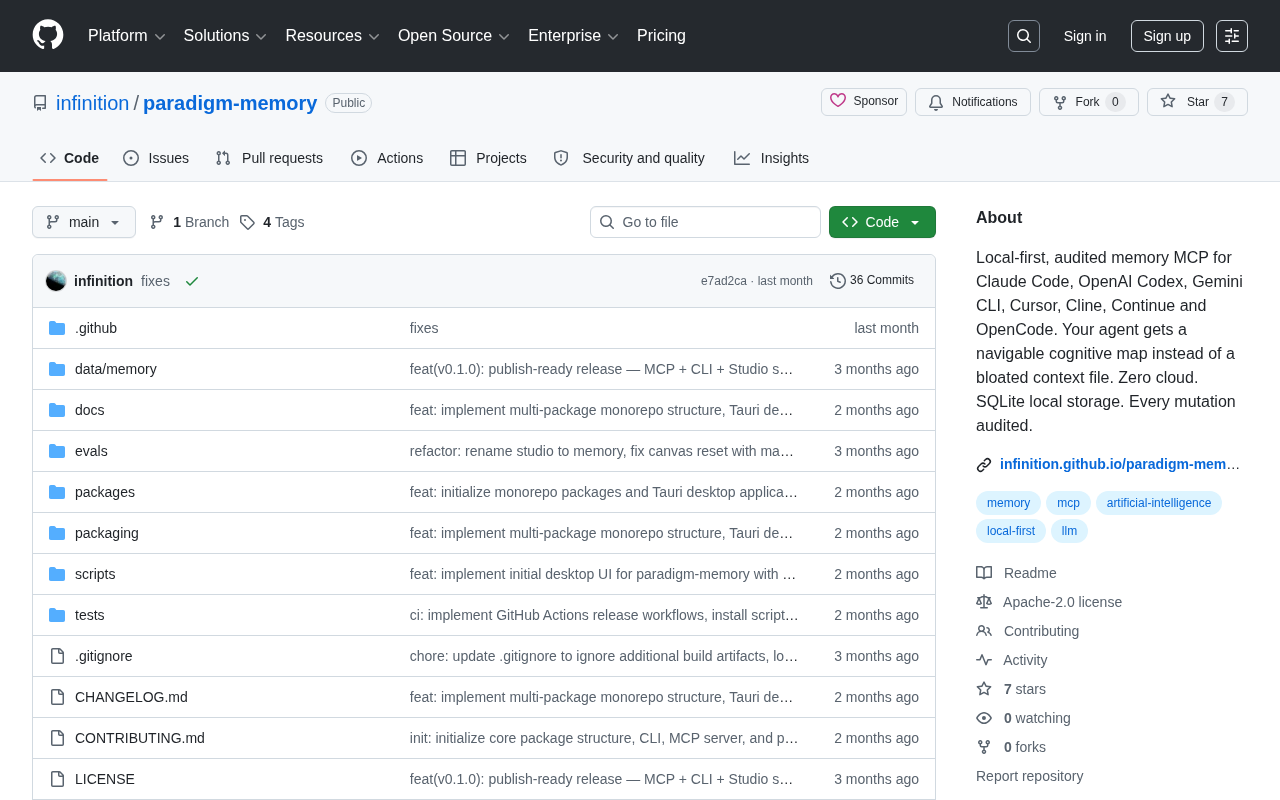
Paradigm Memory: A Local-First Memory System for AI Coding Assistants
paradigm-memory is a local MCP memory tool for Claude Code, Cursor, and Cline. It uses SQLite local storage, zero cloud, full audit trails, and a navigable cognitive map instead of bloated context files.