AI Multilingual Bias: Why Claude Is More 'Polite' in Hindi and Arabic
AI Multilingual Bias: Why Claude Is Mo…
Claude behaves more politely in Hindi and Arabic — here's why that matters for AI safety and fairness.
The same AI model can exhibit noticeably different tones across languages. Claude, for instance, tends to be more polite in Hindi and Arabic due to cultural norms embedded in training data and uneven RLHF coverage. This multilingual alignment gap raises serious concerns beyond mere politeness — including weaker safety guardrails in low-resource languages and unequal user experiences globally.
The Same AI, Different 'Personalities' Across Languages
Large language models are becoming everyday tools for billions of people worldwide, yet a rarely discussed issue is quietly coming to the surface: the same AI model can exhibit significant differences in tone, attitude, and even 'politeness' depending on the language used.
A recent observation that sparked heated discussion on Hacker News noted that if you want Claude to respond in a friendlier, more polite manner, try asking in Hindi or Arabic. What sounds like a lighthearted discovery actually touches on deep challenges in multilingual alignment for AI systems.
Why Does This 'Politeness Bias' Exist?
The Cultural DNA Embedded in Training Data
An LLM's behavior doesn't emerge from a vacuum — it's deeply rooted in its training data. The text behind each language carries its own cultural norms and communication conventions.
Large language models acquire language capabilities through unsupervised pre-training on massive text corpora. For mainstream models like GPT, Claude, and Llama, the training data is typically English-dominant, sometimes comprising 50–90% of the corpus, followed by Chinese, French, and Spanish. Languages like Hindi, Arabic, and Swahili represent a comparatively small share. This imbalance in data distribution directly causes differences in the model's "capability density" across languages — not just in grammatical accuracy, but extending into deeper behavioral patterns such as tone, style, and value judgments.
The cultural contexts of Hindi and Arabic place strong emphasis on honorifics, respect, and expressions of humility in everyday communication — a reality deeply embedded in the structure of the languages themselves. Hindi has an elaborate honorific system where verb conjugations encode the social relationship between speakers: "आप" (āp), "तुम" (tum), and "तू" (tū) each correspond to different levels of familiarity and respect. In Arabic, religious expressions like "بسم الله" (In the name of God) and "إن شاء الله" (God willing) permeate daily conversation, while complex greeting rituals and expressions of gratitude are far richer than their English equivalents. When a model learns from these corpora, the politeness norms embedded in the language structure are absorbed along the way, naturally producing a "demeanor" that differs from English.
By contrast, English training data — especially content from internet forums and social media — contains far more direct, terse, and even argumentative communication styles. This leads to a "default personality" in English that tends to feel more efficient and matter-of-fact.
Language Imbalance in the Alignment Fine-Tuning Stage
Beyond pre-training data, alignment techniques like RLHF (Reinforcement Learning from Human Feedback) also suffer from significant language imbalance.
RLHF is the core of mainstream AI alignment, systematically introduced by OpenAI in the InstructGPT paper and widely adopted since. The basic process involves collecting preference ratings from human annotators on model outputs, training a reward model, and then using reinforcement learning (typically the PPO algorithm) to optimize the language model toward outputs that better match human preferences. However, this process is heavily dependent on human annotation, and high-quality multilingual annotators are extremely scarce and expensive. As a result, the vast majority of RLHF annotation work is conducted in English. Alignment fine-tuning for other languages either relies on translated English preference data or involves far fewer annotated examples — creating a structural imbalance in alignment quality across languages.
Since the safety alignment and politeness tuning of mainstream models primarily relies on English annotation data, model behavior in English has undergone the most precise calibration. Performance in other languages is more of a "generalization" result — and therefore retains more of the cultural characteristics embedded in the original training corpora.
The Deeper Significance of This Phenomenon
It's About More Than Just 'Politeness'
On the surface, tone differences across languages might seem like a curious footnote. But if you substitute "politeness" with "safety," "factual accuracy," or "ability to refuse harmful requests," the issue becomes considerably more serious.
In NLP (natural language processing), "low-resource languages" refer to languages with limited digitized text, underrepresented in model training — of the roughly 7,000 languages in the world, the vast majority fall into this category. Multiple studies have demonstrated that AI safety guardrails are significantly weaker in low-resource languages. Several academic studies in 2023 confirmed the viability of cross-lingual jailbreak attacks: harmful requests that would be refused in English were translated into low-resource languages such as Zulu or Georgian, causing the model's refusal rate to drop sharply — in some cases delivering harmful content outright. The root cause of this security vulnerability is the severely uneven language coverage in alignment training. The politeness bias in tone is, in essence, a mild reflection of this broader "multilingual alignment gap."
A Fairness Issue for Global Users
As AI becomes global infrastructure, whether users of different languages receive consistent quality of service becomes a core equity issue. If a model is more polite in some languages, more accurate in others, or has weaker safety protections in certain languages, then user experience and risk exposure will vary significantly based on language alone.
Truly global AI needs to meet consistent quality and safety standards across every language — not just function as a translated version of English. This is a challenge that AI companies serving multilingual markets cannot afford to ignore.
Practical Recommendations for Developers and Users
For Users
For everyday users, this finding offers an interesting practical tip: if you find AI responses too blunt, switching languages might change the conversational "atmosphere." More importantly, it's worth recognizing that AI behavior is not fully equivalent across languages — when dealing with critical information, an appropriate degree of caution is warranted.
For Developers
For developers building AI applications, multilingual bias raises several important considerations:
- Never assume the model performs consistently across all languages. For multilingual products, independent quality and safety evaluations should be conducted in each target language.
- The language of your system prompt affects output style. A system prompt is a developer-injected instruction used to preset the model's role, behavioral boundaries, and response style — typically inserted before the conversation begins and invisible to the user. When the language of the system prompt differs from the user's input language, complex behavioral interactions can arise. For example, an English system prompt instructing a "professional and concise" style, when met with Hindi input, might produce a hybrid style that is "professional but warmer." Prompt design must account for these hidden cultural biases introduced by language.
- Safety testing must cover multilingual scenarios, with particular attention to languages where alignment resources are relatively limited.
Conclusion: A Window Into AI's Internal Biases
"Want Claude to be nicer to you? Try Hindi or Arabic" — this tongue-in-cheek suggestion points to a real and important issue in AI multilingual alignment. Language is not merely a vehicle for information; it carries cultural DNA, and that DNA travels through training data all the way into the model's behavior.
As AI increasingly permeates the globe, ensuring models maintain consistent capability, attitude, and safety across thousands of languages will become one of the key battlegrounds in AI alignment research. This seemingly casual observation opens a window through which we can examine the "internal biases" of AI systems.
Related articles

Alibaba Launches Happy Shrimp: AI-Powered One-Click Complete Song Generation
Alibaba launches Happy Shrimp, an AI music generation tool that creates complete songs with lyrics, melody, arrangement, and vocals from natural language descriptions. In-depth analysis of its core features, differentiation from competitors like Suno, and industry impact.
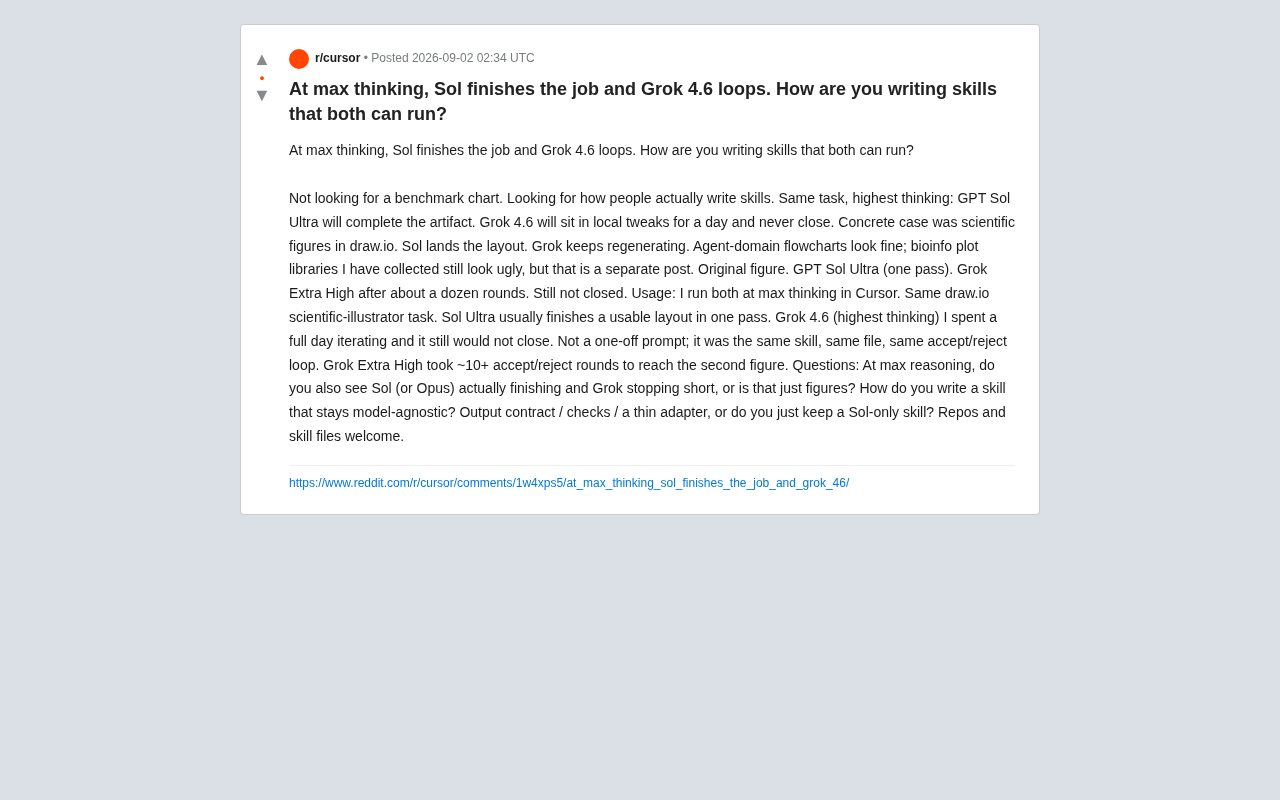
GPT Sol Ultra vs Grok 4.6: Real-World Task Completion Benchmark in Reasoning Mode
Developer benchmark reveals GPT Sol Ultra completes draw.io scientific diagrams in one iteration while Grok 4.6 fails to converge despite maximum reasoning mode, exposing that reasoning depth ≠ task delivery capability.
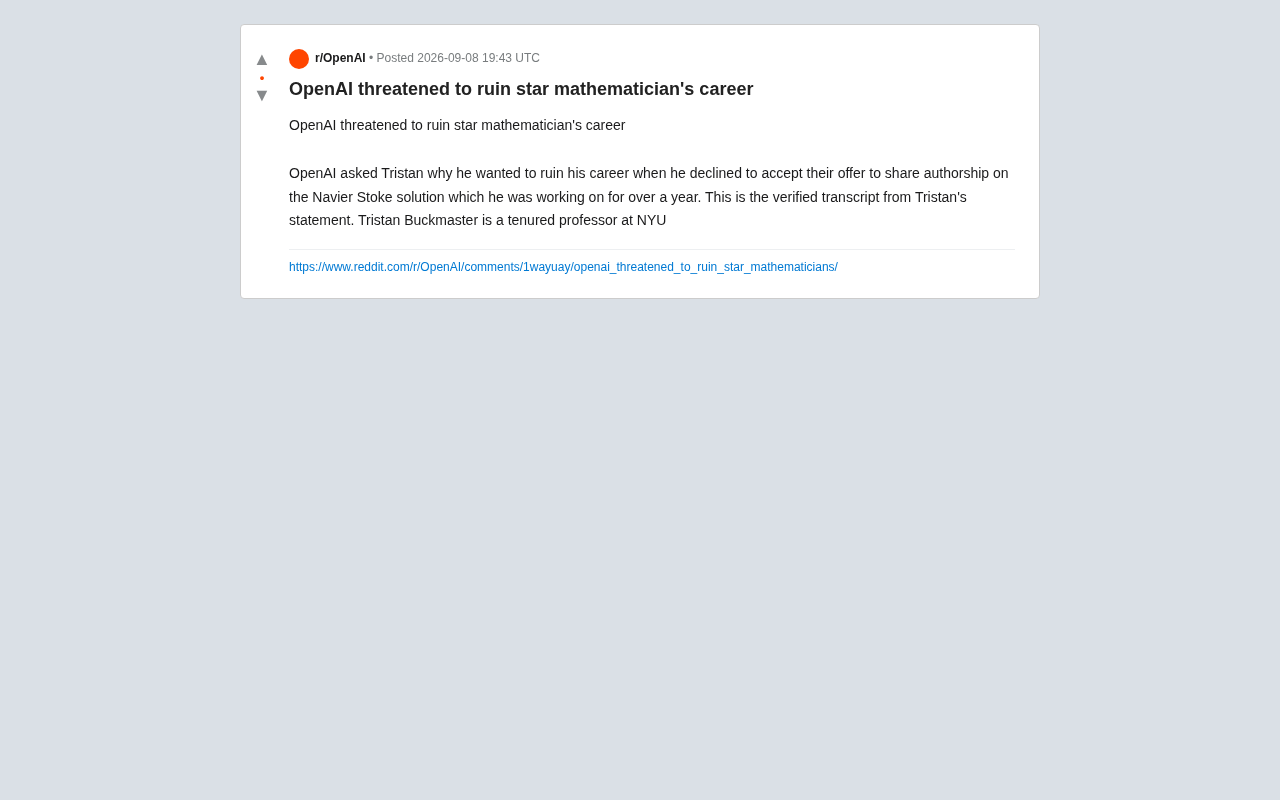
OpenAI Authorship Dispute: The Battle Over Academic Boundaries in the AI Era
OpenAI disputes authorship with mathematician Tristan Buckmaster over Navier-Stokes research, raising ethical questions about AI involvement in science.