AI Programming: Building a WeChat Scan-to-Order Mini Program in 2 Hours with Cursor + Claude

Build a WeChat scan-to-order system for small restaurants in 2 hours with Cursor + Claude
This open-source project uses Cursor paired with the Claude LLM to build a complete WeChat cloud-based scan-to-order mini program in about 2 hours. The system unifies customer and admin sides in one app, using OpenID for role distinction. It covers scan-to-order, adding dishes, voice order alerts, dish management, table QR code generation, and more — all at zero server cost, purpose-built for small restaurants. The project follows an open-source-for-traction plus custom-development-for-revenue business model, offering indie developers a replicable path to monetization.
Project Overview: Building a Lightweight Scan-to-Order System with Cursor + Claude
The biggest headache for small restaurants going digital is the ordering systems on the market — the feature-bloated ones are overkill, and the good ones are too expensive. The open-source project featured today uses Cursor paired with the Claude LLM to build a complete WeChat scan-to-order mini program in roughly 2 hours. It runs entirely on cloud functions and cloud databases, requiring no additional servers or domain names — practically tailor-made for small restaurants.
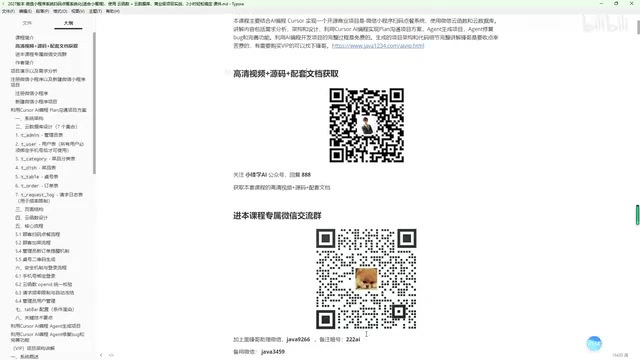
The project is open-sourced on GitHub and built on WeChat's cloud development architecture. It packs both the customer-facing side and the admin side into a single mini program, using OpenID to distinguish user roles. The benefit is straightforward: the restaurant owner can manage orders right from their phone without needing a dedicated computer, keeping the barrier to entry extremely low.
System Architecture and Technology Choices
Why Cloud Functions + Cloud Database?
The tech stack is highly pragmatic, driven by three core considerations:
- Zero maintenance cost: WeChat's cloud development comes with built-in cloud functions and cloud database — no server purchases, no domain registration, no ICP filing process. Deployment and maintenance costs are essentially zero.
- Pay-as-you-go: Small restaurants have limited daily order volumes. The free tier of cloud development is usually sufficient, and anything beyond that is billed by usage — far more economical than renting a server.
- High development efficiency: Cloud development provides complete backend capabilities. Combined with AI programming tools, everything from database design to API development flows seamlessly.
Unified Customer and Admin Design
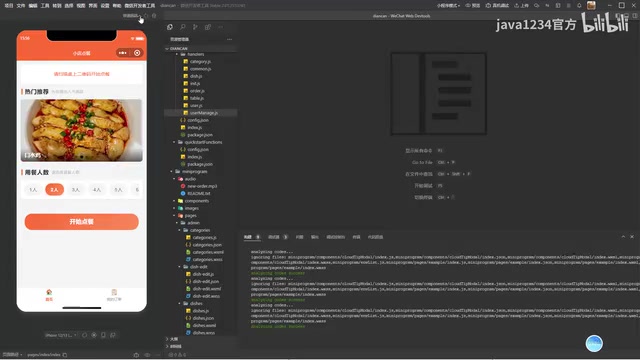
The system integrates customers and administrators into a single mini program, using WeChat OpenID to distinguish identities. This design looks simple but is actually quite clever — shop owners don't need to switch between multiple apps. Opening the mini program gives them simultaneous access to the admin dashboard and new order notifications.
Customer-Side Features in Detail
Scanning and Browsing the Menu
The customer flow is dead simple: scan the QR code on the table → enter the mini program → browse the menu → place an order. The homepage showcases the restaurant's signature dishes and scrolling images to whet the appetite.
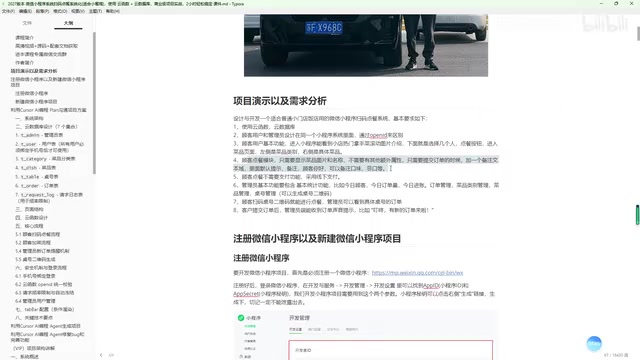
The ordering module follows one design principle — simplicity. It only displays dish images and names without piling on excessive attribute descriptions. This positioning is spot-on: small restaurants have limited menus, customers are generally familiar with the dishes, and too much information actually increases decision fatigue.
Ordering and Adding Dishes
When submitting an order, customers only need to fill in a note (less spicy, no cilantro, etc.) — no online payment integration, just offline checkout. This decision is another precise read of the target scenario: offline payment is more flexible for small restaurants, and it eliminates the development and review costs of payment API integration.
The system also supports an add dishes feature, allowing customers to add more items to an existing order. Additional dish orders are automatically linked to the original table number, making it easy for the kitchen to process everything together.
Admin-Side Features in Detail
Data Dashboard
When admins enter the backend, the first thing they see is today's core metrics: customer count, order volume, and revenue — all at a glance. For individual restaurant owners, these few numbers are all they need, no fancy reports required.
Order Management and Voice Alerts
This is the most practical feature of the entire system. When a customer submits an order, the admin side receives a real-time voice alert — "You have a new order, please handle it promptly." The owner can accept orders, mark them as in-progress, complete them, or cancel them, fully covering the entire order lifecycle from placement to serving.

Dish and Category Management
Admins can add, delete, modify, and query dishes at any time, with one-click listing/delisting support. Category management is equally streamlined, supporting addition, modification, and sorting. All backend operations are completed on mobile, perfectly matching the usage habits of small shop owners.
Table Number and QR Code Management
The system has built-in table QR code generation. Admins generate a unique QR code for each table, print it out, stick it on the table, and it's ready to use. It supports regeneration and saving to phone, with very intuitive operation.
User Security Management
Security isn't neglected either — all users need to log in with a phone number. If someone is found maliciously spamming the API, the admin can directly freeze that account. While this scenario is rare in small restaurant settings, this layer of protection makes the system design more complete.
How Efficient Is AI Programming in Practice?
The entire project was developed with AI assistance using Cursor + Claude, taking about 2 hours from requirements analysis to feature implementation. Using traditional hand-coding, the same functionality would take at least 1 to 2 weeks.
AI programming has very clear advantages in projects like this:
- Rapid CRUD code generation: The create, read, update, and delete logic for modules like dish management and order management are highly similar. AI can quickly generate and adapt code for different scenarios.
- Cloud function templating: Cloud function writing patterns are relatively fixed, and AI can accurately understand requirements and output code that runs directly.
- UI component reuse: For mini program page layouts and components, AI can quickly scaffold them based on descriptions.
More importantly, although the code is AI-assisted, the developer maintains clear control over the overall architecture, making subsequent secondary development and customization even easier to push forward.
Monetization Strategy: Open Source for Traction + Custom Development for Revenue
This project's business model is worth studying for indie developers: open-source the basic version first to build reputation and user base, then monetize through custom development. According to the author, his first open-source project (a mini program membership management system) has already landed multiple custom development orders, with each project charging several thousand yuan.
For indie developers, this is a replicable monetization path:
- Use AI programming to rapidly develop a practical tool for a vertical niche
- Open-source the basic version to gather user feedback and market validation
- Charge for customized secondary development based on client needs
- Cloud development architecture reduces maintenance costs and improves margins
In this model, AI programming isn't just an efficiency tool — it's a core capability that lowers the barrier to entrepreneurship. One person can complete the entire process from development to delivery, truly turning the "one-person company" from concept into reality.
Related articles
 Tech Frontiers
A Rare Quiet Day in AI: Recursive Self-Improvement Stirs Beneath the Surface
A rare quiet day in AI sees multiple sources go silent simultaneously. Behind the calm, Recursive Self-Improvement (RSI) research continues. What this means for the industry.
 Tech Frontiers
Reve 2 vs. Ideogram 4: A Deep Dive into Layout Control in AI Image Generation
A deep comparison of Reve 2 and Ideogram 4's layout control capabilities, covering technical approaches, real-world use cases, and industry trends for designers and creators.
 Tech Frontiers
In the Weights: Check Your Influence Score in the AI World
In the Weights is an AI influence search engine that quantifies your presence in the AI world with a score. Explore how it evaluates practitioners and what it means for digital identity.