AI Promised Less Work—So Why Are Developers Busier Than Ever?

AI speeds up coding but not total workload—the efficiency trap leaves developers busier.
The article explores why AI coding tools increase workload despite speeding things up: rising stakeholder expectations fill saved time with more tasks, review and debugging of AI output are underrated costs, toolchain management adds overhead, and management mistakes AI for linear productivity growth, clashing with frontline reality.
When Efficiency Tools Become a Burden: The Developer's Dilemma in the Age of AI
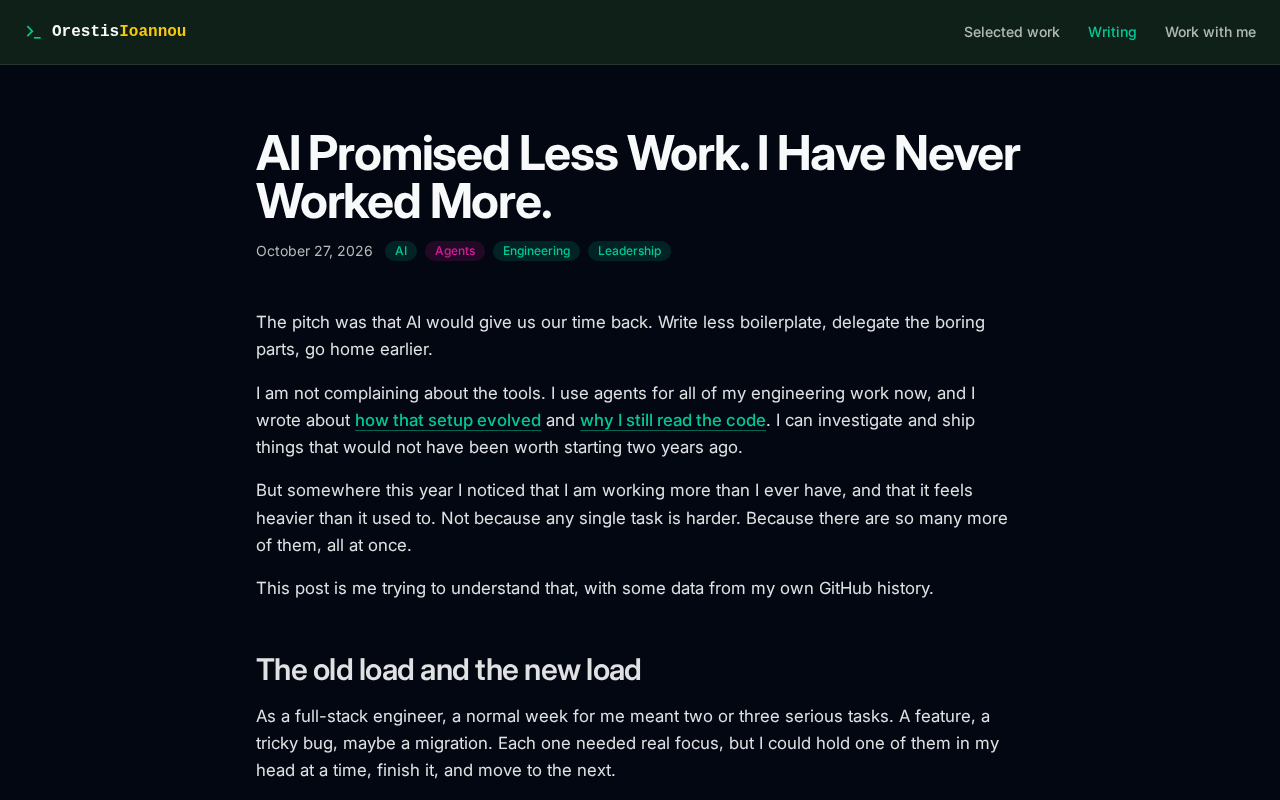
A developer posted on Hacker News: "AI promised to reduce work, yet I've never been busier." The post garnered 80 upvotes and 51 comments, quickly striking a chord. In the comments, many peers expressed similar feelings—AI tools do speed up certain steps, but overall work intensity has gone up, not down. This is not an isolated case but a contradiction worth digging into in the current wave of technological evolution.
Why Doesn't Faster Speed Translate into Less Effort?
The core promise of AI-assisted programming is "write less, do more." But in practice, faster code generation often leads stakeholders to raise their expectations in lockstep. A prototype that used to take a week may now be demanded in two days. The time saved doesn't turn into rest—it gets filled with more tasks. This "efficiency trap" is especially pronounced in software development: the handier the tools, the faster project boundaries expand.
Parkinson's Law, proposed by British historian Cyril Parkinson in 1955, originally meant that "work expands to fill the time available for its completion." In the context of software development, this law reveals a counterintuitive phenomenon: when tools shorten the time per task, organizations typically don't reduce total hours—they use the freed-up time to expand scope, add requirements, or increase delivery frequency. AI-assisted programming is the modern version of this mechanism—faster coding doesn't bring leisure; instead, "deliver a prototype in two days" becomes the new normal. Understanding Parkinson's Law helps explain why efficiency tools work at the individual level but are offset at the system level by requirement inflation. To truly break this cycle, project management must proactively set "time budgets" rather than "task lists," giving saved time a clear non-productive purpose.
Where Does the Extra Work Come From?
The Hidden Cost of Review and Debugging
AI-generated code requires human review, testing, and debugging. According to developer feedback in the comments, this work is often more time-consuming than writing from scratch, because understanding unfamiliar logic and verifying its correctness demands as much focus as original creation. When AI produces large volumes of snippets, the review burden grows exponentially, turning developers from "creators" into "quality inspectors."
Cognitive Load Theory divides the mental burden of completing a task into three categories: intrinsic load (the complexity of the task itself), extraneous load (extra burden from how information is presented), and germane load (beneficial investment in building mental models). When reviewing AI-generated code, developers must simultaneously maintain an understanding of the existing system architecture, trace the intent of unfamiliar logic, and verify edge cases—stacking these three tasks quickly exhausts working memory capacity. Unlike writing code from scratch, reviewing others' (or AI's) output lacks the continuity of an "author's perspective"; developers must reverse-engineer design decisions, and the extraneous load from this reverse engineering is often underestimated. Thus, the review cost of AI-generated code shows up not only in time but in high-intensity attention consumption, which explains why developers feel "busier rather than more relaxed."
The New Burden of Toolchain Management
AI coding assistants themselves require configuration, tuning, and switching. Different models perform markedly differently on different tasks, forcing developers to spend time learning prompt engineering, maintaining context, and managing collaboration workflows across multiple AI tools. These trivial but persistent operational overheads quietly erode what used to be work breaks.
Community Consensus and Divergence
In the Hacker News discussion, most commenters agreed with the judgment that "AI hasn't reduced total workload," viewing AI at this stage more as a capability amplifier than a time saver. A minority offered a different view: for experienced developers, AI is genuinely effective at handling repetitive boilerplate code; the problem is that team collaboration and project management haven't adjusted in tandem, so individual efficiency gains are offset by organizational inertia.
Management's Expectations vs. Frontline Reality
A recurring argument: management tends to equate the existence of AI tools with linear productivity growth, thereby compressing schedules and adding parallel projects. Frontline developers know that AI output needs verification and that integration costs in complex systems remain high. This perception gap translates directly into work pressure.
Redefining "Less Work"
If AI doesn't automatically bring less work, the real way out may lie in redesigning workflows. Directions mentioned in the comments include: explicitly using time saved by AI for technical debt cleanup or exploratory learning rather than stacking new tasks; building buffers for reviewing AI output into project planning from the start; and more honestly assessing AI's actual returns across different task types.
Tool progress doesn't automatically improve working conditions—it merely redistributes cognitive load. For developers, identifying which steps genuinely benefit from AI and which need human-imposed limits is more valuable than simply chasing more tools. This debate over "busier or more relaxed" is essentially a collective reflection on the definition of efficiency.
One-line Summary
AI speeds up coding but doesn't reduce total workload—the efficiency trap leaves developers busier.
Paragraph Summary
The article centers on a resonant developer post on Hacker News, exploring why AI coding tools increase workload even as they boost speed. Core reasons include: stakeholder expectations rise in tandem with efficiency, and saved time gets filled with more tasks; the review and debugging cost of AI-generated code is severely underestimated, turning developers from creators into quality inspectors; toolchain management itself brings persistent trivial overhead; and management easily equates AI with linear productivity growth, creating a perception gap with frontline reality. The community consensus is that AI today is more a capability amplifier than a time saver, and individual efficiency gains are often offset by organizational inertia. The article concludes that the way out is to redesign workflows, explicitly directing time saved by AI toward technical debt cleanup or exploratory learning rather than stacking new tasks.
Related articles
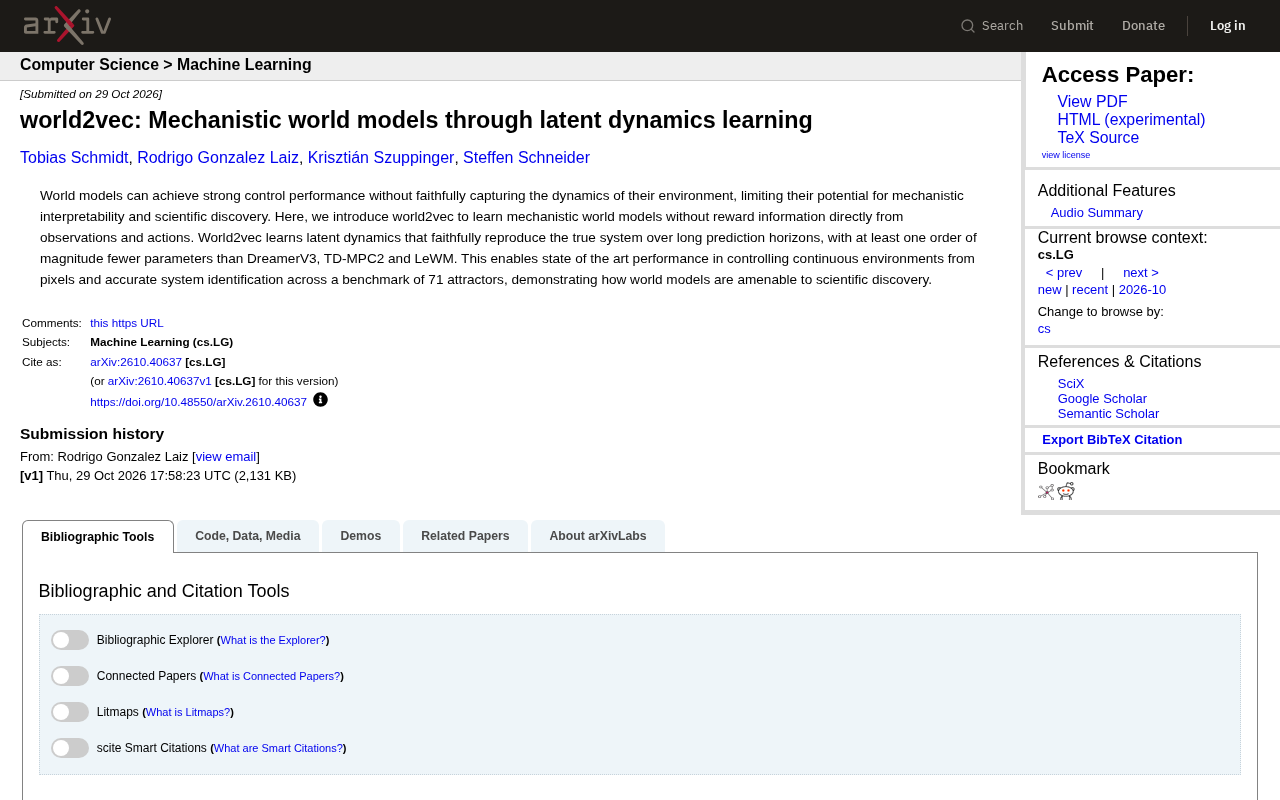
world2vec: Building Mechanistic World Models with Latent Dynamics Learning
world2vec proposes a reward-free method for learning mechanistic world models via latent dynamics, faithfully reproducing systems over long horizons with at least an order of magnitude fewer parameters than DreamerV3, TD-MPC2, and LeWM, and achieving accurate system identification on 71 attractor benchmarks.

A New KL-DRO Paradigm: Adaptive Scenario Generation Around a Learned Density Model
KL-DRO research proposes centering the KL ball on a learned density model instead of the empirical distribution, with adaptive scenario generation guiding sampling toward the worst case. Experiments show lower cost under distribution shift when records are scarce and the model can extrapolate, with comparable in-distribution cost.

ODE Samplers for Discrete Diffusion Models: Exponential Residual Flows Accelerate Generation
Discrete diffusion models lack deterministic ODE sampling? This article introduces Exponential Residual Flows (ERFs), which introduce continuous residual variables per token to construct piecewise ODEs for deterministic sampling and support consistency distillation acceleration. Superior to prior methods on code and text generation tasks.