AI Race Becomes a Matter of National Security: How the US and China Are Framing Tech Competition as an Existential Struggle
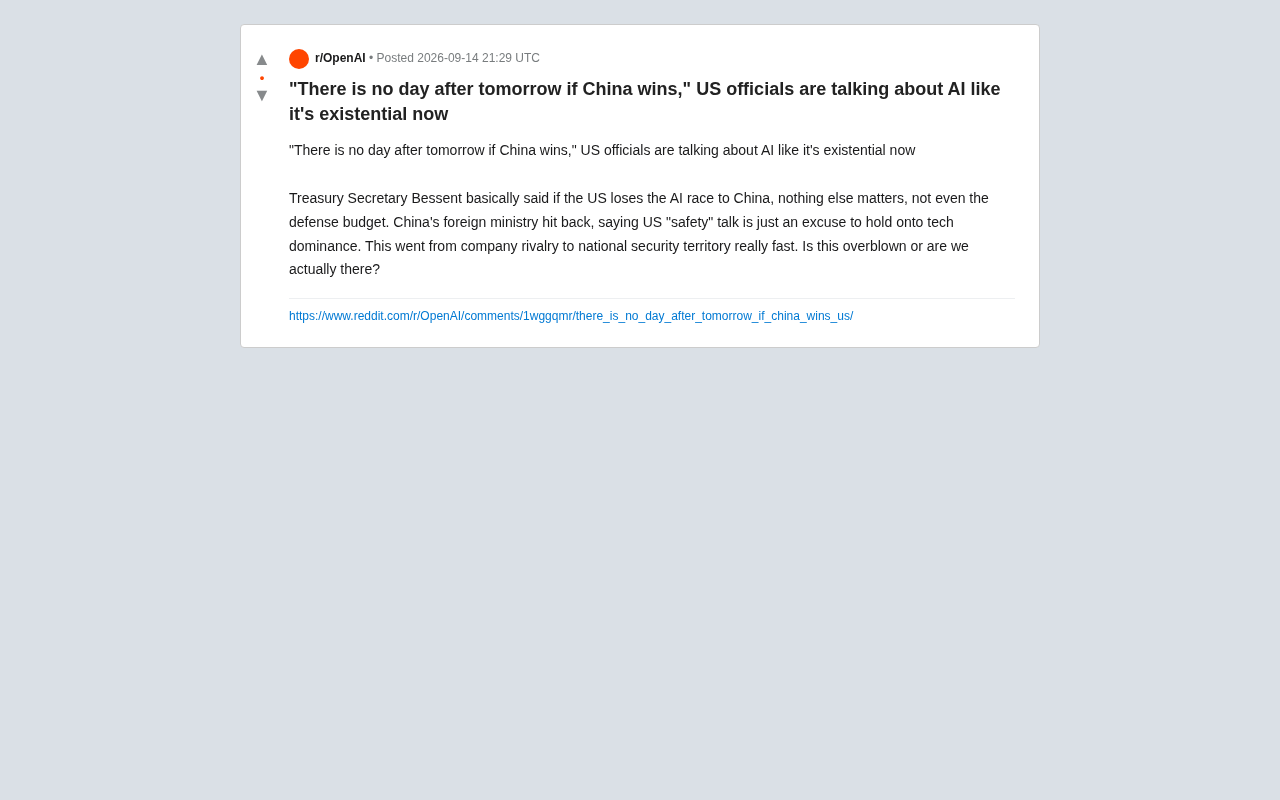
US frames AI race with China as existential; China calls it cover for tech hegemony — zero-sum risks escalate.
US Treasury Secretary Bessent has declared that losing the AI race to China would render "everything else meaningless," elevating tech competition to an existential narrative. China's Foreign Ministry fired back, calling the US "security" framing a protectionist excuse to preserve technological dominance. The article argues that such extreme language serves real political functions — securing budgets, mobilizing industry, swaying public opinion — but that existential framing breeds zero-sum thinking, accelerating decoupling and policy overreaction. The author concludes that while AI holds genuine strategic value, the "no tomorrow if we lose" rhetoric far outpaces what current AI capabilities can justify, and the greater danger may lie in fear-driven decisions that prove irreversible.
From Corporate Competition to National Survival
What began as a competition between companies and business models is being redefined — at a remarkable pace — as a national security issue, even an existential one. According to discussions circulating on Reddit, US Treasury Secretary Bessent has been quite direct: if the United States loses the AI race to China, everything else becomes meaningless — including the defense budget itself.
The weight of that statement lies not in any specific technical roadmap it outlines, but in how it places AI above every other national priority. When a treasury official declares that "if China wins, there is no tomorrow," the conversation has moved well beyond market share for any single company. It is now framing the entire technology competition in terms of survival.
China's Rebuttal: Legitimate Security Concern or Cover for Hegemony?
The Chinese Ministry of Foreign Affairs has pushed back against the US "security" framing, with a pointed counterargument: what America calls "security" is simply a pretext for maintaining its technological dominance. This rebuttal cuts to one of the central tensions in today's AI geopolitics — the line between genuine security concerns and technological hegemony is rarely clear.
The exchange exposes a fundamental mismatch between the two sides' rhetorical frameworks. The US tends to frame the issue around "risks," "threats," and "competition," while China reads this as protectionist language designed to justify export controls, technology blockades, and other concrete policy measures. When the two sides cannot even agree on the nature of the problem, the space for rational dialogue shrinks dramatically.
The Real Risks of Escalating the Narrative
Elevating the AI competition to existential stakes carries real-world consequences of its own. Once a survival narrative takes hold, zero-sum thinking tends to follow: any cooperation risks being seen as subsidizing the adversary, and any restraint risks being interpreted as weakness. This dynamic accelerates technological decoupling, tightens export controls, and pushes R&D resources toward military applications.
It is worth examining the motivations behind such rhetoric. Officials who reach for extreme language often do so for concrete political reasons — securing budget allocations, mobilizing industry, winning over the public. The "existential threat" framing may reflect genuine strategic anxiety, but it can equally function as a deliberately amplified political instrument. Distinguishing between the two is essential for understanding the current situation.
Hyperbole or Hard Reality?
The core question raised in the original Reddit thread deserves serious consideration from every observer: is all of this being dramatically overstated, or have we genuinely reached that point?
From a technological standpoint, AI's strategic value in military, economic, and information domains is rising rapidly, and the competition for frontier models and computing power is real. But the framing of "no tomorrow if we lose" goes well beyond what current AI capabilities can actually support — today's AI systems are nowhere near powerful enough to determine the survival of a nation-state.
A more grounded reading is this: AI does carry significant strategic importance, but the existential language is largely rhetorical amplification. The real risk may not lie in AI itself, but in the policy overreactions that such narratives provoke. Decisions made under fear are often far harder to reverse than the technology competition that prompted them.
Trends Worth Watching
When technology competition becomes fully securitized, several trajectories are worth tracking: whether export controls and investment screening will expand further in scope; whether international scientific collaboration will contract under political pressure; and whether any meaningful dialogue or de-escalation mechanism still exists between the two sides.
This debate is a reminder that the future of AI will be shaped not only by breakthroughs in the lab, but equally by the political discourse coming out of Washington and Beijing. Maintaining clarity between existential narratives and rational assessment may be the most important capability required right now.
Note: This article is based on discussions circulating on Reddit regarding official statements. The full context of the quotes cited here awaits further verification against official primary sources.
Related articles
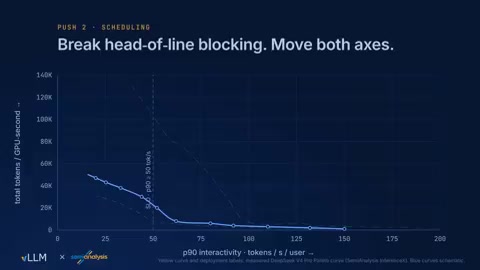
vLLM Full-Stack Optimization in Practice: Handling the Serving Pressure of Real-World Agent Traffic
vLLM's full-stack optimization for real-world agent traffic covers architecture, framework, and runtime layers, benchmarked on SemiAnalysis's public AgentX workload.
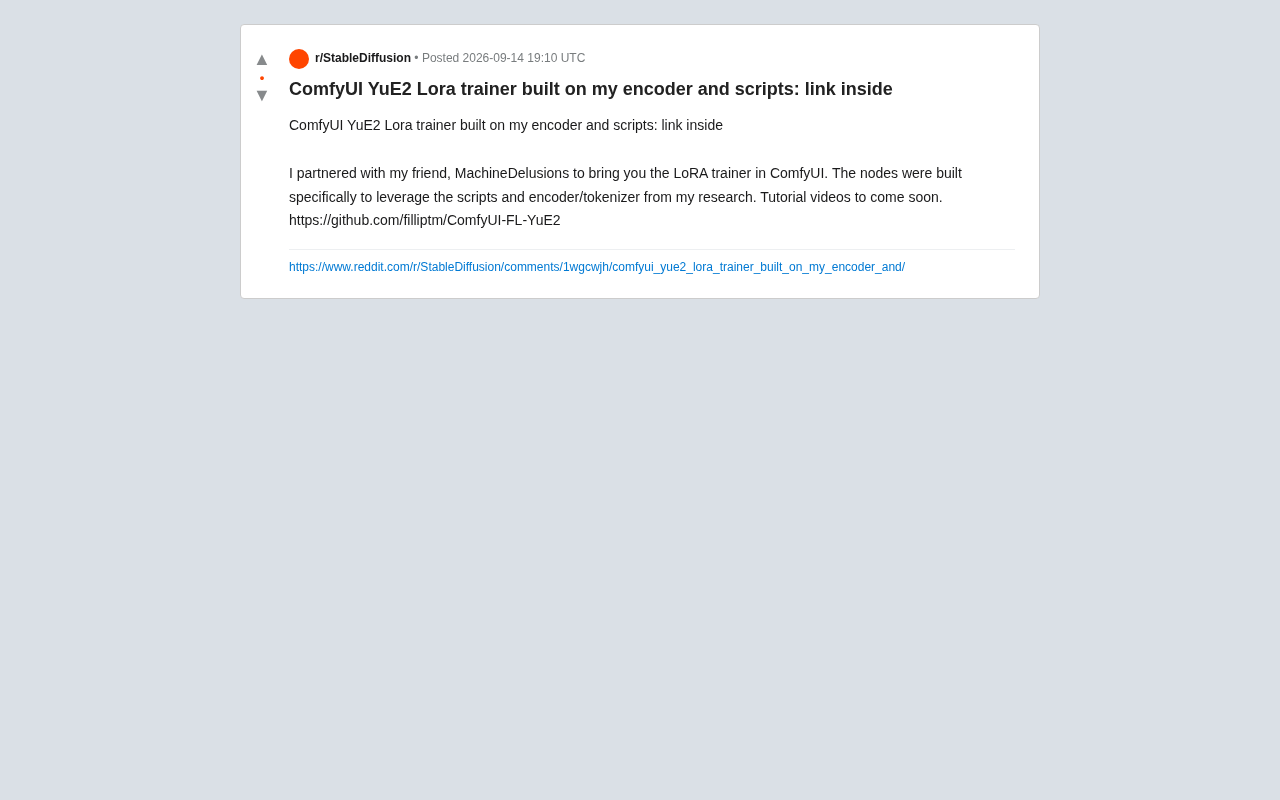
ComfyUI Gets a YuE2 LoRA Trainer: Customizing Music Generation Models
Developer filliptm and MachineDelusions release a ComfyUI YuE2 LoRA trainer built on custom encoder and tokenizer scripts, enabling fine-tuning of the YuE2 music generation model within ComfyUI nodes. Now open-source on GitHub.
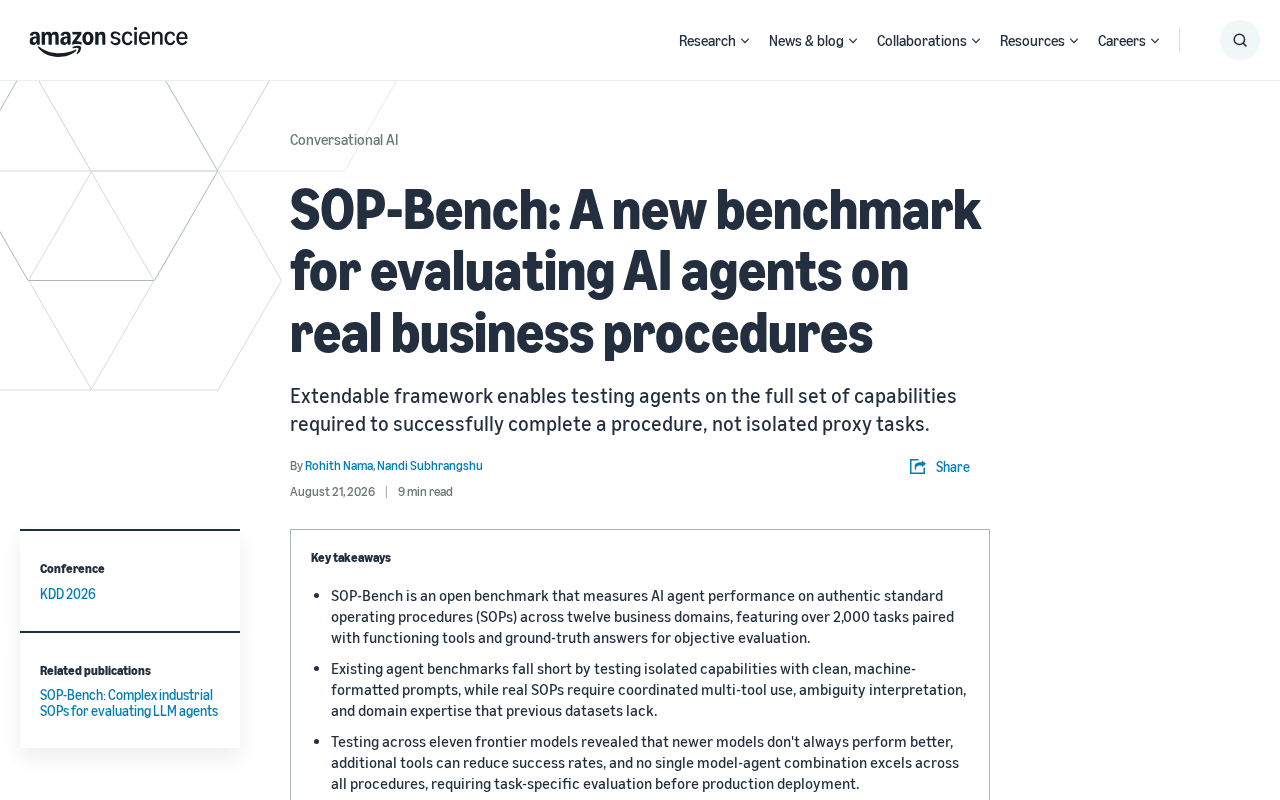
SOP-Bench: A New Benchmark for Evaluating AI Agents on Real Business Procedures
SOP-Bench is a new extendable benchmark for evaluating AI agents on complete real-world business procedures, going beyond isolated proxy tasks to measure true end-to-end capability.