AI Reverse Engineering Tool REA Tops GitHub: Deconstructing Apps Without Source Code

REA open-source project connects AI agents to reverse engineering toolchains, lowering analysis barriers while emphasizing legal compliance.
REA (Reverse Engineer Anything), an open-source project topping GitHub, exists as an MCP server and CLI tool enabling AI coding agents to deconstruct software without source code. It acts as a "connector" wrapping mature tools (disassemblers, debuggers, network analyzers) into AI-callable interfaces, with agents orchestrating analysis via natural language and showing evidence. Supports native binaries, Electron apps, Android APKs, and network captures, all analyzed locally with a one-command install. The author notes its value is integration, not breakthrough tech; AI output needs verification, and use must be legal and compliant. REA's rise reflects the trend of LLMs as dispatch centers coordinating specialized tools.
Title
AI Reverse Engineering Tool REA Tops GitHub: Deconstructing Apps Without Source Code
Meta Description
REA (Reverse Engineer Anything), an open-source tool, tops GitHub. It connects AI coding agents to reverse engineering toolchains via an MCP server, supporting binaries, Electron, APK, and network capture analysis, all run locally without uploading data. Learn its features, boundaries, and compliant usage.
Article Content
An open-source project called REA (Reverse Engineer Anything) recently topped the GitHub trending list, enabling AI agents to deconstruct software without touching source code. The tool is essentially an MCP server and command-line utility that connects coding agents to real reverse engineering toolchains, supporting various input types such as native binaries, Electron apps, Android APKs, and saved network captures.
What Is REA: A Bridge Between AI and Reverse Engineering Tools
REA's core positioning is as a "connector" rather than "magic." According to the project author, it does not contain reverse analysis algorithms itself; instead, it wraps existing mature reverse engineering tools (such as disassemblers, debuggers, network analysis tools, etc.) into interfaces callable by AI agents. Users simply give the agent a natural language instruction like "reverse engineer this note-taking app," and the agent executes the analysis process step by step, showing evidence for each step.

This design approach aligns with the current direction of AI coding assistants: large models handle orchestration and reasoning, while specialized tools execute specific operations. REA's value lies in standardizing and automating the reverse engineering workflow that previously required manual configuration and chaining, lowering the barrier to entry.
MCP (Model Context Protocol) is an open protocol proposed by Anthropic in late 2024 to standardize how large models connect to external tools and data sources. Before MCP, each AI application had to write its own adapter layer to call external tools, resulting in inconsistent interfaces and poor reusability. MCP abstracts tools as "servers," where servers declare their capabilities (resources, tools, prompt templates) and AI clients call them in a unified format. REA appears as an MCP server, meaning any coding agent that supports MCP (such as Claude Code, Cursor, etc.) can directly connect to it without separate adaptation for each agent. This is the technical prerequisite for REA's rapid adoption across various AI toolchains and a microcosm of the current trend toward standardization in the AI tool ecosystem.
Supports Multiple Input Types, Runs Locally Without Uploading
REA supports a wide range of inputs, including native binaries, Electron apps, Android APKs, and saved network capture files. Users can hand any type of target to the AI agent, which will analyze it step by step and provide conclusions.
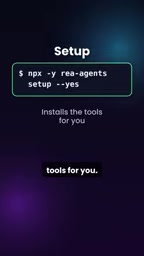
Regarding privacy, REA emphasizes that all analysis is done on the user's own machine, and data is not uploaded to the cloud. Installation is simplified to a single command, with dependencies automatically installed.

Electron apps are cross-platform desktop software built on Chromium and Node.js, including VS Code, Slack, Notion, and others. Their unique feature is a "dual-layer structure": the frontend is web code packaged into an app.asar archive, and the backend is Node.js main process logic. Reverse engineering an Electron app typically starts with unpacking the asar archive to recover readable JavaScript source code, resource files, and configuration files, then analyzing network requests, local storage, and IPC communication in conjunction with the main process code. Compared to pure binary reverse engineering, Electron app analysis has a lower barrier but yields substantial information, making it a common entry-level target. REA lists it as a separate input type, indicating it has tailored encapsulation for this "semi-open" form, with the agent automatically handling unpacking, code localization, and key logic extraction.
A Rational View: The Value and Boundaries of a Connector
Although REA is highly popular on GitHub, the author offers a pragmatic assessment: its core contribution is encapsulation and integration, not breakthrough reverse engineering technology. The actual analysis work is still done by underlying tools; REA's role is to enable AI agents to call these tools smoothly.
This "wrapping" itself has value—it transforms reverse engineering from an expert-only operation into a more accessible workflow, while leveraging AI's reasoning capabilities to improve analysis efficiency. However, users should also recognize that AI agent output still requires human verification and should not be blindly trusted.
Use with Caution: Legality and Compliance Are Prerequisites
Reverse engineering involves legal and ethical boundaries. REA's demonstrator explicitly reminds users to only analyze software they have the right to analyze. Unauthorized deconstruction of commercial software may violate license agreements or even laws and regulations. The more powerful the tool, the more important the user's sense of responsibility.
For security researchers, software developers, and tech enthusiasts curious about the internal workings of applications, REA offers an entry point worth watching. But its positioning means it is better suited as an auxiliary tool rather than a replacement for professional reverse engineers' judgment.
The legality of reverse engineering varies significantly across jurisdictions. In China, for example, the Copyright Law permits reverse engineering of software for learning and research purposes but explicitly prohibits using the results for commercial reproduction or circumventing technical protection measures; the Computer Software Protection Regulations impose similar restrictions. In the United States, DMCA Section 1201 generally prohibits circumventing technical protection measures but provides exemptions for security research and interoperability. The EU Software Directive allows decompilation for interoperability purposes. Additionally, many commercial software end-user license agreements (EULAs) separately prohibit reverse engineering; violation may not constitute a criminal offense but could lead to contract disputes. Therefore, before using REA, at least three things should be confirmed: the target software's license terms, the exceptions in the applicable jurisdiction, and whether the analysis purpose falls within security research or learning.
Conclusion
REA's popularity reflects the trend of combining AI agents with specialized tools: large models do not directly solve all problems but become a dispatch center, assigning the right tasks to the right tools. This model is expected to continue expanding in programming, security analysis, and other fields. For developers interested in trying AI-assisted reverse engineering, REA is a low-barrier starting point, but be sure to use it within legal and compliant boundaries.
One-line Summary
REA open-source project connects AI agents to reverse engineering toolchains, lowering the analysis barrier while emphasizing legal compliance.
Paragraph Summary
REA (Reverse Engineer Anything) is an open-source project that topped the GitHub trending list, existing as an MCP server and command-line tool that enables AI coding agents to deconstruct software without touching source code. Its core positioning is as a "connector" rather than "magic": REA itself contains no reverse engineering algorithms but wraps mature tools like disassemblers, debuggers, and network analysis tools into AI-callable interfaces, with agents orchestrating the analysis process based on natural language instructions and showing evidence for each step. It supports native binaries, Electron apps, Android APKs, and network captures, with all analysis done locally and no data uploaded, installable with a single command. The author acknowledges its value lies in encapsulation and integration rather than technical breakthroughs, AI output still requires human verification, and use must be premised on legal compliance. REA's popularity reflects the trend of large models as dispatch centers coordinating specialized tools.
Related articles

Stop Over-Engineering Prompts: An Engineer's Guide to Agent Thinking
A tech blogger rejects the over-engineering narrative of Prompt Engineering: engineers' problem isn't imprecise prompts but turning one-sentence questions into complex features. With T3 Code case studies, this article explains how Agent thinking replaces reinventing the wheel and how to build MCP and other infrastructure for Agents.

Exponential Backoff with Jitter Still Fails 64%: 100 LLM Calls Tested and Root Cause Analysis
Tested 100 concurrent LLM calls: exponential backoff with ±10% jitter still fails 64%; full jitter improves tail but increases requests; honoring Retry-After and client-side rate limiting reduce times to 11.8s and 8.0s. The article also exposes three llm-retry bugs and offers eight practical retry and circuit breaker recommendations.

Google Open-Sources Harness2: Letting AI Agents Self-Evolve
Google Research open-sources Harness2, a framework that lets AI Agents automatically improve system prompts, tools, and memory configurations through a propose, trial-run, and select loop—no labeled data or scoring model required, validated on Gemini and GLM.