@ai-sdk/tool-bash 1.0.10 Released: Patch Update Aligned with ai@7.0.156
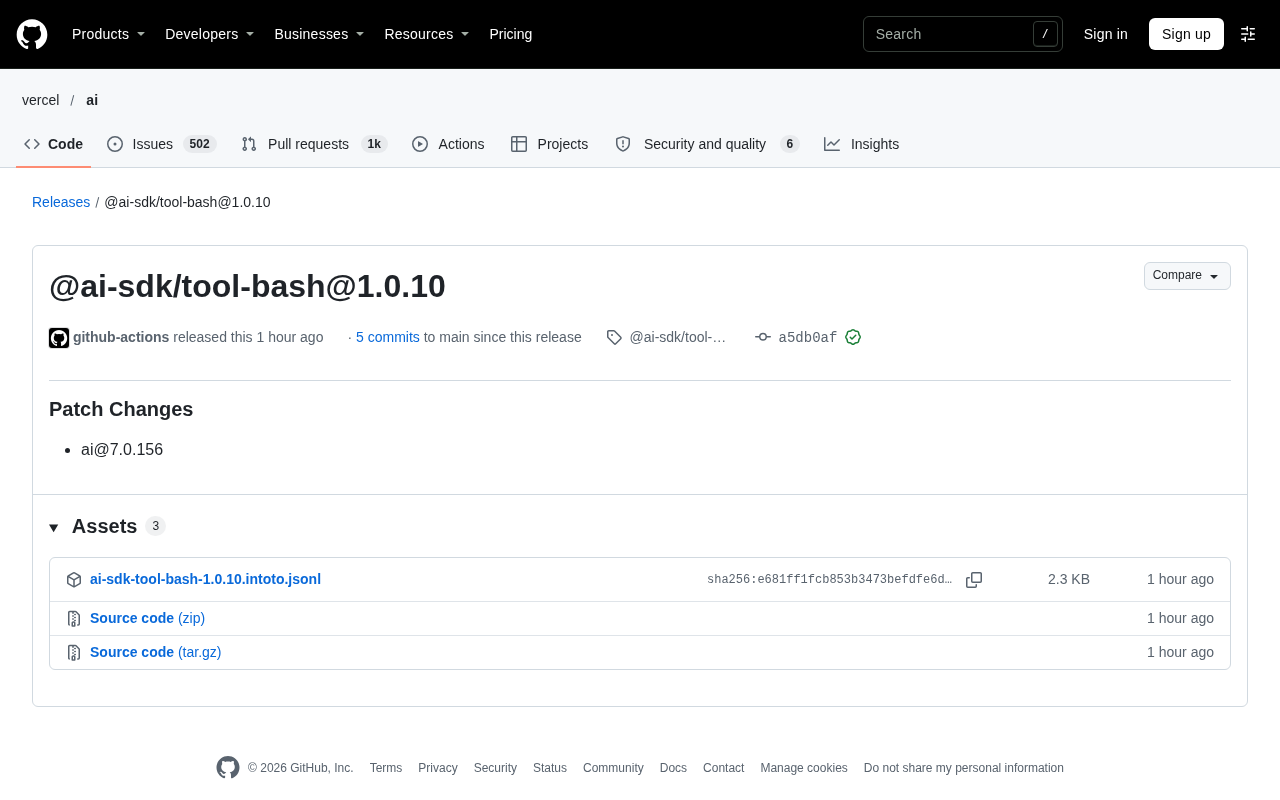
@ai-sdk/tool-bash releases 1.0.10 patch, reflecting AI SDK's automated release and version alignment mechanisms.
The article uses a low-key patch release of @ai-sdk/tool-bash@1.0.10 as an entry point to analyze the AI SDK ecosystem's release rhythm. This version was auto-pushed by the GitHub Actions bot on October 28, containing 5 GPG-signed commits, with the release notes indicating the companion ai@7.0.156 main package version. The author notes that tool-bash is a niche package in the AI SDK wrapping bash tool-calling capabilities, and reaching 1.0.10 indicates its API has entered a stable maintenance phase, with current work focused on edge-case fixes and main package compatibility alignment. The article emphasizes that the traceability brought by automated releases and version alignment has practical operational value for teams building agent applications with the AI SDK. For developers using this package, it's recommended to confirm main package version alignment and regression-test bash tool calls; non-users can view it as a signal that the tool ecosystem is maturing.
A Low-Key Version Iteration That Reveals the Collaboration Rhythm of the AI SDK Ecosystem
On the GitHub release page, the tag update for @ai-sdk/tool-bash@1.0.10 looks unusually quiet: no lengthy release notes, no highlighted promotion of new features, just a patch version number and a one-line reference to ai@7.0.156. For developers who don't regularly track AI SDK version changes, this seems like just routine housekeeping. But for teams building tool-calling pipelines with the Vercel AI SDK, this kind of patch update often means a small issue somewhere in the dependency chain has been fixed, or version alignment between internal packages has finally been completed.
This release was pushed by the github-actions bot on October 28 at 18:36, containing 5 commits merged into the main branch, with commits carrying GitHub verified signatures. From the release format, it's a typical product of an automated release process rather than a carefully orchestrated major version.
What a Patch Update Really Means: Where tool-bash Fits in the AI SDK
What Is @ai-sdk/tool-bash
@ai-sdk/tool-bash is a relatively niche package in the AI SDK ecosystem. From the name, we can infer it provides capability wrappers related to bash tool calls, enabling AI applications to trigger shell command execution in a standardized way. In scenarios where large models need to interact with the external environment, tool calling is a key mechanism, and bash—as one of the most universal execution entry points—has wrapper quality that directly affects the stability of agent-type applications.
This package has iterated to 1.0.10 as a patch version, indicating that its API has entered a stable phase. The current focus is on fixing edge cases and maintaining compatibility with the main package, rather than introducing breaking changes.
Tool calling is the core mechanism for large models to interact with external systems: the model outputs structured function call requests while generating responses, and the host application executes them and passes results back to the model, completing actions like querying databases, making requests, and running commands. The Vercel AI SDK abstracts this mechanism into a unified tool definition interface—developers describe tool inputs with parameter schemas, and the SDK handles parsing the model's returned call intents into executable functions.
@ai-sdk/tool-bashis a "preset toolkit" in this system, packaging the high-frequency need of shell command execution into an out-of-the-box tool, eliminating boilerplate code for command concatenation, output truncation, and error returns. Note that the power of bash tools also means concentrated risk—production environments typically require sandboxing, allowlists, and timeout controls.
Alignment with ai@7.0.156
The release notes explicitly list ai@7.0.156, which usually indicates that this version of tool-bash depends on or is compatible with the corresponding version of the main ai package. The AI SDK's package management strategy tends to bind core packages with toolkit versions to ensure developers don't encounter hidden incompatibilities when upgrading. For projects using monorepos or workspaces, this explicit labeling can save considerable dependency troubleshooting time.
You might not have noticed that while patch updates involve small changes, they often play the role of "blocking the entire build" in toolchains. A small type definition fix or dependency version adjustment might be exactly what's causing a project's CI failure.
In the npm ecosystem, monorepo projects often use changesets or similar release tools to manage multi-package versions: a single change may affect the core package and several toolkits simultaneously, with versions incremented separately according to semantic versioning rules during release, and their correspondence noted in release notes.
aiis the core package of the Vercel AI SDK, providing foundational APIs like generateText, streamText, and tool; toolkits like@ai-sdk/tool-bashare built on top of it. Since toolkits internally reference the core package's type definitions and runtime interfaces, version mismatches between the two can cause type errors or abnormal runtime behavior. Therefore, explicitly writingai@7.0.156in release notes is equivalent to declaring "this version has been verified alongside this core package version," which is also the most direct clue for developers troubleshooting dependency conflicts.
The Engineering Maturity of the AI SDK as Seen Through the Release Process
This release was completed automatically by github-actions, with commits using GPG signatures verified by GitHub. After 5 commits were merged into main, the release was triggered—the entire pipeline is standardized. This level of automation reflects the AI SDK team's emphasis on release discipline: every patch is traceable, version numbers correspond to commit records, and developers can trace specific changes through the compare view.
For teams depending on the AI SDK, this traceability is more valuable than the update content itself. When production environments experience anomalies related to tool calls, being able to quickly identify which patch introduced the change is a practical benefit at the operations level.
GPG signatures and GitHub verified signatures (vigilant mode) are common practices in open-source supply chain security. Developers sign commits with private keys, GitHub verifies signature origin based on public keys, and displays a Verified badge next to commits. Its value lies in proving that the commit genuinely comes from the claimed author and that the content hasn't been tampered with since signing. For repositories with automated releases by CI bots, this mechanism is equally important: it can distinguish "commits produced by the repository's configured automation process" from "forged commits impersonating the bot's identity." Combined with GitHub Actions' release workflow, the entire pipeline from merging into main to tagging and publishing to npm is auditable—this is precisely the technical foundation for the "traceability" emphasized in this article.
What Developers Should Pay Attention To
If you're using @ai-sdk/tool-bash, this update doesn't require excessive concern, but it's worth including in your dependency upgrade plan. Patch versions typically don't contain breaking changes, so upgrade risk is low. Two things to watch: first, confirm whether your project's ai main package version is aligned with 7.0.156; second, check whether tests related to bash tool calls still pass.
For developers who haven't yet adopted this package, this release itself isn't a reason to adopt it, but it highlights a fact: the AI SDK's tool ecosystem is continuously maturing, and wrappers for foundational tools like bash have entered a maintenance iteration phase. This means the related capabilities are becoming mature and can be confidently included in technology selection evaluations.
Summary
@ai-sdk/tool-bash@1.0.10 isn't a headline-grabbing news story, but it's a slice of the AI SDK engineering system operating normally. Automated releases, version alignment, and signature verification—these details together form a maintainable open-source toolchain. For teams building AI agent applications, paying attention to the rhythm of these patch updates is more conducive to long-term system stability than chasing major version announcements.
Related articles
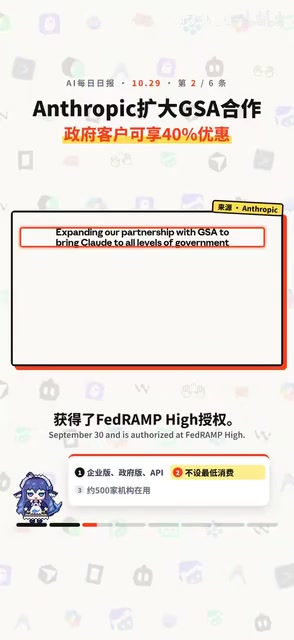
Google Releases Gemini 4 Carbon; Qwen Model Requests to Overseas Servers Spark Security Debate
Google releases Gemini 4 Carbon, topping the intelligence index but with a higher hallucination rate; Anthropic offers 40% off to government customers and reports drug discovery progress; Cohere and Palisade find Qwen 3.8 models attempting to connect to Alibaba servers; MiniMax open-sources a workflow; Anthropic launches an enterprise usage tool.
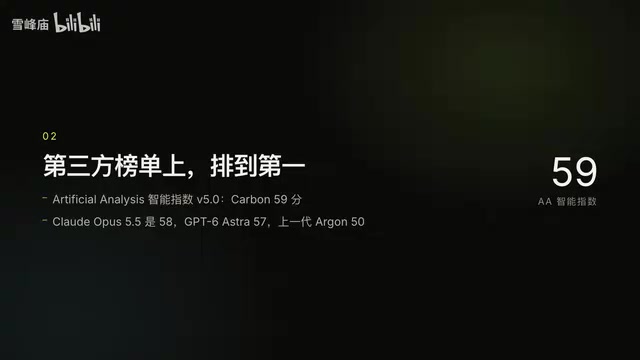
Gemini 4 Carbon Released: Tops Third-Party Leaderboard, But Ordinary Developers Still Left Out
Gemini 4 Carbon tops third-party intelligence index with standout long-context and cybersecurity capabilities, but trails Claude in coding agents and remains limited to Fairwind cyber defenders.

Google's Gemini 4 Carbon Tops the Rankings, Anthropic Achieves First Quarterly Profit
Google releases Gemini 4 Carbon, topping the Artificial Analysis benchmark, while Anthropic achieves its first quarterly profit thanks to Claude Code. This roundup covers the Artificial Analysis Intelligence Index V5 overhaul, NVIDIA's open-source speech transcription model, Ant Group's open-source Ling 3.1 Flash, and Google earnings and Chrome updates.