AI SDK Vue 3.0.318 Release: Dependency Chain Synced and Upgraded

@ai-sdk/vue releases patch 3.0.318, syncing underlying dependencies with no breaking changes.
The AI SDK's Vue adapter @ai-sdk/vue has released version 3.0.318, a routine patch update with no new features or API changes. It only upgrades the underlying @ai-sdk/provider-utils to 4.0.63 and the core ai package to 6.0.318. The article explains why the AI SDK uses a multi-package coordinated versioning strategy: provider-utils, the core package, and framework adapters must stay version-aligned to avoid type mismatches or runtime behavior differences downstream. Since patch versions contain no breaking changes per SemVer, upgrade risk is low, but verifying streaming output parsing after upgrading is still recommended. The article advises production projects to lock versions and batch-upgrade within a controlled window rather than following every minor release.
A Typical Patch Release
The AI SDK's Vue adapter package @ai-sdk/vue has released version 3.0.318, a standard patch update. According to the GitHub release notes, this change does not introduce new features or API adjustments; instead, it syncs upstream dependency versions: @ai-sdk/provider-utils is upgraded to 4.0.63, and the core package ai is upgraded to 6.0.318.
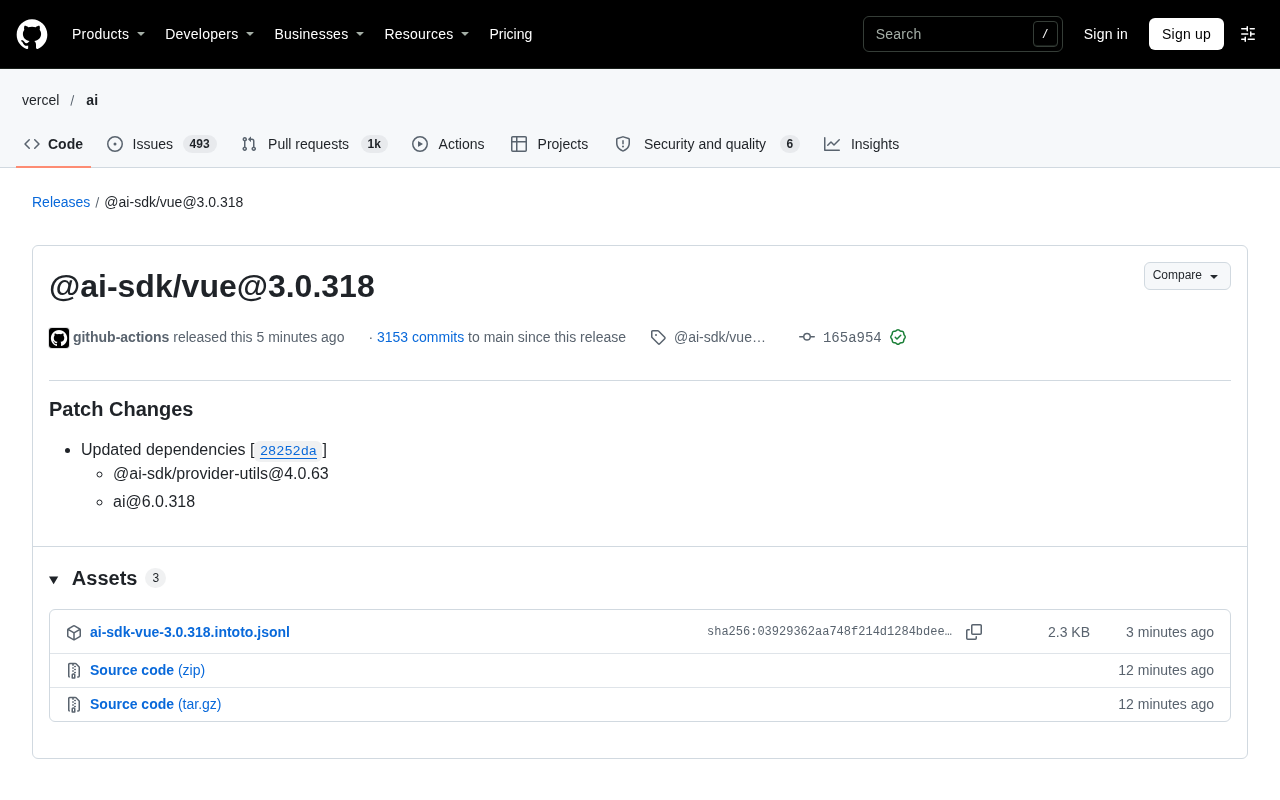
Releases like this are very common in the AI SDK's iteration cadence. The AI SDK maintained by Vercel uses a multi-package coordinated versioning strategy: provider-utils, the core ai package, and the various framework adapter packages (React, Vue, Svelte, etc.) need to stay version-aligned to prevent downstream developers from encountering type mismatches or runtime behavior differences when combining them.
The Engineering Logic Behind Dependency Updates
@ai-sdk/provider-utils is the low-level package in the AI SDK that carries common provider utility functions, handling request construction, streaming response parsing, error handling, and other foundational capabilities. Its patch version updates typically propagate downstream together with the core package, and the framework adapter packages then follow suit, forming a complete dependency chain.
For developers using @ai-sdk/vue, the practical impact of this update mainly depends on the specific fixes or adjustments in provider-utils 4.0.63. Per semantic versioning conventions, patch versions do not contain breaking changes, so the upgrade risk is low; however, it is still recommended to verify after upgrading that streaming output parsing behaves as expected.
Semantic Versioning (SemVer) and Patch Numbers: Semantic versioning follows the form major.minor.patch. An increment in the patch number indicates that the release contains only backward-compatible bug fixes and internal adjustments, adds no new public APIs, and does not change existing behavioral contracts; a minor version increment represents backward-compatible feature additions; only a major version increment permits breaking changes. Therefore, segment changes like 3.0.318 → 4.0.63 mentioned in this article (the third number) are conventionally low-risk upgrades. Note that SemVer is only a publisher's promise, not an enforcement mechanism at the code level. Before actually upgrading, you should still check the changelog or release notes, especially when streaming parsing and other timing-sensitive logic are involved.
Monorepo and Version Alignment: Projects like the AI SDK typically maintain multiple independently publishable npm packages in a single repository, connected through internal dependencies. There are two common release strategies: unified versioning (all packages share a single version number) and independent versioning (each package evolves separately, but a tool batch-bumps interdependent version ranges at release time). The "multi-package coordinated versioning strategy" mentioned in this article is closer to the latter—a release tool (such as a mechanism like changesets) refreshes the versions along the dependency chain at each release, thereby preventing downstream mismatches where "an adapter package declares a dependency on an old core package but actually resolves to a new one."
Practical Advice for Vue Developers
If your project uses @ai-sdk/vue to integrate LLM streaming conversations into Vue components, keeping the adapter package and core package versions consistent is the least troublesome approach. Mixing versions from different batches may cause type errors due to subtle differences in provider-utils interfaces—problems that are especially likely to arise in monorepos or dependency hoisting scenarios.
This release was completed automatically by GitHub Actions, and the commit carries a verified signature, making it a routine automated release process. There are no migration notes or breaking-change notices, which further confirms that this is a low-impact maintenance update.
Dependency Hoisting and Duplicate Instance Issues: In package managers such as npm, pnpm, and yarn, if different dependencies require inconsistent versions of the same package, the same package may be installed multiple times (nested node_modules) or forced to be hoisted to the top level. For libraries with type declarations and internal state, this leads to two typical failures: first, TypeScript reports "two types with the same name are incompatible" because the types come from two different physical copies; second, at runtime, instanceof checks fail or singleton state gets split. Remedies include explicitly declaring unified version constraints, using the package manager's overrides/resolutions fields to force deduplication, and adding dependency tree checks in CI.
Release Cadence Observations
From the number of commits (3153 commits accumulated to the main branch since the last release), it is clear that the AI SDK repository has a high level of development activity. Frequent patch releases mean that fixes reach users quickly, while also requiring developers to remain somewhat attentive to dependency version management. For production projects, locking versions and batch-upgrading within a controlled window is usually more reliable than following every minor release.
One-line Summary
@ai-sdk/vue releases patch 3.0.318, syncing underlying dependencies with no breaking changes.
Paragraph Summary
The AI SDK's Vue adapter package @ai-sdk/vue has released version 3.0.318. This is a routine patch update that introduces no new features or API adjustments; it only upgrades the underlying @ai-sdk/provider-utils to 4.0.63 and the core package ai to 6.0.318. The article explains why the AI SDK uses a multi-package coordinated versioning strategy: provider-utils, the core package, and the various framework adapter packages need to stay version-aligned; otherwise, downstream combinations may encounter type mismatches or runtime behavior differences. Since patch versions do not contain breaking changes per semantic versioning conventions, the upgrade risk is low, but it is still recommended to verify streaming output parsing behavior after upgrading. The article concludes by recommending that production projects lock versions and batch-upgrade within a controlled window rather than following every minor release.
Related articles
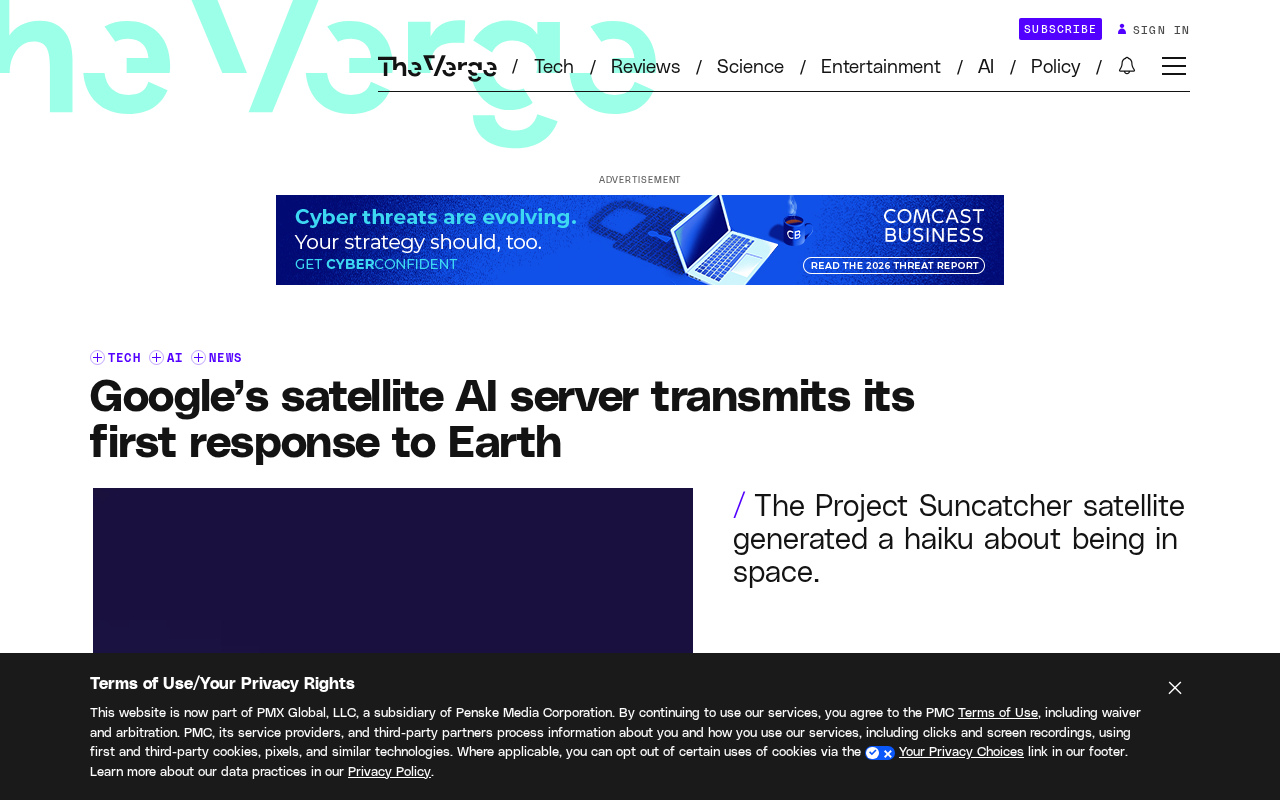
Google's Satellite AI Server Reaches Orbit: Gemma Model Generates First Reply in Space
Google's TPU-equipped satellite powers up in orbit, with the onboard Gemma 4 model generating the first reply from space. This article analyzes the technical path, real-world constraints, and implications for edge computing and satellite remote sensing.
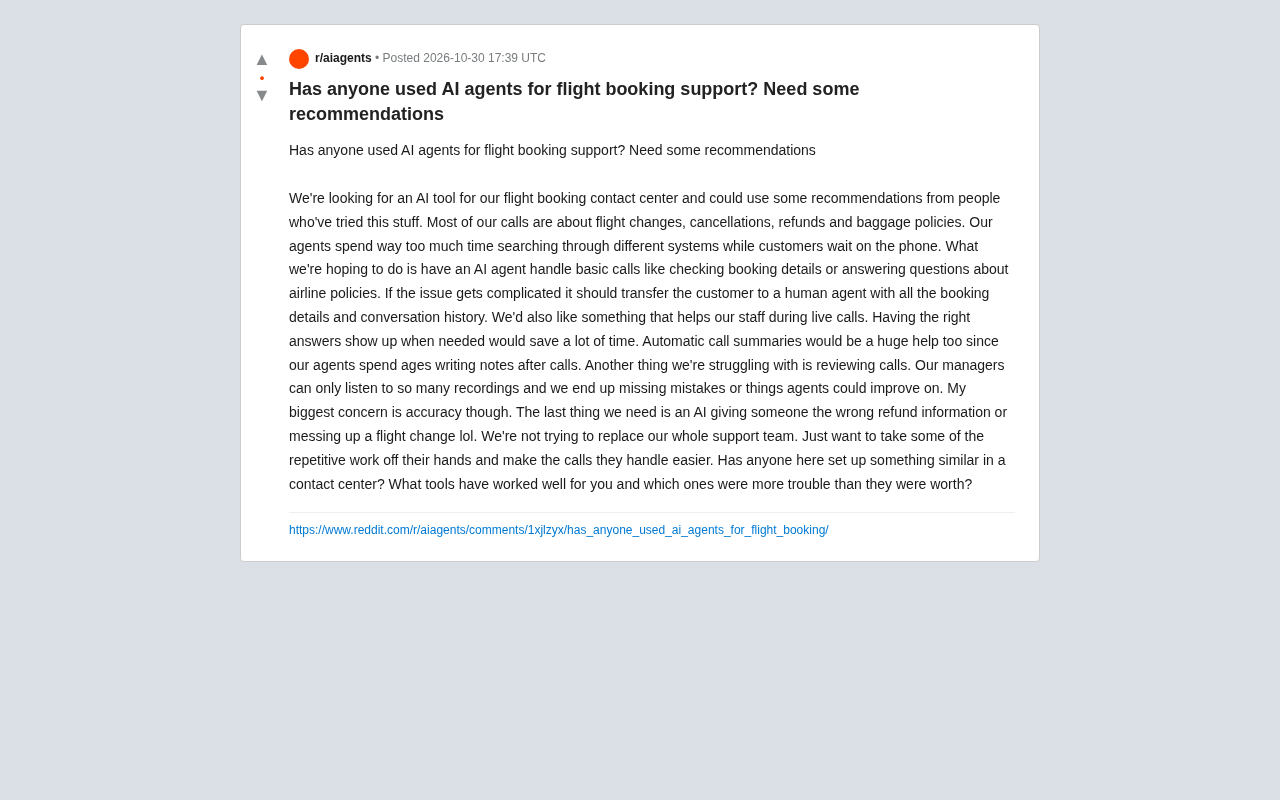
AI Agents for Flight Booking Customer Support: Real Needs and Implementation Challenges
Starting from a real Reddit question, this article breaks down four needs for introducing AI Agents into flight booking call centers: basic Q&A, agent assist, call summarization, and quality inspection, and analyzes accuracy concerns and handoff boundary design.
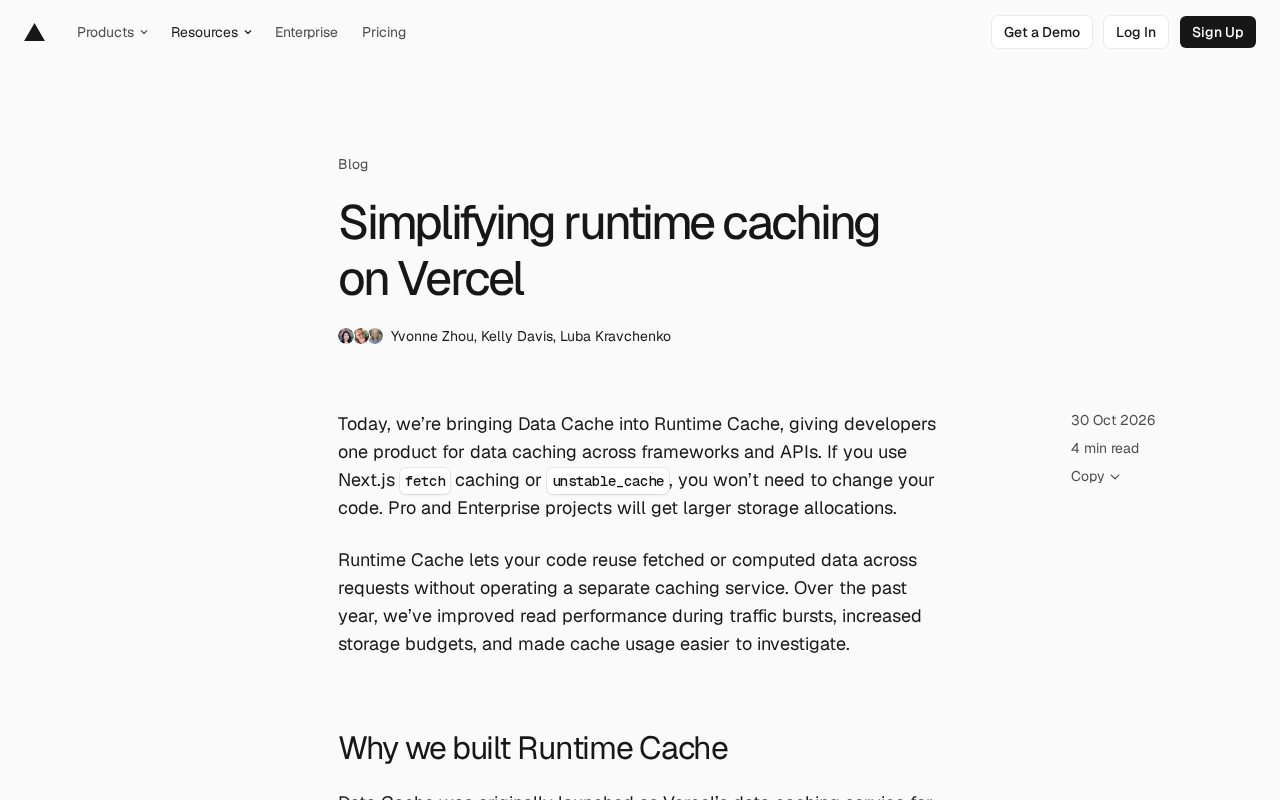
Vercel Unifies Runtime Cache: Data Cache Merges into Runtime Cache
Vercel merges Data Cache into Runtime Cache, unifying storage quotas and billing for Next.js fetch cache, unstable_cache, getCache, and use cache: remote. Pro and Enterprise projects get more storage, and cache reads/writes are now billed at Runtime Cache pricing.