@ai-sdk/workflow 2.0.32 Released: Vercel AI SDK Dependency Update
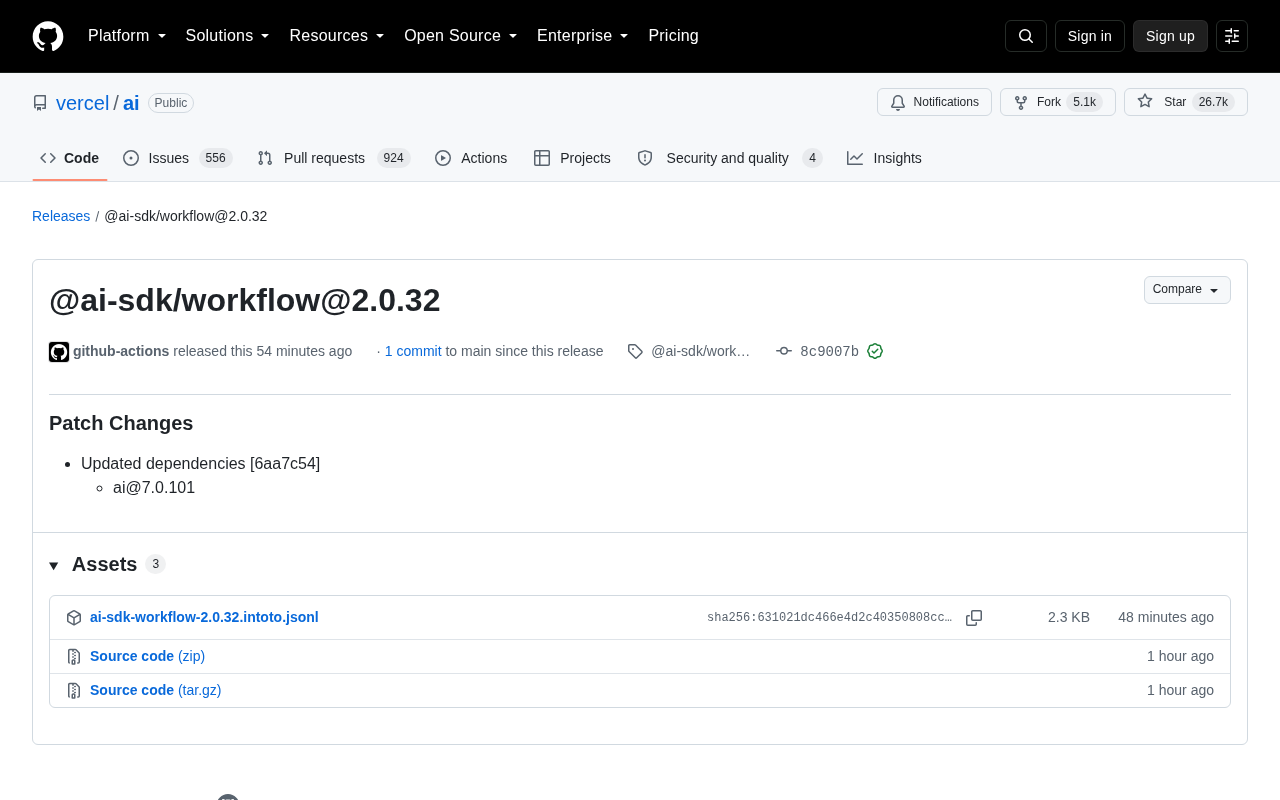
Vercel AI SDK releases @ai-sdk/workflow 2.0.32, a patch update syncing the core ai package to 7.0.101.
`@ai-sdk/workflow@2.0.32` is a routine patch update in the Vercel AI SDK ecosystem, with the sole change being an upgrade of the underlying `ai` core package to `7.0.101`. This is a typical monorepo cascade update: when the core package changes, dependent sub-packages automatically receive a patch-level bump via changesets. The release contains no new features or breaking changes. Developers are advised to update both `ai` and `@ai-sdk/workflow` together to maintain version alignment and avoid type or runtime errors. `@ai-sdk/workflow` is a workflow orchestration module supporting multi-step reasoning, conditional branching, and state management — a key component for building production-grade agentic applications.
Release Overview
Vercel's official AI SDK ecosystem recently pushed @ai-sdk/workflow@2.0.32, a patch release. According to the GitHub Releases page, this update was automatically published by github-actions and is a dependency-sync patch — its primary change is upgrading the underlying ai package to 7.0.101.
For developers building agentic workflows with the Vercel AI SDK, releases like this don't introduce new features, but they're an important part of keeping the dependency chain healthy and avoiding version drift.
What Changed
The core change in this release is straightforward — Updated dependencies [6aa7c54], a sync with upstream dependency changes:
ai@7.0.101
This is a classic monorepo cascade update. In a multi-package repository like Vercel's ai repo, when the core ai package is updated, dependent sub-packages (such as @ai-sdk/workflow) typically have patch-level version bumps triggered automatically via the changesets tool, ensuring the entire toolchain stays version-consistent.
The version number 2.0.32 indicates that @ai-sdk/workflow is in a stable iteration phase of its 2.x line. The frequent increments in the patch version number also reflect that this package is under active maintenance.
Changesets is a version management tool designed for monorepos, open-sourced by Atlassian and adopted by many large projects (such as Remix, Svelte, and pnpm). Its core mechanism works like this: developers attach a changeset file describing the type of change (major/minor/patch) when submitting a PR; once merged by CI, it automatically calculates how each affected sub-package should increment its version and generates a CHANGELOG. For a monorepo like the Vercel AI SDK — which contains dozens of sub-packages — changesets can precisely track cross-package dependencies. When the core ai package changes, all packages that directly or indirectly depend on it are automatically flagged for a new release, eliminating the risk of missing packages when manually managing version relationships.
What Is @ai-sdk/workflow
@ai-sdk/workflow is the workflow orchestration module within the Vercel AI SDK family. It helps developers chain multiple AI call steps together in a structured way, building agentic applications with state management, conditional branching, and multi-step reasoning — without having to manually handle complex call-chain logic.
This package is tightly coupled with the core ai package, so whenever ai releases a new version with bug fixes or API adjustments, workflow needs to follow suit promptly. This is precisely why these patch updates matter for production users — they ensure continuity and stability of API behavior.
Workflow orchestration in AI applications addresses a fundamental challenge: a single LLM call is often insufficient for complex tasks. Developers need to combine multiple reasoning steps, tool calls, and conditional logic into a directed graph structure. The abstraction layer provided by @ai-sdk/workflow allows developers to declaratively define the data flow and control flow between these steps, while the framework handles the underlying details of context passing between steps, error retries, and concurrent execution. Similar ideas appear in frameworks like LangGraph and AutoGen, but @ai-sdk/workflow is natively integrated with Vercel's edge runtime and streaming response system, making it a better fit for web-oriented agentic application scenarios.
Practical Impact for Developers
For teams already using this SDK in their projects, here are a few key points to keep in mind:
- Low upgrade cost: As a patch release, it theoretically contains no breaking changes and is safe to upgrade.
- Dependency alignment: If your project locks both
aiand@ai-sdk/workflow, update them together to avoid type or runtime errors caused by version mismatches. - Verified release: This release is signed with a GitHub verified signature (GPG key ID: B5690EEEBB952194), confirming it comes from a trusted source via the official channel.
Vercel's ai repository has already surpassed 26.7k stars and 5.1k forks, making it one of the most-watched AI development frameworks in the JavaScript/TypeScript ecosystem. Its high-frequency release cadence reflects the fact that the AI application development landscape is still evolving rapidly.
Summary
@ai-sdk/workflow@2.0.32 is a routine dependency sync update, with the sole change being an upgrade of the underlying ai package to 7.0.101. While it doesn't introduce any user-facing new features, promptly applying these kinds of patches is beneficial for developers maintaining production-grade AI workflows — it keeps dependencies healthy and systems stable. It's recommended to review the full changelog of the ai package alongside this update before upgrading.
Related articles
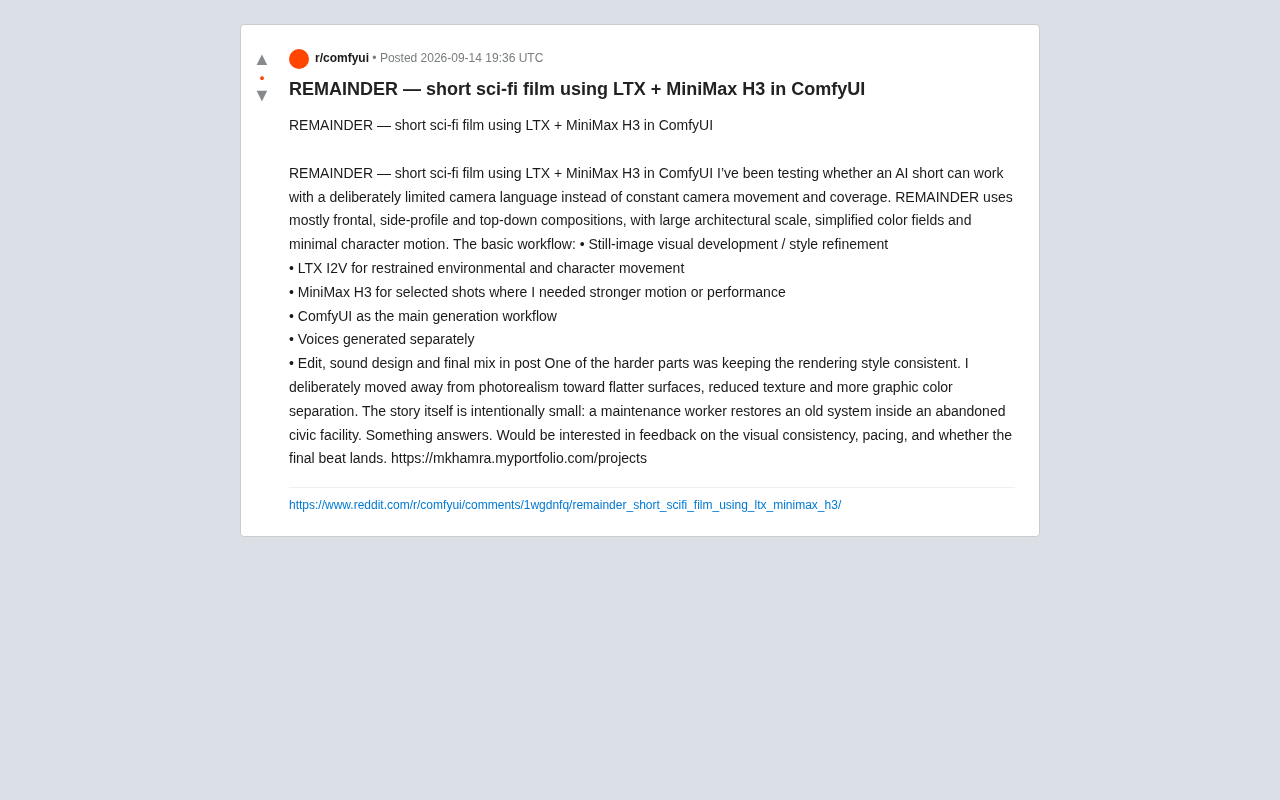
Building an AI Sci-Fi Short with LTX + MiniMax H3: Restrained Cinematography in ComfyUI
Sci-fi short REMAINDER uses LTX, MiniMax H3, and ComfyUI with restrained cinematography and flat aesthetics to solve visual consistency in AI filmmaking.
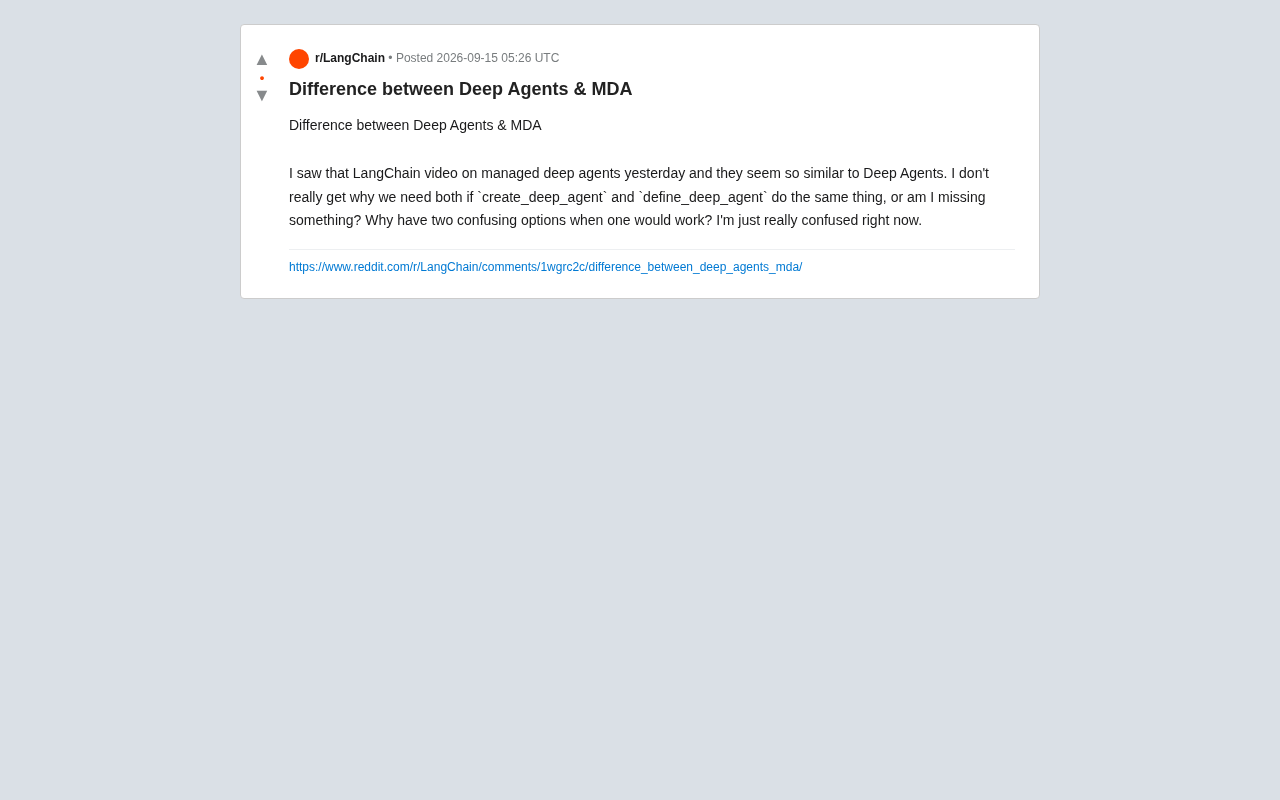
LangChain Deep Agents vs. MDA: Clearing Up the Confusion for Developers
What's the difference between LangChain's Deep Agents and MDA (Managed Deep Agents)? We break down create_deep_agent vs. define_deep_agent and help developers choose.
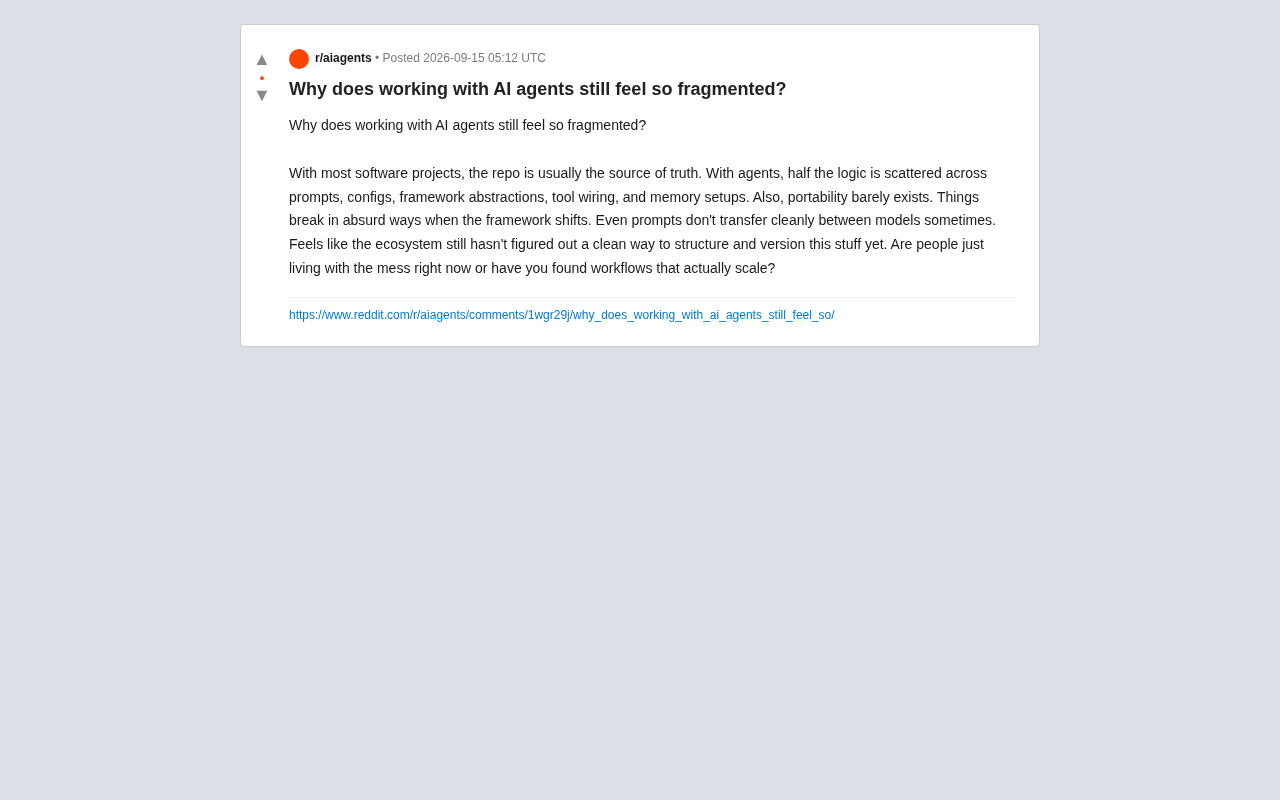
Why Is AI Agent Development So Fragmented? The Real Causes and How to Work Around Them
Why does AI Agent development feel so fragmented? Logic scattered across prompts, configs, and frameworks makes portability nearly impossible. Here's why — and how to cope.