@ai-sdk/zai 1.0.4 Released: A Deep Dive into Vercel AI SDK Dependency Updates

@ai-sdk/zai 1.0.4 patches three core Vercel AI SDK dependencies to maintain ecosystem consistency.
`@ai-sdk/zai@1.0.4` is a patch-level update to the Zhipu AI model adapter in the Vercel AI SDK ecosystem, syncing `@ai-sdk/provider@2.0.5`, `@ai-sdk/openai-compatible@1.0.55`, and `@ai-sdk/provider-utils@3.0.38`. No new features or breaking changes are included — it's safe to upgrade directly. The release is built via GitHub Actions and carries a GPG verified signature, reflecting Vercel's supply chain security practices. Teams using this SDK to integrate Zhipu models should update promptly and check other `@ai-sdk/*` package versions to avoid mismatches.
The @ai-sdk/zai package in the Vercel AI SDK ecosystem has released version 1.0.4 — a patch-level update. While the version bump may seem minor, understanding the specifics of each release still has practical value for developers building AI applications on top of this SDK. This article breaks down the core changes and their context based on the official GitHub Release notes.
What's Changed
According to the release record in the Vercel official repository (vercel/ai), @ai-sdk/zai@1.0.4 is a Patch Change — its primary content is a synchronized upgrade of a set of dependency packages. No new features or breaking changes were introduced; instead, the update keeps the entire SDK ecosystem consistent and stable by refreshing underlying dependencies.
The specific dependencies updated are:
@ai-sdk/provider@2.0.5@ai-sdk/openai-compatible@1.0.55@ai-sdk/provider-utils@3.0.38
These updates were triggered by commit 594787e. For developers using Zhipu AI (智谱 — "zai" typically refers to its model services) as their model provider, keeping these underlying dependencies current helps ensure you receive the latest compatibility fixes and internal optimizations.
Why Dependency Updates Matter
In modern JavaScript/TypeScript SDK architecture, modular design means a higher-level package often depends on multiple foundational packages. As an adapter layer for a specific model provider, @ai-sdk/zai depends heavily on three core modules: @ai-sdk/provider, @ai-sdk/openai-compatible, and @ai-sdk/provider-utils.
Among these, @ai-sdk/openai-compatible is a critical component. Many model services — both domestic and international, including Zhipu — expose interfaces that are compatible with the OpenAI API format. Vercel AI SDK uses this compatibility layer to unify access across different model services. When the compatibility layer is upgraded, downstream provider adapters (such as zai) must follow suit to ensure that call logic, parameter passing, and response parsing remain correct.
@ai-sdk/provider-utils provides shared utility functions used across providers — things like request handling and streaming response parsing. Updates to this kind of utility package typically bring granular bug fixes and performance improvements.
@ai-sdk/provider is the core abstraction layer of the entire Vercel AI SDK ecosystem. It defines the unified interface specification that all model providers must follow, including standard protocols for language models (LanguageModelV1), embedding models, and more. Application code written against this interface doesn't need to care whether the underlying service is OpenAI, Anthropic, Zhipu, or something else. When @ai-sdk/provider iterates, specific adapter packages that don't keep up may encounter interface type mismatches or unexpected runtime behavior. Therefore, @ai-sdk/zai synchronizing to @ai-sdk/provider@2.0.5 in this release is fundamentally about maintaining type and behavioral consistency across the entire dependency tree — ensuring the Zhipu model adapter always conforms to the latest standard protocol.
Practical Impact of This Patch Update
Patch versions (the last digit in 1.0.4) follow Semantic Versioning (SemVer), meaning this update is backward-compatible and does not change any existing API call signatures. For most projects, upgrading to this version is generally safe and can be done directly via your package manager:
npm install @ai-sdk/zai@1.0.4

Semantic Versioning (SemVer) divides version numbers into three segments — MAJOR.MINOR.PATCH: MAJOR signals breaking API changes, MINOR indicates new backward-compatible features, and PATCH covers only backward-compatible bug fixes. Supply chain security has become a major topic in the open-source community in recent years — the 2021 malicious code injection incidents affecting popular packages like `ua-parser-js` and `colors` put the entire frontend ecosystem on alert. Vercel uses GPG signing combined with GitHub Actions automation to achieve a dual guarantee of "trusted build environment + verifiable artifacts." Developers can verify package signature integrity using commands like `npm audit signatures` to mitigate tampering risks at the source.
# or
pnpm add @ai-sdk/zai@1.0.4
Notably, this release was verified with a GitHub signature (Verified, GPG key ID: B5690EEEBB952194) and built and published via GitHub Actions automation. This reflects Vercel's practice around open-source supply chain security — automated publishing paired with signature verification reduces the risk of malicious tampering, giving developers greater confidence when pulling in dependencies.
Recommendations for Developers
For teams currently using Vercel AI SDK to integrate Zhipu model series, it's recommended to update @ai-sdk/zai to 1.0.4 to benefit from the stability improvements that come with synchronized dependency upgrades. Additionally, given the inter-dependency relationships between SDK modules, it's a good idea to also review the versions of other @ai-sdk/* packages in your project when upgrading, to avoid potential issues caused by version mismatches.
From a broader perspective, Vercel AI SDK's release cadence is quite frequent — this package series alone has accumulated over 4,200 commits to the main branch, with the GitHub repository earning nearly 27,000 stars and over 5,000 forks. This active iteration reflects how a unified AI integration layer is becoming a critical piece of infrastructure for frontend and full-stack development. While individual patch updates may seem small, consistently keeping up with them helps projects remain in a healthy, maintainable state over the long term.
Summary
@ai-sdk/zai@1.0.4 is a patch update centered on dependency synchronization, with no significant functional changes. That said, it carries positive implications for ecosystem consistency and long-term stability. It also serves as a window into Vercel AI SDK's engineering practices — modular architecture, semantic versioning, and automated signed releases together form the foundational infrastructure of a mature open-source project.
Related articles
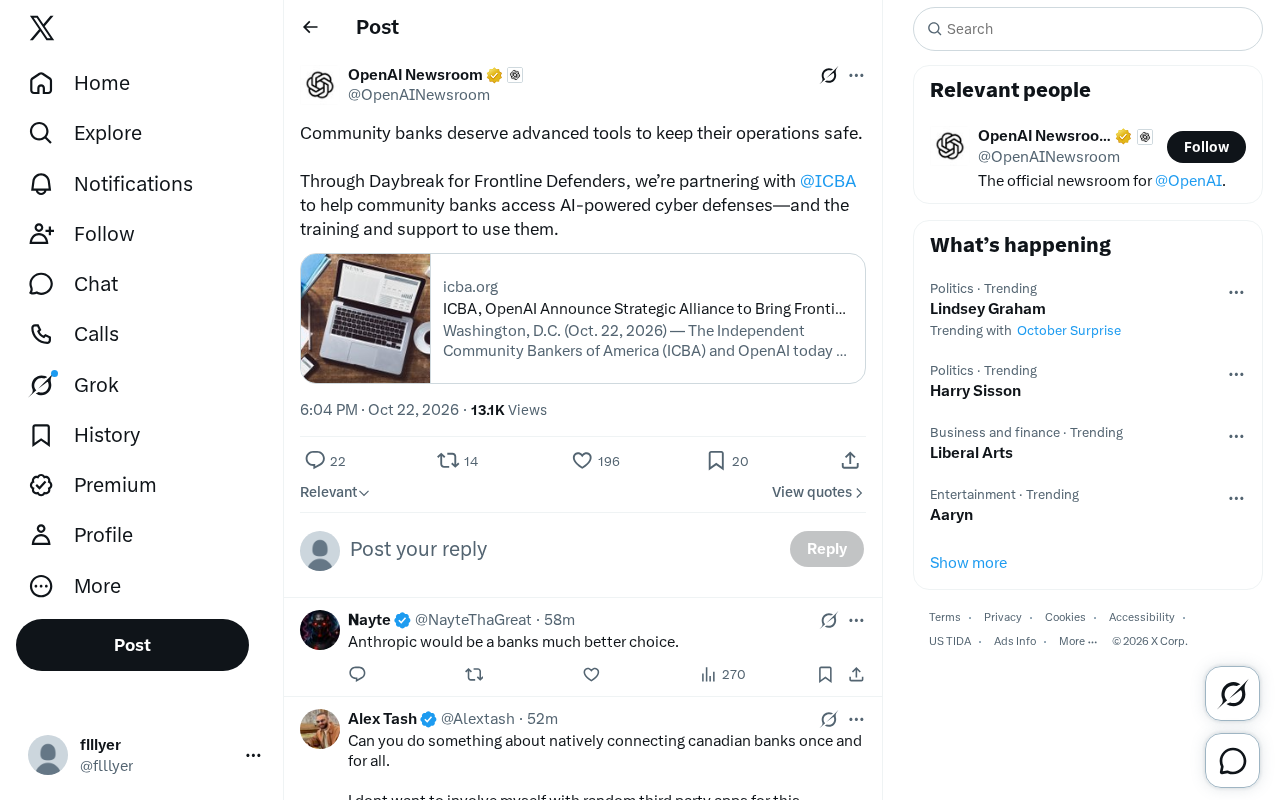
Daybreak Partners with ICBA to Provide AI Cybersecurity Defense for Community Banks
Daybreak partners with ICBA through its Frontline Defenders program to provide community banks with AI-driven cybersecurity defense tools and training support, helping resource-constrained institutions strengthen protection.

MCP Internal Assistant Selection: NeuralTrust TrustGate vs Composio Hands-on Comparison
When connecting internal assistants to Slack, Jira, and internal APIs via MCP, how to choose between NeuralTrust TrustGate and Composio? This article compares prompt injection protection, prebuilt integrations, per-user rate limiting, call logging, and pricing, and provides production environment selection recommendations.

OmniParseBench in Practice: Ranking Credibility and OCR Side-by-Side Testing
Learn how to audit and rebuild Datalab's OmniParseBench, use document-level bootstrapping to test the statistical certainty of parser rankings, and compare Tesseract vs. Indra OCR on custom samples, with a developer checklist.