@ai-sdk/zai 3.0.33 Release: A Breakdown of the Dependency Patch Update

@ai-sdk/zai releases 3.0.33 patch, syncing underlying dependencies — understand the dependency chain, not the version number.
@ai-sdk/zai has released patch 3.0.33, auto-published by github-actions and signature-verified, with no new features. The core change syncs three underlying dependencies: @ai-sdk/provider@4.0.29, @ai-sdk/provider-utils@5.0.62, and @ai-sdk/openai-compatible@3.0.71. These form the AI SDK provider abstraction layer, and their fixes propagate up the dependency chain, potentially affecting streaming parsing or error handling. No immediate upgrade needed if stable, but worth considering when troubleshooting provider issues. Lock files ensure reproducibility.
A Low-Key Patch Release
The @ai-sdk/zai package in the AI SDK ecosystem has released version 3.0.33. According to the GitHub release record, this is a typical patch update, automatically published by the github-actions bot, with commit hash b7f6255, and it has passed GitHub's verified signature check.
For most developers building applications with the AI SDK, these minor version updates often don't bring API-level changes. But understanding the dependency relationships behind these versions helps determine whether an upgrade is needed.
What Changed: Dependency Sync
The core change in this 3.0.33 release is a synchronized update of dependencies, involving three key packages:
@ai-sdk/providerupdated to 4.0.29@ai-sdk/provider-utilsupdated to 5.0.62@ai-sdk/openai-compatibleupdated to 3.0.71
These three packages form the foundation of the AI SDK's provider abstraction layer. @ai-sdk/provider defines the provider interface specification, @ai-sdk/provider-utils provides common utility functions, and @ai-sdk/openai-compatible encapsulates provider implementations compatible with the OpenAI API format. As an integration package built on top of these, @ai-sdk/zai typically follows changes in these underlying dependencies with its version updates.
Why Dependency Updates Are Worth Paying Attention To
Dependency updates may seem trivial, but they can actually affect runtime behavior. When the underlying provider or provider-utils fixes certain edge cases, adjusts streaming parsing logic, or improves error handling, these changes propagate upward through the dependency chain. If you've encountered interrupted streaming responses or parameter compatibility issues while using @ai-sdk/zai, upgrading to a version with the latest dependencies might resolve them.
On semver and patch versions
Semver (Semantic Versioning) splits version numbers into MAJOR.MINOR.PATCH. An increment in the patch number (like the 33 in 3.0.33) means the release only contains backward-compatible bug fixes and should not introduce breaking changes or new APIs. The common ^3.0.33 or ~3.0.33 range declarations in npm are based on this convention: ^ allows the minor version and patch number to float, while ~ only allows the patch number to float.
Therefore, when @ai-sdk/zai only increments the patch number, there should theoretically be no API-level breakage — this is the technical basis for the article's judgment that "no immediate upgrade is needed." However, note that a patch number bump in an underlying dependency doesn't mean its internal behavior is completely unchanged — internal logic like streaming parsing, retry strategies, or error message formats is often adjusted in patches.
Lock files and reproducible builds
Lock files (package-lock.json, pnpm-lock.yaml, yarn.lock) record the exact version and integrity hash that every package in the dependency tree resolves to. Their purpose is to make installation results identical across different machines and times, ensuring build and test reproducibility.
In CI environments, npm ci or pnpm install --frozen-lockfile are typically used — these commands install strictly according to the lock file without resolving semver ranges. If you run npm update locally to let the patch number float to a newer version while CI still installs from the old lock file, you may encounter "works locally, fails in CI" or inconsistent behavior. The cost of debugging such issues is often far higher than keeping the lock file in sync.
What This Kind of Release Tells Us
This release was completed automatically by github-actions, which reveals the project's maintenance model: changes are merged and published through automated pipelines, and commits on the main branch are signature-verified, ensuring supply chain security. For production projects depending on such packages, this automated release process means patch updates will be relatively frequent, but the scope of each change is usually manageable.
How Developers Should Respond
For projects using @ai-sdk/zai, it's worth keeping an eye on these patch versions in your lock file. If your project is running stably, there's no need to upgrade immediately; but if you encounter provider communication issues, the latest patch version is one avenue to explore. When using npm update or pnpm update, note that semver rules allow automatic upgrades within the patch range — CI environments should ensure reproducibility through lock files.
Supply chain security and signature verification
The "verified signature" mentioned in the article refers to commits being verified via GPG or SSH signatures. GitHub displays a Verified badge for commits with valid signatures, confirming that the commit was indeed created by the holder of the claimed key and that the content hasn't been tampered with.
Amid frequent npm supply chain attacks, this mechanism is especially important: if an attacker publishes a "normal-looking" patch version by stealing an account or injecting a malicious postinstall script, it's nearly impossible to detect from the version number alone. Combining signature verification, restricted publish permissions, npm Provenance (publish attestation), and dependency change auditing in CI/CD can significantly reduce this risk. Open source projects commonly adopt bot-based automated releases to make the release process auditable and reproducible, rather than relying on individual manual operations.
Summary
@ai-sdk/zai 3.0.33 is a dependency-driven patch release that introduces no new features itself. It reflects the maintenance rhythm under the AI SDK's modular architecture: the underlying provider layer iterates continuously, and upper-layer integration packages sync accordingly. For developers, understanding this dependency chain is more valuable than memorizing specific version numbers.
One-line Summary
@ai-sdk/zai releases 3.0.33 patch, syncing underlying dependencies — developers should understand the dependency chain rather than fixate on version numbers.
Paragraph Summary
@ai-sdk/zai has released patch version 3.0.33, automatically published by github-actions and signature-verified, introducing no new features itself. The core change is a synchronized update of three underlying dependencies: @ai-sdk/provider@4.0.29, @ai-sdk/provider-utils@5.0.62, and @ai-sdk/openai-compatible@3.0.71. These packages form the foundation of the AI SDK's provider abstraction layer, and their fixes propagate up the dependency chain, potentially affecting runtime behavior like streaming parsing or error handling. The article suggests developers don't need to upgrade immediately if things are running stably, but should consider the latest patch as an avenue when encountering provider communication issues. It also notes the importance of lock files for reproducibility and the maintenance rhythm of continuous underlying iteration with upper-layer sync under a modular architecture.
Related articles
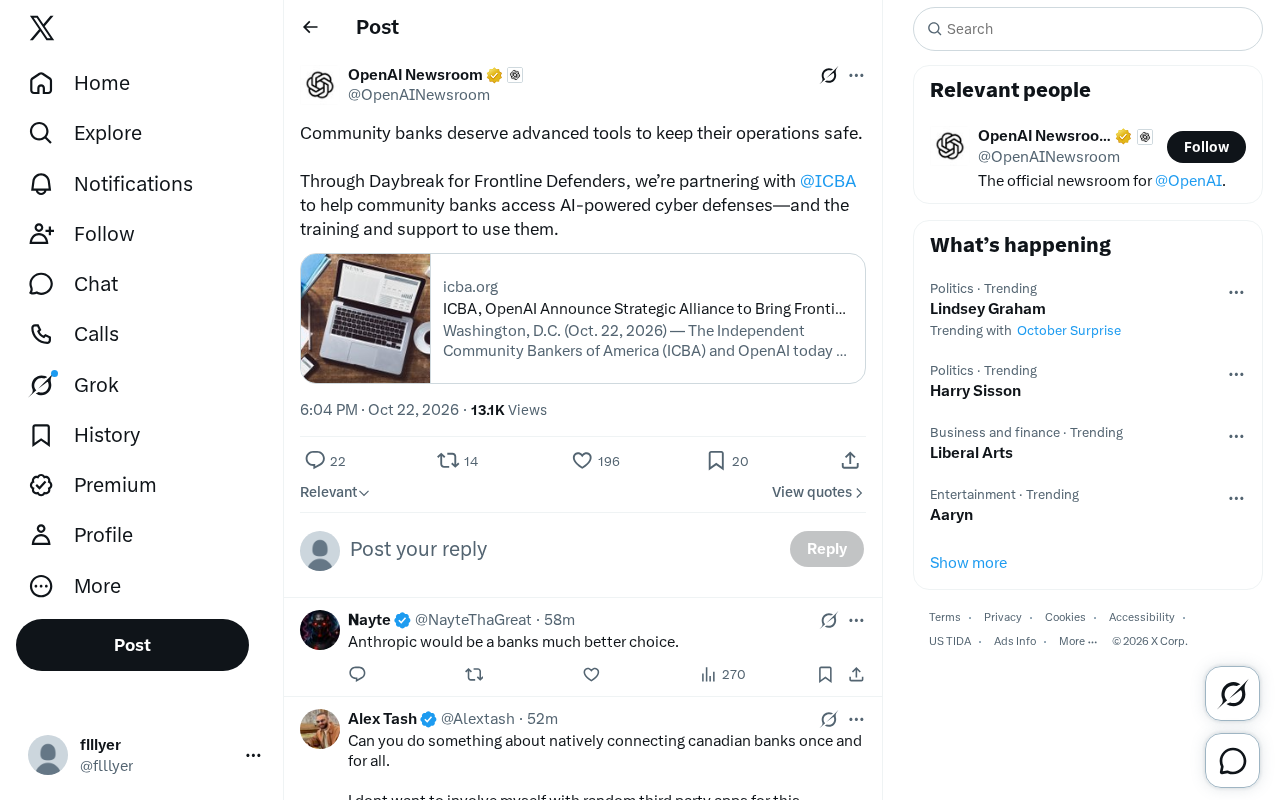
Daybreak Partners with ICBA to Provide AI Cybersecurity Defense for Community Banks
Daybreak partners with ICBA through its Frontline Defenders program to provide community banks with AI-driven cybersecurity defense tools and training support, helping resource-constrained institutions strengthen protection.

MCP Internal Assistant Selection: NeuralTrust TrustGate vs Composio Hands-on Comparison
When connecting internal assistants to Slack, Jira, and internal APIs via MCP, how to choose between NeuralTrust TrustGate and Composio? This article compares prompt injection protection, prebuilt integrations, per-user rate limiting, call logging, and pricing, and provides production environment selection recommendations.

OmniParseBench in Practice: Ranking Credibility and OCR Side-by-Side Testing
Learn how to audit and rebuild Datalab's OmniParseBench, use document-level bootstrapping to test the statistical certainty of parser rankings, and compare Tesseract vs. Indra OCR on custom samples, with a developer checklist.