AI Shakes Up the Literary World: A Wild West of Creative Upheaval
Generative AI is rewriting the underlying rules of literary creation, publishing, and evaluation, and the industry urgently needs a tiered new order.
Using a Hacker News thread as a starting point, the article analyzes generative AI's impact on literature. AI drastically lowers the writing barrier—one prompt can produce short stories, reviews, or genre novel drafts—hitting mid-to-low-end content markets first and squeezing writers' incomes. Copyright and attribution remain gray zones as the human-creation-based framework needs recalibration. Reader trust is diverging, with transparency potentially a differentiator. The article argues a blanket ban is unrealistic and favors tiered governance with disclosure and self-regulation, urging creators to join rule-making early.
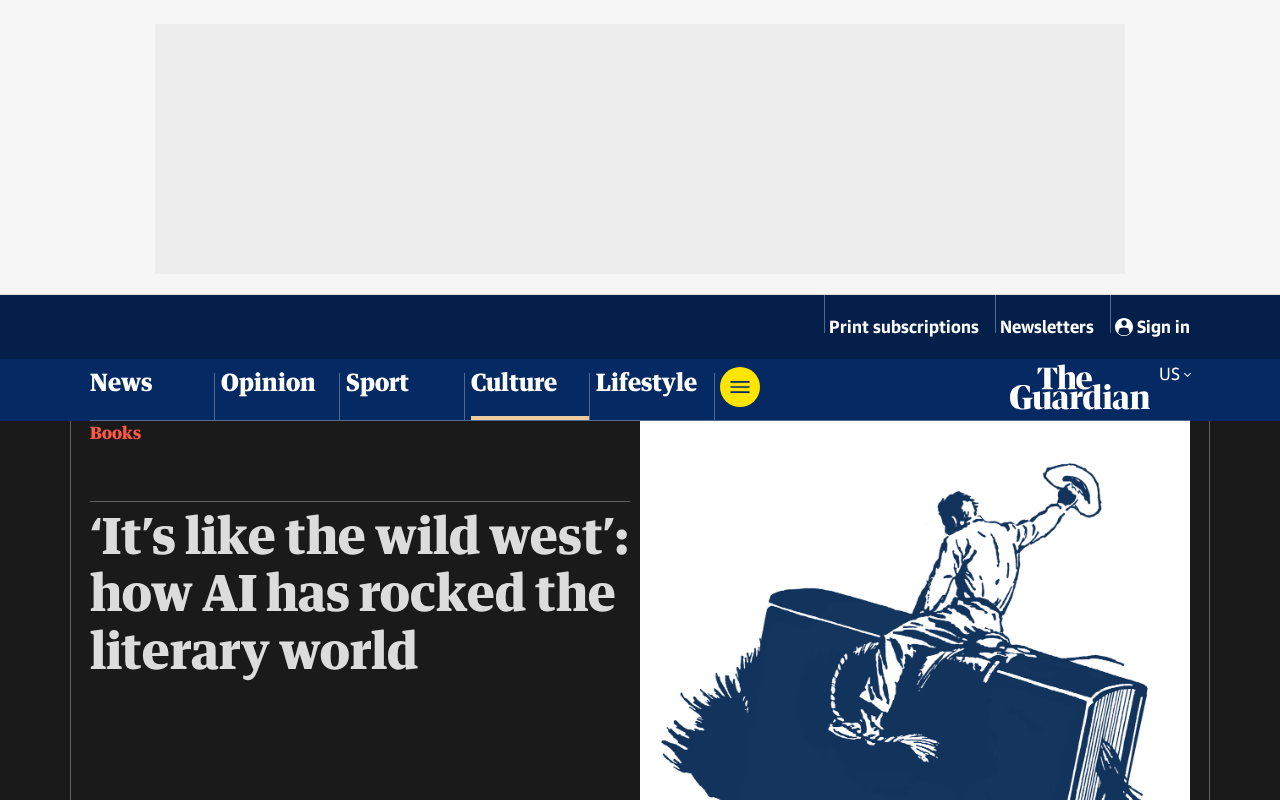
As generative AI begins mass-producing novels, poetry, and book reviews, the literary world is undergoing a restructuring of order reminiscent of the "Wild West." A Hacker News discussion thread titled "'It's like the Wild West': how AI has rocked the literary world" brings this long-simmering anxiety among creators out into the open. The post itself has few points and zero comments, but the trend it points to is worth unpacking: AI is not a peripheral tool for literature—it is rewriting the underlying rules of creation, publishing, and evaluation.
After the Collapse of the Creative Barrier
In the past, the barrier to writing was time, training, and patience. Today, a single prompt can generate a structurally complete short story, a passable book review, or even a first draft of an entire genre novel. The original article uses "Wild West" to describe this state, the core being that rules have yet to be established: who is using AI to write, to what extent, and whether readers are informed—there is no consensus on any of it.
This disorder first hits the mid-to-low-end content market. Texts with relatively loose originality requirements—book reviews, blurbs, marketing copy—are being rapidly replaced. For writers who make a living from this, it is not a distant threat but an income squeeze that has already occurred.
The Gray Zone of Copyright and Attribution
Another layer of meaning in "Wild West" is the blurring of property boundaries. AI-generated text is trained on large amounts of published works, and its output is hard to distinguish from human writing, which raises two practical questions: how originality is determined, and who holds the attribution rights.
The original article does not provide specific legal precedents or regulatory details, but the consensus it points to is clear—the existing copyright framework is built on the premise of "human creation," and as the proportion of machine involvement in creation grows, this framework needs recalibration. Publishers and literary agencies currently mostly require authors to disclose AI usage, but disclosure standards and verification methods remain crude.
Training data and fair use are the key background for understanding this controversy. Generative models ingest massive amounts of copyrighted text during pre-training, a process that in jurisdictions such as the United States currently relies mainly on the "fair use" defense to claim legality, but its boundaries are being challenged by multiple lawsuits. At the same time, whether output constitutes a "derivative work" and whether it is copyrightable depends on the degree of human involvement. The U.S. Copyright Office has repeatedly ruled that content generated entirely by machines, lacking creative input from a human author, is not protected by copyright; only when human creativity in prompting, selection, and editing reaches a certain threshold may limited protection be obtained. This "human author" standard is precisely the core of the tension between the current system and AI creation.
The Divergence of Reader Trust and Literary Value
More subtle than copyright is the question of trust. When readers open a book, they assume there is a human author behind it with intentions and experiences. When this assumption is broken, the reading experience itself changes.
An observable divergence is taking shape: some readers only care whether the story is good and do not mind how it was produced; others explicitly demand "pure human creation" and use this as a basis for purchasing decisions. For writers, this is both a forced statement of position and potentially an opportunity for differentiation—transparently showing the creative process can actually build stronger reader relationships.
Disclosure mechanisms are the industry's main tool for addressing the trust crisis. The basic idea is to require creators or publishers to indicate the degree of AI involvement in a work, allowing readers to make choices with informed consent. The transparency obligations for AI-generated content under the EU AI Act, as well as labeling requirements for AI-generated images on some platforms, are extensions of this approach. But in the literary field, disclosure faces practical difficulties: AI involvement may be just polishing, drafting, or structural suggestions, and the degree is hard to quantify; inconsistent standards easily lead to mere formality. Moreover, excessive disclosure may trigger "algorithm aversion"—once readers learn that a work involves AI, evaluations may systematically decline even if quality is unchanged.
New Rules the Industry Needs
Simply treating AI as a monster is unrealistic. A more pragmatic path is tiered handling: in genre writing, assisted editing, translation and rewriting, AI as an efficiency tool is hard to ban outright; in fields requiring originality and authorship, disclosure mechanisms and industry self-regulation are more feasible directions.
The original article's "Wild West" metaphor actually implies a judgment: chaos is temporary. The West eventually established order, and so will the literary world. The difference is who writes this order and whose interests it favors—that is still undecided. For creators, the earlier they participate in rule discussions, the less likely they are to be left behind by the rules.
The tiered governance approach can draw on practices in other content industries. In journalism, academic publishing, and other fields, three-tier rule designs have emerged in parallel—"prohibited," "allowed but must disclose," and "allowed without disclosure"—based on the level of originality and accountability required in that segment. For literature, applying loose rules to auxiliary segments such as translation, proofreading, and marketing copy, while applying strict disclosure to signed works such as original novels, poetry, and reviews, is a relatively feasible tiered approach. Joint statements by industry self-regulatory organizations, authors' associations, and publishers often take effect faster than legislation, but they also suffer from inconsistent enforcement standards and lack of coercive force.
One-line Summary
Generative AI is rewriting the underlying rules of literary creation, publishing, and evaluation, and the industry urgently needs to establish a tiered new order.
Paragraph Summary
Using a Hacker News discussion thread as an entry point, the article analyzes the impact of generative AI on the literary world. AI has drastically lowered the barrier to writing—a single prompt can generate short stories, book reviews, or even first drafts of genre novels. The first to be hit is the mid-to-low-end content market of book reviews, blurbs, and marketing copy, where related writers' incomes are already being squeezed. Regarding copyright and attribution, the originality determination and attribution of training data sources and outputs remain in a gray zone; the current copyright framework premised on "human creation" urgently needs recalibration, and publishers mostly require disclosure of AI usage but with crude standards. At the level of reader trust, divergence has emerged: some care only about content, while others insist on "pure human creation" and make decisions accordingly; transparently showing the creative process may instead become a differentiating advantage. The article argues that a blanket ban is unrealistic and that more pragmatic is tiered governance—tolerating AI tools in auxiliary segments and relying on disclosure mechanisms and industry self-regulation in original fields—and emphasizes that creators should participate in rule-making as early as possible.
Related articles

Inside Honey Trap Training: Emotional Dissociation and Anchoring Techniques
How are spies trained for honey trap missions? A trainee reveals emotional dissociation, perfume and keyword anchoring, and target photo binding—psychological techniques that condition reflexes for intelligence work.

Frontier AI Risk Management: Full-Pipeline Practices from Training to Deployment
OpenAI outlines a frontier AI risk management framework: from training-stage model alignment to deployment-stage sandboxing and blocking safeguards, plus post-deployment monitoring—a layered risk control system across the model lifecycle.
DaisyRose-27B: 1,200-Task RL Boosts Qwen3.8 from 5.6% to 12% on Terminal-Bench 4.1
DaisyRose-27B uses RL training on 1,200 tasks to boost Qwen3.8's Terminal-Bench 4.1 score from 5.6% to 12%, showing lightweight RL can more than double terminal task performance.