AI Software Factory in Practice: Deep Dive into 35% Code Contribution in 4 Weeks
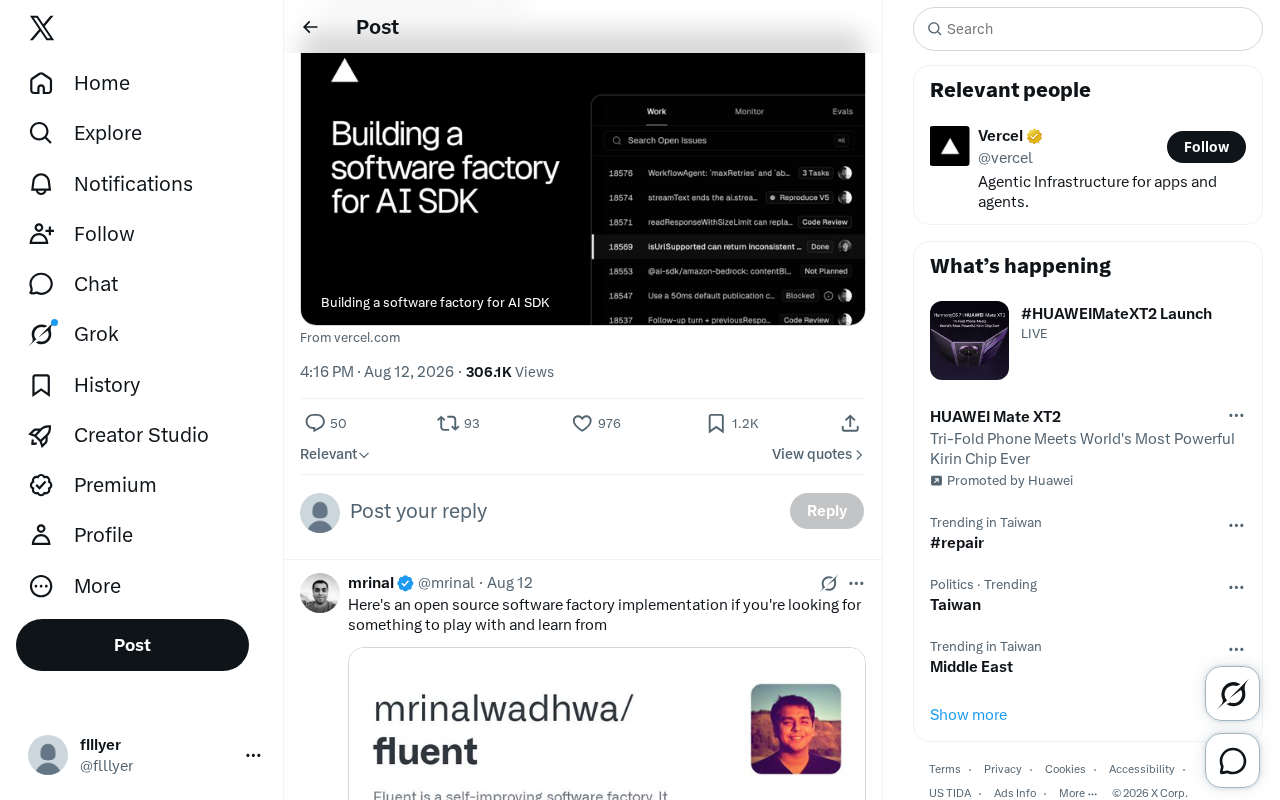
AI agents contributed 35% of merged code in 4 weeks through specialized pipeline collaboration.
An AI software factory using multi-agent pipelines achieved remarkable results in 4 weeks: 35% merged PR contribution, 70% issue closure rate, and 25% bug reduction. By assigning specialized AI agents to different development tasks while humans focus on review and approval, this model balances efficiency with quality control and extends automation beyond traditional CI/CD into code generation itself.
A New Paradigm for AI-Driven Software Development
An "software factory" composed of AI agents is transforming traditional development workflows. This experimental project, focused on AI SDK development, adopts an innovative model where each development step is assigned to specialized AI agents, while human developers focus on reviewing and merging changes.
Four weeks of practice data reveal impressive results: the AI factory contributed up to 35% of merged PRs (Pull Requests), successfully closed 70% of July issues, and reduced unresolved bugs by 25%. These numbers demonstrate AI's shift from an auxiliary tool to core productivity in software engineering.
Core Working Mechanism of the AI Software Factory
The core concept of this AI software factory is the agent pipeline: decomposing various stages of software development—requirements analysis, code writing, testing, documentation updates, etc.—into independent steps, each handled by a specially trained AI agent.
AI agents are artificial intelligence systems capable of perceiving their environment, autonomously planning, and executing tasks, distinct from traditional single-turn Q&A AI interactions. The concept of Multi-Agent Systems (MAS) originated from distributed artificial intelligence research, with the core idea of decomposing complex tasks among multiple specialized agents for collaborative completion. In software engineering scenarios, different agents can focus on code generation, test case writing, documentation maintenance, bug reproduction, and other specialized tasks, passing contextual information through standardized interfaces to form a pipeline-style collaboration chain. The advantage of this architecture is that each agent's prompts and fine-tuning data can be highly optimized for a single task type, avoiding the "attention dilution" problem common when general-purpose assistants handle diverse tasks.
Unlike traditional single AI programming assistants, this multi-agent collaboration model allows each agent to focus on domain-specific tasks, forming an efficient production method similar to industrial assembly lines. Human developers play the role of "quality gatekeepers" in this process, reviewing AI-generated code changes and deciding whether to merge them into the main branch.
This human-AI collaboration model balances efficiency with quality: AI handles repetitive, rule-based tasks, while humans are responsible for decisions requiring creative thinking and strategic judgment.
What Does a 35% Code Contribution Rate Really Mean?
The 35% PR contribution rate is a key metric. Pull Requests (PRs) are a core collaboration mechanism in modern software engineering based on Git version control systems, introduced and popularized by GitHub in 2008. After developers complete modifications on independent branches, they submit merge requests to the main branch through PRs, triggering the code review process. Reviewers can comment line-by-line, request changes, or directly approve merges. In the AI software factory, this mechanism serves as a critical quality gate: every PR submitted by AI agents requires professional review by human developers. The 35% merge rate means these AI-submitted changes passed review under the same evaluation standards as human code, rather than being accepted with lowered thresholds. In other words, among all accepted and merged code changes, over one-third came from AI agents, sufficient proof of AI's substantive contribution.
More noteworthy is the 70% issue closure rate. This indicates AI can not only write new features but also effectively fix known issues and bugs. Coverage across the full workflow from bug fixes to feature development demonstrates the maturity of AI agents in real software engineering scenarios.
The 25% reduction in unresolved bugs is directly related to the speed of technical debt repayment. Technical Debt, a concept introduced by Ward Cunningham in 1992, describes code quality issues accumulated for short-term delivery speed that will require higher costs to address in the future. In traditional development teams, bug fixes are often postponed due to priority competition—new feature development occupies most developers' time. AI agents can continuously and tirelessly handle backlog repair tasks, effectively providing the team with a parallel workforce focused on "debt repayment." This also explains why a 70% issue closure rate and bug reduction can be achieved simultaneously without sacrificing new feature development.
Core Insights for Software Development Teams
This case provides several important insights for the software industry:
Value of Specialized Division of Labor
Distributing AI capabilities across multiple specialized agents, rather than relying on a single general-purpose assistant, may be a more effective AI application strategy. Each agent can be optimized and fine-tuned for specific task types, achieving higher output quality in their respective domains.
Best Practices for Human-AI Collaboration
The model where humans retain final decision-making authority (code review and merging) both unleashes AI productivity and ensures quality control. This "AI produces, human reviews" workflow may become the standard mode for future software development.
New Dimensions of Continuous Integration
CI/CD (Continuous Integration/Continuous Delivery) is a core pillar of DevOps engineering practices, originating from Extreme Programming (XP) methodology and becoming an industry standard in the 2010s with the proliferation of tools like Jenkins, GitHub Actions, and GitLab CI. Traditional CI/CD pipelines concentrate automation on testing and deployment stages, assuming code is written by humans. The AI software factory extends the automation boundary upstream, incorporating code generation itself into an orchestratable automation process. Conceptually, this represents a major expansion of DevOps automation boundaries. Some researchers call it an early form of "AI-native DevOps," opening new possibilities for team engineering efficiency.
Challenges and Future Directions
Despite encouraging initial data, this model still faces considerable challenges. The maintainability of AI-generated code, its ability to understand complex business logic, and how to handle tasks requiring deep innovation all need continuous observation over longer periods.
Additionally, is there a ceiling to the 35% contribution rate? As AI agent capabilities improve, can this percentage continue to grow? Or will it encounter bottlenecks due to tasks that inherently require human intelligence? The answers to these questions will determine AI's ultimate role in software development.
For teams hoping to explore similar models, we recommend starting with small-scale pilots, selecting subsystems or task types suitable for automation, and gradually building trust and process standards. The goal of the AI software factory is not to replace developers but to redefine their work focus—from writing code to designing systems and controlling quality.
Key Takeaways
- AI agent pipelines achieved 35% merged PR contribution, 70% issue closure rate, and 25% bug reduction in 4 weeks
- Multi-agent specialization outperforms single general-purpose assistants through task-specific optimization
- Human-AI collaboration model: AI produces, humans review and approve, balancing efficiency with quality control
- AI extends CI/CD automation upstream to code generation, representing "AI-native DevOps" evolution
- Technical debt repayment accelerates as AI agents handle backlog repairs in parallel with feature development
- Challenges remain in maintainability, complex logic understanding, and innovation-requiring tasks
- Recommended approach: start with small pilots on automation-suitable subsystems to build trust incrementally
Related articles
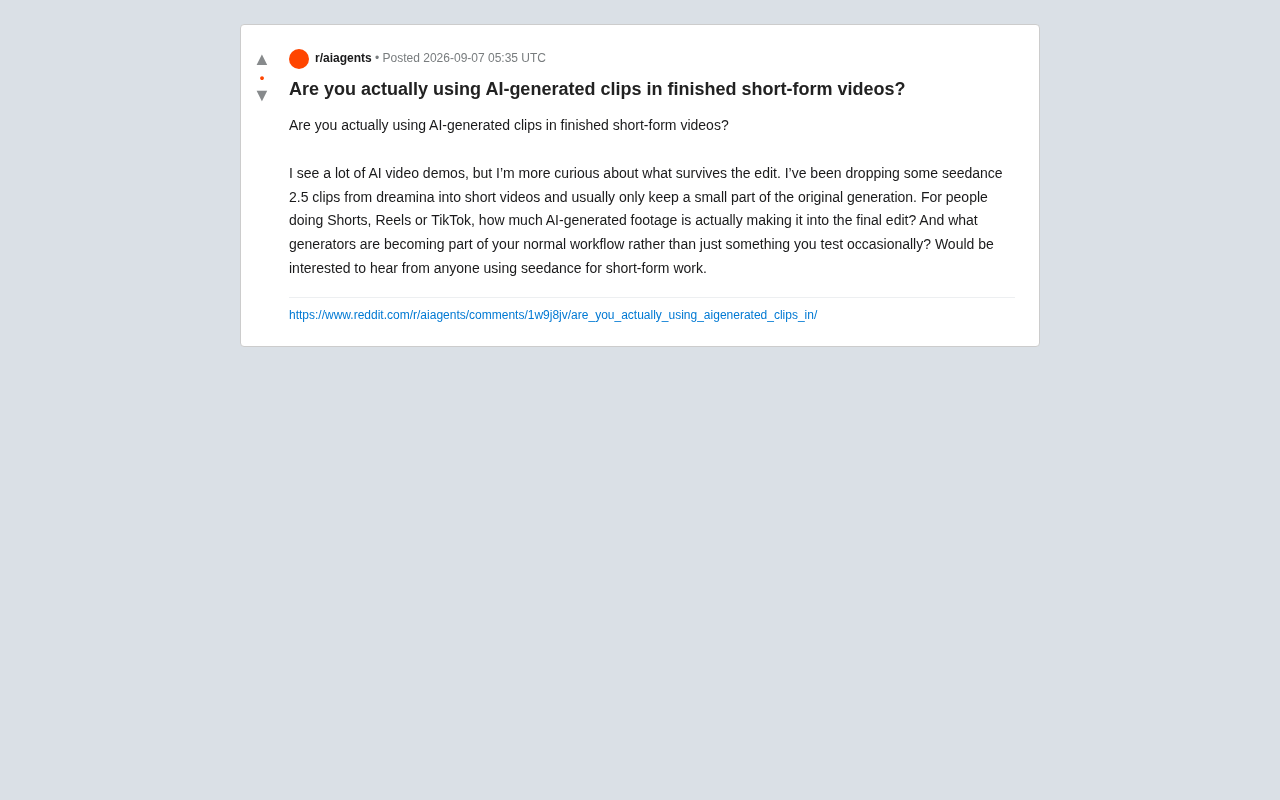
How Short-Form Video Creators Are Using AI Video Generation Tools
Exploring the real-world application of AI video generation tools in short-form video creation. From Seedance to Runway, how do creators integrate AI assets? Revealing the gap between demos and production use.

Home Data Center Setup Guide: A Complete Self-Hosted Private Cloud Implementation
Deep dive into building a home data center: hardware selection, software architecture, cost analysis, and operational challenges. From data sovereignty to technical implementation, build your private cloud infrastructure and control your digital assets.
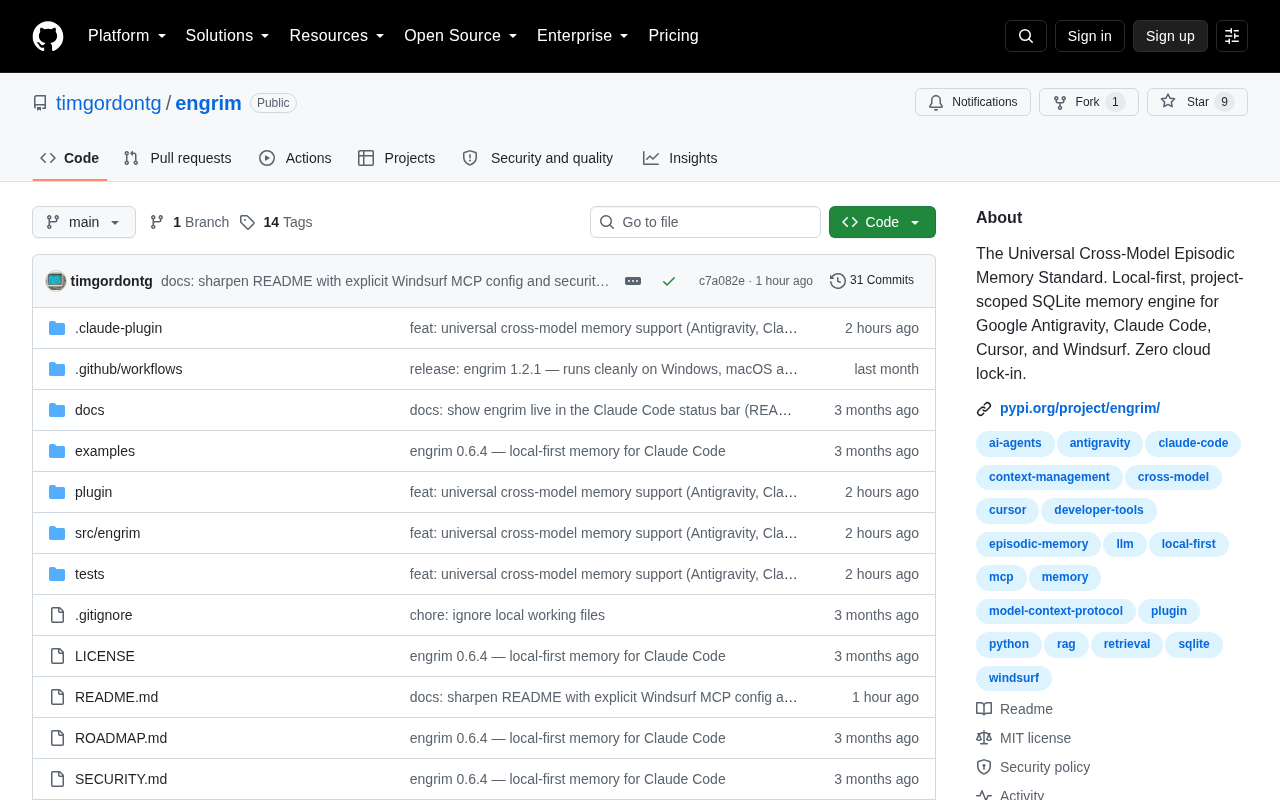
Engrim: A Local Memory Engine Solution for AI CLI Tools
Engrim is an open-source, local-first SQLite memory engine built for AI CLI tools like Claude Code and Aider, solving context loss while keeping data private.