AI + Test Stores: 849 Orders in One Month — How Cross-Border E-Commerce Shifted from Chasing Hits to Systematic Product Selection

How AI screening and test store validation replaced guesswork in cross-border e-commerce product selection.
A cross-border e-commerce seller shares how combining AI-assisted product screening with test store data validation generated 849 orders and nearly 100,000 RMB in August sales across two stores. The article breaks down the shift from chasing viral products to building a repeatable, data-driven selection system — covering AI's real role in filtering, test store validation logic, and practical criteria for profitable product selection.
From Gambling on Products to Screening Them: A Real August Retrospective
In the world of cross-border e-commerce, "find one viral product and you're set for life" was once an obsession shared by countless sellers. However, a Bilibili content creator used real operational data from two stores in August to offer a completely different answer.
According to his retrospective, from August 1 to August 27, the two stores combined for 849 orders with sales approaching 100,000 RMB. The first store generated 440 orders with sales of 48,838 RMB, while the second achieved 409 orders and 46,914 RMB. Both stores currently maintain a steady rhythm of 10 to 15 orders per day, and based on the current profit structure, each store generates over 10,000 RMB in net monthly profit.
You might not have noticed, but this creator deliberately downplayed the "how much money did you make" topic. In his words: "If I'm just showing off numbers, you won't actually learn anything from this video." Compared to the excitement of occasional order spikes, he now focuses on three questions: Can the store maintain steady orders? Can products be continuously replenished? Can the entire process be repeated?
This shift from "viral hit thinking" to "stability thinking" is exactly the cognitive upgrade that many mature cross-border sellers have experienced. Notably, as platforms like Temu, SHEIN, AliExpress, and Amazon rapidly expanded during 2023-2024, product selection competition in cross-border e-commerce shifted from early-stage "information asymmetry advantages" to a battle of "systematic operational capability." Previously, sellers could profit by eyeballing products on supply chain platforms like 1688 and copying hot sellers, but as the number of entrants surged and platform algorithms matured, the success rate of blind copying plummeted. Industry data shows that fewer than 15% of new listings achieve stable sales within 30 days, meaning the vast majority of product selection decisions ultimately get rejected by the market — and this is precisely the industry backdrop behind this seller's strategic pivot.
The Core Shift: From Gambling on Hits to Systematically Screening Products
The fundamental logic underlying this product selection methodology can be summed up in one sentence: Stop gambling on whether a single product will go viral, and instead continuously test to keep only the products backed by real data.

The Trap of Traditional Product Selection
The creator admitted that when he first started, he was like most people: upon seeing a product, his first reaction was "Can this sell? Others are doing well with it, so maybe I can too," and then he'd start researching the product, the pricing, and the competition.
But after doing this for a while, he discovered a critical problem: No matter how long you research, it doesn't guarantee the market will agree. Often, what truly wastes your time isn't that a product didn't sell — it's that you've already invested enormous effort only to finally discover the product was never worth pursuing.
This problem has a deeper theoretical explanation in cognitive science. The "survivorship bias" concept in management theory points out that people tend to focus only on successful cases (viral hits) while ignoring the vast number of failures, thereby overestimating the probability of success for any single decision. In cross-border e-commerce, the frequent appearance of "100K monthly income" stories on social media amplifies this bias, leading sellers to believe that picking the right product is all it takes to replicate success. The essence of systematic product selection is transforming entrepreneurship from "single high-risk bets" to "multiple low-risk iterations" — similar to a venture capital portfolio strategy that reduces the impact of any single product failure through diversified testing.
A Fundamental Reversal in Product Selection Logic
This led to a fundamental reversal in his approach:
- Old logic: Find a product → Research thoroughly → List and operate
- New logic: Screen in bulk → Test quickly → Review data → Then decide
It might look like a simple reordering, but the difference is enormous. Before, it was more about betting on "I think this product should work." Now, it's about letting real data tell you "whether this product is worth continuing."
This logic closely aligns with the core framework of Silicon Valley's Lean Startup methodology. The Lean Startup's emphasis on "MVP (Minimum Viable Product)" and the "Build-Measure-Learn" loop is essentially about validating hypotheses at minimal cost and then deciding whether to persevere or pivot based on feedback. The creator's "screen in bulk → test quickly → review data → then decide" is precisely this methodology applied to cross-border e-commerce.
His evaluation criteria are highly pragmatic: if testing yields no results, eliminate quickly; if data is mediocre, continue analyzing the issues; if orders start stabilizing, move to the next phase of scaling. "I no longer aim to get every product selection right, because that's simply unrealistic. What I care about more is whether I can identify mistakes quickly, and whether I can scale up the wins."
AI + Test Stores: The Dual Engine of Efficient Screening and Market Validation
If you're not gambling, how do you actually screen products? This is precisely why AI and test stores enter the picture.
AI's Real Role in Cross-Border E-Commerce Product Selection
The creator specifically emphasized that his understanding of AI is not a magic tool where you input a few keywords and it tells you which product will definitely make money. Throughout the entire product selection process, AI primarily handles preliminary screening, with its core value being efficiency improvement.
Specifically, structured information like cost, weight, dimensions, profit margins, and fulfillment complexity is first assessed by AI to quickly filter out products that clearly don't meet the criteria. This step essentially leverages AI's ability to process massive amounts of information, replacing the inefficient manual preliminary screening process.
From a technical perspective, AI applications in product selection primarily focus on structured data analysis. Using large language models (such as ChatGPT and Claude) or specialized product research tools (like the AI features in Jungle Scout and Helium 10), sellers can rapidly evaluate candidate products across multiple dimensions: calculating gross margins between procurement costs and selling prices, estimating fulfillment costs across different logistics channels, analyzing competitive saturation in target markets, and more. AI excels at these types of calculation and comparison tasks with clear parameters, completing in seconds what would take hours manually. But AI's limitations are equally apparent — it cannot accurately predict consumers' emotional preferences, cannot judge the "click appeal" of product images, and struggles to capture emerging trends not yet reflected in data. This is why AI is suitable only for "preliminary screening" rather than "final judgment" — ultimate validation must return to the real market environment.

The Data Validation Logic of Test Stores
After AI screening comes the testing phase. The role of a test store is very straightforward — validating products with real market data:
- Impressions but no clicks → Main image or title needs re-optimization
- Clicks but mediocre conversion → Continue analyzing pricing or product detail pages
- Stable orders begin → Move to the next phase of scaling and optimization
Test stores represent a well-established lightweight validation strategy in cross-border e-commerce. Sellers typically set up dedicated stores, rapidly listing large numbers of products with minimal inventory investment (or even using a dropshipping model), and observe the organic traffic feedback from the platform — including impressions, click-through rates, add-to-cart rates, and conversion rates — to determine which products have market potential. The core advantage of this model is minimizing the cost of trial and error: rather than spending two weeks deeply researching a single product before listing it, you can use the same time to test twenty products and let market data do the filtering. The typical data observation period for test stores is 7-14 days, during which sellers progressively eliminate underperforming SKUs based on funnel data.
The entire cross-border e-commerce product selection process can be clearly summarized as:
AI-assisted screening → Test store data validation → Decide to keep or drop → Optimize details → Scale up
AI handles screening efficiency, test stores handle market validation, and ultimately real data determines whether a product is worth continuing. This "machine screening + market final judgment" combination solves both the efficiency bottleneck of manual screening and avoids the disconnect from reality that pure AI-based decisions can produce.
Practical Product Selection Logic: Making the Numbers Work Comes First
When it comes to the specifics of product selection, the creator's primary lens is no longer "how many units can this product sell" but rather "can this product actually turn a profit."
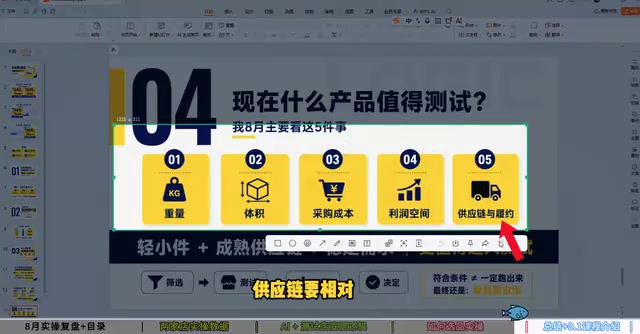
He currently focuses on the following dimensions when selecting products:
- Weight and dimensions: Can't be too extreme, or logistics costs eat into profits
- Procurement cost and profit margins: Must be reasonable, leaving enough room to operate
- Supply chain stability: Avoid products prone to stockouts or inconsistent quality control
- Testing value: Whether it's worth allocating resources to validate
Among these dimensions, the impact of weight and dimensions is often severely underestimated by beginners. The logistics cost structure for cross-border e-commerce is fundamentally different from domestic e-commerce — international shipping typically charges based on the greater of actual weight or volumetric weight (length × width × height ÷ dimensional factor), involving multiple stages including first-mile transportation, customs clearance, and last-mile delivery. For shipments from China to the United States, for example, a small parcel under 500 grams via dedicated logistics lines costs approximately 20-35 RMB, while a product over 2 kilograms can see shipping costs soar to 80-150 RMB. This means that for mid-to-low-priced products in the 50-150 RMB range, logistics costs can swing from 15% to over 50% of the selling price, directly determining whether a product category is viable. This also explains why experienced sellers overwhelmingly prefer small and lightweight items — not only are shipping costs controllable, but return costs are lower and inventory turnover pressure is smaller.
Considering all these factors, he tends to test small, lightweight products with mature supply chains, relatively stable demand, and low logistics pressure.
However, he also offers an honest reminder: meeting these criteria doesn't guarantee a product will succeed. "I don't aim to get every selection right anymore. Instead, I screen first, test next, then let the data decide the next step. If the data is bad, I cut quickly. If there's potential, I keep optimizing. Once something truly takes off, then I scale."
The Methodology Matters More Than Any Single Month's Numbers
After six months of doing this, what this creator most wants to share isn't "how much money I made this month" but rather how his thinking about running a cross-border e-commerce business has evolved:
Before, I kept trying to figure out how to find one profitable product. Now, I focus more on how to build a system that continuously screens, tests, and evaluates products.
This is perhaps the most valuable part of this entire retrospective. He makes no promises that "just follow these steps and you'll definitely profit," because every business has its unique circumstances and data is constantly changing. But for cross-border e-commerce practitioners, the shift from chasing individual viral hits to building a repeatable product screening system — this mindset migration is more valuable than any single month's numbers.
From a broader perspective, this thinking shift also echoes the evolutionary direction of the entire cross-border e-commerce industry. Since 2024, major platforms have been tightening traffic allocation to low-quality bulk-listing stores while increasing rewards for high-quality products and stable supply capabilities. This means the rough "cast a wide net and hope for the best" model is being systematically eliminated by platform algorithms, while the refined operational model of "having methodology, having data, having iteration" will gain an increasingly significant competitive advantage.
AI here doesn't play the role of a magical "Midas touch" — it's a pragmatic efficiency tool that helps you quickly eliminate unreliable options and reserve precious testing resources for products with real potential. In the information-overloaded cross-border e-commerce environment, this combined approach of "filter with AI first, then validate with the market" is worth serious consideration and adoption by every seller.
Key Takeaways
Related articles

DuckFightClub: An AI Robot Duck Fighting Arena
DuckFightClub combines reinforcement learning with open-source robots. Teams train MicroDuck AI strategies, competing from simulator battles to real-world combat in a multi-agent adversarial arena.
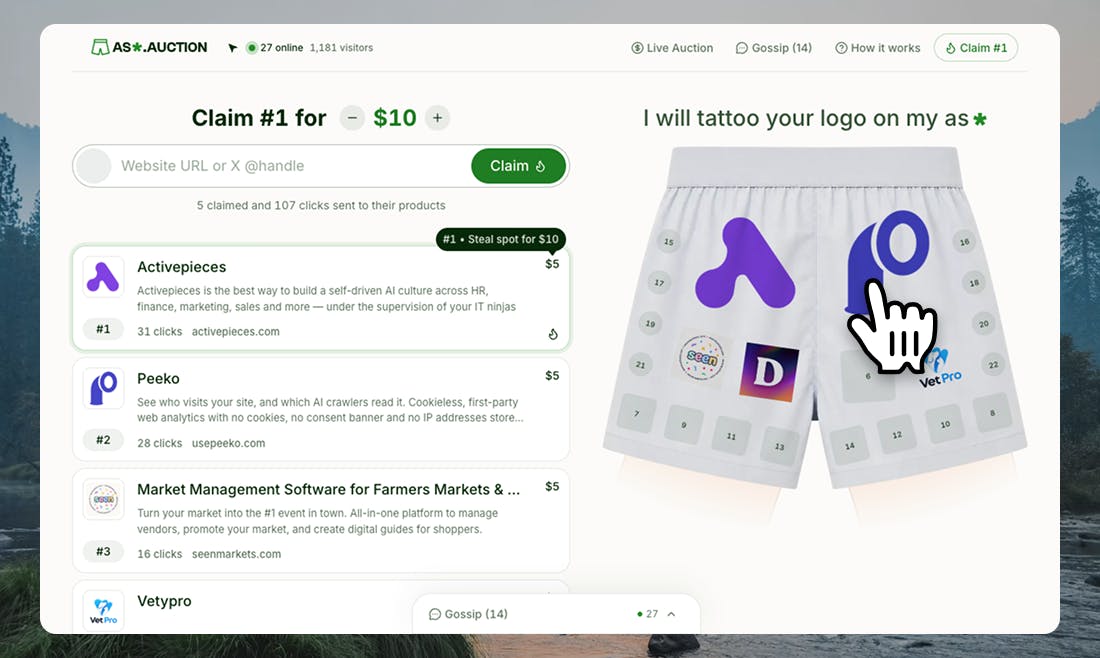
Ass Auction: The Marketing Logic Behind an Absurd Ad Bidding Experiment
Ass Auction earned 90 votes on Product Hunt: brands bid to print logos on underwear. A deep dive into the bidding mechanics, viral design, and attention economy behind this marketing experiment.
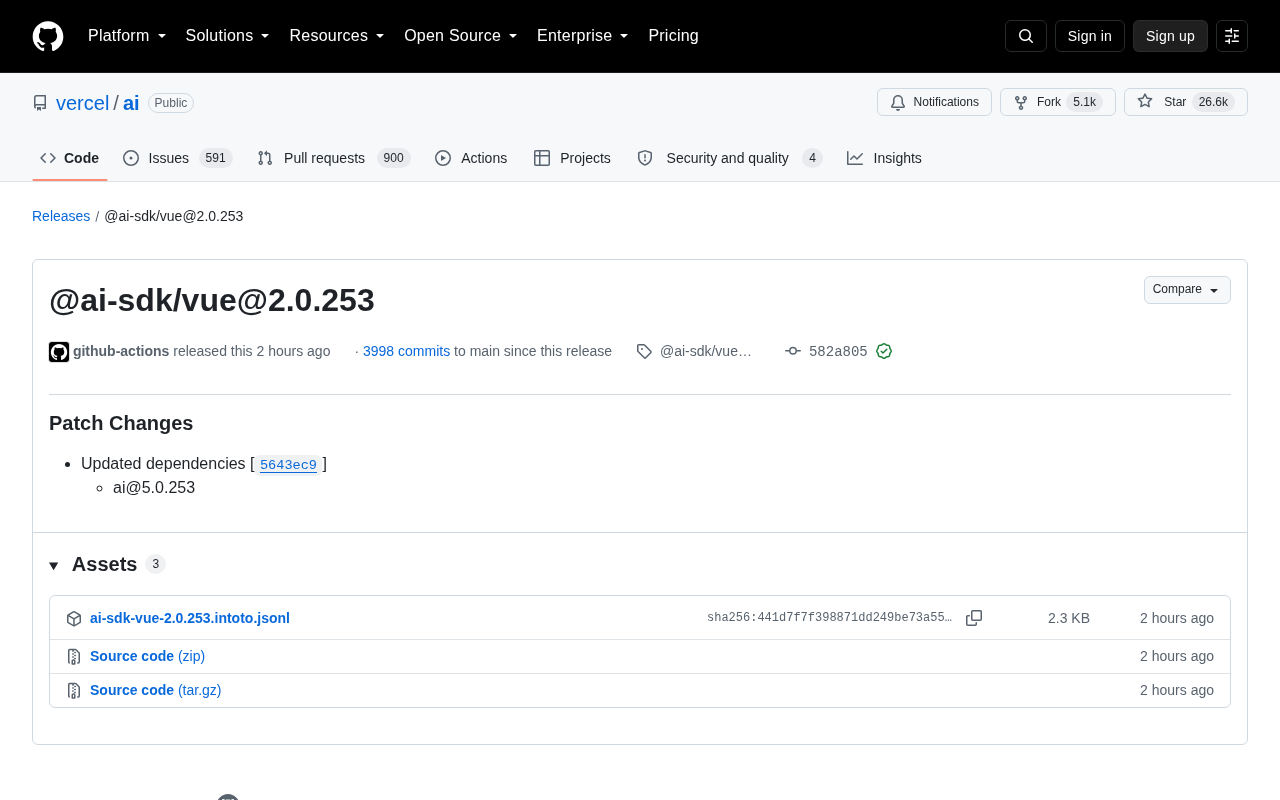
Vercel AI SDK Vue 2.0.253 Update Analysis: Multi-Framework Adaptation Strategy and Development Practices
In-depth analysis of Vercel AI SDK Vue 2.0.253 patch update, covering its multi-framework architecture, dependency sync mechanism, and practical value for Vue developers integrating AI capabilities.