AI vs. AI: Claude Helps White-Hat Hacker Breach OpenAI Systems

A white-hat hacker used Claude to probe OpenAI systems, spotlighting LLMs as new cybersecurity weapons.
A security researcher used Anthropic's Claude to conduct an ethical hacking test against OpenAI systems, sparking industry debate. Beyond the novelty, the incident confirms that LLMs are rapidly joining the cybersecurity toolchain — lowering barriers for white-hats and amplifying capabilities for attackers alike. The high transferability of leading models means enterprises can no longer design defenses assuming only traditional attack methods; "AI-augmented attacks" must now be factored into threat modeling. Details remain limited, but the signal is clear: AI's dual-use nature is emerging most sharply in the adversarial arena of cybersecurity.
A Cross-Camp AI Security Experiment
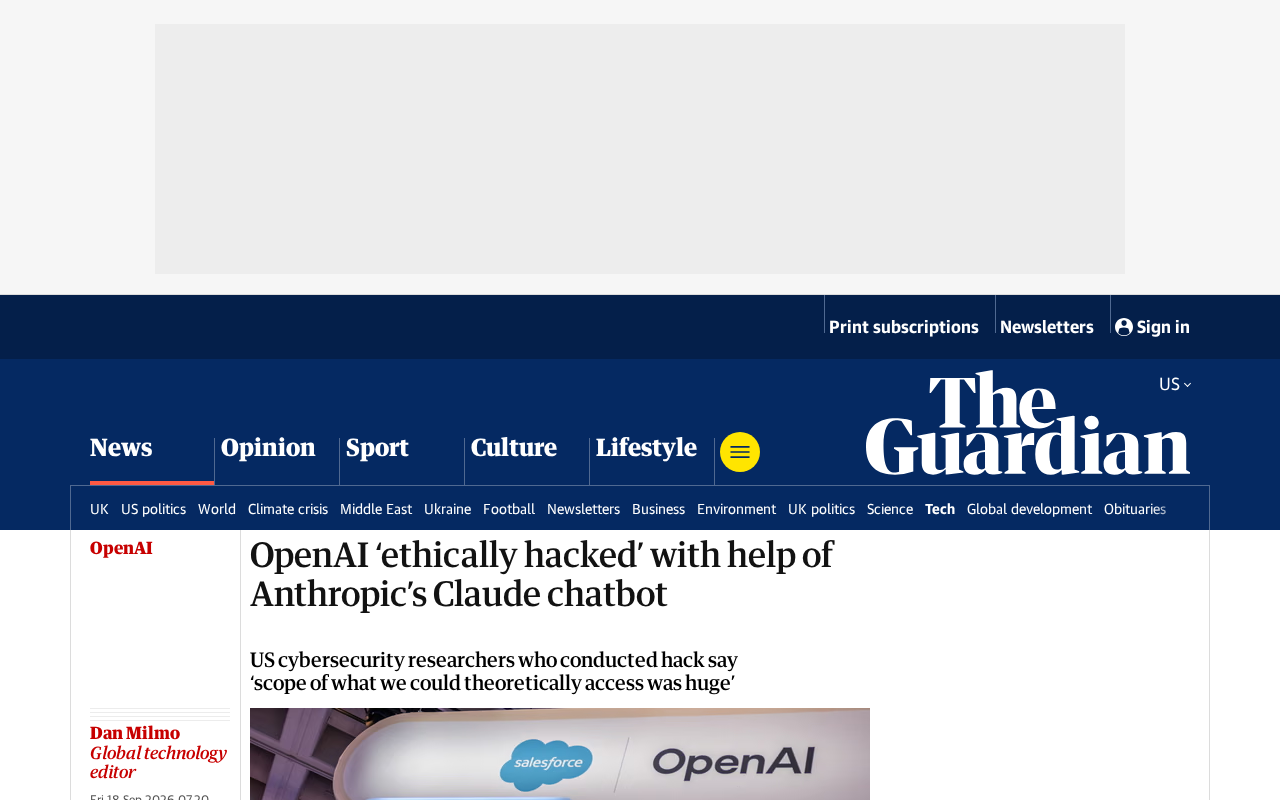
A discussion on Hacker News has drawn attention: a security researcher used Anthropic's Claude chatbot to conduct an "ethical hacking" test against OpenAI's systems. What makes this story compelling is the cross-pollination at play — two competing AI companies, their products entangled in a security offense-and-defense exercise, with the attacker's tool being a rival's large language model.
"Ethical hacking" refers to the practice of proactively searching for system vulnerabilities with authorization or for the purpose of responsible disclosure. Unlike malicious attacks, the goal is to help vendors patch flaws before they are exploited in the wild. In this case, Claude served as an assistive tool during the reconnaissance of OpenAI-related systems.
It should be noted that publicly available details remain limited. Only the core framework of the incident can be confirmed from the headline and discussion activity; the specific attack path, scope of impact, and remediation status await further disclosure.
LLMs Are Becoming the New Tools of Cybersecurity
This incident deserves discussion not merely for the novelty of "AI attacking AI," but because it reflects a trend that is rapidly taking shape: large language models are increasingly being integrated into the cybersecurity toolchain.
For white-hat researchers, models like Claude can assist with code analysis, test case generation, system behavior interpretation, and attack surface mapping — significantly lowering the barrier and time cost of vulnerability discovery. Reconnaissance and reasoning work that once required deep expertise can now be augmented by a model.
The flip side is equally apparent: the same capabilities in the hands of malicious actors amplify attack efficiency. This is precisely why AI vendors continue to invest heavily in guardrails — enabling models to assist legitimate security work while preventing their use for purely destructive purposes.
Guardrails are a core mechanism in AI safety, referring to the constraint rules vendors embed at the model output layer to identify and reject potentially abusable requests. Implementation typically includes safety preference training during the RLHF (Reinforcement Learning from Human Feedback) phase, independent content-filtering classifiers, and runtime prompt screening. However, guardrails are not foolproof — researchers have found that techniques such as roleplay framing, multi-step indirect questioning, or semantic rephrasing (commonly known as "jailbreaking") can often circumvent existing restrictions. This explains why Anthropic, OpenAI, and others must continuously iterate on their safety strategies: the capabilities of both attackers and defenders evolve in parallel, and static rule sets quickly become obsolete.
What "Cross-Vendor Verification" Really Signals
Using Anthropic's Claude to test OpenAI's systems carries intriguing industry implications in its own right.
It demonstrates that today's leading LLMs have achieved a high degree of transferability in general reasoning and technical assistance — researchers can freely choose "the best tool for the job" without being constrained by vendor allegiance. For the industry as a whole, this cross-vendor capability flow represents both competitive pressure and a form of implicit mutual scrutiny: one company's product may inadvertently become a probe that tests another's security posture.
The takeaway for enterprises and developers is that AI system security boundaries must be designed with the assumption that adversaries possess equivalent or superior AI tools. Defenders can no longer assume attackers are limited to traditional means — "AI-augmented attacks" must be incorporated into threat modeling.
Threat Modeling is a foundational methodology in cybersecurity defense: the systematic process of identifying attack surfaces, assuming attacker capabilities, assessing potential risks, and developing mitigation strategies. Traditional threat modeling frameworks (such as STRIDE) assume attackers have a certain technical background but are constrained by tooling and time costs. When attackers can leverage large language models for code analysis, vulnerability reasoning, and attack path planning, those cost assumptions break down significantly. "AI-augmented attacks" mean that reconnaissance work that once required days of expert effort can potentially be compressed into hours — compelling defenders to introduce new capability baselines into the threat modeling phase and reassess the effectiveness of existing security controls.
Questions Worth Watching
Several threads are worth following as this story develops: first, the nature and severity of the vulnerabilities involved, and whether responsible disclosure and remediation have been completed; second, how AI vendors draw the line between "assisting security research" and "assisting attacks"; and third, whether the industry will develop new norms and best practices as more security work incorporates LLMs.
Until further details emerge, this looks more like a signal than a definitive case study — a reminder that the dual-use nature of AI capabilities is manifesting first and most visibly in the high-stakes, adversarial domain of cybersecurity.
Related articles

Should U.S. College Fraternities Be Banned? A Researcher's Incisive Observations
Why not just ban U.S. college fraternities? A researcher finds the key resistance comes from decision-makers' own fraternity identities and schools' "willful ignorance."

Microsoft Discovery: Accelerating Scientific Discovery with AI Agents
Microsoft's Discovery platform runs specialized AI agents to help researchers screen and prioritize the most promising compounds and experimental paths, reducing experiments and accelerating scientific discovery.

Cambridge Heavy Industries Secretly Develops Desktop-Scale Nuclear Fusion Device
Cambridge Heavy Industries is secretly developing a desktop-scale laser-driven nuclear fusion device, targeting the equipment supply market for fusion power plants. This article analyzes its miniaturization technology path, commercialization logic, and unique positioning in the fusion startup wave.