AI Weekly: GPT-6 Codenamed Spud Revealed, Claude Conway Agent, DeepSeek V4 Shifts to Huawei Chips

GPT-6 codenamed Spud, Claude's Conway agent, Cursor 3 rebuilt, and DeepSeek V4 shifts to Huawei chips.
A packed week in AI: OpenAI is training next-gen base model Spud (GPT-6 level) for Spring 2026; Anthropic is building persistent agent Conway while tightening subscription policies; Cursor 3 rebuilds the IDE around AI agents; DeepSeek V4 pivots to Huawei Ascend chips, accelerating China's domestic AI compute stack; and open-source models Qwen 3.6 and Gemma 4 show strong competitive performance across benchmarks.
Over the past week, the AI landscape saw a wave of major updates. From OpenAI's next-generation base model Spud to Anthropic's persistent AI agent Conway, from Cursor 3's complete overhaul to DeepSeek V4's pivot to Huawei chip training — each development is reshaping our understanding of AI's future. Here's a breakdown of the key stories to help you stay on top of the industry.
OpenAI Spud: A GPT-6-Level Base Model on the Horizon
OpenAI has reportedly redirected resources away from projects like SORA to focus on training its next-generation model, codenamed "Spud." This model is essentially GPT 5.5 — or possibly a direct jump to GPT 6 — and is positioned as an entirely new base model aimed at fundamentally advancing AI intelligence.
OpenAI President Greg Brockman described it as a "leap forward," built on years of accumulated research at an enormous scale. Unlike simple fine-tuning, Spud represents a ground-up reinvention — capable of handling complex long-horizon tasks, more accurately and flexibly understanding user intent, and unlocking capabilities that were previously out of reach.

That said, some sources suggest the improvement over GPT 5.4 is "not a dramatic leap" and may fall short of Anthropic's top models. Regardless, the model is expected to launch in Spring 2026, which will be a critical moment to evaluate OpenAI's technical direction.
GPT Image 2 Quietly Enters the Arena
OpenAI has also been quietly testing GPT Image 2 in the Arena. Early impressions are impressive: it boasts an exceptionally rich knowledge base, near-perfect text rendering, and may even outperform Nano Banana Pro. The model is currently running under three codenames in the Arena — Masking Tape Alpha, Gaffer Tape Alpha, and Packing Tape Alpha — and users can experience it directly by selecting the image feature in battle mode.
Anthropic Conway Agent: Persistent AI Agents and Ecosystem Shifts
Conway — A Persistent AI Agent for the Enterprise
Anthropic is developing a persistent AI agent called "Conway." According to findings from Testing Catalog, Conway will run in standalone UI instances, capable of operating browsers, connectors, and cloud-based code. It supports triggering via various webhooks and is compatible with the upcoming CNV ZEP standard. Developers will be able to build custom tools, UI tabs, and context processors — potentially automating a large number of enterprise workflows.
Claude Subscription Policy Tightens, Sparking Controversy
Starting April 4, Pro and Max Claude subscriptions will no longer support third-party tools like OpenCloud. Going forward, using such tools will require additional payment. Anthropic is offering only a one-time credit equal to one month's subscription fee as compensation.

The context here is that some users were running agentic workloads worth thousands of dollars on a $200/month plan — essentially exploiting the pricing. From a business standpoint, Anthropic's adjustment is understandable, but the Claude ecosystem has effectively become significantly more expensive overnight. Users relying on third-party tools have until April 17 to decide: enable overage billing, switch to an API key, or spend down their remaining balance.
Claude Code Adds Ultra Plan and Voice Mode
On the positive side, Claude Code has introduced an Ultra Plan. Users can activate it via slash commands, prompt invocations, or the web-based planning mode. The core advantage is reaching detailed design consensus before implementation begins, improving code readability and planning quality.
Even more noteworthy, leaked information about Claude Code reveals integration with Deepgram Nova 3 in voice mode. This signals that Anthropic is expanding beyond text and code into fully multimodal AI — with voice features potentially launching officially alongside the next-generation model, possibly with Claude 5.
Cursor 3 Rebuilt: A Next-Gen IDE Built for AI Agents
The Cursor team has released a rebuilt Cursor 3 IDE, designed around the philosophy of letting agents handle the bulk of coding work while preserving the depth of a full development environment.
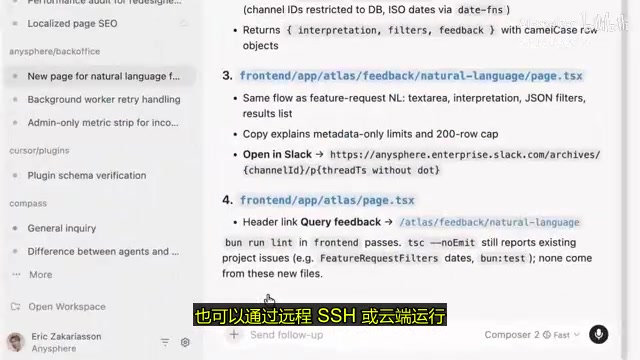
Key highlights include:
- Multi-agent parallelism: Run multiple agents simultaneously, locally, via remote SSH, or in the cloud
- Redesigned interface: New standalone windows that precisely surface core editor functionality
- Flexible positioning: Acts as a powerful assistant within the IDE when needed, rather than a forced replacement
For developers who primarily work in cloud-based environments, Cursor 3's upgrade is genuinely compelling.
DeepSeek V4 Shifts to Huawei Chips: AI Hardware Landscape Rewriting Itself
DeepSeekAd V4 is expected to launch this spring, but the real headline is this — it will be the first frontier AI model from China to run natively on Huawei Ascend chips.
The strategic implications go far beyond the surface: Alibaba, ByteDance, Tencent, and other tech giants have already bulk-purchased tens of thousands of Huawei Ascend chips, causing prices to surge 20% within weeks. DeepSeek has deliberately prioritized compatibility with domestic hardware vendors while keeping Nvidia out.
For Nvidia, the short-term revenue impact may be limited, but the strategic blow is significant — as vendors shift to Huawei chip compatibility, dependence on the CUDA ecosystem decreases, potentially eroding Nvidia's long-term technical moat. Two years ago, this kind of domestic AI compute architecture barely existed. Now it's a reality.
Open-Source Models: Qwen 3.6 and Gemma 4 Rise Together
Qwen 3.6: 1M Token Context and Across-the-Board Upgrades
Alibaba Cloud's Qwen 3.6 delivers an impressive showing: a 1-million-token context window, a score of 78.8 on SWE-Bench (compared to Claude Opus's 80.9), outperforming Claude 3.5 Opus on most benchmarks, with stronger coding capabilities and lower cost. It can understand images and screen content like a human, achieving comprehensive upgrades in multimodal understanding and real-world application.
Gemma 4: Full-Spectrum Coverage from Phone to Workstation
Google's Gemma 4 is released under the Apache 2.0 open-source license, available in multiple sizes ranging from lightweight on-device to large-scale versions, with advanced reasoning, coding, and multimodal processing capabilities. Remarkably, Gemma 4 can already run on devices like the iPhone 17 Pro, achieving speeds of 40,000 tokens per second with MLX optimization — delivering image understanding and logical reasoning even at the edge. The model currently ranks third on the Arena leaderboard, demonstrating the strong competitive power of open-source models.
Conclusion: Spring 2026 Will Be a Critical Inflection Point for AI
This week's AI developments reveal several clear trends: competition among base models has entered a white-hot phase, with OpenAI, Anthropic, DeepSeek, and the open-source community all accelerating iteration; AI agents are moving from concept to product, with Conway and Cursor 3 both exploring new paradigms for human-AI collaboration; and the AI hardware landscape is undergoing a strategic shift, with the rise of Huawei Ascend chips potentially reshaping the global AI compute map. Spring 2026 will be a pivotal moment — the concentrated release of heavyweight models like GPT-6 and DeepSeek V4 will profoundly shape the direction of the AI industry.
Related articles
 Tech Frontiers
A Rare Quiet Day in AI: Recursive Self-Improvement Stirs Beneath the Surface
A rare quiet day in AI sees multiple sources go silent simultaneously. Behind the calm, Recursive Self-Improvement (RSI) research continues. What this means for the industry.
 Tech Frontiers
Reve 2 vs. Ideogram 4: A Deep Dive into Layout Control in AI Image Generation
A deep comparison of Reve 2 and Ideogram 4's layout control capabilities, covering technical approaches, real-world use cases, and industry trends for designers and creators.
 Tech Frontiers
In the Weights: Check Your Influence Score in the AI World
In the Weights is an AI influence search engine that quantifies your presence in the AI world with a score. Explore how it evaluates practitioners and what it means for digital identity.