Aleph Alpha Announces Partnership: A New Development for European AI
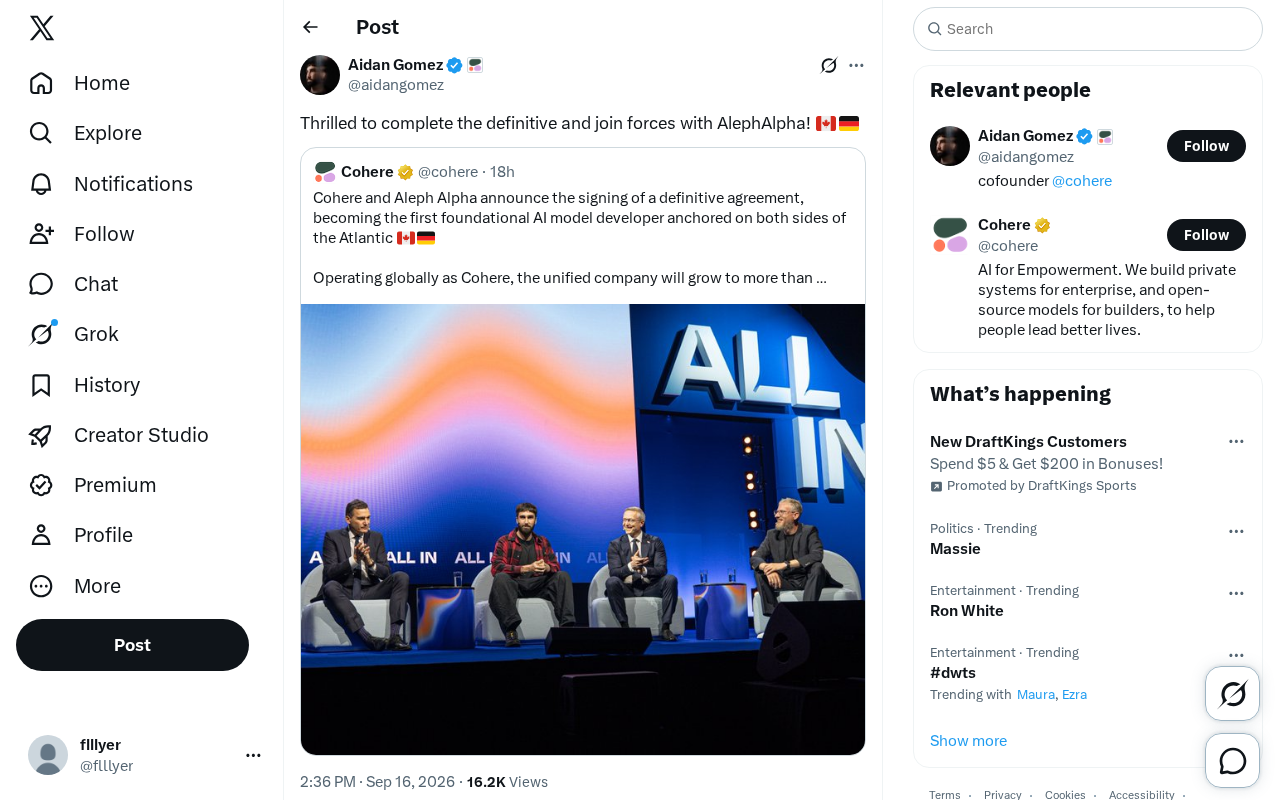
Aleph Alpha completes a definitive agreement with a Canadian party, signaling a potential transatlantic AI partnership.
A brief social media post featuring Canadian and German flags announced that a party had completed a definitive agreement with German AI company Aleph Alpha, sparking speculation about a transatlantic AI collaboration. A flagship of Europe's AI sovereignty strategy, Aleph Alpha focuses on trustworthy AI for governments and enterprises under GDPR-compliant frameworks, and pivoted in 2024 from general-purpose LLMs to a "Sovereign AI Platform." The partnership could complement Canada's deep AI research talent with Aleph Alpha's enterprise deployment capabilities, bolstering Europe's position against US AI giants. However, with only a one-sentence announcement and no disclosed deal terms, the nature of the transaction remains unconfirmed.
A Tweet That Caught the Industry's Attention
Recently, a brief social media post caught the eye of AI industry watchers: an announcement that a party had completed a definitive agreement and would be partnering with European AI company Aleph Alpha. The Canadian and German flags (🇨🇦🇩🇪) in the tweet suggested this could be a cross-Atlantic collaboration or acquisition involving North America and Europe.
Unfortunately, the original post offered almost no detail — just a single-sentence announcement with no transaction value, partnership specifics, or clear explanation of each party's role. As a result, this article draws primarily on existing background knowledge to help readers understand the potential significance of the announcement.
About Aleph Alpha
Aleph Alpha is an artificial intelligence company headquartered in Heidelberg, Germany, long regarded as one of Europe's most prominent homegrown forces in large language models and generative AI. Against a backdrop where American players like OpenAI and Anthropic, along with Chinese vendors, dominate the global narrative, Aleph Alpha has come to symbolize Europe's pursuit of "AI sovereignty" and technological self-determination.
The company focuses on trustworthy AI solutions for enterprises and governments, emphasizing data compliance, explainability, and deployment in regulated industries such as the public sector, finance, and healthcare — areas that align closely with Europe's strict data protection and regulatory environment.
Aleph Alpha was founded in 2019 by Jonas Andrulis and has received strategic support from the German federal government and the state government of Baden-Württemberg. In 2023, it closed a funding round of approximately $500 million, with investors including German industrial heavyweights such as Bosch, SAP, and Volkswagen. Its proprietary large language model series, "Luminous," supports multilingual processing, is designed specifically for the European regulatory environment, and can be deployed on-premises on customer-owned infrastructure to meet the compliance requirements of GDPR and the EU AI Act. In 2024, Aleph Alpha announced a strategic pivot, shifting its focus from general-purpose LLM development toward a "Sovereign AI Platform" for governments and enterprises, centered on process automation and decision support rather than competing directly with OpenAI's consumer-facing products. This repositioning sharpened its focus on the B2G (business-to-government) market, giving it a distinctive foothold in the wave of public sector digitalization sweeping across Europe.
What a Cross-Border Partnership Could Mean
The simultaneous appearance of Canadian and German flags in the tweet points to a transatlantic collaboration or integration. If this partnership materializes, it could involve several directions:
Technological and Market Complementarity
Canada has deep roots in foundational AI research, with cities like Montreal and Toronto home to a dense concentration of top-tier research talent. Combined with Aleph Alpha's enterprise deployment capabilities in Germany, the pairing could theoretically create a powerful complementarity between research and commercialization.
Strengthening the European AI Ecosystem
For Aleph Alpha, bringing in an external partner or additional capital would provide more resources to compete against American tech giants, further reinforcing Europe's independent standing in generative AI.
Limited Information — Interpret with Caution
It must be emphasized that the only publicly available information is a single social media announcement, with no official press release, deal structure, or follow-up details to corroborate it. "Completed the definitive" typically implies that a definitive agreement has been signed, but whether this represents an investment, acquisition, or strategic alliance has yet to be confirmed.
Without verification from authoritative sources, readers are advised to exercise rational judgment when encountering brief announcements of this kind, and to follow official statements from both parties as well as in-depth coverage from industry media.
A Definitive Agreement is a legal term used in M&A and investment transactions, referring to the binding formal contract signed by all parties after due diligence has been completed — distinct from earlier-stage documents such as a Letter of Intent (LOI) or Term Sheet. The signing of such an agreement generally signals that the transaction has cleared its most complex negotiation phase and entered the closing period, awaiting regulatory approval and settlement. However, "completed the definitive" does not mean the deal has fully closed. In cross-border M&A, transactions must still pass antitrust reviews and foreign investment security screenings in the relevant jurisdictions — such as the EU's FDI screening mechanism — particularly in strategically sensitive sectors like AI, where regulatory processes can take several months.
Conclusion
Brief as this announcement is, it touches on a central question in today's AI landscape: in the global race for AI supremacy, how can Europe and North America find a breakthrough through collaboration? As a flagship of European AI sovereignty, any major development involving Aleph Alpha deserves continued attention. We will wait for more details to emerge before conducting further analysis.
Related articles
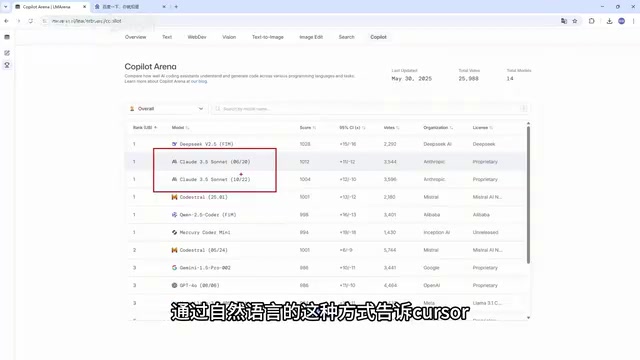
What Is Cursor? Core Differences Between This AI Coding Tool and Traditional IDEs
What is Cursor? This guide explains the AI-native code editor built on VS Code, how it compares to traditional IDEs, and its integration with Claude, DeepSeek, and Gemini.

Coze 3.0 Beginner's Guide: A Complete Overview of Agents and AI Applications
A beginner's guide to Coze 3.0: covering agents, AI applications, workflows, and plugins on ByteDance's AI platform, plus a comparison with Dify.
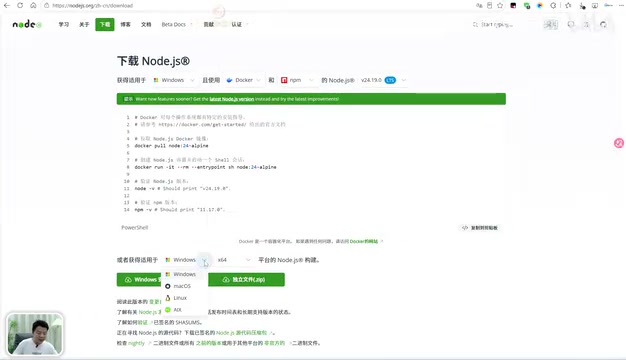
Setting Up the DeepSeek Harness Environment: A Complete Guide to Node.js Installation and Configuration
A beginner-friendly guide to setting up the DeepSeek Harness environment: Node.js installation, Add to PATH, redirecting npm global and cache directories, and configuring system environment variables.