Alphabet Book Ll Parent-Child Read-Aloud: Playing with Letter L Through One Picture Book

A Bilibili alphabet book Ll video uses a "who is looking at whom" chain story to provide dense input of the L word-initial sound and offers parent-child read-aloud activities.
This article introduces a read-aloud video of the alphabet book Ll on Bilibili, pointing out that it uses the "Look" sentence pattern to connect L-initial animals such as ladybug, lizard, lamb, and lion into a chained observation structure that both repeats sentence patterns and provides concentrated input of the word-initial sound L. The article analyzes how friendly this structure is to young readers: children can predict sentence patterns, and attention focuses on new words; the ending "Look out! The lion is looking at you" turns the gaze toward the reader and enhances interaction. The author also provides parent-child read-aloud activities such as pointing, chain questioning, ending interaction, and the find-the-L game, and emphasizes that the book is suitable as supplementary material for early English education, requiring practice with other vocabulary and not relying on one book alone to master phonics.
In early English education, alphabet books have always occupied an awkward position—children flip through a couple of pages and put them down, and parents don't know what to do beyond reciting the letters. A read-aloud video of the alphabet book Ll on Bilibili offers a nice demonstration: it hides letter L pronunciation training inside an observation chain of "who is looking at whom," reading like a story while practicing the same word-initial sound.
An Alphabet Book Is Actually an Observation Chain
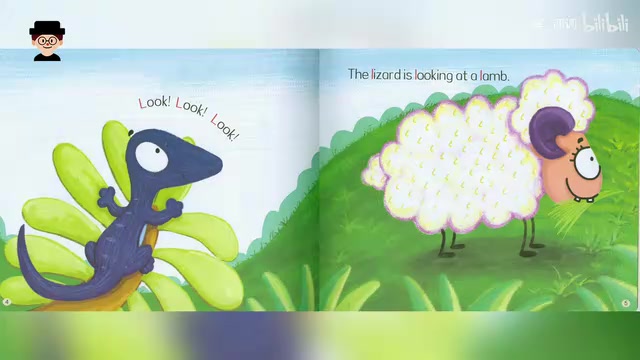
The text structure of this Ll book is very clear, built entirely around "Look": Look, look, look. What do all the little animals see? Then ladybug, lizard, lamb, and lion appear in sequence, with each page showing one animal looking at the next.
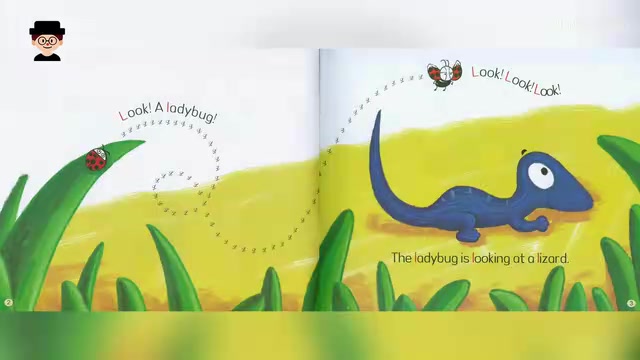
This chain structure is very friendly to young readers. Every time the child turns a page, they can predict the sentence pattern, and their attention naturally lands on the one word that changes—the newly appearing animal name. What repeats is the sentence pattern; what gets substituted is the word-initial sound. This is exactly what an alphabet book should do.
Dense Input of the Word-Initial Sound L
Almost all the core words in the book contain L: ladybug, lizard, lamb, lion, plus the repeatedly appearing look. According to the video footage, the illustrations use large images with short sentences, showing only one animal and one description per page, with very little visual distraction.
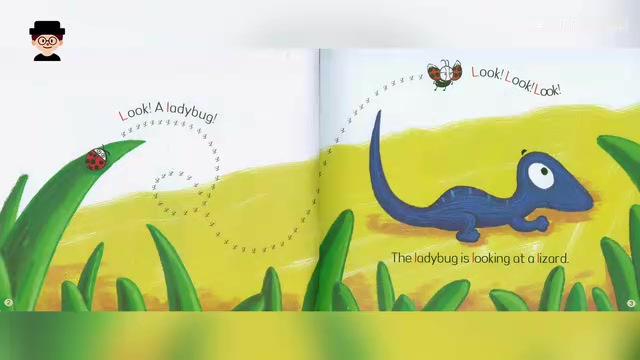
For children just beginning to encounter phonics, this density is appropriate. When the same sound appears repeatedly in a short period, it is easier to form sound-letter correspondences than with scattered recognition. When parents read along, they don't need to rush to explain pronunciation rules. Just read look and the animal names a little more loudly, and the child will notice on their own that they begin with the same sound.
Phonics is a common method used by children in English-speaking countries to learn to read. Its core is establishing the correspondence between letters and sounds. For consonant letters such as L, children need to master its most common sound /l/, made with the tongue tip against the upper alveolar ridge and airflow passing along the sides of the tongue. Alphabet books usually focus on one letter and present multiple words beginning with that letter precisely to reinforce this "sound-letter correspondence." During parent-child read-aloud, parents can deliberately emphasize the word-initial sound, but do not need to explain pronunciation rules; instead, repeated input lets children perceive it naturally. Research shows that the development of early phonological awareness significantly predicts later reading ability, so dense word-initial sound input like this book provides is an early education approach consistent with language acquisition principles.
How Progressive Narrative Holds Attention
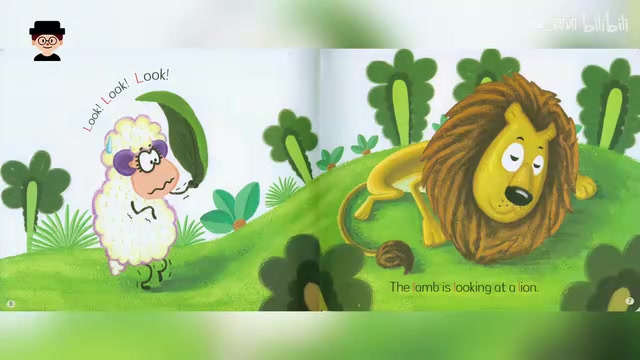
From ladybug to lizard, from lizard to lamb, from lamb to lion, each page hands the action of "looking" to the next character, and children want to know who will appear next. This is a rare narrative ingenuity in alphabet books—most alphabet books list items in parallel, but this one has a line that moves forward.
When the lion appears, the text suddenly turns: Look out! The lion is looking at you. The objects of observation before this are all characters in the book, and the last sentence turns the gaze toward the reader. This twist is the place in the whole book most worth pausing to play with; children usually laugh or turn to look at their parents.
Cumulative tale is a classic children's story structure in which each episode repeats what came before and adds a new element, such as The House That Jack Built or There Was an Old Lady Who Swallowed a Fly. This structure is especially friendly to young readers because repetition lowers cognitive load while new elements create anticipation. Using cumulative narrative in an alphabet book is uncommon; most alphabet books simply list words beginning with the same letter in parallel. Through the "who is looking at whom" observation chain, this book links separate animal names into a story with a sense of direction, allowing children to naturally focus on new words while predicting the next page. This narrative ingenuity not only increases fun but also aligns with children's psychological preference for repetition and prediction, helping maintain reading motivation.
Several Specific Parent-Child Read-Aloud Activities
Point-and-identify game: When reading an animal name, have the child point to it in the picture, connecting sound and image.
Chain questioning: Before turning each page, first ask "Who is looking at whom this time?" and have the child make a sentence beginning with Look. With enough repetition of the sentence pattern, they will naturally remember it.
Ending interaction: After reading the last sentence, stare at each other with your child and act out Look out! This kind of physical participation helps the sentence stay in memory longer.
Find-the-L game: After closing the book, ask the child to recall which L-initial words appeared in the book. However many they can say is fine; don't insist on recalling them all.
Dialogic reading is a widely studied parent-child read-aloud method that emphasizes interactive dialogue between adults and children around a book rather than one-way reading aloud. Specific techniques include prompting the child to point out objects in pictures (such as the "point-and-identify game"), asking open-ended questions (such as "Who is looking at whom this time?"), connecting the story to the child's life experience, and encouraging the child to retell or complete sentences. Research shows that dialogic reading can significantly improve young children's vocabulary and comprehension. The chain questioning and ending interaction in this article are typical applications of dialogic reading—they turn the child from a passive listener into an active participant. Parents do not need to be rigid about form; as long as they ask more, point more, and act more during read-aloud, they can make short reading time more effective.
Who This Material Suits
This Ll book is better suited as supplementary material for early English education rather than a main textbook. Its value lies in providing a cleanly structured read-aloud text with concentrated pronunciation; parents can complete one round of letter-sound input just by reading it. If the child can already recognize a few letters, this book can also serve as an entry-level reader for independent reading, with short sentences and lots of repetition that make reading less frustrating.
The read-aloud pace in the video itself is rather slow, suitable for repeating after. Note that the role of an alphabet book is to build sound awareness. Truly mastering the phonics of letter L still requires practice with other vocabulary; the vocabulary in one book alone is not enough.
One-line Summary
A Bilibili alphabet book Ll video uses a chain story of "who is looking at whom" to provide dense input of the L word-initial sound and offers parent-child read-aloud activities.
Paragraph Summary
This article introduces a read-aloud video of the alphabet book Ll on Bilibili, noting that it uses the "Look" sentence pattern to connect L-initial animals such as ladybug, lizard, lamb, and lion into a chained observation structure that both repeats sentence patterns and provides concentrated input of the word-initial sound L. The article analyzes how friendly this structure is to young readers: children can predict sentence patterns, and attention focuses on new words; the ending "Look out! The lion is looking at you" turns the gaze toward the reader and enhances interaction. The author also provides parent-child read-aloud activities such as pointing, chain questioning, ending interaction, and the find-the-L game, and emphasizes that the book is suitable as supplementary material for early English education, requiring practice with other vocabulary and not relying on one book alone to master phonics.
Related articles

Hermes Agent Beginner's Guide: Hands-On with a Self-Evolving AI Agent
A beginner's guide to Hermes Agent, the open-source self-evolving AI agent that gained 41.7K GitHub stars in two months—covering Harness Engineering, the learning loop, three-layer memory, WSL installation, and hands-on configuration.

AI Agent in Action: Building a Smart Office Assistant with WorkBuddy
A practical case study shows how Tencent WorkBuddy batch-converts and archives files, compares chat LLMs with AI Agents, and analyzes WorkBuddy's credit system, use cases, and positioning for office automation selection.

From Single-GPU Bottlenecks to Hundreds of Billions of Parameters: 6 Key Questions in Large Model Distributed Parallelism
Based on a Bilibili tutorial, this article organizes core knowledge of large model distributed parallelism: starting from decoder-only architecture's token-by-token generation and the essence of X times W computation, it analyzes six key questions including data parallelism, tensor parallelism, and pipeline parallelism under single-GPU bottlenecks. Suitable for learners in private deployment and model training scenarios to build systematic understanding.