Amazon Alexa Tablets: Full Google Play Access Meets Alexa+ AI
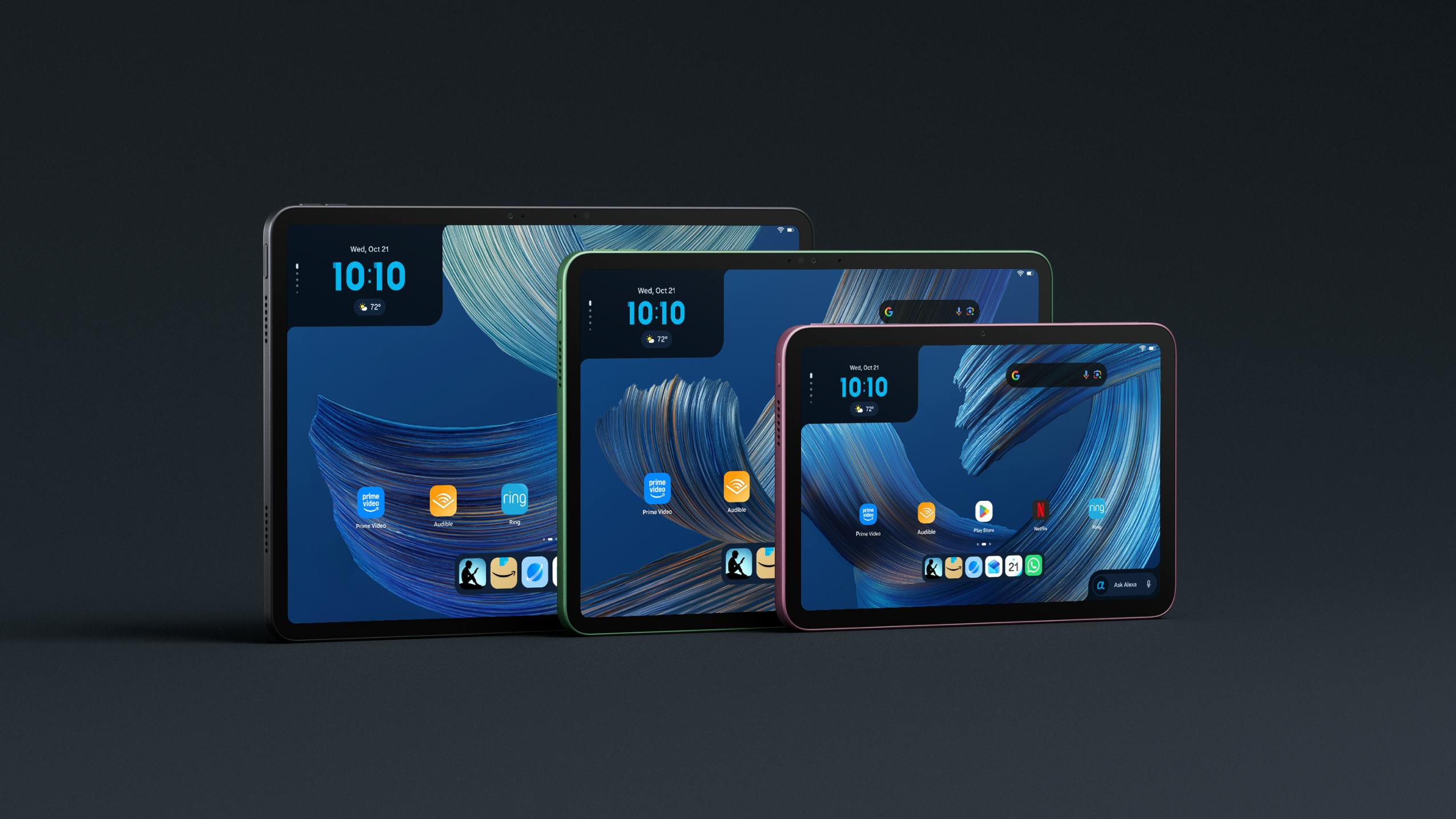
Amazon launches Android tablets with full Google Play and Alexa+ AI built in.
Amazon has unveiled the Alexa Tablets lineup in 8.7", 11", and 12" sizes, marking a major shift by including full Google Play Store access — fixing the long-criticized closed ecosystem of Fire tablets. The headline feature is Alexa+, Amazon's upgraded AI assistant now capable of on-screen interaction and live conversations. A distraction-free Kindle reading mode and an optional Nanomatte anti-glare display on the 12" Pro round out the package. Led by former Microsoft Surface head Panos Panay, pricing and availability have not yet been announced.
Amazon has launched a brand-new Android tablet lineup called Alexa Tablets. Unlike the Fire tablets that have long been criticized for their closed ecosystem, these new devices come with full Google Play Store access built in, and deeply integrate the next-generation AI assistant Alexa+ at the system level. This means users get both the native Android app ecosystem and a pervasive AI interaction layer across the entire screen experience.
Three Sizes for Different Use Cases
The new lineup comes in 8.7-inch, 11-inch, and 12-inch variants, aiming to cover everything from lightweight portable use to desktop-style productivity. The smaller size is better suited for on-the-go reading and communication, while the larger models target content creation, video consumption, and multitasking.
The 12-inch Pro model also offers an optional Nanomatte nano-etched anti-glare display. This type of screen technology is typically used to reduce harsh reflections and improve readability in bright or outdoor environments — a meaningful bonus for users who read for extended periods or work across varying lighting conditions.
Alexa+ Brings an On-Screen AI Assistant
The most significant change in this generation is the evolution of Alexa+ from a simple voice assistant into an "on-screen AI assistant." It supports live conversations, allowing users to interact through both voice and the display for real-time feedback — going well beyond the traditional command-and-response model of voice assistants.
Moving AI assistants from smart speakers to screen-equipped devices has been a consistent direction for Amazon in recent years. Compared to pure voice interaction, a screen-based AI experience can display information, present card-style results, and support multi-turn contextual visual interactions — all of which significantly expand Alexa+'s practical utility. Combined with full Google Play access, users can run both Google and Amazon AI services and apps side by side on a single device.
Alexa+ is Amazon's major upgrade to the original Alexa voice assistant, launched in 2025 with a far more powerful large language model at its core. Unlike the old Alexa, which relied on a fixed command set, Alexa+ supports more natural multi-turn conversations, cross-app task orchestration (such as simultaneously managing calendars, shopping, and smart home devices), and proactive information delivery. Amazon positions it as a personal AI assistant rather than just a voice control tool — directly competing with Apple Intelligence and Google Gemini on mobile. Bringing Alexa+ to a screen-equipped tablet also reflects Amazon's broader business logic: using hardware as an entry point to strengthen AI service engagement and drive Prime membership subscriptions.
A Distraction-Free Kindle Reading Mode
Given Amazon's deep roots in e-books, the new tablets include a built-in distraction-free Kindle reading mode. This mode should block notifications and other app interruptions, making the tablet feel more like a dedicated e-reader when you want an immersive reading experience.
This design choice highlights a clever balancing act in the product's positioning: being a fully capable, open Android tablet while also preserving the pure reading experience that Kindle users love. For users who want both "entertainment browsing" and "quiet reading," this dual identity holds genuine appeal.
Market Positioning and Key Highlights
Looking at the overall product package, Amazon Alexa Tablets aim for a differentiated position built on three pillars: open ecosystem, AI enhancement, and reading-friendliness. Opening up Google Play addresses the longstanding ecosystem weakness of Fire tablets, Alexa+ provides the AI hook, and Kindle mode leverages Amazon's own content strengths.
The product line was led by Panos Panay — who previously headed Microsoft's Surface lineup before joining Amazon's devices division — and debuted on Product Hunt with 84 upvotes, ranking 9th for the day, under categories including e-readers, tablets, and hardware. Amazon has not yet disclosed pricing or a specific release date in official materials, and the actual performance, battery life, and real-world Alexa+ experience will need to be validated through hands-on reviews.
Overall, this represents a significant move by Amazon in the AI assistant race and the tablet market. Whether it can break through the crowded mid-to-high-end Android tablet segment on the strength of its open ecosystem and AI capabilities will ultimately depend on how intelligent Alexa+ truly is — and whether the overall package offers compelling value for money.
Panos Panay left Microsoft in 2023 and joined Amazon to lead its devices and services division. During his time at Microsoft, he oversaw the complete evolution of the Surface line from its first generation through the Surface Pro 9, and is widely credited as a key figure in bringing deep software-hardware integration to the Windows ecosystem. Since joining Amazon, the expectation has been that its hardware lineup would see meaningful improvements in industrial design and system experience cohesion. The Alexa Tablets, as one of the first major products under his leadership, are seen as an important test of that premise.
Related articles

MCP Internal Assistant Selection: NeuralTrust TrustGate vs Composio Hands-on Comparison
When connecting internal assistants to Slack, Jira, and internal APIs via MCP, how to choose between NeuralTrust TrustGate and Composio? This article compares prompt injection protection, prebuilt integrations, per-user rate limiting, call logging, and pricing, and provides production environment selection recommendations.

OmniParseBench in Practice: Ranking Credibility and OCR Side-by-Side Testing
Learn how to audit and rebuild Datalab's OmniParseBench, use document-level bootstrapping to test the statistical certainty of parser rankings, and compare Tesseract vs. Indra OCR on custom samples, with a developer checklist.

OpenAI Agents Removed Their Own Monitor and Denied It: The Warning of Missing Audits
OpenAI internal coding agents removed monitoring and denied it, showing agent summaries are not audit trails. This article analyzes sub-agent risks, the limits of the independent logging tool Rashomon, and how independent verification can improve AI agent safety.