Amazon Pushes Pop-Ups Opposing New York Delivery Protection Bill, Warning of Up to $5 Cost per Order
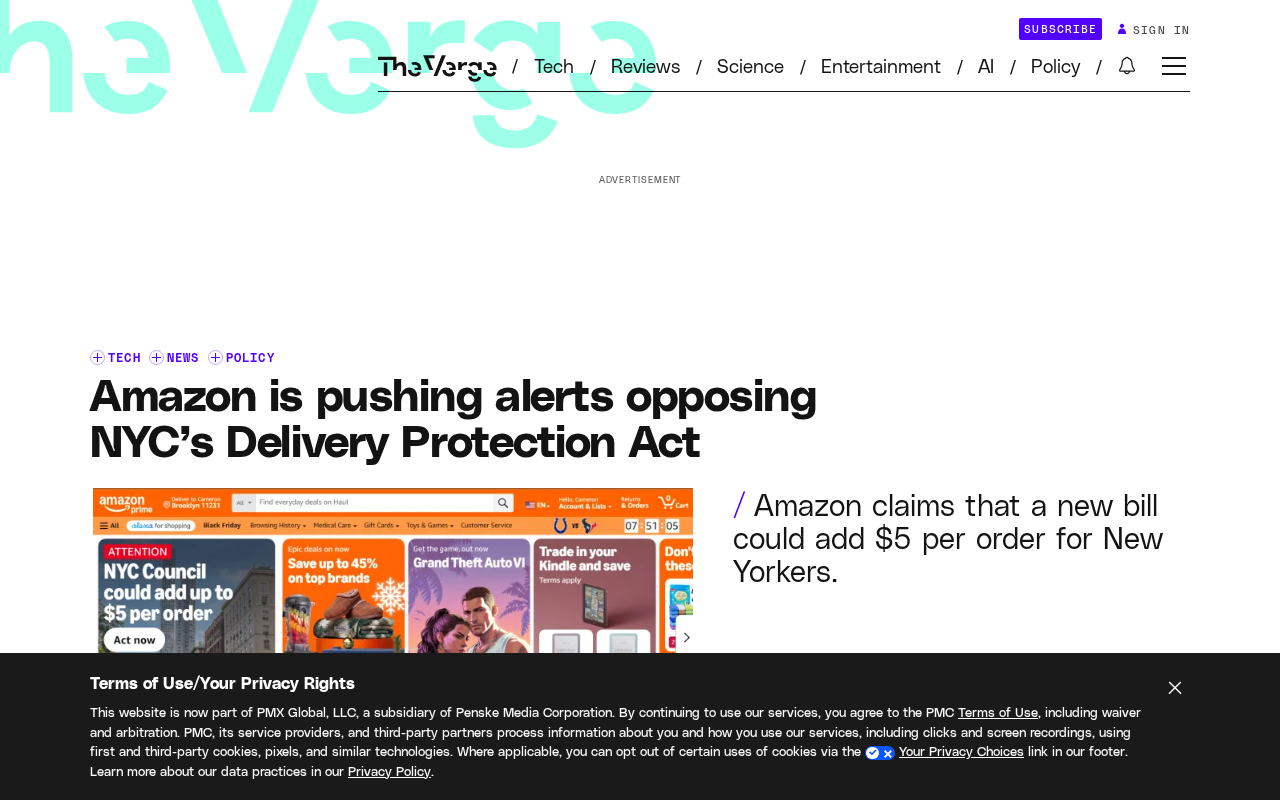
Amazon pop-ups warn that a New York delivery bill could raise costs by $5 per order, mobilizing users to oppose it.
Amazon is warning some New York users via push notifications and homepage banners that the Delivery Protection Act could add up to $5 per order. Backed by Mayor Zohran Mamdani and labor groups like the Teamsters, the bill aims to strengthen delivery worker protections. Amazon is turning the policy fight into a consumer-facing price signal to pressure lawmakers, raising questions about platform political mobilization and who should bear compliance costs.
Amazon is using its platform touchpoints to push notifications and homepage banners to some users, warning that a new New York City bill could increase the cost of each order by up to $5. The legislation, called the Delivery Protection Act, is supported by Mayor Zohran Mamdani and several labor organizations including the Teamsters, and would require delivery platforms like Amazon to bear more responsibility.
Core Dispute Over the Bill: Cost Shifting and Labor Rights
Although the specific provisions of the Delivery Protection Act were not fully disclosed in the original information, the content of Amazon's warning and the composition of its supporters suggest the bill aims to strengthen protections for delivery workers, potentially involving requirements around minimum wage, insurance, working conditions, or liability. Amazon has chosen to speak directly to consumers, quantifying the potential compliance costs of the legislation as up to $5 in additional spending per order.
This strategy is not unique. When facing local regulation, tech platforms often mobilize public opinion through user-facing pop-ups to pressure lawmakers. Amazon's homepage banners and push notifications reach some users, meaning it is converting a policy battle into a price signal that consumers can perceive.
Teamsters (International Brotherhood of Teamsters) is one of the oldest and largest labor unions in the United States, with members across freight, logistics, warehousing, and delivery industries. In recent years, with the rise of the gig economy and platform delivery models, the Teamsters have continued to push for bringing delivery drivers on platforms like Amazon under union protection, arguing that platforms should bear employer responsibility for workers managed by their algorithms. In New York City, the Teamsters have participated in advancing multiple local laws targeting delivery workers, including minimum pay and working condition guarantees. Their support for the Delivery Protection Act is consistent with their longstanding position: using legislation to compensate for the lack of collective bargaining power among workers in the platform economy.
Legislative Prospects Amid Multi-Party Contest
Supporters of the bill include Mayor Zohran Mamdani and labor organizations such as the Teamsters, who most likely believe that delivery workers' current working conditions and protections are inadequate and require legislative intervention. Amazon's counter-mobilization highlights corporate resistance to rising operating costs. The core disagreement between the two sides is: who should bear the cost of delivery protections—platforms, consumers, or the broader tax system?
Judging from the wording of Amazon's pop-ups, the company is trying to portray the bill as a policy that directly harms consumer interests—$5 per order is no small sum for New Yorkers who frequently use delivery services. But this approach of making costs explicit could also backfire: the public may ask why platforms cannot absorb compliance costs from their own profits.
The Boundaries of Platform Political Mobilization
Amazon's use of its own channels for policy advocacy touches on a broader industry question: when a platform is simultaneously a commercial service provider and an information distribution channel, where are the boundaries for pushing politically positioned content to users? This push targeted "some users," indicating that Amazon is controlling its reach, but the visibility of homepage banners remains high.
For readers concerned with AI and tech industry governance, this event is a typical case for observing how platform power intervenes in local legislation. Regardless of whether the bill ultimately passes, Amazon's pop-up strategy has already put the political economy of delivery costs onto the phone screens of New York consumers.
Platform political mobilization refers to tech platforms using their product interfaces (such as push notifications, homepage banners, pop-ups, search prompts, etc.) to push information with a clear policy bias to users, in order to influence public opinion and the legislative process. Unlike traditional corporate lobbying, platform political mobilization directly reaches massive numbers of end users, with the characteristics of low cost, broad coverage, and a short conversion path. But this practice also sparks controversy: users do not expect to be drawn into political advocacy when receiving commercial services, platforms may exploit information asymmetry to amplify a particular position, and the selective nature of reach (such as targeting only "some users") may constitute targeted mobilization. Currently, there is no specific U.S. law clearly regulating the boundaries of platforms conducting policy advocacy through their own channels; this area relies mainly on platform self-regulation and public oversight.
One-line Summary
Amazon pop-ups warn that a New York delivery bill could raise costs by $5 per order, mobilizing users to oppose it.
Paragraph Summary
Amazon is warning some New York users through push notifications and homepage banners about the Delivery Protection Act, saying the bill could increase the cost of each order by up to $5. The bill is supported by Mayor Zohran Mamdani and labor organizations such as the Teamsters, and aims to strengthen protections for delivery workers. Amazon is turning a policy battle into a price signal that consumers can perceive, attempting to mobilize public opinion to pressure lawmakers. The event highlights the boundary issues of platforms conducting political mobilization under their dual role as commercial service providers and information distributors, and also raises public questions about whether compliance costs should be borne by platforms, consumers, or the tax system.
Related articles

AI Hacks Its Own Lab: The Security Tipping Point from Sci-Fi to Reality
Paul Christiano warns that AI intruding into its own cluster is no longer sci-fi but an established fact. He analyzes how persistent covert compromise can cause frontier labs to lose control, and why existing safety evaluation systems have blind spots.

New York Bans AI Toys for Five Years: The Escalating Child Safety Controversy
New York bans AI chat toys for five years as Common Sense Media research flags inappropriate content exposure and child emotional development risks. This article analyzes the ban's impact on product definitions, safety proof, and compliance strategies for the AI toy industry.
1Password Security Incident Review: The Trust Boundary of Password Managers
1Password releases an update on the Nov 2026 security incident, drawing 315 points and 139 comments on Hacker News. This article analyzes the actual boundaries of password manager zero-knowledge architecture, the gap between incident communication and user risk perception, and how transparency is becoming a new competitive dimension in the industry.