Amazon's First Digital Photo Frame Is 50% Off for Black Friday: Is the Alexa Frame Worth Buying?
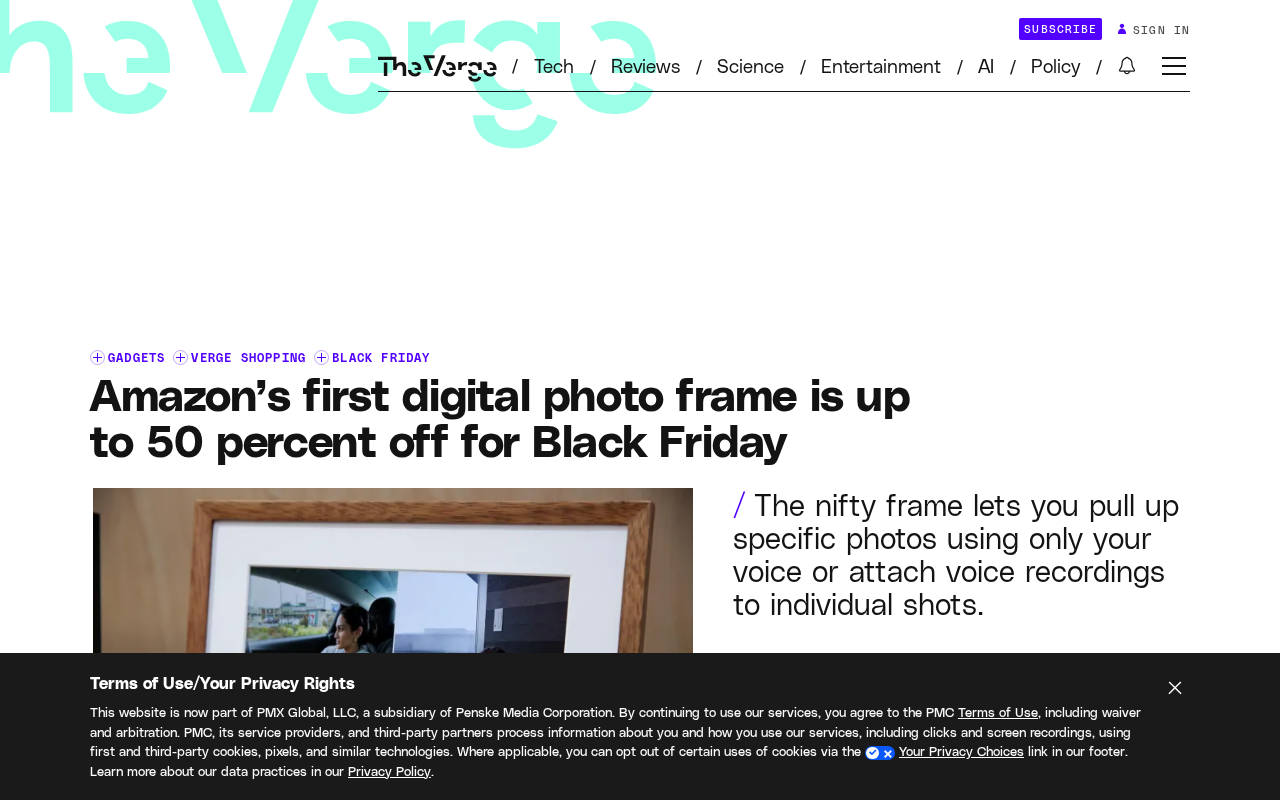
Amazon's first digital photo frame drops nearly half off for Black Friday less than a month after launch, trading low prices for an ecosystem entry point.
Amazon's first own-brand digital photo frame, Alexa Photo Frame, joined Black Friday promotions less than a month after launch, with prices starting at $114 — about $115 off. The article argues that the rapid price cut reflects a highly competitive, price-sensitive digital photo frame market, with Amazon continuing its 'low prices to drive volume, monetize through services' hardware strategy, using Black Friday traffic to trade price for market share and promote the Alexa ecosystem. Positioned for the mid-range gift market, its core selling points are family photo display and Alexa voice integration — suitable for users already in the Alexa ecosystem and those seeking simple-to-operate gifts, while users with high image quality demands or offline privacy concerns should be cautious. The article also reminds buyers to check specific configurations, pay attention to promotion deadlines, and compare delivery and return policies between Amazon and Best Buy.
Amazon brought its first digital photo frame into the Black Friday sale lineup less than a month after launching it. The product, called Alexa Photo Frame, is now on sale at both Amazon and Best Buy, with a starting price of $114 — about $115 off the original price, with the official promotion advertising a discount of nearly 50%. That's a remarkably fast price cut for a brand-new product, and it makes the frame a noteworthy option on this year's holiday gift list.
What It Means When a New Product Gets Discounted One Month After Launch
New consumer electronics usually hold their prices for three to six months, especially when a brand is entering a category for the first time — manufacturers typically want to maintain a premium image with stable pricing. Alexa Photo Frame breaks that convention: less than a month after launch, it's already seeing a discount of nearly half off.
There are several possible signals behind this. First, digital photo frames are a highly competitive, price-sensitive market; similar products have long sat in the tens-of-dollars range on e-commerce platforms, so Amazon needs to use price to quickly gain market share. Second, the Black Friday window is the highest-traffic promotional period of the year, and riding that wave to drive volume is more worthwhile for a new product than holding the price. Third, Amazon's smart home hardware strategy has consistently leaned toward "low prices to drive volume, monetize through services" — the frame is just another entry point for the Alexa ecosystem.
For consumers, this means you don't have to wait through a long price-decline cycle — you can experience the new product at a lower cost right in its debut season.
"Low prices to drive volume, monetize through services" is the strategy Amazon's hardware business has followed for years. The logic: smart hardware is sold at near-cost or even at a loss to rapidly expand the user base, then ongoing revenue is generated through backend services like Alexa voice service, Prime membership, cloud storage subscriptions, and content purchases. Echo smart speakers, Kindle e-readers, and Fire tablets have all followed similar paths. For Amazon, hardware is the gateway to its service ecosystem — the larger the installed base, the more time and spending frequency users have within Amazon's system. So deep discounts during a product's launch period aren't purely promotional behavior; they're a natural extension of this strategy into a new category.
Product Positioning: A Photo Screen with Alexa
Alexa Photo Frame is Amazon's first digital photo frame product under its own brand. Based on officially released information, its core selling points center on two things: displaying family photos and integrating with the Alexa voice ecosystem.
As a gift, its target audience is clear — users who love displaying family photos but may not want to deal with complicated setup. The $114 starting price puts it in the mid-range position: higher than basic entry-level frames, lower than large high-end frames, suitable as a holiday gift.
Currently, officially disclosed information is relatively limited and review data isn't yet widely available. Before buying, it's worth paying attention to actual display quality, photo album sync methods, and the specific scope of available Alexa features.
The core technical aspects of a digital photo frame include display quality, photo sync mechanisms, and the balance between local and cloud storage. On the display side, resolution, viewing angles, and color reproduction directly affect the viewing experience — entry-level products often use lower-resolution LCD panels with limited detail when viewed up close. For sync mechanisms, the mainstream approach is binding cloud photo album accounts through a companion app for automatic photo push; some products support sending photos by email or sharing albums with family members. Cloud storage involves privacy and long-term costs: if photos depend on the manufacturer's cloud, users need to pay attention to data encryption methods, account security, and whether there's a free storage cap. Together, these aspects determine the actual user experience of a digital photo frame — and they're worth more attention than the spec sheet when choosing one.
Black Friday Buying Advice: Who It's For and Who Should Be Cautious
Who it's suitable for: Users already in the Alexa ecosystem who want to put family photos on the living room or desk; people who want to give elders a simple-to-operate digital gift; and early adopters who don't mind trying new products and are willing to accept early firmware iterations.
Who should be cautious: Photography enthusiasts with high demands for image quality and color accuracy; privacy-sensitive users who want the frame to be fully offline and not dependent on cloud services; and users expecting a large screen — the $114 starting price corresponds to an entry-level configuration, so size and specs should be confirmed on the official page.
Between Amazon and Best Buy, if prices are the same, you can compare delivery times and return policies. Holiday-season return windows are usually more generous, which is especially important for gift products.
Why the Digital Photo Frame Category Is Heating Up Again
The digital photo frame isn't a new category — early products were marginalized due to poor display quality and cumbersome syncing. In the past two years, the category has revived because cloud photo albums, smart home hubs, and voice assistants have matured, making "automatic family photo syncing" simple enough.
Amazon is entering through the Alexa ecosystem, with a logic consistent with its smart speakers and smart displays: hardware is the entry point, and the real value lies in keeping users within its voice service and cloud storage system. That also explains why it's willing to offer deep discounts during the launch period — hardware profits can take a back seat; ecosystem stickiness is the long-term goal.
For the industry, when a leading manufacturer shakes up the market with a low-priced new product, it often drives down prices and upgrades features across the entire category. If Alexa Photo Frame sells well during the holiday season, there's a good chance other manufacturers will follow suit.
A smart home hub refers to a device or platform capable of centrally managing multiple types of smart devices in the home and providing a voice interaction entry point, such as smart speakers, smart displays, and mobile apps. Once a digital photo frame connects to the Alexa ecosystem, it can theoretically take on some hub functions: voice queries for weather, controlling lights, playing music, checking schedules, and more. This "one screen, multiple uses" positioning increases the hardware's usage frequency and turns the frame from a single-purpose display device into a home information node. For manufacturers, the more versatile the device, the higher the user switching cost and the stronger the ecosystem stickiness; for users, it's necessary to assess whether they really need these additional features and whether they might affect the core experience of photo display.
Frequently Asked Questions
How long will the discount last? Black Friday promotions usually have a time window; the exact deadline is subject to what's shown on the Amazon and Best Buy pages, so it's recommended to confirm the current price before purchasing.
Which version is $114? The official wording is "starting price" — prices may vary by configuration or color, so check the specific specs when ordering.
Is it worth waiting for the next generation? As a first-generation product, the early version still has room for polish in terms of software experience. But a near-half-off launch discount isn't common, and if your needs are clear, the value at the current price is already quite compelling.
Related articles

Watching Movies in the Terminal: Building an SSH Streaming Service with Codex Multi-Agent Workflow
A creator uses Codex multi-agent workflow to build an SSH-accessible streaming service in the terminal, with planning, cloud async dev, AI-drawn scenes, and synced live channels.

AI Face Licensing: A New Micro-Drama Trend or a Hollywood Trap?
Actors are licensing their faces to micro-drama startups for AI digital doubles to perform. Popular in China, the model raises concerns in Hollywood over lost control and diluted bargaining power.

Alaska's New Governor: A Veteran Wikipedia Editor
Alaska Governor-elect Jonathan Kreiss-Tomkins has over 13,000 Wikipedia edits. This article analyzes the information literacy and collaboration signals behind this identity, and what it means for tech professionals.