An Android Veteran's Switch: iPhone 18 Pro Max In-Depth Review

iPhone 18 Pro Max shrinks the Android switcher's regret list, but telephoto hardware and iOS quirks remain.
A seasoned Android flagship user puts iPhone 18 Pro Max through a rigorous real-world evaluation. The A20 Pro's 2nm leap delivers both performance and battery gains, while the new variable aperture main camera (f/1.48–f/4.0) and 55–60W charging erase two long-standing Android advantages. Video stabilization remains best-in-class. Yet the conservative telephoto beyond 8x, the absence of a large-sensor periscope 3x lens, persistent iOS keyboard and notification frustrations, and Siri's deep dependence on the Apple ecosystem still give a committed Android user pause.
Four years ago, I bought my first iPhone in over a decade — the 14 Pro. It was an excellent phone, but it ultimately couldn't keep me, and I found myself back in the arms of Android flagships. Because I missed too much of what made top-tier Android devices so compelling: wild cameras, diverse hardware options, fast charging, and massive batteries.
So where does that leave us now? With the iPhone 18 Pro Max, things seem to have shifted. On paper, it's poised to steamroll an increasingly bloated and complacent Android ecosystem — especially in North America, where the Samsung Galaxy, Google Pixel, and Motorola are basically your only premium options. As someone who has used nearly every Android flagship over the past two years, I decided to seriously evaluate whether this phone is enough to pull me back.
For me, it comes down to three core questions: has Apple caught up on battery life and charging, how much camera versatility would I lose by switching, and does iOS still make certain everyday tasks unnecessarily frustrating?
Design: The Surprising Return of Aluminum
I went with the Glacier colorway on the Pro Max this year. Since the 17 series, the larger iPhones have become easier to hold one-handed thanks to more rounded edges. As for colors, the rest of this year's Pro lineup felt a bit dull to me — the Burgundy left me cold, and while the dark gray is understated, that's not necessarily a compliment.
Honestly, I never loved the design language of the iPhone 11 Pro through 16 Pro era. But the strong return to aluminum over the past year is a breath of fresh air — it vaguely reminds me of classic Android legends like the original Google Pixel and the HTC One M8. The glass area for MagSafe now matches the metal in color, which is a clear visual upgrade. I also appreciate the precision of the camera island's machining and how well everything fits together; among all the camera bump designs out there, I think this is the best-looking.

That said, it's the heaviest iPhone ever at 249 grams — noticeably heavier than Android heavyweights like the OPPO Find X9 Ultra. Apple is clearly going for a more substantial feel with this year's Pro lineup. But thanks to the weight distribution, if you're coming from an S24 or S25 Ultra, it won't feel dramatically heavier. The curved edges combined with the matte coating do make it a bit slippery, though, so a case is recommended.
Performance and Battery: The Old Reasons to Go Android Are Gone
Upgrading from the 17 Pro Max, this feels more like an "S" year — no dramatic design overhaul, with technical changes either hidden inside or subtle enough to require a magnifying glass. I barely noticed the smaller Dynamic Island, though the bigger benefit is its ability to accommodate more Live Activities.
The Dynamic Island shrank because the infrared camera for Face ID has been moved to an under-display position on the left side of the screen. Look closely and you can spot a faint shimmer around the first couple of digits, but it's easy to ignore in practice.
The A20 Pro chip is, of course, a beast — launching the world's first 2nm mobile chip a few weeks ahead of Qualcomm and MediaTek. It dominates in Geekbench, and in the ray-tracing-intensive 3DMark Solar Bay stress test, its minimum loop score is nearly double the S26 Ultra's maximum loop score. The phone gets warm during testing, but not uncomfortably hot like some Android devices — credit goes to the larger vapor chamber.
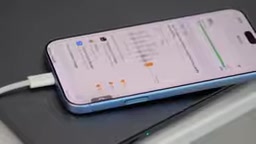
The 2nm process combined with increased battery capacity delivers a significant improvement in longevity this generation — battery capacity is roughly 10% larger than the S26 Ultra's. Battery life and charging speed used to be the main reasons I gravitated toward large Android flagships, and on this iPhone, they've essentially disappeared from my "reasons to go back to Android" list. 55–60W charging paired with epic endurance is more than sufficient.
I'm using the international version, which, unlike the US version, includes a SIM card slot, has a slightly smaller battery, and uses Apple's in-house C2 modem rather than the Qualcomm X80. The consensus online is that the Qualcomm modem offers higher peak speeds, while Apple's is more power-efficient. In real-world use, I actually found the new iPhone more usable in some weak-signal areas.
Tech Note: The 2nm process node represents the current frontier of semiconductor manufacturing. Compared to the previous 3nm generation, transistor density is further increased, theoretically delivering greater performance at the same power consumption — or dramatically lower power draw at equivalent performance. TSMC's 2nm node (N2) adopts a new nanosheet transistor (Nanosheet/GAAFET) architecture, replacing the previous FinFET structure for more precise gate control over the channel and lower leakage current. This is the underlying reason the A20 Pro achieves both a performance leap and improved battery life simultaneously — a more efficient chip does more work per milliampere-hour. The vapor chamber is another key thermal technology: filled with a liquid coolant that vaporizes when heated, spreads to cooler regions, and condenses there, distributing heat across a larger surface area and preventing the localized hotspots that cause chip throttling — critical for sustaining peak performance over time.
iOS 27 and Siri AI: Intelligence Built on Polish
iOS 27 feels primarily like a layer of refinement and stability on top of iOS 26. Version 26 already rebuilt the entire system with a glossy glass aesthetic. I remain ambivalent about the "Liquid Glass" design language — I don't dislike it, and paired with the right lock screen it can look genuinely stunning, but its effect in everyday apps is inevitably subtle, especially now that Apple has removed the gyroscope-driven spectral highlights that were in iOS 26.
One change I notice every day is that the iPhone 18 Pro Max switches back to cellular data more decisively when leaving Wi-Fi range, rather than clinging to a network that's technically in range but practically unusable — something many OPPO and Samsung Android devices are guilty of.

The marquee new feature in iOS 27 is AI-integrated Siri. Siri has seniority, but has long been considered inferior to Google Assistant and Alexa. With this AI injection, it's noticeably improved — though responses still feel a bit slow. Its usefulness depends heavily on how deeply invested you are in the Apple ecosystem and how much data you're willing to share with first-party Apple apps.
For example, Gmail doesn't expose individual emails to Spotlight Search, so Siri can't retrieve them — unless you connect your Gmail account through Apple Mail. iMessage works great in the US, but apps like WhatsApp, Messenger, and Line don't integrate the same way, which weakens Siri's capabilities in certain regions. Since my personal data lives more on Google's side, Gemini understands my personal context better. Fortunately, there's a solid Gemini app on iOS, so you can have the best of both worlds.
The old frustrations remain, though: the keyboard still feels more awkward than Android's Gboard, with a slight lag when typing into Siri; and the notification center, despite stacking and AI summaries, remains more cluttered than what you get on a Pixel or Galaxy. Neither of these will change anytime soon.
Tech Note: Spotlight Search is iOS's system-level universal search, indexing local files, app content, contacts, and web information — and it's what the AI-powered Siri leverages to understand personal context. However, the data third-party apps can expose to Spotlight is subject to strict permission constraints. For privacy and competitive reasons, Google-owned apps like Gmail don't offer per-email content indexing, meaning Siri can't directly "read" your messages. This stands in sharp contrast to Google Assistant on Android, which deeply integrates with Gmail, Calendar, Maps, and other Google services — a reflection of the long-standing tension between platform ecosystem closure and data interoperability. Apple processes some inference locally via its Apple Intelligence framework, which protects privacy but inevitably limits the data boundary AI can access.
Camera: Variable Aperture Fills a Gap, but Versatility Still Lags
Switching back to the iPhone camera from a top-tier Android camera phone always feels a bit odd — not because it's bad, but because despite Apple having some of the best processing algorithms in the industry, certain hardware elements still feel unremarkable.
Building on the solid foundation of the 17 Pro, Apple has added a variable aperture to the new main camera. The 48MP, 1/1.28-inch main sensor can now stop down from f/1.48 all the way to f/4.0, with several stops in between. The concept isn't new — Samsung, Nokia, and Honor have all tried it over the past decade — but as smartphone camera technology advances, variable aperture is becoming increasingly necessary. Take the OPPO Find X9 Ultra: its massive 1.1-inch main sensor with an f/1.5 aperture can sometimes produce bokeh so shallow it's hard to keep the entire subject in focus, and variable aperture is exactly the solution.
The larger maximum aperture also extends the 18 Pro Max's capability in near-darkness, delivering impressive results in low-light stills and even nighttime 4K walking videos — enough to compete with the Find X9 Ultra, which has a theoretical optical advantage. Three 48MP lenses mean you can shoot at 2x crop and still retain full resolution with no digital zoom. And in an era of rampant AI fabrication, iPhone photos still deliver a reassuringly honest quality.

The limitations are real, though: the ultrawide still has room to improve in less-than-perfect lighting, with some edge softness in darker frames; and beyond 8x, the telephoto becomes underwhelming — Samsung and Google can push further, and current OPPO flagships can reach 30x or beyond. I also deeply miss the excellent 3x telephoto found on OPPO, Honor, and other Chinese brands — a periscope lens over a large sensor enables macro and portrait shots the iPhone simply can't match. Using the iPhone's 2–2.5x crop with a wider aperture for background separation gets you about halfway there, but it's no substitute for the luxurious bokeh that comes from a large sensor paired with a fast aperture.
Video processing and stabilization, on the other hand, remain an area where Apple consistently dominates. Even on full auto, without touching ProRes or Log, tricky backlit scenes are handled with ease. This is the hardest part of switching: I appreciate the reliability of iPhone video, but there are always shots that make me wish for the additional camera hardware OPPO brings.
Tech Note: Variable aperture in smartphones is implemented differently from traditional cameras. Conventional cameras use multi-blade mechanical iris diaphragms, but phones — constrained by lens stack thickness — typically use liquid crystal light valves or miniature blade mechanisms to control the amount of light entering. A smaller f-number means a larger aperture, shallower depth of field, and better low-light performance; a larger f-number means deeper focus, better suited for scenes where you need front-to-back sharpness. Periscope telephoto lenses fold the optical path 90 degrees inside the body, allowing the lens group to lie horizontally, achieving much longer focal lengths without increasing device thickness. This design accommodates larger sensors and longer optical zoom ranges, and is the core hardware reason Android flagships currently outpace iPhone in telephoto reach.
Conclusion: The List Got Shorter, But There Are Still Reasons to Look Back
When I switched from Android to the iPhone 14 Pro four years ago, I had a long list of things I missed. With the iPhone 18 Pro Max today, that list is noticeably shorter. Fast charging and battery life are essentially non-issues; telephoto has come a long way since the 14 series; the new variable aperture lets the iPhone compete with the best Android phones in low light; and in video, Apple keeps getting stronger. Apple's walled garden can still give you the best of both worlds — one foot firmly in the Google ecosystem.
What remains absent are those wild, experimental features, which is partly a function of iPhone's mass-market positioning and supply chain requirements. The OPPO Find X9 Ultra's 10x camera and larger 3x sensor are things I genuinely miss when using the iPhone. The same goes for silicon-carbon battery technology, which could let Apple either pack in more capacity or significantly slim down this hefty device. iOS annoyances like notifications and the keyboard persist as well.
But overall, this remains an exceptionally refined experience, with enough shared design language with Android that switching doesn't feel like a cultural shock. Has the 18 Pro Max done enough? Enough that I want to keep using it — even if those more adventurous Android cameras still give me reason to look back. I'll keep using it over the coming months to see how it holds up against the incoming wave of Android flagships.
Related articles

AI Is Not a Replacement: Human-AI Collaboration Through the Lens of Factory Root Cause Analysis
Starting from factory root cause analysis, this article explains how AI accelerates evidence chain construction rather than replacing human experts, exploring the pragmatic implementation logic and business value of 'AI supporting people rather than replacing them.'

AI Agent Decision Auditing: Building an Evidence Chain in Regulated Workflows
Starting from a Reddit discussion, this article analyzes three core issues in AI agent decision auditing within regulated workflows: what fields audit records should contain, how to handle feedback latency for erroneous decisions, and how to continuously calibrate LLM judge consistency with human judgment.

Apple Opens Multiseat Subscription Purchasing: App Subscriptions Can Now Be Sold in Bulk to Businesses and Schools
Apple opens multiseat purchasing for auto-renewable subscriptions: businesses and schools can bulk-buy via Apple Business and Apple School Manager, adding or removing seats anytime. Enabled by default in App Store Connect—developers should verify settings; group purchasing sandbox testing opens October 2026.