Anchoring, Loss Aversion, and Nudges: 5 Psychological Tactics Retailers Use to Make You Spend

Retailers use psychological shortcuts like anchoring and loss aversion to design choice environments; consumers must slow down to reclaim decision-making power.
Starting from behavioral economics' challenge to the "rational actor" assumption, the article introduces Herbert Simon's bounded rationality model and heuristics, explaining that consumers pursue "good enough" rather than optimal solutions. It dissects five manipulation tactics: anchoring with inflated original prices, framing through wording, loss aversion driving scarcity and countdowns, and nudge theory via shelf placement and default options. It concludes with three counterstrategies: slow down, set your own anchor, and question purchase motives.
You pick up a pair of discounted headphones at the supermarket. The original price is crossed out, and next to it reads "50% off." You almost instinctively feel you've scored a deal. But behavioral economics tells us this "50% off" may have been designed from the start. From anchoring effects to loss aversion, retailers have long exploited the shortcuts of the human mind to quietly rewrite your judgment of "is it worth it."
From Rational Actor to Bounded Rationality: Why Consumers Are Always Being Played
Traditional economics long assumed consumers are "rational actors" pursuing optimal financial choices. But 20th-century psychological research repeatedly proved that human decisions are rarely fully logical. By the 1970s, these findings gave rise to behavioral economics—a discipline studying the intersection of economics and psychology.
Nobel laureate Herbert Simon proposed the "bounded rationality" model: consumers face limited information, limited time, and various psychological constraints, so they don't seek the "optimal solution" but rather an option that "feels good enough."

So how do we judge "good enough"? Behavioral economists answer: heuristics—mental shortcuts that make decisions faster and less effortful. The most critical one is the "anchoring effect": the first piece of information you receive becomes the baseline for subsequent judgments. When the first dish on a menu is priced at $50, you unconsciously use it as a reference when looking at other prices.
Psychologists like Daniel Kahneman believe heuristics can predict a large number of consumer choices—which also means they can be manipulated. That "50% off" headphone may have a real discount of only 20%, or the original price itself may be inflated.
Heuristics is a core concept in psychology referring to simplified rules or mental shortcuts people use when facing complex judgments. It is not deliberate reasoning but relies on experience, intuition, and readily available information to reach conclusions quickly. Common heuristics include "representativeness heuristic" (judging by similarity) and "availability heuristic" (estimating probability based on easily recalled examples). Heuristics are highly efficient in everyday decision-making and usually yield reasonable results, but their systematic biases are precisely where behavioral economics finds room for manipulation—merchants only need to understand which shortcut is activated in which context to predict or even guide consumer choices.
Framing Effect: The Same Thing Costs More When Worded Differently
Anchoring is just one of many shortcuts retailers exploit. Imagine two cleaning products with identical efficacy and similar prices, but one says "natural formula" while the other has plain packaging—which would you lean toward? Subtle differences in wording and pricing make one appear more attractive. This is the framing effect, which can short-circuit our ability to assess value.
Framing works because people's sense of "worth it" is highly context-dependent. The same amount of money, described as "saved" versus "avoiding a loss," triggers completely different psychological responses. Retailers know this well, so they don't sell products directly—they sell a carefully framed choice scenario.
The framing effect was first systematically revealed by Kahneman and Amos Tversky in 1981 through the "Asian disease problem" experiment: the same set of outcomes, described as "lives saved" versus "lives lost," significantly changes people's risk preferences. Its psychological mechanism lies in the fact that people's judgments of gains and losses depend on a reference point, and wording determines where that reference point is set. In consumer contexts, whether a price is "tax included" or "tax excluded," described as "10% off" or "save 10%," emphasizing "95% fat-free" or "contains 5% fat"—all create differences in subjective value for the same product. The framing effect is hard to resist because it operates on the input side of value assessment, not the output side of judgment—before you even start calculating, the frame has already set the parameters for you.
Loss Aversion: Fear of Losing a Nickel Beats Wanting to Gain One
Some U.S. grocery stores tried promoting reusable bags with a reward: 5 cents back for bringing your own bag. The effect was modest. Then they switched to charging 5 cents for disposable bags—and the effect improved immediately.
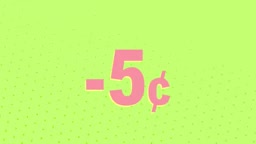
The same 5 cents: "avoiding a loss" drives behavior more than "gaining a benefit." This is loss aversion. Retailers exploit this fear of losing value to frequently create scarcity and countdowns—"limited time," "only 3 left"—making you abandon comparison under pressure and buy immediately.
A 2008 study placed participants in an MRI scanner and had them taste five wines of increasing price. Participants reported preferring the more expensive wines, and brain imaging "confirmed" this. But the truth was: they only drank three bottles—the two cheapest were repeatedly poured into the most expensive bottles. Price expectation itself changed the subjective experience.
Nudge Theory: Shelves and Webpages Are "Deciding" for You
Retailers don't just manipulate perception—they also control the space in which you shop. Supermarkets place high-margin products at eye level and design traffic flow to guide you past more shelves. Behavioral economist Richard Thaler and legal scholar Cass Sunstein called this subtle product placement "nudge theory."

The same logic applies online: recommending related products, pre-checking add-ons, making "Buy Now" buttons more prominent. You think you're choosing freely, but the arrangement of options and default settings have already made most of the decision for you.
The core feature of a nudge is: it prohibits no options, significantly changes no economic incentives, yet predictably changes behavior. Thaler and Sunstein proposed this concept in their 2008 book of the same name and linked it to "choice architecture"—any way of presenting options constitutes an architecture, and the architect inevitably influences outcomes. The ethical controversy of nudges lies in their "covert guidance" nature: they preserve formal freedom of choice while exploiting cognitive biases. For this reason, scholars distinguish between "transparent nudges" (disclosing the intent to guide to users) and "manipulative nudges." Retailers' designs of shelves and default options mostly fall into the latter category, which is one reason the article emphasizes "questioning motives."
Counterstrategies: Slow Down and Set Your Own Anchor
Retailers are designing your choices, but understanding this psychological mechanism is itself a countermeasure. Try three things:
- Slow down your decisions. Heuristics are fast and instinctive. Slowing down to calculate can see through the real price behind flashy discounts.
- Set your own anchor before shopping. First figure out how much this thing is worth to you, then look at the price tag, avoiding being led by the merchant's "original price."
- Question the motive. Are you buying it because you need it, or because it's "cheap"? Buying only because it's on sale means the choice is no longer yours.
Retailers and advertisers sell more than products—they design your choices. Understanding this design logic may be worth more than a discount: the ability to make decisions on your own terms.
One-line Summary
Retailers use psychological shortcuts like anchoring and loss aversion to design choice environments; consumers need to slow down to reclaim decision-making power.
Paragraph Summary
The article starts from behavioral economics' challenge to the "rational actor" assumption, introducing Herbert Simon's bounded rationality model and the concept of heuristics, explaining that consumers pursue "good enough" rather than optimal solutions under information, time, and psychological constraints. It then dissects common manipulation tactics used by retailers one by one: the anchoring effect makes inflated original prices the baseline for judgment; the framing effect changes subjective value through wording; loss aversion makes "avoiding loss" more motivating than "gaining benefit," which is why scarcity and countdown tactics work; nudge theory designs choice environments through shelf placement, default options, and recommendation algorithms. The article concludes with three counterstrategies: slow down decision-making, set your own anchor before shopping, and question purchase motives, emphasizing that understanding this design logic is itself the process of reclaiming autonomous choice.
Related articles

iPhone Duo Battery Life Tested: One Charge a Day Is Unavoidable, and the Large Screen Is the Culprit
iPhone Duo battery test: heavy use needs at least one charge a day, and about 30% remains after 6.5 hours of screen-on time. How often the large screen is unfolded is key; a MagSafe battery pack helps, and long-term degradation is also worth watching.

Kimi K3.1 Pro Open-Sourced: 2.8 Trillion Parameters Close In on Opus
Moonshot releases the open-source MoE model Kimi K3.1 Pro, with 2.8T total parameters and 104B activated, trailing Opus 5.5 by under 1 point on Terminal Bench 4.0.

Costco Tech Price Guessing: Are Monitors, Keyboards, Mice, and Bose Speakers Worth It?
A YouTube blogger guesses prices of Costco tech products: 2K 180Hz monitor, Logitech keyboard and mouse, Bose speaker, and CyberPower UPS, revealing warehouse-store selection and brand premium.