Andrew Ng Invites You to AI Dev NYC: A Two-Day Hardcore Tech Feast

Andrew Ng invites developers to AI Dev NYC in late November in New York, emphasizing the irreplaceable value of in-person tech exchange.
The article introduces Andrew Ng's endorsement of AI Dev NYC, calling on developers to stay technically sharp through in-person exchange. The event runs November 30–December 1 in New York, gathering researchers and engineers for a full-stack AI perspective from underlying models to application layers. Content is highly technical, with speakers candidly sharing failures and pitfall retrospectives, plus both talks and workshops. The article notes the event suits developers integrating AI into products, engineers handling model deployment and optimization, and tech leads seeking full-stack engineering judgment—offering better direction than scattered reading.
Why In-Person Tech Exchange Remains Irreplaceable
The pace of change in AI engineering is evident to all—frameworks, toolchains, and best practices refresh almost every few months. In his latest invitation video, Andrew Ng offers a simple but effective piece of advice: one of the best ways to stay technically sharp is to spend time engaging face-to-face with developers and experts in the same field.
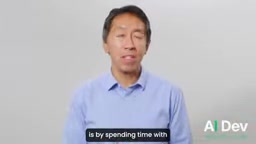
Online courses and documentation certainly matter, but the immediate feedback, informal discussions, and human connections that in-person events provide are often things video tutorials simply cannot replace. Andrew Ng himself has long practiced this philosophy, and his personal endorsement of AI Dev NYC signals that the event's content design has genuine substance.
Event Basics: Two Days, New York, Full-Stack Perspective
AI Dev NYC is scheduled for November 30 and December 1 in New York City, running for two days. From Andrew Ng's description, attendees will include researchers and engineers, covering every layer of the AI technology stack.
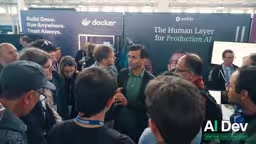
The word "full-stack" deserves attention. Most AI conferences today lean either academic or product-application focused, whereas AI Dev positions itself as connecting engineering practices from underlying models all the way up to application layers. For developers who need to bridge model deployment, data pipelines, and application integration, this perspective offers more practical value than deep dives into a single area.
The AI technology stack can generally be divided into several layers: at the bottom is compute and infrastructure (GPU clusters, training frameworks), above that is the model layer (pre-training, fine-tuning, evaluation), then the data layer (collection, cleaning, labeling, pipelines), and at the top the application layer (API integration, agent orchestration, product interaction). Most developers are only familiar with one or two of these layers, while a "full-stack" perspective requires understanding the interfaces and constraints between layers—for example, how model selection affects inference cost, or how data quality determines fine-tuning results. For teams looking to truly bring AI capabilities into products, cross-layer engineering judgment often determines project success more than depth in any single area.
Content Style: High-Density Technical, Failures Welcome
Andrew Ng's description of the conference content centers on two keywords: highly technical, and candid. He specifically mentions that speakers will openly discuss "what went wrong" and which ideas they believe can help attendees build more interesting things.
This is uncommon at tech conferences. Most public talks tend toward showcasing success stories, with failure details often glossed over—yet the most valuable information in engineering practice is precisely hidden in those details. Model training not converging, inference latency missing targets, data quality issues causing launch delays—retrospectives on these "pitfalls" are especially valuable for developers new to the field.
According to Andrew Ng, the event targets developers looking to level up their AI engineering skills across the full stack. The program includes both technical talks and workshops, the latter typically implying hands-on practice and deeper interaction.
Model training not converging typically means the loss function oscillates or stalls during training and fails to drop to expected levels. Common causes include improper learning rate settings, data distribution shift, and vanishing or exploding gradients in the network architecture. In practice, engineers usually troubleshoot by adjusting learning rate schedules, adding normalization layers, and checking data label quality. Inference latency missing targets refers to response times per request exceeding business tolerance thresholds after deployment, often related to oversized model parameters, unreasonable batching strategies, or insufficient hardware resources. Common optimization techniques include quantization, pruning, operator fusion, and swapping inference engines. These problems rarely have direct answers in papers or tutorials—they are precisely the real-world topics most frequently discussed in offline engineering exchanges.
Who Should Attend
Judging from the event's positioning, the following types of developers will benefit most: application developers integrating AI capabilities into products, engineers responsible for model deployment and inference optimization, and technical leads looking to understand full-stack AI engineering practices. If you already have a development foundation and are seeking a path from "can use APIs" to "can build reliable systems," the sense of direction provided by this kind of high-density technical event is more valuable than scattered reading.
Closing
Andrew Ng closed his invitation with "I hope to see you in New York." For developers focused on AI engineering practice, this is an opportunity to turn online learning into offline exchange. November 30 to December 1—see you in New York.
Related articles
AWS AgentCore Gateway: Connecting AI A…
AWS AgentCore Gateway: Connecting AI Agents to Enterprise Backends with MCP
How AWS AgentCore Gateway acts as a primary MCP server to aggregate REST APIs, Lambda, and existing MCP services? Analyzing its AST real-time mapping, zero cold start, semantic search for tool overload, session isolation, and key injection security design, plus the architectural approach to decoupling enterprise AI agents from backends.

One Link Gives Figma AI a New Skill: Hands-On with MCP Connectors
Paste one MCP server link and the AI Agent in Figma gains new tool capabilities. We break down the setup flow, 20+ one-click apps, read/write permissions and execution policies, and the public HTTPS requirement.

Cognition SWE-2 in Practice: One Prompt to Handle the Whole Product Launch Process
Analyzing a YouTube creator's prompt for using Cognition SWE-2 to launch a product: a landing page, seven-email sequence, and non-buyer follow-up tool, plus how the 'test and report' constraint changes AI delivery quality.