Andrew Ng on Agentic AI: Cutting Through the Hype to Find the Core Skills That Actually Matter

Andrew Ng argues that evals and error analysis — not prompt tricks — are what separate great agent builders from the rest.
In his Agentic AI course, Andrew Ng confronts the industry hype head-on — the term "agentic," which he coined himself, has been co-opted by marketing, yet real-world deployments in customer support, legal document processing, and medical diagnostics continue to grow steadily. The course's most valuable insight: what separates skilled agent developers from novices isn't prompt cleverness, but the discipline to build systematic evals and conduct rigorous error analysis — a data-driven methodology that turns iteration from guesswork into engineering.
In the opening of his Agentic AI course, Andrew Ng spoke candidly about a phenomenon he's witnessed firsthand: when he coined the term "agentic" to describe an important and fast-growing trend in how people build LLM-powered applications, he never anticipated that marketers would seize it and slap it onto virtually every product in sight. The result? A sharp spike in hype surrounding Agentic AI.
Beneath that froth, however, genuinely useful and valuable Agentic AI applications are growing rapidly — just not as fast as the marketing noise. Understanding how to cut through the buzzwords and build truly functional agent workflows is becoming one of the most important skills in AI today.
What the Agentic AI Hype Gets Wrong
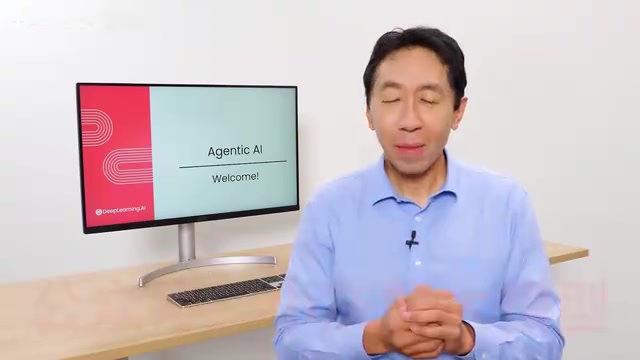
The original intent of the word "agentic" was to capture a meaningful and rapidly growing trend in how developers build LLM applications. Once the concept was marketized, however, it gradually lost its technical meaning and became a branding label. Ng openly acknowledged that this has pushed the perceived temperature of Agentic AI to unrealistic heights.
The rational response to hype isn't wholesale rejection or blind enthusiasm — it's redirecting attention back to applications that deliver real value. Ng emphasized that even after stripping away the marketing veneer, the number of deployed agent applications continues to climb steadily, which confirms that the underlying value of this technology is genuine. For developers, the key is learning to distinguish what's mere spectacle from what actually solves problems.
Real-World Use Cases for Agentic Workflows
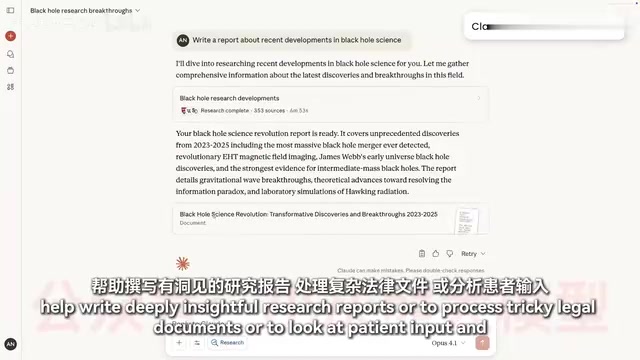
Ng walked through several scenarios where agentic workflows are already being used in practice, offering a clear picture of where the technology actually lands:
- Customer support agents: Automatically handling user inquiries and issue resolution
- Deep research: Assisting in writing substantive, insight-driven research reports
- Legal document processing: Tackling complex and tricky legal documents
- Medical diagnostic assistance: Analyzing patient-submitted information to suggest possible diagnoses
He specifically noted that many projects within teams he has led simply couldn't exist without agentic workflows. That statement carries a clear message: agent workflows are no longer just a lab concept — they've become necessary infrastructure for certain complex applications. Building the skills to create these systems is one of the most important and valuable capabilities in AI right now.
The fundamental difference between an agentic workflow and a traditional single LLM call lies in the closed loop of multi-step reasoning and tool use. In a single call, the model receives input, produces output, and stops. Agentic workflows allow the model to make dynamic decisions during execution — calling a search engine, running code, reading and writing files, invoking external APIs — and to adjust subsequent actions based on intermediate results until a complex goal is achieved. This makes them naturally suited for multi-step tasks: legal document analysis often requires first retrieving relevant clauses, then comparing them section by section, and finally synthesizing a conclusion; medical diagnostic assistance requires combining a patient's description, querying a symptom database, and ruling out differential diagnoses before offering a recommendation. It is precisely this "plan → execute → observe → re-plan" loop that allows agentic workflows to handle complex cognitive tasks that previously required human intervention.
The Key That Separates Experts from Beginners: Evals and Error Analysis
One of the most noteworthy observations in the course is Ng's take on what separates people who build agent workflows well from those who struggle. He argued that the biggest difference between truly effective builders and less efficient ones is whether they drive a disciplined development process.
At the heart of that process are two critical practices:
Evals (Evaluation)
Systematically evaluating agent outputs rather than relying on gut feel to judge quality. A quantifiable evaluation mechanism is the prerequisite for continuous improvement.
Evals in AI engineering are a systematic testing and measurement framework — analogous to unit tests and integration tests in traditional software engineering. For agent applications, evaluation typically covers three dimensions: accuracy (does the output correctly complete the task), robustness (how does it perform on edge inputs or under unexpected conditions), and consistency (does the same input produce stable outputs). Because LLM outputs are inherently stochastic, traditional exact-match scoring is often insufficient. In practice, evaluation sets are commonly built using LLM-as-Judge scoring, human annotation, or semantic similarity against reference answers. Without an evaluation framework, developers can only rely on subjective impressions to judge whether a system is improving — which is especially dangerous in multi-step agent pipelines, where subtle degradation in a single step may not surface as a serious problem until several iterations later.
Error Analysis
Deeply analyzing where and why an agent fails, then making targeted improvements. This data-driven, error-oriented iteration is the true dividing line between professional developers and hobbyists.
In other words, building excellent agent applications doesn't come down to a flash of inspiration or clever prompt tricks — it requires a rigorous, repeatable, eval-centric engineering methodology.
Error analysis is a classic methodology in machine learning engineering, systematically popularized by Ng in his earlier ML courses. The core steps are: collect samples where the model failed → manually categorize them by error type (e.g., tool call failures, context loss, reasoning gaps) → tally the proportion of each error type → prioritize fixing the categories with the broadest impact. In agentic settings, error sources become more complex: they may stem from prompt design flaws, unexpected tool API response formats, information loss across multi-step reasoning chains, or blind spots in the model's domain knowledge. Systematically tracking and categorizing these errors allows developers to move away from random, whack-a-mole patching and instead concentrate limited optimization resources on the highest-value improvements.
Why This Skill Is Worth Investing In
Throughout the course introduction, Ng repeatedly emphasized that mastering the skills to build Agentic AI will unlock a wealth of new opportunities — both for career advancement and for building impressive software on your own.
From an industry trends perspective, this assessment is well-grounded. As the capabilities of large models mature, the simple "question-and-answer" pattern can no longer meet the demands of complex business needs. Agent workflows — capable of autonomous planning, tool use, and multi-step execution — are becoming the dominant paradigm for the next wave of AI applications. Those who develop solid building methods at this stage will have a head start in the competition ahead.
For developers looking to get started or level up, Ng's direction is clear: don't let the hype steer you. Put your energy into establishing systematic development discipline — especially the two most easily overlooked yet critically important practices: evals and error analysis. That may be the most valuable takeaway from this course.
Related articles

DeepSeek Said It Was 'Sleepy' While Transcribing Music? Let's Talk About Anthropomorphism in LLM Chain-of-Thought
A Bilibili creator found DeepSeek saying it was 'sleepy' mid-task. We explain why LLMs mimic fatigue, how Chain of Thought amplifies anthropomorphism, and what to do about it.
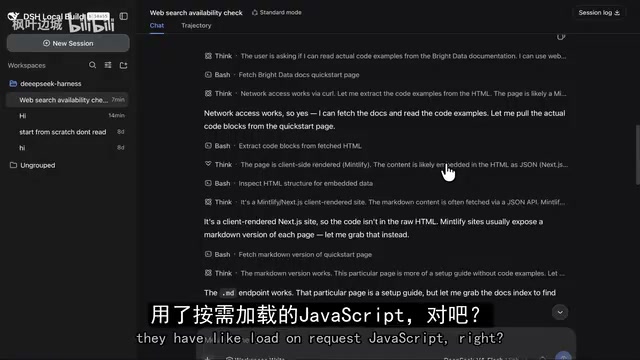
DeepSeek Harness in Practice: Building a Low-Cost AI Coding Powerhouse
Learn how to transform DeepSeek's open-source harness using Claude Code, Bright Data scraping, and vision models to build an AI coding workflow costing just half a cent per task.
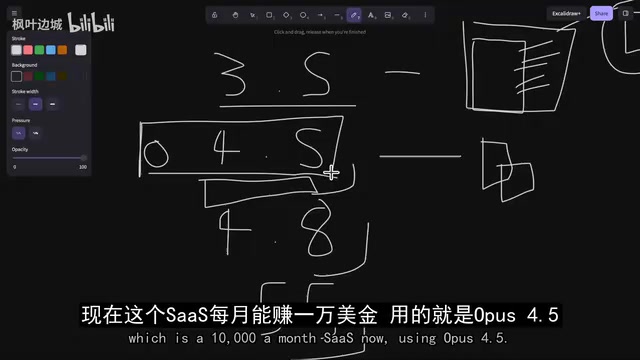
Overseas Developer Tests: DeepSeek Already Rivals Opus — Stop Waiting for the Next Model
An overseas developer finds DeepSeek V4 Pro rivals Opus 4.8 at a fraction of the cost. Learn how DeepSeek + BrightData compares to Claude Code for building SaaS.